


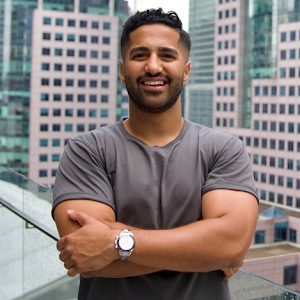
Ross Correia is the Co-founder and CEO of Reactiv, an AI-powered mobile commerce platform. Under his leadership, Reactiv has raised significant seed funding and forged partnerships with major retail brands. Before Reactiv, Ross held sales and leadership roles at companies, including Shopify. He has also been named to Forbes’ 30 Under 30 list for retail and e-commerce.


Here’s a glimpse of what you’ll learn:
- [4:19] The dangers of renting customers
- [5:58] Why brands fail at building owned channels and over-optimize short-term metrics
- [8:37] How early e-commerce mobile apps failed and created lasting resistance to app adoption
- [11:31] Leading brands’ mobile apps, retention, and customer lifetime value strategies
- [16:51] How app experiences enable location-based features, shoppable video, and higher LTV
- [19:47] Why sending paid traffic to App Clips can increase app installs without hurting conversions
- [27:32] The psychological differences between email, SMS, and push notifications for consumers
- [31:17] How AI and zero-party data enable personalization in mobile commerce
- [44:49] Why co-founder relationships fail more often than ideas, and how long-term trust prevents it
- [48:39] Ross Correia shares his founder journey and how he bet on his house to make payroll
- [54:02] How Ross’ upbringing and immigrant background shaped his work ethic and values
In this episode…
Most e-commerce brands believe they own their customers — until ad costs spike, algorithms shift, or attribution breaks overnight. When growth depends on rented attention, even healthy revenue can hide fragile foundations. What allows brands to build durable growth and real customer relationships in an increasingly noisy digital world?
Mobile app builder Ross Correia maintains that the strongest brands focus on ownership over optimization — prioritizing direct relationships, reducing friction at every touchpoint, and meeting customers where and when they’re most receptive. Brands should stop over-optimizing short-term metrics, design experiences that feel native to how people use their phones, personalize outreach thoughtfully, and choose long-term trust over quick wins. The result is sustainable growth rooted in loyalty, not volatility.
In this episode of the Up Arrow Podcast, William Harris talks with Ross Correia, Co-founder and CEO of Reactiv, about building owned customer channels in e-commerce. Ross explains why paid ads create hidden risk, how mobile-first experiences increase retention, and what it takes to build a company — and culture — by choosing the difficult but durable path.
Resources mentioned in this episode
- William Harris on LinkedIn
- Elumynt
- Ross Correia: LinkedIn | X | Instagram
- Reactiv: Website | Instagram
- Jay Myers on LinkedIn
- Bold Commerce
- “The Steve Jobs of Leather: Growing a DTC Brand to $150M With Curtis Matsko” on the Up Arrow Podcast
Quotable Moments
- “You’re just renting your customer. You’re praying that they come back, you’re praying that they convert.”
- “There’s got to be a better way here, and so we kind of went back to basics.”
- “We bet the farm on it, and I had two little kids at home.”
- “There’s always an easy decision and a hard decision, and usually the hard one is right.”
- “There’s no such thing as problems, only solutions.”
Action Steps
- Prioritize owned customer channels over rented traffic: Relying less on paid ads protects your business from algorithm changes and rising acquisition costs. Owned channels create stability, predictability, and long-term customer relationships.
- Reduce friction at every customer touchpoint: Making it easier for customers to engage increases conversion, retention, and lifetime value. Small improvements in ease of use compound into meaningful growth over time.
- Use personalization thoughtfully, not aggressively: Relevant, well-timed messaging builds trust and drives action without overwhelming customers. Respecting user context prevents engagement from turning into annoyance or churn.
- Build culture before optimizing for scale: Hiring people who deeply believe in the mission strengthens resilience during hard periods. A values-driven team makes better long-term decisions under pressure.
- Choose long-term integrity over short-term wins: Taking the harder path often leads to better products and stronger customer trust. Sustainable growth comes from consistency, not shortcuts.
Sponsor for this episode
This episode is brought to you by Elumynt. Elumynt is a performance-driven e-commerce marketing agency focused on finding the best opportunities for you to grow and scale your business.
Our paid search, social, and programmatic services have proven to increase traffic and ROAS, allowing you to make more money efficiently.
To learn more, visit www.elumynt.com.
Episode Transcript
Intro 0:00
Welcome to the Up Arrow Podcast with William Harris, featuring top business leaders, sharing strategies and resources to get to the next level. Now let's get started with the show.
William Harris 0:14
Hey everyone, I'm William Harris. I'm the founder and CEO of Elumynt and the host of the Up Arrow Podcast, where I feature the best minds in e-commerce to help you scale from 10 million to 1 million to 100 million and beyond. As you up arrow your business and your personal life, most e-commerce brands don't actually have customers. They have temporary access to people, as long as Meta or TikTok allows it, and the second, costs go up. Algorithms change or sit your attribution breaks, that customer base disappears. Today's guest believes that's not just inefficient, it's existentially dangerous. Ross Correia is the co founder and CEO of Reactiv. He's a former Shopify enterprise leader, Forbes 30, under 30, and someone who has lived through the hard version of building e-commerce. We're going to talk about why most funnels are fundamentally broken, why brands keep renting instead of owning them, and why you should rethink your mobile apps. We'll also get into the uncomfortable stuff, betting the house, selling personal stock to make payroll, building culture before product, and why irrational optimism might be the only real advantage founders have. Ross, welcome to the Up Arrow Podcast.
Ross Correia 1:19
Hey, William, thank you so much for having me. I'm honored to be here. I listened to a couple of the great people come before me, and I was honored that you were, you know, able to have me on here. I'm excited.
William Harris 1:29
Yeah, likewise, we've got a lot of good stuff that I'm excited to get into. I do want to give a shout out to the guy who introduced us, Jay Myers, founder of Bold Apps, his friend, previous guest on the pod, Jay. Thank you very much for making this intro. Oh.
Ross Correia 1:42
Jay is a legend. I've known Jay for many, many years, back when I was at Shopify, and one of the few people that I hold very, very high, I've seen him. I see him every now and then, and I've learned some of the best life lessons from Jay. He knows what I'm talking about. Vegas Shop Talk. Great Story by the bar. We'll have to save that one for another time.
William Harris 2:03
I don't know. I kind of want to get into that. Maybe we'll see you. Let me know if it's one we can share later on tonight or not. I The other thing that we share, which we'll get into, that I appreciate, is Jay, myself and you, we all had paper routes as kids, and I think that that's, I don't know, just a fun way to start building up that entrepreneur journey as a very young kid.
Ross Correia 2:25
Yeah, you know what? That's actually like. That's such an interesting anecdote. I haven't I would love to know everyone should now put this on their LinkedIn. I'm gonna go after and put paper out in there, so then we can search by these people, because there's some lesson or something that you learn at least. Will. Where are you based?
William Harris 2:42
Out of Minnesota right now, but I was in Ohio when I was a paper boy, okay, I mean, both sound awful to be a people boy, yeah, that's true. I mean, you're up north, though, too, aren't you?
Ross Correia 2:52
I'm up in Toronto, Canada, and, I mean, I remember those days it was minus 30 degrees. You have kids as well, right? Well, I do, Yep, I've got two young kids, and, like, they're not going to do the paperwork they should, but it's a lot of work for the parent too. I feel like the parent has to help. And when I was a kid, you know, the last thing I wanted to do was go outside minus 30, walk up and down the street with, like, an Ikea bag on my shoulder and just throwing them out. It was the toughest job. But, like, I don't think I had an iPod or anything back then, and you just listen to the sound of nothing while you're doing this paper out. It was something changed at that point in my life. I believe it.
William Harris 3:33
I really do think that you're onto something. I think the no iPod is maybe part of it, right? You just had to come up with ideas in your mind, as you just, you know, wandered around the neighborhood.
Ross Correia 3:44
So when I'm older, I'm going to start a mobile app company.
William Harris 3:48
Yeah, exactly. Okay, I have one interruption, and then I want to get into the good stuff here. This episode is brought to you by Elumynt. Elumynt is an award winning advertising agency optimizing e commerce campaigns around profit. In fact, we've helped through this get acquired with the largest one selling for nearly 800,000,001 that ipoed. You can learn more on our website, elumynt.com, which is spelled Elumynt.com, okay. Ross, if a $30 million brand stopped paid ads tomorrow, how many of them would still survive 12 months later? For you
Ross Correia 4:19
know, you probably count them on both hands. It's incredibly tough. I mean, we speak to so many companies, and I've started Reactiv now, you know, two and a half years ago, to solve this problem, but I've been in the space for about 10 years. I used to own my own brand. I've owned multiple brands, and embarrassingly so, we've all been fueled by meta ads or Tiktok ads or some sort of social media ad, you know, Snapchat, etc, etc, whatever, clicks and you get so reliant on that machine. And, yeah, I think it's horrible. You're just renting your customer. You're praying that they come back. You're praying that they convert. When, in reality. You just keep running ads to the same people over and over and over again. And so, you know, I went when I was talking with Zalk about starting Reactiv, it's like, we have this idea of what's going on out there. And we talked to so many people, and everyone's just okay doing it. Everyone's like, yeah, we're just gonna keep doing it. And we were like, there's got to be a better way here. And so we kind of went back to basics, and we're like, well, everyone's on their iPhone. They're all scrolling from nine o'clock at night to 1am how do we capture those customers? How do we create a solution to better engage with those customers? And instead of having to rent that customer, you can now take a customer who's looking at an ad and take them into your highest retention channel, your mobile app. And so it sounded like a pipe dream two and a half years ago, and here we are. Fast forward. Things are things are going really, really well.
William Harris 5:48
Everybody loves to say, Build owned channels, but practically, why do brands keep failing at it?
Ross Correia 5:56
Oh, that's such a good question. Oh, man. Why? Do brands keep failing at it? I mean, I don't think anyone wants to fail at it, you know, they're not doing it on purpose. I think it's just using the tools that are available. And I think, you know, and a bad side to this is what I'm thinking about it on my own, you know, in my own self, here about we set these goals for ourselves, whether it's for the business, whether it's personal goals, and you're held accountable to those goals. And sometimes those goals are just numbers and figures like, it's like, hey, we need our row as to be a certain number. We need our CAC to be a certain number. And you think that by hitting that, everything else will get fixed. And you over you think and think over and over again on, how do we adjust this number? How do we get this number lower that's going to solve our all of our problems? And we do it, and nothing's fixed. You're still where you were yesterday, and then you continue to lower those numbers to a point that it doesn't make sense anymore, and you're still hoping for change. We do it over and over again and nothing happens. And so, you know, I think we're here to try and break that cycle, but it's a cycle that I think everyone falls into, not just in business, just in life, of trying to over optimize, over optimize and over optimize, and just, you know that that goal post just keeps moving. And when you're working with some of these ad platforms, you can't predict what they're going to do. And one day, you'll wake up and your campaign is going to be on fire, and the next morning fire in a good way. You know?
William Harris 7:29
Sure, okay, yeah, it could be on fire in a bad way too. You don't know
Ross Correia 7:33
which side of the coin you're going to get. You'll wake up the next day and it's on fire in a bad way. And so it's incredibly inefficient. It's so hard to predict. I think everyone just has this, this, this thinking that it's like, we're just gonna keep going, we're just gonna keep going, we're gonna figure it out. It's gonna change, but like, it's a necessary evil that we have to do. And I think some of the best brands out there are really focused on retention, right? How do we get that customer back to our website. How do we create some sort of compelling offer to get that customer to give us their email or their phone number or install our mobile app, and then we can build a proper relationship with that customer? Whereas, you know, we all know the cycle, the acquisition cycle, we run ads, customer comes to the website, 90% of them drop off. It's broken. It's the worst,
William Harris 8:21
and building that relationship is the key. And you called this out just a little bit ago. You want to get them into your mobile app. And I'd say that there's a lot of there's a lot of benefits. Let's just go back to early mobile apps for e-commerce.
Ross Correia 8:38
Maybe it was the worst. Okay?
William Harris 8:42
Intellectually, let's go there for a second so we can move forward intellectually, though, on this maybe you got 1% 5% 10% into your mobile app, and that's fine, but then it's like the app isn't updated the way that it needs to be. It became really not that much better than actually just going to the website and shopping. And so I feel like we've tried mobile apps before, and it's just become like a I don't even usually talk about mobile apps at all with any my customers anymore. What are you guys doing differently that helps to kind of fix that?
Ross Correia 9:14
Yeah, and I think what happened is we've all, and maybe not we all. What's the demographic of the demographic of the people that listen your podcast? William, do you know?
William Harris 9:24
Well, okay, demographics, psychographics, right? Like, as a general rule, these are e-commerce founders, between 10 and $100 million that's who we go after. That's who I've seen. Most of the comments come from things like that. There are definitely, let's just say, e-commerce executives, maybe of some of the larger brands and things like that, because we've had under armor on and stuff like that. But most of these are going to be marketers who are trying to grow e-commerce stores.
Ross Correia 9:50
Okay, nice. I think everyone that's listening has probably been around for the first iPhone to release. I say that, and that's so timely, because I just had lunch with like, a 17 year old. World, and I don't think he was alive for the launch of the first iPhone. Oh, sure, he's running a successful brand, and like, he's crushing it, but like, I don't think he's lived through that yet. And so when I think about, like, 2008 I was like a kid. I was in high school, I was doing the paper route, I was working at Kumon, because I was a comm on kid, as every image it is. Of course, my oldest son is in humon. Now, he's amazing. But I remember when that first iPhone came out, and everyone said, Oh my god, this is the future. This is the greatest thing ever. And very quickly, I think it was a year after Apple launched the app store, and everyone was like, oh my god, we have to launch an app. And it didn't matter what you were building, whether you were building a dating app. I don't even think dating apps were a thing back then. I think it was like, Sure, amorous brands or Flappy Bird and these types of games. Everyone was like, Let's build a mobile app. And like you said it yourself, we all install those apps because we were told, okay, download this app. It's gonna be crazy shopping app. And we sat there for like, six minutes on Wi Fi, because that's how long it used to take back in the day, and then see our four gigabyte iPhone space deplete, and there was, like, a gig, you know, it was so tough. And you would do that, and you would install this app, and you're like, Wait, this is just the website. Why did I spend all this time getting this? And then they would blast you with notification, like, 20 notifications at a time, and I think it just left an awful taste in everyone's mouth. And so a lot of the brands that did that were then like, oh my god, app was a nightmare. I never want to think about it ever again, right? And I think it's very much stayed that way, but it's gotten a lot better, you know? And when I think about, like, the big brands, I think of like Zara and Lululemon and H M and some of these really big brands revolve that do mobile app really, really well, or Starbucks, for example, airlines, there are certain companies that do it well, and it's kind of brought it back. And it's like, okay, if we can get someone into our mobile app, we know that we're going to retain that customer. They're going to be the first to know about our newest offers. They're going to get a notification when that pair of jeans they were looking at comes back in stock. And you start to cultivate these incredible shoppers, you start to build this VIP segment. And I think there's a lot of misinformation and myths about your best customers will automatically install your mobile app. I just I don't think that's true. I think it is to a certain degree. And you know, there is a level of self selection where those customers that do love your brand may install your mobile app, but I do think they're not going to stick around if your mobile apps bad. And so what we're seeing is when you have that mobile app, when you're doing things right, when you have a proper strategy, you're able to now take an audience and build this like VIP segment, and the LTVs are so much higher that customer shopping much more often than someone on Web. You have a free way to send them notifications, to engage with them. And so I think, are you still following well? Are you aligned that, like when all those things, when the stars align, that sounds lovely. 100% okay. Perfect. And and so that is the pipe dream, though. That is like, if you know, if everything goes right, that's where we'll be. And so when we focused on Reactiv and kind of bringing it back to your question about, How do we simplify this for people? How do we remove all the friction? So when Zach and I started the company and Mike, we really focused on App clips, a technology that Apple released over covid. So in 2020 2021 it was really focused on travel. And it was like one of those times, you know, when Apple releases things, it goes it usually goes well, Apple vision Pro, but sometimes they release things and it doesn't hit and that was app clips, because in 2020 covid was going around, no one traveled. And so it just became this like piece of technology that was kicked to the side that nobody implemented, or no one thought, How do I apply this to my business? And so when we built Reactiv, we took app clips and we said, we're going to make this the forefront of the mobile app. We're going to remove the need to go and manually install an app and sit there and wait for it to install and go through an onboarding flow. We're going to take people right into that channel as soon as they click on an ad on their phone, as soon as they scan a QR code at your retail store, as soon as they get to a physical location and the iPhone can tell they're at your store, we're going to surface this to them automatically. And it's just been transformational for the business. It's been transformational huge, yeah, and with the companies that we're talking to have really changing their perception of, hey, this app doesn't have to be this clunky thing that people don't want to deal with. We're building, like this sexy, super light version that is easier to get to than a website, which is, which is really, really cool, and I'm sure we'll dive into how that all works, but that's kind of the gist of it. Yeah.
William Harris 14:47
Okay, so one of the biggest frustrations that I think a lot of people have with mobile apps is that friction, and it sounds like that's been largely addressed. One of the others might be, let. Just say, how do we make sure it doesn't become spam?
Ross Correia 15:03
2.0 yeah, yeah. How do we make sure that people don't abuse it? How do we make sure, you know, it doesn't turn into the next SMS? And so I think those, those tools already exist. So today, with Apple, you know, with the iPhone, you have your Do Not Disturb modes and things like that, like we can't magically break through that. And what we do, as well as as a company, we limit the amount of notifications our merchants can send. I know that sounds like really counterintuitive, but we have a limit there so that we can't let our merchants spam and use this, you know, annoyingly and bother people. We've also built AI tools now where, if we detect Hey, William is not liking these messages, then William is not going to get messages about price drops. William only cares about new product releases. We can also see what's really cool. And I think in the age of AI now, we don't have to hire a million people to analyze all the data and do this, but we can say, Hey, William, he's got kids. Or we don't know William has kids, but he never clicks on his notifications until 8pm and by that time, we're like, the 15th notification there. Let's not spam him during the day. Let's send it to William at 9pm or 10pm because we don't have to follow the SMS laws where you can't, you know, this quiet hours. We're being very, very creative. We're using data. We're using AI to kind of hit people at the right time. I think that's really important.
William Harris 16:25
Well, that's very important, because I feel like we see that in other areas too, where anytime that you have right message at the right time, it makes a difference. The right message at the wrong time, wrong message the right time doesn't work. Right messages right time. What are some ways that, because you mentioned like that, this is better, right? It's not just the website. What are some ways that make this a better experience than it just being, you know, an app version of the website?
Ross Correia 16:51
Yeah, that's, that's, that's a great question, too. I mean, I think there's, there's really two camps here. So one is, you really want to provide as much value to that customer as humanly possible. And so some small things that we do is, when someone opens one of our app clips, or Reactiv clips, we know what the location is of that customer. And so for a lot of our brands, we can now say like, Hey, this product is available nearby at one of the stores, and we use location access, which I think is really, really unique. Another thing that we do is, and you can only do this in an app, is give people the Tiktok like experience. I hate to use this, but it's like being able to provide lots and lots of video content in a smooth package where people can seamlessly scroll through it. And so a lot of our brands will take UGC content, and they'll take Tiktok style video, put that into the clip and create these, like shoppable video, shoppable clips to really kind of change how that customer shopping. I think we're all a little bit brainwashed in the best way possible. And I say this as being someone who you know was at Shopify, who's owned many e-comm brands, but Shopify has distilled shopping down to a home page, a a collection page, a PDP, cart, checkout, and that's why it works really well, because we're so used to it. It's so streamlined. But I think in the clip, we can be more creative, you know, we can have a better element of video content, turn it into what feels like a mobile app instead of what feels like a website, and then have shopping be a part of that tie in the notifications to bring people back. I think we can be very creative there. So that's a big thing that we try to do. But if you also just compare, and I hate to do this, but it's true, if you compare apples to apples of just, hey, let's push this user to the website, let's push this user to the app, clip, the conversion is roughly the same. I think ours is a little bit better inside of the clip, which is huge, but we have a huge benefit of around 15% of those people will install the app automatically without a discount code, a welcome discount, and that customer is now going into that self selecting bucket, whatever it is where they're shopping, much more often. They're making their first, second, third, fourth purchase in the app, and you're creating a longer life cycle and flywheel by doing it. So there's almost no con to doing it, even if you don't have a massive creative team and you want to do video and content, I think the benefit is just still there.
William Harris 19:16
So we run ads, that's the big part of what we end up doing for people. So if we're running ads, we can either send them to the home page, we can send them to the PDP page, or we can send them to this app clip, which is likely going to lead towards, let's just say, 15% downloads of the app with with no loss, right? Because you're saying you're going to get basically the same conversion rate, maybe better, right? Potentially, but at the very least you're not losing anything. You're only gaining something, which is a little bit more stickiness of your best customers.
Ross Correia 19:46
That's exactly it. That was super well put.
William Harris 19:49
Hmm, that is interesting. Okay, and let's go, go ahead, right?
Ross Correia 19:53
I think, I think everyone in their mind is like, Oh my God, to get and we've all I mean, I'm sure you guys. To do it at Elumynt two. You have brands that have mobile apps that are like, I want to run a campaign to drive mobile app installs, and we're all praying, please, don't like the cactus, yeah, don't do it. Been the hardest segment to get, to get those people into the mobile app, and for us to now say, hey, let's just piggyback off of your conversion ads. And now we're going to drive installs as well at, like, an unprecedented rate, I think, is one of the biggest unlocks that even we as a company, we didn't think that was going to happen. And, like a cool anecdote, we have a brand, actually. You know the brand? I think you interviewed the founder. His name is Al Doan from Missouri. Star, incredible founder. I've known him for many, years. He's been on Reactiv for a long time now, and in the last three months. I won't give I won't give away the exact numbers, because those are his. But he had two times the amount of installs just from App clips than any sort of welcome campaign, or any type of campaign he had driving people to the app, and that was all for free, for free, huge.
William Harris 21:04
So okay, that's getting them in there. That makes the most sense to me, and that makes it the most sense on why I would want to do something like this. Because you're right, a mobile app install campaign, Mai, I don't think I've done one of those in at least a couple of years for an E commerce brand. I will say we do have some, but that's just because the entire company is a mobile app, like, that's what it is. And so we to those. But for E commerce, I can't remember the last time we ran one, because of that exact reason. I could usually get a better AOV, a better lifetime value, and we're just getting them to the website to purchase. But to your point, it seems like that's kind of shifting on its head now.
Ross Correia 21:40
Yeah, it's, I think it's, you know, we're really trying to change the way that people think about it. We're working closely with partners, great agencies, you know, to really just show people that, one, this technology exists. And two, I think the results are incredible. And you know, a lot of the brands that we're working with are already seeing these results and getting a head start on, on what that looks like, what this next chapter of commerce might look like.
William Harris 22:05
You've given me some hints about some good ways we could use this. If, if somebody was going to sign up, somebody was use this. What are three hacks or optimizations that you're like? Please, please, please, do these things. It will just make it so much better.
Ross Correia 22:21
In terms of which the mobile app, the ads, what side?
William Harris 22:24
Well, on the mobile app side, yeah, I mean, I
Ross Correia 22:27
think if you're running a mobile app and you're not using clips, I think you're just you're shooting yourself in the foot, because you're probably giving away some sort of welcome discount or some sort of incentive to get that customer to insult I don't know, are you seeing that as well? But that seems like the broad strategy. Regardless if you're Air Canada or your Tom shoe company, that just seems like the number one strategy, or you're giving away some sort of freebie. And so I think even when we look at that, you know, why do people do that? If, if people are still on the fence about mobile app in 2026 you know, why do these big companies still give those types of huge welcome discounts? I was just at Nike the other day. I was buying a pair of shoes, and I got to the cash and I was ready to pay, and she goes, Hey, do you have the Nike app? And I was like, Oh, no. And she's like, if you download the Nike app right now, I'll give you 15% off this order. And like, I'm at the checkout with my credit card out ready to pay. I think was like 130 bucks. You're going to take away $20 there, just so I install this mobile app, like there are much sort of huge value in there for the brand, right? So as a brand, you get all this data, all this information, but you're always giving something away to get that customer in there. I think now with clips, we've really, really solve that by removing the friction to get someone to use the mobile app, and, you know, to kind of draw a parallel, because I'm sure everyone's listening, and they're having all types of different things going on in your life, where you're buying a house, you're buying a car, you're trying on a piece of clothes, it's almost like try before you buy, where you're taken to the mobile app without any friction, and you experience it. And you go, Oh, this is actually really nice. Like, this is a nice content where this content is not on the web. Oh, this is, like, really seamless. I just got to check out in two seconds. And I could just use Apple Pay. Like, this is lovely. And then you make the purchase, and it goes, Oh, well, if you want to track that purchase, install the mobile app, and you're like, Oh, well, that's a no brainer. You just really simplify the flow, take all the friction out of it, without having to sacrifice that discount, I think, is, like, a huge thing. So that's, that's kind of benefit number one, or thing to do number one that I would I would definitely recommend. I think thing to do number two would be to really have a mobile app strategy. So a lot of companies will just say, like, Hey, I'm launching the mobile app because my CMO or my CRO or someone told me to launch the mobile app and, like, I just want to get it out there, and we're not going to promote it or talk about it. It's not going to it's not going to work out well, if you do that. Yes. And I think the best customers that we work with, the best brands that we work with, they have a strategy, and they go, Hey, we're going to launch this mobile app, and we're going to do some sort of discount or some sort of incentive for shopping inside of here. So maybe they're going to receive, you know, their package early, and maybe that's going to be included. Maybe they're going to get an hour early to access the latest drops. And in the Shopify world that we live in, that's so easy to do from the admin, you're just publishing it to a different sales channel, like a lot of that stuff that used to be a nightmare, is so easy. Now it's just about having that strategy. And hey, I'm going to post this on my it's such a small thing. But hey, let's post this on our social media channels, on Instagram, and tell people this app even exists. And if you do that, and you do the absolute bare minimum, we usually see brands hover around 20% of their revenue coming from their mobile app without really doing anything like 1233, small steps, and you're doing it. The brands that take it much forward, you know, we'll use al as an example, because I love using al as an example. You know, he's closer to, like, 30, 40% of his revenue, and that's huge, huge. And he's sending push notifications. He's getting customers early access to products. He's posting content inside of his mobile app. He's got this new channel. They've got a whole YouTube channel where mom Jenny, they do these quilting tutorials. You can now access that directly from the mobile app, and you get a notification every time Jenny drops a new video. And he's building this community. It's it's so cool, and it's really lovely to see these like brands really just take a full mobile strategy to it, and then just start to see huge rewards, and that, that that that 30% that 40% there's a, you know, there's still a massive double digit, incremental lift on top of that. That's not just like, hey, I moved these customers from web to mobile app. When you tie in the clips to it, when you tie in all the different things you're doing, you know, it's so net positive. So, you know, we're doing our best to spread the word. I like the idea
William Harris 27:01
of even being able to say some type of notification about the new YouTube video or something like that. I feel like, if it's an SMS, the likelihood that you want to spend the money on an SMS to announce you got a new video is very, very low, right? But this gives you an opportunity to have like those other relationship building type events to be a part of speaking of the notifications, then, from a customer's perspective, in the customer's mind, what do you think the psychological differences between getting an email, getting an SMS and getting an app notification?
Ross Correia 27:32
Yeah, I mean, this is gonna be interesting. When do you check your email as well?
William Harris 27:38
I mean, so this is different, because I'm a market who is on my computer with my multiple monitors all day long. So I check them all the time, your personal email, yeah, probably, you know, maybe a little bit early in the morning to make sure there's nothing there for the kids, for their school or something. And then, but that's a quick scan. And then probably, yeah, later in the evening, when sometime with work, yeah,
Ross Correia 27:58
there's no, there's no canceled school bus, etc, etc. Yeah, I'm kind of in the same boat as you, and I think, you know, I mean, I'm always on my computer too, so I'm always checking my work email. I live on my work email. It's scary, for sure, I know, but I'm also very good, and you might do this too. If something comes in from a work email and it's not work related, I unsubscribe. I put a spam like I get rid of that, I keep it very, very clean. Otherwise, I can't stay focused. I don't have an EA yet, so I try and manage it as best I can. But in my personal email, I usually check it in the morning, and then I forget about it, and I probably check it in the evening once, and so there's just not a lot of time. Or, you know, does it matter if a brand I'm shopping with, say, Apple, I've got my iPhone here, they send me an email at 1pm or 3pm like, it doesn't matter, it's just going into a box. And I'm also seeing like, 50 different types of sales and in copy. I mean, I'm sure you guys do some sort of like, outbounding as well. You know, we've all thought about, what does that subject line need to be? It's so competitive to fight in that email box that I think it's incredibly hard. I think, you know, if you really need a customer to love your brand, to get them to go to that email, find you, come back. SMS is different. SMS, you know, I check all my SMS. It comes through at any point. But I do the same thing. If I get an SMS from a company and I don't know who it is, I reply st, op, immediately. I'm like, leave me alone. This is my phone. I want to talk to my wife, to my friends, don't bother me.
William Harris 29:26
It's my least favorite channel. Just work. I hate SMS is from brands.
Ross Correia 29:30
Yeah, yeah. And so push notifications. Now I feel like push notifications are very different for for some reason, and maybe will correct me if I'm wrong or if you feel differently because, but when I get a push notification, like, I don't do Do you swipe away every notification? Do you keep it clear, or do you just let it run on I let it run on me, too. And so, like, if I get something I'm just not interested, I either leave it or I swipe it away. So I don't really care if I. It a push notification or not. I do think the ones that work well, though. So my phone is usually on D and D from like, nine to seven ish and like, I don't be bothered. But in the evening, if I get a notification and it's like, oh, I looked at these pair of jeans. It's my Lightning McQueen pair of pants for my kid that my wife sent me that I was supposed to buy, that I did buy, I'm like, oh shit, I better go buy this now, or I was supposed to buy this birthday gift, and I didn't. So I think that's really where we're seeing a lot of traction. Is when notifications are sent between 9pm and 1am they have a huge hit rate where people are clicking into those they're going in and they're getting to it. So I think it's really about just finding the right person at the right time, being able to use that data. And one thing that we have that is that data, so we can tell when someone clicks on that notification, what time of day it is, where they go in the app clip or the mobile app, what they're doing in there. We have so much zero party data for every one of these brands, and now we run that through the AI machine, and it just lets the marketer go automatic. It lets it run by itself. It's so powerful. So I think we're seeing it work really well now, but I think we're just scratching the surface on what good looks like there. I think in, like, the AI era and, like, we have to talk about it, right?
William Harris 31:14
That's where I'm going next. So just go ahead and get into it. It wouldn't be
Ross Correia 31:17
right if we didn't talk about AI in 2026 on a podcast. But I think we're really scratching the surface, you know, and we speak to so many brands and, like, we collect all this data. And I'm like, so what do you do with this data in snowflake? And they're like, well, we warehouse the data, yeah. What do you mean, doing with it? Pay for it, yeah, paying for it. We don't have time, but, like, our snowflake bill, oh, my God, it's insane. Well, it's like, well, you know, AI is so good at taking this unstructured data and finding things from it. So now with mobile apps, you know, previously, all the event data, all the information you would get, but then you're like, holy shit, who's gonna, like, look at all this data and figure out how to market to each single customer with AI? You know, we're building an AI tool that'll just do it for you. So this super high data rich channel, we basically will learn the nuances of William. Do you use Uber Eats? By the way?
William Harris 32:09
William, not that often. Where I'm at, it's not that big of a thing. If you order it, it's gonna get here in like, an hour and a half. But I do like it when I'm in
Ross Correia 32:17
the cities. I was gonna draw a parallel, because I'm like, people listening. You know, you know, you can still draw a parallel. Most people will get it. I think Uber Eats is the bell. Like, we put our kids to bed at seven, and we've done this ever since the kids were born, and at like, 702, like, I'm sure I'll get one tonight. It's like, Taco Tuesday, $18 at your house in 20 minutes. And we're like, Okay, we have to get this. Like, Uber knows us so goddamn well. That is where we're trying to get our AI and push notification engine too, and we want to do that for every single brand. Now think about what you could do with that information from your customer and that personalization, like Uber that is how you're going to build a meaningful long term relationship with that customer over time. I mean, we're not there yet. I think we're very close, but that's where we're going with all this. And I think the app clips the app is that it's just creating that flywheel of, how do we build the best relationship with that end user?
William Harris 33:11
We want that kind of personalization. I know that sometimes we've thought about that for giving up data and things like that, and there's a lot of data privacy laws, and those are good things, but we still want the personalization that would ultimately come from that as human beings, we want somebody, even when we're talking to a human being, where it's just like, I want you to know me, ask me a question, as if we've actually had a conversation before, like, not just like, the same generic thing that you're going to say to every single other person. And so I think when an app has that capability in it, then you feel more emotionally connected to that brand. I'm sure there's some good psychology we could use there. I'm not smart enough to know what it is, but I guarantee maybe it's raising your Oh, what is the one chemical, oxytocin? It's probably raising your oxytocin and creating more of an emotional bond. Now, with that brand,
Ross Correia 33:53
I think you knit you like hit the nail, the nail on the head there. And I think what's cool too, with the notifications is you don't have to write a massive email, like, we have a brand, and I think it's just one crazy I shouldn't say that loud, but he's like, it's one crazy guy, and he does all the notifications himself, and kind of like the messages you would send to, like your wife or your husband, your spouse, and there are these, like, very simple push notifications, and they convert like crazy. And I'm like, What's the secret sauce? And he's like, I just don't take it too seriously. He's like, I just have quick notifications. And if people care, they care, and they open it. And if not, then that's cool too. But it's like, and I think the equivalent on like, the personal basis, and you just said this is like, How many times have you been I'm only saying this because I just came back from a sales conference NRF in New York City. But you go to a conference and you have those conversations and you're just talking about the weather, that's kind of what email and SMS feel like to me. It's at this certain point, it's like, cool. You're running another black or, you know, another sale, cool, whatever. But it's like, if you just send me, send me something weird from a push notification. Or you're like, Hey, I know you're in Seattle and it's raining right now. Hey, it's raining right now. Check out these boots that is gonna that's your notification. That's your copy. You don't have to come up with anything fancy. It just converts so much better.
William Harris 35:13
I I like sending things like that, like you said, from human being to human being, not overthinking things. I would say that something I've been doing more of the last two or three years is trying to not overthink things. It's very easy in our space. I feel like, and maybe you feel this way too, because I grew up in like the growth hackers days, and so it's like everything is analyzed and we're hacking it. But the older I get, the more I realize I'm like, stop overthinking it. Just send it. Likely your gut reaction is a pretty good one. You might get into trouble a little bit here and there, but for the most part, those are walk. You're able to walk back from things, but just start sending things like a human being, yeah?
Ross Correia 35:51
And like, I totally agree. And I think we all just have, I don't know if it's because of llms now, but the fatigue from just getting an email or an SMS that is, like, a pair, or, like, multiple paragraphs wrong. It's like, oh my God, I don't want to read this wall of text. And I say it from, like, the investor side of you too. Like, I'll just send to an investor like you in question mark. And like that email has the highest hit rate. Everyone's like, oh shit. Like, what's going on? And, you know, you talk to those people. I mean, you probably see them all the time. Like, they don't even say, Hey, William in the beginning. The beginning. It's just exactly what it is. Thanks. And you probably respond to it very, very quickly. And it's like, how do we bring that level of simplicity, you know, back?
William Harris 36:33
Wow, Ross, that's a really great answer. It's here that you are thinking this through very well. I don't know, trying to sound like the you know, AI right now, in the way that responds to you. Okay, at what point does automation stop feeling helpful and start feeling creepy?
Ross Correia 36:50
Then, oh, this is such a good question, too. And I think this is a little bit where there's two sides of the coin with the mobile app, because how many times have you had a private conversation, gone on Instagram, and the first ad is exactly what you were talking about. It's so creepy. I don't know how it works. I don't think I'll ever know how it works, and I think that's going to get a lot scarier in the next couple years as AI advances and personalization gets better, and our phones know even more about us. I think it's gonna get a little creepier. Now, there's two sides to it. I mean, I kind of like it, because usually it's right and I'm like, I do need that. Or like, Oh, that is exactly what I was looking for. It's like, you know you're for you. Page like your for you. Page knows you so well, where does the line draw, though? And so I think, for me and doing it on a platform level, and us working with customers in America and Europe, and being able to follow all the laws and things like that, I actually think Apple again. I don't know how meta does this. I don't know how Instagram does it. If someone does, please reach out to me. Reactiv.ai I really want to know what the secret sauce is, but I think inside of the mobile app, and inside of the Reactiv mobile apps, we don't want to be creepy, we want it to have a level of personalization based on what you're doing inside of your app. And so there exists this thing called App Tracking transparency, which allows me to basically say, Hey, you're William on Instagram, and now you're William inside of our mobile app. And then I'm going to get that information, I'm going to share it, and then I'm going to do something funky with it. We don't do that yet. I don't think we I don't think we ever will do that. I mean, never say never. What we really try to do is we try and build a relationship of personalization based on what you do with that brand. So for example, if you're a customer who's bought for the seventh time with that brand, and I know you're a loyalty user, your account is going to get tagged and it's going to be focused around different products and things like that, whereas if you're a brand new user, I want your content to be about brand building. I want to tell you why I'm the best brand in the world. I want you to make your first, second, third purchase with me, and so we really focus on the individual relationship between the business, the merchant, and that customer, and not try and take in any of the noise outside, because I think that's the creepy part. Now, if you ask the merchant what they want, they're going to say, well, we want the creepy part. Give us share all the data. Turn it up to 11. I think that again, is, is where as a platform, we have a bit of responsibility to kind of say, Hey, I don't think this is the right thing to do. I think you're working with enough data here. I think you know, we can show you meaningful growth, meaningful change, meaningful numbers of the business that we don't need to get creepy and do those types of things.
William Harris 39:55
But I also just don't know how they do it, and I don't know how they get away with it. It's insane. You're working with an NBA team. And when people hear that, they might assume, okay, great marketing gimmick. What are you actually doing that most brands don't realize is possible, though, with them,
Ross Correia 40:11
with who is that story, an NBA team? Oh yeah, yeah, that's really, really exciting. So one of the big we have three big values for Reactiv this year. One is enterprise, and that's working with, you know, incredible customers really focused on scalability, performance, security. That's like top tier for us. The second is being where the customers are, so being at the retail stores, being in llms. So if you just search for, you know, find me the best bamboo sheet set on your iPhone in chat. GBT, it'll be a cozy Earth bamboo sheet set. When you click on it, it'll take you right into their their mobile app without you ever installing. It's incredible. We're really focused on that. And then the third piece is omni channel. So retail. How do we, how do we take someone from an in-person, you know, in real life experience and give them a digital companion to what that thing is. So with the NBA team that we're working with, when you show up at the stadium, actually, it happens before you show up at Stadium. When you get to the parking areas near the stadium, your iPhone will automatically show you the name of their app on your phone, you can open it and it'll tell you, based on your ticket and your apple wallet, which parking garage you should go to, where the nearest spots are, how fast of a walk it'll take you to get to the gate? Well, that's very nice. It's cool. When you get to the gate, then it says, hey, the game is about to start in 10 minutes. You should grab a seat on your way there. There's all these different concession stands, if you care. When you're in your seat, it says, Hey, our team's winning. Do you want to order a jersey directly to your seat? You could do that. Hey. Do you want to order a hot dog? Do you want to get a beer all without ever opening a mobile app on your phone? And most people don't go to a basketball game multiple times a year until, unless you're a baller, good for you. If you do. I'm so jealous, even though my raptors are not the best team in the world. I would love to go all the time, but for most people, they want this ephemeral like, oh, I can use this app now. I'm not installing it on my phone. I don't have to worry about deleting it, and when I leave the arena, I'm not going to get blasted about every game that's happening and tell me to come when I don't have money to buy another ticket. Like, that's just depressing. Leave me alone. And so we're creating these experiences now in retail, in real life, and there's really no limit to what we can do there. All powered through our Reactiv clips, which is really, really cool. I can see this
William Harris 42:31
working really well for a lot of other brands. Then, like you said, like, that's very experiential in and of itself, but now you can make it more experiential even just going to we were talking about one of the other podcasts I like doing. So I had a good conversation with Curtis Matsko, the founder of Portland Leather Goods, very dynamic. One of my favorite episodes that I recorded because of just, I don't the way that he talks through some of his stories of his life and things like that, but he's, he's going to open up a bunch of stores this year. Like, that's his big thing. And I can see where you're like, how could you take this now, take this, not just like I'm going into this leather goods store, but now I can increase your experience while you're here, not just like the look, the feel, the smell, but we can increase your shopping experience as well. Yeah.
Ross Correia 43:14
And I mean, it doesn't even have to be shopping, I know, like we're very commerce focused. How do we give that customer a better experience, right? And so even, even one example that I love is like, amusement parks. You know, I just my kids to an amusement park in the summer, and they still hand out the same pamphlet they handed out when I was a kid. And like, this is the map, and this is where you go. It's like, that can be this digital companion. It automatically opens because we know you're there, and we can set these they're not beacons, because beacons, you need a physical device. This is just being able to put down a pin in a map, and when someone gets to that pin, it automatically shows up on their phone. It's quite wild, interesting, yeah, how do we build really, really cool experiential events around that? And so we're also working with a really popular store. They usually have a lineup to get in. Usually put your name down. They call you now when you get there, it's like, Oh, do you want to check in? Okay, perfect. You can add your name to the list. You'll get a push notification when you're ready. Hey, while you wait for 30 minutes, here's some coffee shops nearby, and you can scroll through the catalog, so, like really, kind of building up that experience of what that can be, even on top of shopping, I think is going to be really, really big for us.
William Harris 44:27
2026 Yeah, it's just more of that blending online, offline, just whole customer experience. I want to talk a little bit about your founder journey, because there's some good stuff here. You and Zach have built multiple companies together. Why do partnerships fail more than ideas? And how have you averted those problems?
Ross Correia 44:49
Yeah, great, great question. I think, I think you know, one of the one of the hardest thing to do is find, you know, the best co founders out there. And I think I found two incredible co founders my CTO. Like and Zalk, who I've known for very, very long, but we both met working at Shopify, you know, a decade ago, and we became friends back there. We started two agencies together. We worked at another company together. We were at Shopify together, and then we started Reactiv together. And so when we decided to start Reactiv. We've both just come up from another company building mobile apps. We were actually in this space, and we would always just complain to each other. We're like, Ah, this. This isn't the right way to do it. Or, like, I don't think this is the right decision. And so we always have that little bit of a chip on our shoulder, and when we saw it at its best. We're like, Oh, my God, this can be amazing. You know, why is anyone doing this? Why are we not pushing this as a company? And so for us, when we left our last company to start Reactiv, it was very easy for us to say, like, Hey, we've been talking smack about other people. Let's, let's do this ourselves. Let's put the onus on us, and let's build a company the way we want to build it. Let's focus on the things that we know are going to do well from just being in this ecosystem for so long. And so when we started Reactiv, it was very much about building the best mobile app platform out there. We said, if you're a and now we're working with like a dating company, and I, you know, we're working with an MBA team like that's insane for year two of any business. But when we started the business, we said, Let's build the best mobile app solution for businesses and the best tool, but let's like, 5050, to that is this must be the best experience for customers. If customers don't want to use these apps, it's never going to work well. And so when we started the company, we just set out and like, listed out all the values, all the things that we really, really cared about. We already knew what it was like to work with each other through like, good and bad, which I think really, really helped. And then, I don't know if you want me to go in the founding story immediately, but we had quite a wild journey when we you know, when we started a Reactiv
William Harris 46:58
there are things that I want to ask you about, so if you're gonna get into it. I mean, you told me that you hired for culture first, literally, number one, yep. Like, that's rare, special receipts. Like, why did that matter more than everything else? Yeah. I mean, I think that
Ross Correia 47:14
was another that was a really good learning from Shopify and being at Shopify in those early days, culture was everything, and I remember working at the office till God knows what time of day, and those values that I learned from the company were just ingrained in my head, and I believed them. And I would sleep at the office sometimes, but I wouldn't care. I was like, I will live or die by this mission of this company, and I very much aligned with that. So when we were building Reactiv, it was very much trying to find those people that are going to care super deeply about this, that just have a passion for commerce, that have a that want to see brands and merchants absolutely Smash. Want to Build an experience customers want to use, want to build at a company that was making just all the right choices, and essentially hoping that like the money would follow. We were going with, let's build a great business. Let's focus on what we know will work and the money will follow. And like, that was very much even the founding story. When I started Reactiv, it was like, let's start building the best product. And so Zach and I are not engineers Mike, our CTO is. And so we brought mike on board, and we're like, Mike, we got to start building like, we got to prove ROI immediately. And he's like, Okay, I need like, six engineers. And I was like, Mike, we're going to hire them right now. And like, we went out and we hired six of like, the best engineers that we could hire, some people that I've worked with in the past, a lot of people from Shopify, and so we hire these people, and I think we all didn't believe that we were going to be able to hire these people, because then I was like, Okay, we got to pay for these people. And I was like, no problem. I'm going to figure this out. You know, we'll bootstrap it for like, a payroll, and then we'll raise money, right? Like we have this incredible background, like it's gonna be so easy, no problem. And so we started to fundraise. And fundraising was an absolute nightmare. Like, I think I don't remember what year was, 2023 September. It was like, after the summer, like pre seed investing was dead, like no one, like, the AI stuff was coming on, like, no one knew what the future was, and, like, nobody wanted to invest. And so time went on, and it was like, holy shit. Okay, we're not getting money, but we have the best people, and we can't let these people down, and they've got families, and they've got kids, and so, like, that was not an option. And so it started with with me selling, like, I used to have, like, a watch collection, because it split it. I saved up and I bought my oldest a watch when he was born, and, like, when I got my first job at Shopify, I bought a really nice watch. So it started selling watches. I was like, okay, selling watches to run payroll. Now, what the hell is going on that happened for a month, maybe, and then it went into holy shit. It like we're still here. We're building a product. It's amazing. We still don't have money, and investors are like, You're still too early. So then I started to sell all of our Shopify stock, all of my my splitted stock, and then it's like, Okay, another month goes by and it's like, okay, we're getting we're getting close to a resemblance of a product. But one of the values that we had at Reactiv from day one was we think big, but don't compromise. So me and Mike are like, Mike, I need I need something. I need to be able to sell something so I can tell investor that we have revenue. And he's like, I can do that. But then we're going to branch off the code, and it's going to create a nightmare later. And I'm like, okay, don't do that. Just keep doing what you're doing. I'm going to figure this out. And then he is wild. And then my wife, I met my wife at Shopify. Actually, she's been there for 10 years now. It's like, okay, well, she has some stock, so now we're selling her, we're selling that stock. And then, and then it's like, Okay, I've got, you know, I had a whiskey business, at a wine business, and all these different companies that I was running, and, you know, things that I built up over the years, and it's like, okay, well, I'm selling portions of that. I'm stepping away from this, or bringing someone here. It was a, it was a wild, wild journey. And then eventually we got the first version of the product built, and it was so good. It was like, this, this works. This is such a great product. This is going to work for brands. We started to sell customers, and then the money came in. And you know, that was incredibly tough as a founder. It was painful. Like, if you ever saw me at like the third we do payroll at the 15th and the last day of the month, if you ever saw me on like the 30th or the 28th of the month, I was miserable trying to figure out how good a big payroll. But we did every time. And like, we bet the farm on it, and I had two little kids at home, and like, my wife was fully aligned with it. And like, never, ever was like, wow, hey, are we making the right decision? It was always we believe in the team. Another value is we trust our team that we have here at Reactiv. We have five really, really great values. One is we trust our team, and we always had trust that our team was building the right another one is we build the right product at the right time. Holy shit, I'm pretty good at these values. Emily, our head of people will be very proud. But, you know, I think it was a lot of those values that I would just remember and bring myself to, and it's like we are going to figure this out. And then at the same time, I always thought back in the best companies I worked for, like Shopify, and it was the same thing it was, we're going to make commerce better for everyone. Don't be an asshole, like those things always just stood out to me. And so I think when you're building a company, it's so important to have great values. Align on those values with your founders, and that's going to that's what's going to help you get through those dark times. And if, if you believe in those values, to put them on paper and tell your company about them, and you hold yourself to those values, I think good will always come from that. And as long as you're generating value, and you know what that flywheel looks like, ours is build value for customers, so customers install the app, build value for businesses to show them positive ROI, and then our revenue target for our company, and that's this massive flywheel. And we feel like, if we do those things very, very well all the time, the money just comes. The Money Follows. It's kind of the third thing in the cycle. But that's kind of been our mantra ever since we started.
William Harris 53:16
That is absolute guts, that is definitely a founder who believes in the mission and the vision of what they are doing. I think that that is almost somewhat necessary in order to be successful, just in general, because that happened at the very beginning years. But like, you can look through almost any company, and they all come up against something like that at some time in their company where it's like the founder basically has to say, like, you either believe in this or you don't. And if you don't believe in it's just not gonna last. You have to believe in it that. Well, I like, like, this idea of like, mission vision values so much. Now, once we implemented it at our business, I implemented it in my family as well. And I'm like, I'm printing off what is our family mission vision and values, because I just think it aligns us so well,
Ross Correia 54:01
I think, you know, if I, if I had to, like, put, you know, what is the culmination of your life, or what are the things, I imagine this when I'm dying at the age of 80 something, I don't think I'm gonna live that long. Whenever I die, I imagine I, you know, I look back on all these things, and it's, it always comes down to the value. So if I think about growing up, I don't have too many memories of growing up. I was born in India. I moved to Canada when I was five, you know, we weren't super well off. My mom stayed at home. My dad worked, but I always remember the values that my mom taught me, which was, like, you're gonna start something, you're gonna finish it, you know, like, never lie, like, all these great values. And I think, like you said, it applies in family, it applies in work, it applies, you know, throughout your life. And I think if you really believe in those values and you trust those values, you will, I mean, kind of sound like a religion now, doesn't it? I don't even know, but it is conversation,
William Harris 54:57
it is but it is good, and I love that. That's what. Stuck with you from your mom. You learned good values from Shopify. You've also seen how not to run a business. From what I understand as well. Tell me a little bit more about that.
Ross Correia 55:12
Yeah, you know, at some point in your career, I think you need to, you need to work for a company that isn't doing well. I think you learn a lot more from a company when the company fails than when a company does good. And so I worked for one company that most definitely failed, and we just, we didn't do anything right. I don't think we had any company values. There was a lot of smoke and mirrors. We had a good product. I think that was the worst part, is we had a good product, and, you know, it was working really well for a lot of customers, but on the business side, and it's nice that, you know, my co founder was also there with me. So when we started Reactiv, we just wrote down, you know, what are we never going to do here, you know, and we didn't keep those, what are we never going to do here? Is, we're kind of like goldfish, which goldfish. We forgot those. We just we turned those into the positive version of things, which is like, what are we going to do, and what are those values that we're going to do, and what are we going to hold people accountable for? And I think every company needs to do that. Otherwise, I think just working feels stale. Just the day to day feels stale. It can feel like Groundhog Day when it's like, New Year, same mission, and people are like, Oh, that's boring. But like, if that mission has such strong values and is generating, you know, value for the business, for the people that you're selling the business to, like that is a strong mission. Like that is a great mission, and staying true to that year over year like I don't think there's anything wrong with that, but as a company, I think every company needs to set those, those missions, those values. I know it might feel like a weird thing to do at first, but during the bumpy times that every company has, that is what's going to get you through it.
William Harris 57:00
Said you're a goldfish, and you forgot what you wrote down for these. Well, what's one thing? One very important lesson that you're like this. This is a moment that I will never forget. And we made sure that we were not this way.
Ross Correia 57:14
Yeah, I think, I think it, yeah. I mean, there were several of those, and I think that was what went into we think big, but don't compromise. So whether you're a SaaS business, you're an e-comm business, you're in a relationship, anything in life, there's always an easy decision and a hard decision, and it's, you know, one is sometimes the easy decision is the right decision, and sometimes, like analysis paralysis, you don't want to go down that, but sometimes doing the thing that takes a little bit longer, but building either the better product or, you know, for example, I'm thinking, you know, you have a lot of people that sell products and they run e-comm stories. It's like, hey, we sell a leather goods, you know, we sell this product. And maybe this, this batch of products arrived, and it's not perfect, but we have a big sale coming up. Do we sell that product, or do we wait and rerun it, and maybe we're a little bit late to that sale, maybe we, you know, we don't hit that deadline, but no one receives a bad product. I think at the last tech company I worked with, we always made the easy choice. We always chose to. And I'll give you a little example from my world. Is when we're building integrations, we're building, you know, things that connect to a loyalty platform or reviews platform. We have two paths that we can build it. We can build it for one specific merchant, which is easy to do, and it'll probably take three days. Or we can build it for the platform so that everyone can use it, but it'll take eight days because there are niche cases and nuances that we need to align for. We need to roll it out on the platform level. At the last company, we always took the easy choice. We said, Okay, we're going to build it for this one customer. It's going to allow us to go fast and break things. And boy, did we go fast and break things with Reactiv we really take the second approach. It's okay, this is going to take a little bit longer. Let's set that expectation from the beginning, but we know this is going to be rock solid. And so that was, you know, the the whole thesis for we think big, but don't compromise, is even when that easy thing is right there, and it's so easy, it's probably easy for a reason. You know, try and resist it as much as you can, and you can't always do it as well, but we try and make the hard decisions that people don't want to because usually as well. You know, when you try and generate value for a business, they can build a mobile app themselves. I mean, if I wanted the leather goods, I can do it myself. I can go on Etsy, on Alibaba, like in this world that we live in today, everything is accessible. And so if, if we're making this choice for the business, what would that business want? What would that customer pick? And they're going to pay us for this value. So we always take the bit of the high choice here or the high road, and I think that's been the. Been, like, pivotal for Reactiv.
William Harris 1:00:02
Have you ever heard the poem, choose your hard I don't know if that's the name of it, but it's like, basically, working out is hard. Being out of shape is hard. Choose your hard, right? And like, it goes through a whole bunch of scenarios, and I'm hearing this where you're like, shipping, like, let's say missing your sale deadline because you have the product that's not good, that's hard, like, but then shipping out bad products that way, you have a bunch of customers that return it and talk about how bad you are on social media, and never buy from you guys. That's also hard. Choose which hard you want to deal with.
Ross Correia 1:00:33
It's never worth it. I don't think it's ever worth it. Yeah,
William Harris 1:00:37
I want to get into who is Ross Correia, because I think it's fun to get into the personal side of who you are. You talked a little bit about your mom, but let me go back. You describe yourself as irrationally maybe not you Zach described you as irrationally optimistic. I should clarify that you told me that your favorite quote in life is there's no such thing as problems, only solutions. Where did you get that quote from? And why do you think that you are is irrationally optimistic as you are?
Ross Correia 1:01:11
That's hilarious. I got that quote from my best friend's girlfriend, and she's this amazing, you know, super upbeat human being. Like, I love being around her. She's so fun. She's hilarious. They just moved to France. I miss them so much. But she actually told me that quote many, many years ago, and it always just stuck with me. And I was like, like, I do that all the time. I just didn't have a thing for it. And I was like, Emma, where did you get it? And she's like, it's from Franklin, the TV show for kids, the turtle. And I was like, Oh, my God, I've been telling people this. She just like, she's very French. She just like, smiles and laughs at me. She's like, What do you want me to say? And I'm like, oh, that's but, you know, I think in life, you know? And it kind of goes back to just like, choose your hard every single day. We face so many different challenges, you know, whatever those challenges might be, and some are easy, and some are really difficult, and some change your perspective on things. But there's always a solution, right? There's always, you know, even when you got a gun to your head, there's like, 50 things you can do. I always feel that way. And I think another thing that I will never let happen is, like, do not die. Like that was that was like another founder that I was talking to, he's like, that's all you got to do. Just don't die. And he's like, just keep going. Just keep chugging along, and you'll figure it out. And I feel like that that's always been the case. You know, no matter whether it's been like problems in life, problems with friends, problems with your partner, problems with kids, problems with your business. There's two ways to kind of think about that. You could either think like, oh shit. Like, how am I going to deal with this, yada yada yada. Or you could think about like, Okay, this is the hand I've dealt. How am I going to fix this? What am I going to do? How do I get out of this? And my brain has just always been like that, ever since I was a kid. I think it was probably just like, again, it probably goes back to my mom and, like, we didn't have a lot growing up. And like, I don't even know, I'm not cool enough to know these days, like, what is cool? Or like, Oh, you have this. You're cool. But like, back in the day, when I was in elementary school, it was like, what video game console Do you have? And I remember the PlayStation Portable had come out the PSP, I'm aging myself. And everyone was like, oh my god, I gotta get one. And so it was my birthday, and I was like, Mom, like, I want the PSP. And like, she's like, this is, I remember was $350 back then CAD, and it's a lot, yeah, a lot of money. And she's like, Yeah, like, not happening. And she's like, go get it yourself. And I was like, What do you mean? She's like, go get a job and get it. And like, I think that's what made me get the paper out. And so I've just always been in this position where I haven't had what I wanted, and so I've just had to come up with, like, Well, how am I going to get it? What am I going to do to get it? What do I need to do to get it? And just kind of be creative. So like, I started as a paper boy. I was in Kumon for a long time. I finished Kumon, I got a job at Kumon in high school, and I was doing like, paper route in Kumon. And then I was about to finish high school, and I was like, well, I need a job to pay for university. Like, I have to pay for school. Like, that wasn't something I grew up with. And so I applied for, like, the AT and T was called Rogers, and I do the interview, and, like, I put a suit on. It was kind of weird. I don't know why I did that. I did I went in, I interviewed really, really well, and then she called me to give me the offer. And I'm like, perfect. She's like, send over your information, your sin. And then she's like, so your credit check failed. And I'm like, what? And she's like, well, you're not 18 yet, like, I can't hire you. Oh, and so I remember her perfectly. Her name was Maria, and she worked for Rogers. Maria, if you're like, she's probably not. She probably doesn't even remember me. Called me on my birthday, three months later, and gave me the job, which was insane. And then so I worked at Rogers, which was like, a commission sales job, selling. Phones and Mastercards and TV. And I absolutely hated the job because you're selling services to old people or people don't want your solution, and you're charging them lots of money for it, but it paid commission. And I was like, well, here's my solution for paying for school. Like, I can sell more cell phones, and then I have my school paid for this year, and then I could sell more, and I can buy lunch, and I can sell more, and then I can go out for dinner. And so I always just kind of saw life that way. It's like, oh, I don't have this, but what can I do to get there? And so I did that for a while. I started the beef jerky company. Ended up selling that to my two friends, started working at Shopify, started like it was just, it's, I think it's just been that culmination of, I see something, and I'm like, I like that. I want that. How am I going to get that and figure that out? Is like the most easy sense to think about it. But, you know, deeper problems everything in life, it applies to everything
William Harris 1:05:57
I we talked about kids. I have three kids, 15, 12, and 10. Yeah, right. It's like this. Well, thank you. And one of the things that I talked to them about is, whenever they've got a problem, and I say this myself as well, is this a solvable problem or an unsolvable problem? Because it feels, especially to teenagers, as if this is the end of the world, nothing could be, you know, worse than this situation that I'm in right now. But when you get them to ask that question, it's like, what's a solvable problem? It is right. Because every solvent is a solvable problem. It's very rare that you're gonna actually become we have yet to come up with one that we're like, Yeah, this is an unsolvable problem. Yeah. And once you have that frame of mind, then you say, okay, so it is a solvable problem. What are we going to do about it? And I want to ask you this, then, how do you how do you find those solutions to those problems that you're into? Do you find it better to sit and think and put together like spreadsheets, or are you more like I'm just going to take one step and I'm going to let that step lead me to the next step, lead me to the next step, and that step lead you the next step. There's two different ways to
Ross Correia 1:07:05
go about it. Wow. I haven't even, like, thought about it like that, because I think my body is just like, fight or flight, and I just do and I don't think about it. I think it depends on what the problem is. I think, you know, if it's a business problem and say it's a revenue problem, I'm opening up the spreadsheet, I'm going into the model, and I'm like, Okay, let's start playing around with numbers. What can we do here to make this happen? How can we reduce costs, etc, etc. How can we raise more money? Sometimes, like, well, we've reduced costs. We can't over optimize. I'm also, I think a lot of people are very much afraid of of you know, if something's not perfect, and they let you know they don't do the good, I'm very much like, just do the good. It's fine. Like, this is good enough. We don't need to over optimize this for waste time on this. And so for those types of problems, I will whip out a spreadsheet and I will go to town on it. Or, like, if we're planning a family vacation, and it's like, Okay, we have seven people in this and that and flights. I'm like, the group planner in our friend there's always one, yeah, fortunately, that person and I put that spreadsheet together, and like, everyone can vote on the hotel, and then we pick it. And like I do, I take care of all that. So I very much do that. It's very type A I do that. And then for other problems. You know that some people be like, Oh, my God, that's catastrophic. Sometimes I just, I do it one thing at a time. I'm like, let's just focus on what's the smallest thing we can do to make this a little bit better? And it just keeps getting better and better and better. And I also think, you know, it's never that bad. And I'm saying that even in hindsight, of the struggles that we went through, of like starting our company, or, you know, the things from my early life, there's, there's always a solution. There's always something it might just and it goes back to what you said, choose your card. I think you just have to make hard choices sometimes. But there's always a solution there, even when it doesn't look like it. Yeah, no, that's really good. You like mechanical things, watches, cars, etc. You had to sell some of your watches.
William Harris 1:09:08
If is there one watch that you missed the most, you're like, I really wish I had this one again. Or is there one that you've got your eye on? You're like, I kind of want to start this collection back.
Ross Correia 1:09:18
Oh, my God. Watches is such a dark rabbit hole. I think a lot of my hobbies started out during or they started a long time ago, but, like, covid very much amplified them when you're sitting at home. I was a director for a public company. I was making a lot of money. We couldn't travel. We just had our first kid, and you're sitting at home and you're like, Well, what's my next passion project going to be? And like, I got an uni, and I started making pizza at home. I went through that phase. Love, that love, you know, we did that for a long time. Watches has definitely been one of those. I don't miss any of the watches I sold. I think I don't even ever, I mean, I do think about them sometimes if, like, watches comes into the conversation like, oh, that's. Nice. But then I think about, like, what it meant to sell those and start the business, and where we are today, now going through, like, our third financing round, and like, we're growing so rapidly, I know that it was always worth it, and I'll do it a million times over. If there was a watch that I wanted to get. Do you have one?
William Harris 1:10:19
William? I'm not a watch. Guy, no, I have an Apple watch, and I barely wear that, so
Ross Correia 1:10:26
I think, I think it's a paddock, a paddock. Philippe, yeah, that I've had my eye on for a long, long time. And I think maybe one day when Reactiv IPO is That'll be the day when I get to buy that watch. I think that'll be a very, very special day, but I only do that when there's something special. So when my first kids were born, both my boys, I got a watch. When I got my first big kid job, I got, you know, not a paper route or selling cell phones. I got, I got a watch.
William Harris 1:10:52
Geez, selling these watches was not just selling a collection. You were selling memories too.
Ross Correia 1:10:58
Yeah, yeah. It was insane, but 100% worth it. 100% worth it.
William Harris 1:11:05
Do you think that your love for some of these mechanical things? Do you think that that plays into the way that you approach building businesses or even building a family?
Ross Correia 1:11:16
Yeah, 100% I mean, I've always been into it as a kid, I actually have these podcasts. Are crazy. I should do more of these. But when, when you really, you ask really good questions. You're good at this. William, like, I just had a memory, fled back about, like, mechanical things, of like, when I was a kid, I was still in India, so I must have been like, four or five. And there's this photo. My mom and dad have it. It's me. They got me this big, like, drive in car, you know, one of those cars that you can drive in as a kid,
William Harris 1:11:46
the plastic one that was, like, red and yellow,
Ross Correia 1:11:48
yes, yeah. Wasn't the it wasn't that one. It this was, like, this had some sort of, like, engine or something, okay, so, like, a power wheel, maybe a power wheel, like, something like that, a junior power wheel. Okay, I remember, I wrote it around for a couple days. I think, got it for my birthday. I took it apart. Like, one day I just got a screwdriver. I took the whole thing apart. I love it, and, like, poked around with it and broke it, and it was all over the phone or all over the floor. There's a photo of me and my brother, like tinkering, and then I put it back together and and I think I just always had, like, my parents probably still wish I was an engineer, but I've always had, you know, a thing for mechanical things and opening things up. I always want to know how things work. I have a really obsessive personality. Like, if I if there's a question or I'm thinking about something, I will not stop until I know everything about that subject. So, like, you could just say, like a watch and give me a reference someone, I'll tell you what company that's firm, and like, when it came out, I know everything about that, or like cars is, like, very, very much the same thing. Like, have a really big passion for that. And I think that's why I got so excited, and I think that's where I got a job at Rogers, is I used to love cell phones, and I used to love the newest technology, and the leaps were so much bigger back then, like now the new iPhone, when we got, like now we got less cameras, we took away, like it was always so big, and there was always these new, cool features. And I grew up being like a camera nerd too. I was a videographer and photographer for weddings. Wow, I probably had to buy something really expensive, and so that was the job I wanted, or I was into photography, and I was like, Well, I better start making money, otherwise I can't buy these cameras. Like, what's the point? Yeah, it's, you're kind of seeing the pattern. I do this over and over again, but I think that's probably why I'm on the whole mobile app thing, and I'm on being on the latest iPhone and building the most slick, beautiful experiences, and then taking an in-person thing at a stadium or your retail store and doing something cool. I think that has just always been in me, and for the last 30 something years in the world that like you and I grew up in, that that's kind of what's always centered me. That's what I've always cared about. And it's cool and amazing that I get to job now, and I get to buy a new iPhone every year, and that's a business expense. That's like, the coolest thing ever. It's pretty funny,
William Harris 1:14:13
you and I have so much more in common than I even realized. Because, okay, going back to you, said you were four or five, so you're a little younger than me. You were smarter than me, apparently. But I was about five or six, I remember being in kindergarten, and I would sit in the back of the bus taking RC cars apart and using the motors to build things. And it was just one of those things that I did. It's like if I got an RC car for my birthday, I maybe played with that for a day before I had that thing, take it apart, strip down for parts
Ross Correia 1:14:38
and just building stuff with it. I would do the exact same thing. I love it.
William Harris 1:14:42
And then you said you were doing wedding photography. I was not officially the wedding photographer. My wife was, but I was her co shooter, and so I've probably shot, I don't even know, 20-30 weddings myself as well with her. And it's just it was a really fun way to go from, let's just say, like there's the logic of the mechanical, and then there's the creative side too, and being. Able to, like, visually see things. And it's like, I love blending both of those worlds.
Ross Correia 1:15:04
I was always bad at the creative side. Are you good at the creative side?
William Harris 1:15:07
Not as well as her. I would say I was good at the creative side of objects. So I would take pictures of, like, some of the, like, the stuff that was there. Yeah, I sucked at taking pictures of the people. And so I usually was just the one holding the holding the reflector for her as she took pictures of the
Ross Correia 1:15:22
people you were doing the B roll. I don't know. I mean, it's, it has to be something. I don't think it's DNA. I think it has to do with those types of early jobs and something that makes people the way they are. But now, as a dad, I think the scariest thing for me is, how do I how do I do that for my kids, how do I get them to have that same sort of drive? How do we make sure, and even from, you know, outside of even kids, even like employees at work, and, you know, building the business, we have 31 employees now, which is insane that all look up to me. How do we, how do we make sure we build the best company for those people, and how do we make sure that we give them that space to breathe and thrive, but also give them direction, I think, out of doing all the things that we're talking about that is the stuff that keeps me up at night is, what am I doing to my kids? How am I building my company? How do I how do I give people the passion and the drive to want to work here, right? We we spend so much money hiring all these incredible people that could work for any company out there, but how do we make sure they want to stay Reactiv and build here and build the future? That kind of stuff keeps me up. I don't have the solution just yet for that.
William Harris 1:16:35
That sounds like you. The start of part two of this podcast. I feel like there's a lot that we could unpack there about just, how do we set these things up for our our employees, for our families? I'm in the same boat as you. I think we actually just had our 20th employee start here a week or two ago. And like you said, that's the part that keeps me up, is it's like, how do I make sure that I provide enough direction to where it's exciting and give them the space to do that, but then also, you know, not step on them. They're the best advice that I have been given on that was from Dave Mortensen. He's the founder of Anytime Fitness, if you're familiar with the gym franchise co founder there, and he said, basically, it's like you have to let them make mistakes. And I think that's so important for kids too. It's like you have to let them get hurt, you have to let them make mistakes. You have to let them experience the world, because that's what you and I did. Yeah, I think there's another quote by Alex hermosi. I believe. I don't know if he's the one who started it, but at least I've heard him say it something along the lines of, you want our we want our kids to be strong, but we don't want them to go through things that make them strong. We want to be patient, but we don't want them to go through things that make them patient in the patient. And the reality is, if you want them to have those characteristics, you have to let them go through those experiences that give them those characteristics.
Ross Correia 1:17:49
That's amazing. I mean, that's 100% and I think we got to give ourselves the grace to fail 100% same thing too, right? We just always try to protect ourselves as human beings, like our innate nature is take care of ourselves. Take care of the people that we love. Take care of the people that work for you. Yeah, that's the hardest part. It really is.
William Harris 1:18:09
I have really enjoyed talking to you and getting to know you here, if people wanted to work with you or follow you, what's the best way for them to
Ross Correia 1:18:15
do that? Yeah, I'm Instagram is basically family, like I said, with SMS too. I'm, I'm pretty, you know, like family, family first kind of thing. And so I don't have a public Instagram. I think my co founder, Zach does, and we have a Reactiv one as well. But I'm on LinkedIn. So Ross Correia LinkedIn. I'm always on LinkedIn. I respond to almost all the DMS I get on LinkedIn,
William Harris 1:18:43
that's aggressive, good job.
Ross Correia 1:18:46
And I just even say, like, not interested, or, if it's, you know, just saying something, I really try and respond. And then sometimes there's some total diamonds in the rough, and people just want to work and collaborate and do cool stuff, which I think is great, but, yeah, always
William Harris 1:18:58
on LinkedIn. No, that's great. Well again, Ross, it's been really fun learning from you, learning about you. I appreciate your time and your wisdom here today.
Ross Correia 1:19:06
Appreciate you as well. Thank you so much for having me, William, this was so much fun. You're really good at this. And, like, I had a couple, like, moments where I'm like, Ah, I like, completely forgot about that, and, like, completely taken aback by it. So really appreciate it.
William Harris 1:19:19
Yeah, that's so good. Thank you everyone for listening. I hope you have a great rest of your day.
Outro 1:19:24
Thanks for listening to the Up Arrow Podcast with William Harris. We'll see you again next time, and be sure to click Subscribe to get future episodes.


%201.png)