


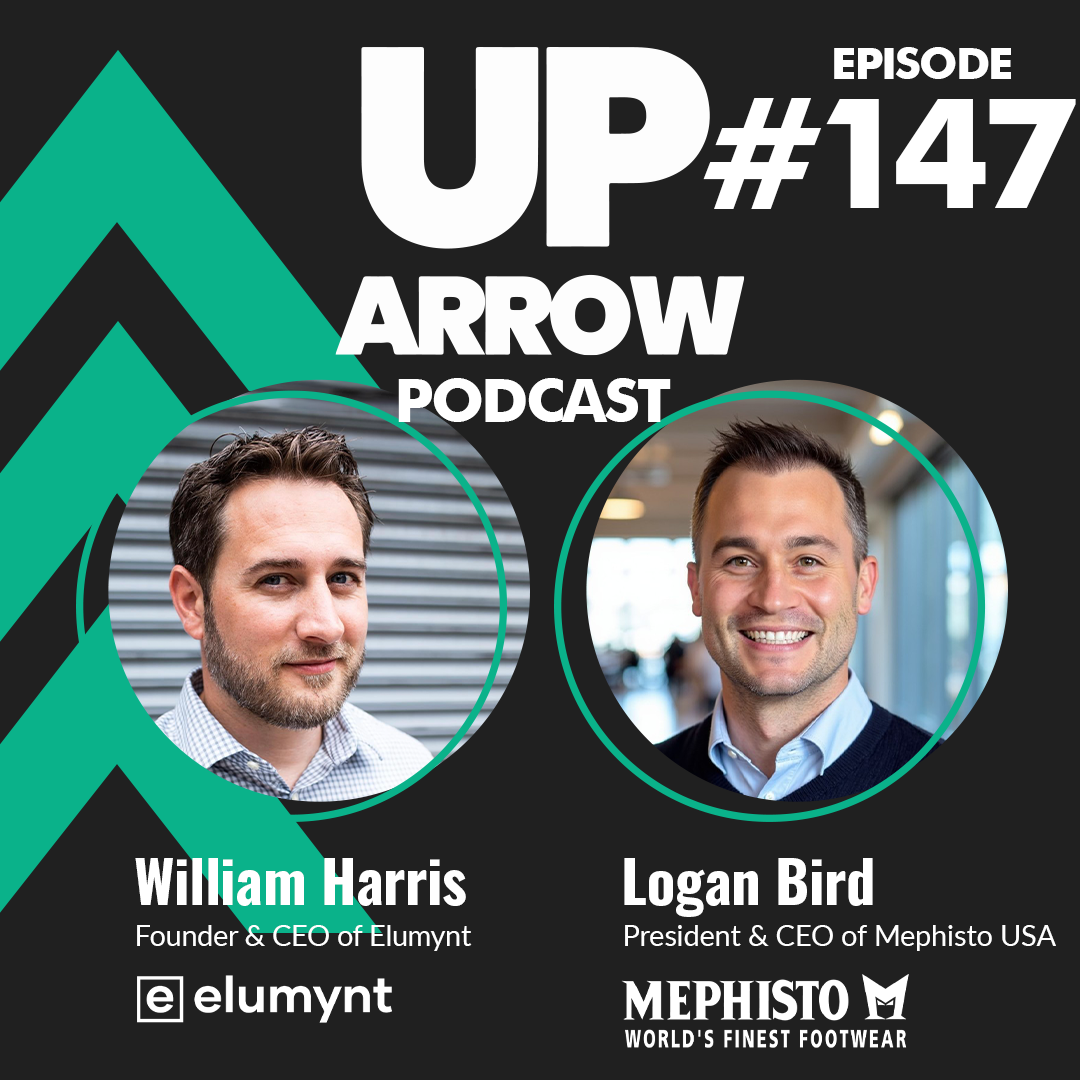



Logan Bird is the President and CEO of Mephisto, a France-based premium footwear brand known for handcrafted comfort shoes. Previously, he served as Mephisto’s Vice President of Omnichannel Sales, where he helped advance the brand’s digital, retail, wholesale, and DTC strategies. With experience in e-commerce, strategic partnerships, and omnichannel growth, Logan held senior roles at Lands’ End and Zappos.


Here’s a glimpse of what you’ll learn:
- [2:20] Logan Bird explains the origin of the Mephisto name and how its founder envisioned a global footwear brand
- [7:45] Why craftsmanship is more important than scaling quickly
- [11:54] How systems and processes break when legacy businesses scale into new channels
- [13:36] Logan’s shift from operator to executive and how he learned to trust teams with responsibility
- [19:29] The elements of scaling e-commerce brands: product-market fit and customer understanding
- [22:53] How Mephisto approaches retail, wholesale, and DTC as one connected omnichannel business
- [34:28] What Logan learned about leadership, trust, and cultural differences while running a business in Japan
- [47:22] How leaders can give high performers more responsibility without distracting them from their areas of expertise
- [56:15] Logan shares how reading business books as a kid shaped his curiosity about leadership and building companies
- [1:09:52] How Mephisto’s family-owned culture and succession planning shape Logan’s leadership philosophy
In this episode…
Scaling a brand can feel like a paradox: the faster you grow, the easier it becomes to lose the craftsmanship, culture, and customer trust that made the business work in the first place. In a market obsessed with speed, automation, and shortcuts, how can leaders grow without becoming generic?
Logan Bird’s answer is to build around product-market fit, craftsmanship, and people who can execute with focus. As an e-commerce and omnichannel growth leader, he maintains that durable growth starts with knowing your customer, protecting product quality, and creating consistent brand experiences across channels. Leaders should replace manual processes before they break, trust teams enough to let them learn through execution, listen for patterns in customer feedback rather than reacting to the loudest complaint, and hire through trusted networks to find people aligned with the company’s vision. The result is a business that scales with stronger systems, clearer priorities, and a deeper connection to its customers.
In this episode of the Up Arrow Podcast, William Harris chats with Logan Bird, President and CEO of Mephisto, about scaling premium brands without losing craftsmanship. Logan discusses product-market fit, omnichannel growth across retail and DTC, and leadership lessons from Japan and Zappos.
Resources mentioned in this episode
- William Harris on LinkedIn
- Elumynt
- Logan Bird: LinkedIn | X
- Mephisto
- Allen Burt on LinkedIn
- Blue Stout
- “TikTok Live Streaming: Top Lessons from #1 F&B TikTok Shop With Dayne Hepner” on the Up Arrow Podcast
- Good to Great: Why Some Companies Make the Leap...and Others Don't by Jim Collins
- Who Moved My Cheese?: An A-Mazing Way to Deal with Change in Your Work and in Your Life by Spencer Johnson, MD
- Delivering Happiness: A Path to Profits, Passion, and Purpose by Tony Hsieh
- Holacracy: The New Management System for a Rapidly Changing World by Brian J. Robertson
Quotable Moments
- “You want to be able to have elements of your business remain constant.”
- “I think people are adaptable, but systems aren't.”
- “Without the trial and error phase, there really is no learning phase in that process either.”
- “Consumers are very channel agnostic; they like to shop where they shop.”
- “You can have great products, and we talk about product-market fit.”
Action Steps
- Build around product-market fit: Knowing exactly who your customer is and why your product matters makes scaling more focused and efficient. This clarity helps teams create better messaging, prioritize the right channels, and avoid chasing growth that does not fit the brand.
- Protect craftsmanship as you scale: Quality, durability, and the customer experience should remain constant even as the business grows. Preserving what makes the product special helps prevent the brand from becoming generic or losing customer trust.
- Replace manual processes before they break: Systems that work at a smaller scale often fail when order volume, SKUs, and channels increase. Investing in infrastructure early allows teams to grow faster without creating operational bottlenecks.
- Treat every channel as part of one customer experience: Retail, DTC, marketplaces, and live shopping should feel connected rather than fragmented. Consistent branding and product presentation help customers trust the company wherever they choose to buy.
- Hire and empower focused operators: Strong teams need people who can execute the vision without getting distracted by every new opportunity. Giving trusted people ownership, while keeping them aligned on priorities, creates healthier leadership and more sustainable growth.
Sponsor for this episode
This episode is brought to you by Elumynt. Elumynt is a performance-driven e-commerce marketing agency focused on finding the best opportunities for you to grow and scale your business.
Our paid search, social, and programmatic services have proven to increase traffic and ROAS, allowing you to make more money efficiently.
To learn more, visit www.elumynt.com.
Powered by Rise25 Podcast Production Company
Episode Transcript
Intro 0:03
Welcome to the Up Arrow Podcast with William Harris, featuring top business leaders, sharing strategies and resources to get to the next level. Now let's get started with the show. Hey everyone.
William Harris 0:15
I'm William Harris. I'm the founder and CEO of Elumynt and the host of the Up Arrow Podcast, where I feature the best minds in e-commerce to help you scale from 10 million to million to 100 million and beyond, as you up arrow your business and your personal life, how do you scale without losing the soul of what made your company special in the first place? Because scaling is weird at first, growth solves problems. Then eventually, growth creates them, more channels, more people, more meetings, more complexity, more pressure to cut corners, and somewhere in the middle of all of that, a lot of brands slowly drift into becoming generic versions of themselves. But today's guest has lived at the intersection of premium craftsmanship and modern e-commerce scale in a really fascinating way. Logan Bird is the president and CEO of Mephisto, a premium footwear company that still manufactures its own shoes and has spent decades obsessing over quality in a world increasingly optimized for speed and cost cutting. Before Mephisto Logan helped scale Lands’ End from essentially zero to two 50 million across marketplaces and digital channels. He lived and worked in Japan, leading teams internationally, spent time around the Zappos ecosystem during one of the most experimental eras in e-commerce history, and has seen firsthand what actually changes and what shouldn't change as businesses grow. Logan, welcome to the Up Arrow Podcast.
Logan Bird 1:32
Thanks, William. I'm grateful to be here.
William Harris 1:35
I'm excited to chat with you, but I do want to give a shout out to Allen Burt, over at Blue Stout. Allen is the one who actually put us in touch. So Allen, thank you very much for introducing me to Logan.
Logan Bird 1:44
Yeah, shout out to Allen. Awesome guy. Definitely appreciate him providing your contact in a in a time of need. So it came in very clutch, so I appreciate it.
William Harris 1:53
Yeah, I got one more interruption, then we'll get into the good stuff here. This episode is brought to you by Elumynt. Elumynt is an award winning advertising agency optimizing e-commerce campaigns around profit. In fact, we've helped 13 of our customers get acquired, with the largest one selling for nearly 800,000,001 that IPO. You can learn more on our website at elumynt.com, which is spelled elumynt.com, okay, Logan, do you work for the devil?
Logan Bird 2:20
You know what? It's a, it's a question that I get all the time. And as you can see, yeah, basis, you know of the logo itself for Mephisto, while not technically, the true reason why the brand name is based off of Mustafa Lee's, which you know, comes from a folk tale from like, kind of the Germanic tribe background. It's not directly correlated, but there is some history to it. The brand name. You know, when our founder, Martin mccaley, was trying to build his footwear brand, the goal was really just to have a name of a brand that could be said in any language and understood sophisto, whether it said in French or German or English, it comes out the same way it's understood. So he had a pretty smart perspective at a very young age to kind of say, I know I want to have a global brand, which I don't think many people were really thinking about at that time. But, you know, he came from a background of American shoe manufacturing, a word that really doesn't exist today, but he came to America early on. Spent a decade or so up in factories, up in Maine and up in upstate New York, where we used to have the majority of us shoe manufacturing. He learned how to manufacture shoes there, and then he went back and decided to start his own business. The cool part of that story, and sorry to give the long intro to him,
William Harris 3:44
Well, I like this. I mean, I'm going to ask you more about it, but you're just, yeah, you're cutting to it
Logan Bird 3:48
for me. The cool part of that is, you know, there is this area in the eastern part of France, on the Germany border, where a lot of famous footwear brands were actually started, right? Adidas is there bakta, which no longer exists in that part. But if you look up bakta In India, billion dollar footwear brand in India, right? And it left that region. But a lot of the shoe making similar to the northeastern part of the United States was in the Alsace region of France and Germany. And so funny enough, when Martin mccaley was coming back after spending a decade or so in the US, he called up a childhood friend, Addie dossler, you know, founder of Adidas, and said, Hey, I've got to start my own brand. I'm going to start a company. And Addie dossler advised him, you know what? Don't start it in Germany. Started on the French side, it's a little bit more business friendly, but you can pull workers in. You'll have enough of the expertise in the area for the craftsmanship to get it done. So
William Harris 4:43
wow, that is so much history that I did not know that I'm very excited to learn, like, if I crush it on Jeopardy now, I will be able to thank you for that. It's interesting, because I think the thing that I've liked as I've dug into the Mephisto brand more is that it feels like. Is almost anti modern, but in the best way possible. You guys are manufacturing your own footwear. You're accessing over craftsmanship, taking years to build products. Why did the founder believe that that mattered so much?
Logan Bird 5:14
I just think there was a craftsmanship that he he ultimately and always cared about that kind of define what he wanted this footwear to represent. And I think because he's kept his thumb print on that business, I mean, he's turning 90 this year, he's still actively involved in the business. So I think there's always been this, this underlying idea that, you know, you want to be able to have elements of your business remain constant, right? That creates the value of the business, right? And I think, you know, especially in the space where we talk about e-commerce, you ultimately come back to the brands that are very successful, come back to, you know, the product-market fit, right? And I think he understood this potentially even before the market and things started to change. But you know for a tangible product, you know how it feels in your hand, and ultimately how it makes your foot feel matter far more than anything else. And I think he had a very strong understanding in terms of building a product that had the heritage and craftsmanship that would give it the longevity, the feeling that would make your foot feel great, and then also the design understanding to know what would look great. He had that sense and understanding which, which he's really tried to make it a major part of the culture, right? I often talk about, you know, our our brand, and the way that it is done in Europe. You know, we're a manufacturer of product first, you know, we're not a marketing company, we're not a e e-commerce company, we're a manufacturer. So when I really have my meetings with our board over in Europe, you know, first and foremost, we talk manufacturing, we talk about what makes great product, and how do we sustain that? And then all the intricate details, like you said earlier, of having our own factory in France, having factories in Portugal. And what that means is that, and that's kind of a lost art. There really aren't any many shoe manufacturers left in France at all at this point. Yeah,
William Harris 7:09
I see a lot of brands, especially in DTC, that hyper scale, zero to 200 million in a year, or something absolutely ridiculous. The product hasn't been tested in any appreciable way. On the flip side, if I remember correctly, you said that he came here for, you know, between 510 years in, more or less just apprenticed on learning how to craft shoes in like this extreme way. Do you think modern founders are too much in a rush in under appreciating apprenticeship and really learning a craft?
Logan Bird 7:45
I think so, you know, I think that's a really great question, just in terms of the market that we see in the here and now, right? We're in the demand generation, where, if you create it, you feel like you should be able to scale it, and it almost needs to happen immediately. And I think software has driven that, but I think that that's kind of pulled through through every sector of business. You see it with consumables. You see it with everything. In terms of, if I have a great product, I have to build it and I have to scale it quickly, which I'd almost say is kind of the opposite of the the Japanese way of life, right? I always come back to a lot of my experience in Japan, because you go back to a culture where it you think of them being so technologically advanced. But when you live there and spend time there, it almost feels like you go back in time where their goal of really executing is to get to a perfection. You might be an apprentice as a sushi chef for decades before you even have a chance to to run the show or have your own restaurant. And so just that craftsmanship, that attention to detail, I do think, really makes a huge difference, especially as we look at how that kind of splits the difference between the good and the bad, the winners and the losers over a longer period of time, right? And I think that that even goes for a lot of the businesses. You know that when you look at, you know, I think one of the great books, Good to Great when you talk about what Jim Collins wrote in terms of what really drives the longevity of certain businesses and their products, I think a lot of that really ties into it in terms of that hyper focused attention to detail, whether that's operations or whatever part of that is, you know that that really makes your business unique and special, that there is that the longevity that comes into it when you are hyper focused
William Harris 9:31
for sure. So if the quality is there, we're investing more in quality at Mephisto. What is it that customers feel when they put on a Mephisto shoe. What is the difference? What is it that they should be able to feel that they're like, I didn't know what that is, but this is what I'm feeling.
Logan Bird 9:48
It's uh, it's interesting. And I feel like I haven't done my uh just due of sending you a pair of shoes yet, William, so I feel like follow up on our relationship and actually get you into. I like this does because it is, it's a noticeable difference when you wear a pair of shoes. And I love talking to independent retailers about this, right? The independent retailers, you know, the mom and pop stores across the country that really helped kind of define and build the Mephisto brand here in the US over the past 40 years, one of my favorite stores, and they've got a location in Northern California, and they carry a lot of brands, right? It's a multi brand store, and this is how she says, you know, she's she sees a lot of customers, and she says, when she talks about the Fisher, she tells customer, you shouldn't try on that shoe. Her selling point is, if you try on that shoe, it is so much better than every other shoe you're going to put on my store, you're going to pay more for it, but I don't want you to try that shoe on, because ultimately, that's the shoe you're going to leave the store with, right? So in terms of that question of, like, how does it feel? It is a noticeable difference. There is support, there is weight to it, right? You know, it's not lightweight. You can tell that there's a construction, a durability, to it that is different than a lot of sneakers or other products that you might put on your feet. You can tell it with the leathers that you feel in your hand as you wear that shoe for extended period of time, how it wears, how it molds to your foot, and how you feel is the most important thing of the fact that I now can't even think of putting on another shoe after wearing Mephistos For the past four years, because it just makes such a difference, you know? And it feels good initially, and it only feels better over time. Yeah,
William Harris 11:29
I want to go back in time then, because I want to hear more about, like, what you're doing at Mephisto currently, but I need to understand more about what you did before that that helped shape the way that you think about growth. Because I really like talking about that 10 to 100 million range, but you went from zero to 250 from zero to 250, or somewhere in this range, you're at Lands End during a massive growth season. What breaks first inside a company when growth accelerates?
Logan Bird 11:54
Great question. I would say systems and processes for legacy businesses are the first thing to break. You know, Land's End, phenomenal business, kind of one of the pioneers in the DTC space, but that really came through catalogs and then quickly in the E commerce. But you're typically set up to operate in a very specific way. So the idea of adding new channels, adding new means of distribution, distribution, and then changing the processes for how everything else operates really. You know, for a business that is only singularly operated, one way starts to break a lot of things right? You have to rethink about, you know, the pic, pack, ship process. You have to rethink about how your systems communicate to external tools when they haven't necessarily had to ever at this point, and so that there is just kind of this exhaustive process of working through legacy systems. And everybody knows it's come and worked for bigger brands that these legacy systems are often built specifically for their businesses, and those are the things that start to kind of fall apart. I think people are adaptable, but systems aren't. So, you know, it's how do I add on to systems? How do I export from those systems? How much of it is a manual process until you actually build up of enough scale to justify the expense of automating processes?
William Harris 13:16
Reminds me of the old saying where one of the best ways to figure out where the leak in the bucket is, to fill the bucket up with water. And one of the best ways to figure out what's broken with your systems is you just got to go and scale
Logan Bird 13:26
it and see what breaks
William Harris 13:28
exactly agree completely. What did you have to personally unlearn going from operator to executive?
Logan Bird 13:36
What did I have to learn? I think it was something that I kind of already knew, but you have to get very comfortable with giving things up. I think the thing when you really start to move more into out of an operational role, into a leadership role, it is this idea that I have the right people around me. I trust those people that they were hired for a very specific reason, and I have to give them responsibilities that I know I excel at, right, but I have to trust that they can excel at those and likely are going to be better at me than I was doing those type of responsibilities. And so to me, that's the first big area where you have to get really comfortable as you scale and as you as you move into the leadership ranks and start to move out of being an everyday doer is just trusting that you're building the right team. You have the right team, and you trust them to execute at a really high level and and I think you know when you build the right team, you absolutely know that you have those people, and you have trust, and you have to let those people fail. I think that's always part of it, right? They're not going to learn and grow if you jump in and try to solve the problem or fix it every single time. And I think that's part of really building a mature team that can really help you get through all the challenges you're going to face every single time. You're kind of working through the different dynamics of your business.
William Harris 14:52
Yeah, I might get in trouble for saying this. I don't know if I'm supposed to, but one of my business mentors is Dave Mortenson, the founder of anytime fit. It's the gym franchise, and I remember him telling me about a story where he had to allow his team to do something that he actually thought was the wrong decision, but he's like but they were convinced this is the right decision, and the best thing that I could do was to let them do it and learn from it, so that way they would come up with a different idea, which, coincidentally, was my idea, but now they're much more bought into it, and it became successful. But if I just told them, This is what we're going to do, then there's no buy in, and they're not ready to be able to do that. And so sometimes, to your point, very often, you've hired the right people, they're going to make come up with better ideas. But there are some times where you're still convinced that you're like, I'm pretty sure I've got the right idea. You still have to let them go ahead and
Logan Bird 15:39
do that anyways. I think that's an amazing example. And I think it's it's so true, because as a leader, you want to jump in if you feel like you kind of know or understand what the formula is, or what the path is for growth and acceleration. And I'm sure you see this with clients constantly, right? You pick up a different brand and partner, and they feel like they kind of know it or have an understanding of it, and they'll have very strong opinions about that. Everybody has very strong opinions about how they think certain things should be done. But without the trial and error phase, there really is no learning phase in that process either. So as much as you want to gift it on a platter, a lot of times, you know it's better for them to kind of have the ups and the downs to arrive at the conclusion you might have had all along in order to help the team be more successful.
William Harris 16:23
Yeah, what's something that you have found works still at the $10 million range, but once you get to the 50 million or the $100 million range, it doesn't work.
Logan Bird 16:36
It's a great question. I think, as you start to get to those scales. You know, I would probably start to say that the manual processes is probably the first thing that you think you can continue to operate and scale at that level. I often think about, you know, scaling Amazon at Lands End, and it was very, very manual in terms of the product setup the data feed, the data feed attribution, the build out of this, as opposed to actually having a PIM that connected all the details for us, where that could flow into an aggregator and allow us to publish listings quicker, allow us to kind of move the entire process flow faster. I think a lot of times you think you can kind of brute force yourself there, but then you really have to realize that at those larger scales, it just becomes too much volume. It becomes too many skews, at least it did at our business, that you really need to spend time building infrastructure that supports it in the background. You can be you can have a small team. They can do a lot of things themselves, but they need the support ultimately, right? I don't believe you have to, ultimately have a team of 50 to get it done, but you need to have the right system and processes and tools implemented in order to make it
William Harris 17:49
work. Yeah, I remember early on at Elumynt, I was, I'm not a process guy by nature. You've got the you've got the visionaries, and you've got the, oh, what's you know, I'm on EOS. I'm on EOS. I'm trying to think, there's the there's the visionary, and then whatever the opposite of that is, right, like, I'm not the other one. I'm definitely visionary. And so I had none of those processes documented when I first started at Elumynt, and I can remember when we went through Eos, and I had, you know, Jeff Snyder, my, my, our president here, he's much more operationally minded, and we started implementing these things to me, you know, like a visionary, creative, high energy person, it felt like restriction. And it's like, this is so this is going to slow us down. It was amazing to me to see that as we started implementing things like this, how much it sped things up. And I didn't want to believe it until I saw it. I was like, this makes sense now it does.
Logan Bird 18:40
It feels a little bit like having to take those steps backwards, and you're like, we've already solved those problems, but you're like, I haven't solved those problems at scale yet. And so it's like taking steps back that allow you to accelerate forward. And it's simple analogies like that, but to your point, right? You're kind of like, I've solved it, but you're like, Have I solved it? For where I need to get to and what's required to accelerate that growth. And that's a bad part of it.
William Harris 19:04
Maybe I just MacGyvered it. Is that a reference that you understand MacGyver? You
Logan Bird 19:08
remember that show? Yes, you know nothing like a gum a toothpick exactly from your pants. You know? You never
William Harris 19:16
know. I was very good at MacGyvering it. Um, you told me before that, there's basically a playbook for scaling e commerce. In your opinion, what are the non negotiable ingredients to that playbook?
Logan Bird 19:29
I think the non negotiables today, one is product-market fit. I've talked about that a lot. I think it's understanding where your product fits within its specific marketplace and who your customer is would be the next non negotiable for me, because so much of scale today is tied to customer acquisition and customer targeting and the ability to go find new customers. To me, the biggest thing you know that's a non negotiable is truly understand. Being the foundation of your brand and your product and your customer. Once you understand all of that, then then building the briefs and building the understanding to go target and grow the business at scale becomes a whole heck of a lot easier, right? You're no longer questioning who is the end consumer buying my product. You know that up front, right? So you build that for them. You build the creative briefs. You build the funnel, ultimately, knowing that for you to scale, it checks all of those boxes. And I think, you know, I'm not one to sit here and say that I have any idea about that formula, because I wasn't the one to make it up. I'm, you know, I joke around with you a lot of times that my learning really came from others in this industry that share that formula, and me realizing like they gave me the playbook. I look at those DTC brands that we talk about, brands that that you understand, that you've worked with, that you've taken from 10 million to 100 million IPO and you can say, okay, these were the exact steps. Okay, well, we can follow those exact steps, I think, you know, there's nuances to that, but relatively similar processes based upon the dynamics of the market in order to get to that. And I think that's a really key component today, is that brands don't have to figure that out, but you do have to know who you are to start. I
William Harris 21:15
think we underestimate that product-market fit. And one of the things that I like when we talk about the whole reason why I talk about the whole reason why I talk about this podcast going from 10 million to 100 million is, at 10 million, you figured out product-market fit to a point, right? And now it's a matter of, how do we accelerate that? But before that, there's still so much that you don't know about who your customers are, what your position is within this market. But once you do get that figured out, now to a point, like you said, the rest of the playbook is it almost becomes easy. It's not. There's a lot of work, there's a lot of sweat, there's a lot of tears, but it is, it's at least defined to your point. What is it? There's a difference between difficult and complicated, right? And it's like, it's not complicated, but it is difficult,
Logan Bird 21:56
yes, and I think that's a great way of putting it right. It's not that you don't know what you're doing. You now know what you're doing. The question is, how am I going to execute on it? Right? Because you just know the amount of time and effort it's going to take to do everything right. And you just know that at scale, everything increases two fold, three fold, four fold, to be able to continue to maintain that, especially when it comes to direct to consumer, right? You just realize that it's really tied to your ability to acquire new customers, and how you decide to do that, in which channels determines those strategies that you execute on, and the amount of volume of creative or ad spend, and everything else that has to be tied into it, and ultimately, to get there.
William Harris 22:36
Let's talk about that. I want to talk a little bit about the different channels and how you're approaching things. You guys have a lot of retail locations as well as DTC. Do you look at them as separate sides of the business? Are you looking at them as how they're working together? Like, what is your approach to that?
Logan Bird 22:53
I think you have to look at them as one business that's that somehow is connected together, right? And I think how you're looking at that really comes down to what the overall strategy is from an omni perspective. And this is one thing that I've been a cheerleader for for a while, is what is that Omni strategy in terms of how you're meeting the customer, right? If I look at the Mephisto business historically, you go back to when we launched 40 years ago, here in the US, I go, internet wasn't a part of that business, right? The business for discovery, for new products, was at retail, right? And we had over 1000 different retail locations between, you know, independent stores to large, big box retailers, you know, you name it. We had so many partners that that was the business. Our business was wholesale. And, you know, I largely believe that, you know, as things have changed over time, I'll say it often that I think the US was over leveraged at retail, right? We started to see that we overbuilt retail locations, and that's why we've started to see a change in how the consumer shops. And then we had went through covid, and covid accelerated that, where we then taught people and forced people to get comfortable with every form of e commerce, purchase. So coming out of that, it was going, you know, if you lived in a more rural location, you no longer needed to travel to your mall, which might have been 1015, miles away. You now just felt comfortable. So to me, I think there's a continuity that has to exist between all of those channels as a brand. Your goal should be to make sure that the experience is the same, right? The products obviously the same, but how you're representing that brand needs to be cohesive, and that's been really one of our big focuses here at Mephisto, because we have all these retail locations, and we're scaling DTC, that you want to represent the brand in each one of those channels. So the look, the feel, is as is, would be what you expect when you find it in a retail location, it's going to have your best products represented. Those are the best products that I'm driving from an average. Sizing perspective, because I know those are the products that my cons, my end consumer wants, because I know who my consumer is. And so a lot of that is, you know, skew optimization. It's branding. It is, you know, how we take ourselves to market, how we take our creative and how we make everything surrounded by this idea of, you know, consumers are very channel agnostic. They like to shop where they shop. So if I can't put my brand there, I know I'm ultimately never going to encounter that customer. And because we have so many customers that have been with the brand for such an extended period of time, and we've lost retail locations as that shrunk, we still have to make sure that we represent ourselves and show up in the same way, regardless of what the channel is. So I think it's a lot about consistency and continuity with a brand as you scale across channels and locations.
William Harris 25:47
I love that idea of channel agnostic, because, to your point, if you think about let's imagine no DTC, we're just going back to just old school retail customers going to shop at like, their Mall. They're going to that vault. And so it's like, Hey, we're in the mall. But it's like, Yeah, but you're not in you're not in the mall that this person is going to and so you're just never going to get them as a customer. You have to be in all the malls. And similarly, it's like, you have to be in retail, and you have to be on Amazon, and you have to be on your own DTC, you have to be in all of those different areas, because that is where that customer is going. And some customers do shop across different places, right? But there's a lot of people where it's just like, I only buy over here if I can at least find it there, and if I can't, then maybe there's some friction, and maybe I'll come and buy it from this other place, but maybe I won't. It's
Logan Bird 26:33
100% true, and it was one of the fascinating things that when I got the call, when I was at Zappos to leave and go to Lands End, I wasn't super excited, kind of to leave, you know, what I felt was a very forward thinking, aggressive brand like Zappos was a pioneer in the footwear industry and in the tech industry, essentially, as well. And you know, I got this call from our seat, the CEO at Atlanta's end, and the conversation was, you know, we need someone to build an Amazon business from scratch. And I go, Well, let me first do some of that due diligence, and I and I looked at it, and I just said, You know what? I quickly came to this realization, as you kind of use your ability to scrub, you know, organic data on Amazon, and I could do that at times at Zappos, and I could say, hey, there's latent demand for lands end that's not being captured. So for so many legacy brands out there, it's very different than New Age brands that are having to build from scratch, that don't have pent up demand built for them in existing channels that they just don't know about. There was latent demand. And so I could see that, you know, for lands and swim, you know, land, the core categories of the lands end business, there were customers that were already on Amazon, searching for that product. So the minute that we went live, business just happened, right? I wasn't having to go acquire a customer. My customer was there. And so that was a great bit a factor for us. And just kind of the general awareness was that customer had changed how they shopped. They had moved into new channels, and our brand hadn't. And the minute that we did that acceptance was already there, that trust and viability of a brand was was already made. And so the minute that that we adopted that channel, we automatically saw a huge lift of business, which was awesome. That's not the
William Harris 28:14
only one that you did that saw a huge lift, if I remember correctly, you told me that Lands End did over a million dollars in the first hour on QVC. What does qv understand about selling psychology that modern e commerce brands just are missing?
Logan Bird 28:28
You know, QVC is a fascinating platform, just in terms of their ability, in a lot of ways, to captivate and own a customer in a unique way. I often, you know, I love traveling, and I'm in airports all the time, and I always think of like captive audiences, right? It's like an amusement park. It's like an airport where you kind of go. I am trapped in this location, and I'm stuck to the choices that are within the jurisdiction the walls of this location. And QVC figured this out very quickly by being the pioneer of TV shopping. Of you know, we they knew how to capture their audience, they knew how to sell to their audience, and they know down to a science, what converts their customers, right? And that was a learning process for us. You know, being approached by them saying, you know, this is one of the biggest brands that we get requests from all the time. Not only is it the brand, it's these products, right? They came to us with a details that I was kind of blown away with, saying, Okay, this is what they want from you. This is what we want you ultimately, to kind of make for us to provide. This is how we're going to sell it, and this is how we're going to do it, right? They had that playbook. They had that playbook dialed. And I'm not surprised when you look at QVC and, you know, you outside of, you know, the external factors that are, you know, TV is dying because of digital, but you look and say, Well, who was the largest seller on Tiktok this year? QVC?
William Harris 29:53
Wow, I didn't realize that,
Logan Bird 29:55
right? And it's so it's like they're going to be transformative. To take their learnings and. Into a new platform, and they're already doing that, right? So I think as they rework their model and ultimately adjust how they sell, you know, they understand how to sell directly to consumers in a visual format, in a video format, you know, they're going to find ways to be successful, and they've already kind of discovered that, but they're having to adjust to the economics and changes that are happening to a consumer that's no longer glued to a TV, right, that is choosing media based on On Demand preferences, but they're going to figure it out.
William Harris 30:32
Have you watched any of the QB stuff on on Tiktok?
Logan Bird 30:35
A little bit, because I've been trying to figure it out myself with this brand of how do we do live shopping? Because I think it's a pretty fascinating model that, you know, China kind of felt like the pioneer of that, and we kept seeing glimpses of everything that China was doing. And then you see, you know what, not becomes a phenomenon here in the US, eBay, live now and tick tock shop now doing live shopping. You kind of look at you go, I understand, understand the audience. You know how to capture the audience and understand the dynamics of why it works so well. But I love, I do love watching in different channels, especially things that I'm passionate about, right? It's like, you know, we're now at the Renaissance Pokemon cards again, and it's like, it's wild.
William Harris 31:16
Yes, I have a buddy. Okay, that's a tangent. I have a buddy who is deep into this world right now, and he, maybe a month ago, was telling me, he was like, he'll go in, he'll buy 1020, $30,000 worth of cards at like these meets, turning them around, sell them for $50,000 and he's doing this, like every weekend or something. He's like, It's wild.
Logan Bird 31:35
It is wild, but, but it's, it's amazing, right? And I think it's just kind of part of the trend. And one of the things that I do love, and you kind of look at why, while certain while certain brands that are struggling today, but you look at like where it's becoming successful. And I think a lot is caught up in talking a lot about what's going on at Nike, right? That it's hard to ignore the biggest brand in my industry, largest footwear brand, arguably the largest apparel brand. But you look at kind of what's working today, and it's what's working is areas that are in specific niches, right? And that niche of being able to go speak to 100 people live that want to consume just your content as a person is extremely powerful. And I think some of the sub brands at Nike, I love Nike, ACG, all conditions here, I think that's one of the coolest brands has been for a long time. And I think what you're going to continue to find are brands within brands, within brands that are very kind of sub culture, very niche culture, that are going to make it more successful, just like you kind of see from an influencer or, you know, a person that's a personality is able to build a brand, and all it really takes for them to scale and be really successful is what 20, 3040, 50,000 followers to be able to do enough significant volume to build something right? It's these kind of really unique markets today that can be really, really powerful.
William Harris 32:55
I gotta go look at some of this QVC stuff on Tiktok now, because I had Dayne Hepner on the show, and I believe he was the number one seller in food and beverage on tick tock. And his personality is very tick tock. Like, like, I mean this with all sincerity, but it's like, if I was, it's like, it's high energy. It's like, Hey guys, welcome to this we're doing. It's like, very different than what QVC is. And so like, you're selling QVC is like, I gotta go and see what they're doing. Because I didn't think that, that, I didn't think QVC could work on Tiktok. But you're saying that they are obviously I need now. I'm like, I feel behind, and I kind of go watch this and see. I'm like, how are they doing? Are they high energy? Are they, like, this typical QVC, you know, here's this thing that we can show you here,
Logan Bird 33:36
yeah. And I just assume it's also part of the your ability just to go be live, 24/7, right? Yeah, I think, I think there's a competitive advantage that they probably have in terms of, like, we have production value first, amazing hosts. We also know that we can go 24/7 with every product category, and we know how to sell, and we also have the operational chops. So if it just meant switching channels, we can quickly adapt and switch switch channels and quickly scale. And I believe that's, you know, being able just to take an already successful model and move it into a channel that's virtually doing the exact same thing. I
William Harris 34:10
want to talk a little bit about leadership. You move to Japan at 28 years old, you walk into the boardroom. You're giving direction. Everybody's nodding along. Nothing happens. Tell me more about what's going on there and what you learned from this.
Logan Bird 34:28
Oh, man, it's a great flashback and a story that I love to tell because, you know, I was young, and there's so many things about Japanese culture that I thought I somewhat understood, you know, I had the benefit that my father ran a business in Asia for about six, seven years in China. And I think there's some similarities there in terms of, you know, age equals respect, tenure equals respect, right? So the longer you've done. Something the greater the respect, because it just feels like it has to be earned, right? And that's culturally a lot of it. So, of course, kind of being thrust into a business that had been in Japan for, you know, we'd had a business in Japan for about 30 years. So it wasn't anything that was new. We had operated really successfully. It was a very good business. It was a mixture of catalog and E commerce. And so, you know, bringing an American over to run that business when there hadn't been an American a part of that business for over 15 years was a bit of a culture shock for them and for me. So of course, you always feel like a little bit, especially coming from the background of like us, has really been the market leader when it comes to e commerce, and I felt like everything that I had learned would translate directly over there. I've got this vision. I know exactly what I'm going to do day one, when I step into the building and I hadn't earned it yet, right? And I think there was a huge part of that going to a group of individuals that had been with this business for a long time, all much older than I am, right? Much many of the executives on that team 4050, years old, having worked in the business almost the entirety of their careers, looking at me going, what do you actually know? Right? And as much as I felt like I could come in and make changes, they looked at me and said, Sure, you can keep telling us what to do, but we already know what to do, right? And I had to go through that hard learning process of really building connections with those people and that leadership team in my office, and to kind of prove to them in a way that you know, the direction and ideas and guidance that I was coming from weren't ideas that I had made up, right? I was bringing over proof and concept that was successful, that I knew would translate and help that business. But that was hard, right? That was really hard to think that people were buying into me initially, but behind the scenes they weren't, and that took a long process in terms of really being able to build respect with that team, and being able to build an understanding that that I had good ideas and good intentions, but I had to get them and bring them along in that process.
William Harris 37:10
What was the biggest thing that helped them to gain trust in you?
Logan Bird 37:14
You know, one of the things that I think helped me the most was a hire. I was the only person in that team, and for me to do that job in Japan, it required me to have a full time interpreter. And so it very different than a translator, right? An interpreter can actually help convey, you know, the thoughts and feelings that get conveyed through words, right? And that was some of the best advice I got. Is you don't need a translator. You need an interpreter. But with an interpreter, every 15 minute meeting becomes 30 minutes. Every 30 minute meeting becomes an hour. Every one hour meeting becomes two hours. And you know, I needed somebody else on the inside that was more Japanese than they were American to help me. And so I felt, based on some really good advice of a couple mentors that I had in Japan that were expats running Japanese businesses that gave me advice and go find somebody else to bring into that team that is Japanese, but that spent time working in a US business. So I hired a new head of HR who was Japanese, born and raised in Japan, did her schooling there, ultimately got hired to go work in the US, spent time working for US companies, Japanese companies, and bringing her over was a way for me to bridge that gap, right, because she can help communicate to things to them behind the scenes that helped kind of build the relationship that I needed, that I couldn't necessarily build her and I could connect, because we could connect at a American to American level. She could connect with them from a Japanese to Japanese level. And so that ultimately, kind of helped the camaraderie of that business and my ability to help get things accomplished in different ways, because she could convey the message in a way differently than myself or the interpreter.
William Harris 39:04
What's something that you appreciated about the way the Japanese ran their business that you wish we would adopt here in the US?
Logan Bird 39:16
Patience, taking your time. You know we talked about that, that focus on really doing things intentionally and the right way. Oftentimes, I think you know, what we love about e commerce is the ability to test and learn and do things rapidly and very quickly, but we can kind of gloss over the details of of what makes it special, and what makes it unique, and whether that's our product or our customer, and really taking that next level of appreciation about our product or about our level of execution, that was one of the things that I just came to appreciate, right? You know, things move slowly on purpose that. Were intentional about things on purpose, to really make sure that that they were trying to do it the right way, right? And that was culturally part of it, right? They wanted to make sure that, you know, a promotion or an execution wasn't alienating customers, that it felt right for the brand. And so our mechanism of test and learn really quickly had to be test and learn a little bit slower over there, because they were so conscious about how the consumer would perceive things that they were doing. And you got feedback from the consumers, and I think that was one of the biggest things that I learned in the business in Japan, was consumers were so willing to give that feedback that if you listened, it could make a dramatic difference in terms of how that brand would be interpreted in that culture, especially as a classic Americana brand that is highly, highly popular. You know, Americana style was very popular. American workwear style is extremely popular when it comes to Japan. So there are niches within that business that if you listen to the consumer, they're going to tell you what they want, and you just have to be very tactful about how you execute.
William Harris 41:03
I think it's so important to get better about listening to customer feedback. One of the pitfalls can be listening too much to the customer feedback too. And how do you balance between this is feedback that I need to listen to and use, to adapt by product, or this feedback is exactly who we aren't and why we're not going to do that.
Logan Bird 41:28
I think it's often the loudest customer that seems to be heard the most, and it's not necessarily the masses of customer heard. And so I think it's sometimes being able to sift through, you know, is this just one customer complaining, or is this our customer complaint? Right? You know, is this customer one person, or is this many customers? And really trying to understand that sentiment to your point of making sure that it doesn't shift or change the philosophy of your product or of your execution as you go to market, because listening is important. But at the same time, I think if you have a great understanding of who your customer is, you can sift through that pretty quickly to understand if it's one outraged customer or if it's the general sentiment from lots of your customers.
William Harris 42:09
Sure you mentioned that one of the biggest things that you did was you hired somebody here, and specifically a translator. And you've talked before about making sure that you surround yourself with some of the best people. How do you find true A players like that?
Logan Bird 42:28
I think finding the right talent often comes down to your network. A lot of times, you know, and I talk about this a lot when it comes to finding jobs, or helping people find jobs that you know the best jobs rarely get posted and are often through word of mouth or through your network in terms of who you've worked with and who you've already made an impression on, because when you think about an opening that you have within your organization, I'm sure you're like me when I go I already have people in the back of my Mind who I think I would know would fill that role, or if I don't, I know the right experts that I would like to go talk to who would give me those recommendations. So first and foremost, I think it's the network that that within this industry becomes, and all of our industries becomes fairly tight, as much as we think that, you know, we're going to put it up on LinkedIn, and we're going to go find that right person, our instinct is generally to trust intrinsically, who we know works, who we know executes at a high level, who has that expertise. And a lot of times, even if it's it's not that I'm off, I'm awful. Also looking at a lot of times of who's that agency, who's that company that is executing, right? Who are the people that I'm trying to emulate? Well, that's where I want to go poach from. And it might be not the number one guy, but it might be the number two guy who spent the time learning and executing at that level. But I think you know, as you look at hiring a talent, it's often from within your network. If you surround your people yourself with people who you think push you and make yourself in your organization more excellent. You know you're often losing those people, but it's pushing you to continue to go find and hire and build people within your organization that are making them more valuable, but then creating a broader network.
William Harris 44:11
You've hired a lot of people, you've likely had to fire some people. What are the things when you are bringing on these A players, and they they hit all of these green flags. What's the what's the one red flag or two that you're just like, they could be so talented, they could be all of the things. But you look at it, you say, Nope, I've got pause, because I've been down that path before. This is a red flag for me.
Logan Bird 44:40
Yeah, I think the biggest red flag for me, and I'll just say for me, tends to be losing focus on what the vision is right for execution. And I think you know, that might, that might not come across in the right. Right way, but ultimately, as a brand and as an operator. And like I said, I think, as you and I have talked many times before, you put on both hats, right? I have, I have the role as president, which is the operational role, then I have the role as CEO, which is the strategic role, right? So you kind of have both hats that you have to put on your head at different times. And so when you have people in very strategic roles, it's very different than people in operational roles. So when someone's in an operational role, and they start to, you know, lose sight of where we have to execute and what those long term plans are, and start to kind of go off the beaten path. It's not necessarily a bad thing that you go off that beaten path, but in terms of understanding the the check marks that are along the path to execute to get where you need to go, you often can't be distracted. And right to me, the distraction is the thing that starts to pull your yourself and your company and your team in the wrong direction. And that that often becomes a thing, which it might be, I have the right talent, but that talent is now being strategically pulled in the wrong way, and if I can't get that person to focus, then I have to go find somebody who can focus on what's going to help us achieve our goals in that short, medium and long term, and is bought into that, and that isn't bought into the other ideas that are going to distract us from What we want to accomplish.
William Harris 46:21
It reminds me of people in a row boat, and a lot of times they talk about it's like, you know, once you add three people, the organization becomes more complex, because you might be rowing in three different directions a little bit, and you five people, six people, the more people you add, the more you have to make sure everybody's rowing the same direction. Otherwise there's wasted effort. And to your point, it's like, you might have somebody that's like, you are absolutely fantastic, best row we've ever had on this team. And I don't know rowing, so I don't know what's a fast speed, but it's like you're rowing, like, two meters a second. Like, like you are, you are crushing it. I don't know if that's good or not, but it's like you were rowing but it's in the wrong direction. And so I need you focused on this. Even if you were only rowing one meter, but it was in the direction we're going. It's significantly more beneficial to the overall inertia of the organization.
Logan Bird 47:05
And I think oftentimes, too, you get so excited when you're doing something as an organization, people want to take on more responsibilities, right? And it's that control of yes, I want to give you more responsibilities, but I don't want that to distract from what has to get accomplished.
William Harris 47:20
Yeah,
Logan Bird 47:22
and I think far too often, as you're trying to maintain a very small team, but expand what you're doing, you're often trying to put more on these people, but then it comes down to can they manage what they need to execute, and how do we prioritize what they have to do? Because I often see that's where part of the problem comes into it of going, Okay, I want to add this element onto this person's role, but does that take away from what they're really, really good at, right? And I think a lot of times it's also helping people understand what they're really, really good at, is what they need them to focus on. And, you know, we might be able to focus and spend a couple hours on that passion project that can still support the business. But what need, what needs executed on, is what we all have to be rowing in terms of using, you know, your analogy, we all have to be rowing in that same direction together in order to get it done.
William Harris 48:08
Yeah, you've spent some time at another organization that was very cutting edge in footwear, at Zappos. You described it to me a little bit like being a lab rat. Like, explain to me what it was like being at Zappos, like, what are some of the like, the highlights of that, or some of the low lights?
Logan Bird 48:28
I'll only say it was highlights, right? You know, Zappos was a phenomenal organization led by a true visionary, I think anybody that had the opportunity to get to know Tony, Tony Hsieh and to be at Zappos during a time where we were seeing exponential growth, we were pioneers of internet footwear, but also just experiential footwear. Not experiential footwear, but experiential commerce, right? I think there was this idea that Tony often spoke about his book really depicted that of like the idea wasn't to sell product, it was to deliver happiness, right? The the focus of what we did was about delivering, wow. You wanted every interaction with the customer to have them come away with, you know, an experience that said, you know, I want to go back and shop and work with them because they care about me as a person. So, you know, everybody at the organization was required to go through, you know, six weeks of onboarding, which sounds like a really.
William Harris 49:25
That is a long time. Wow.
Logan Bird 49:27
It's like you get hired by this company. You're excited about your job, but foundationally, they did an unbelievable job with culture setting. They set the culture that said, first and foremost, we are a customer service organization. We could sell anything. If one day when the business decided to pivot, and we were going to sell, in Tony's point of view, porta potties, you know, or we were going to go into the airline industry, we could pivot the organization, because first and foremost, it was about customer service, right?
William Harris 49:55
Wow.
Logan Bird 49:56
And so you understood that by spending that first six weeks. Going through customer service training, you had to understand what it was like to sit and be on the phone. So that's what we did the first couple of weeks. Was all about understanding what the business was about and how we delivered an exceptional experience to all customers. Then you spent hours on the phone, and you had to understand all those processes. And then when it came to the holiday time of year, everybody was expected to chip in, to spend 10 to 15 to 20 hours on the phones.
William Harris 50:28
Wow.
Logan Bird 50:28
So I think from a culture perspective, it was just incredible, because it gave everybody that same understanding of what we're here to deliver upon, right? And it's going to be a great experience. And if the business were to ever pivot which it didn't, but if it ever was, you know, in Tony's mind, it could go in any which direction, and he often used that with a lot of the other side businesses that he started. But it came to that same foundation of how you wanted that business to work. But it was a fantastic place to work so many incredible people. It still is a wonderful organization that has changed a little bit since, since, kind of since Tony's death, but still is an absolutely incredible place that I look fondly back on, the memories and the parties and just, you know, it defined how to have fun at work, and how to really enjoy what you do, and how to make it just, you know, how to bring your whole self to work. He often taught that was kind of the whole idea of it, of you know, you just want to be able to be who you are and enjoy being who you are. And that really defined what that organization
William Harris 51:27
was. I love that. Speaking of wild pivots in companies, this is maybe a month old by now, but it still blows my mind all birds and becoming an AI company. Wait, what
Logan Bird 51:41
is it's just hard to explain. I someone made the joke to me the other day, like, did you hear Spirit Airlines is gonna be an AI company?
William Harris 51:48
No, is that? Is it a joke? Or is that, for
Logan Bird 51:51
real? It was a joke. But I was like,
William Harris 51:52
I would believe it. Though
Logan Bird 51:54
I would too. At this point, it's like, you know what? If you're just gonna hop on the bandwagon, you may as well just go for it. Yeah, but, you know, it's too bad to hear what happened with all birds. But it is interesting as you look at the dynamics of you know, if you want to pivot, pivot into what has demand at this point. So
William Harris 52:11
yeah,
Logan Bird 52:11
but for them, if it works out, and I hope it does,
William Harris 52:13
for sure, all right, coming back on topic here, speaking of making sure that we're rowing in the right direction, Zappos, I think they were also, like Holacracy, right? Very experimental at the time too, at least as far as I know, like I'm young enough to where that was very unique and new to me to hear that, yeah, how did that work? How did that function? Do you think that, like a flat organization works? It's
Logan Bird 52:40
a really good question. And to the point comment that you made earlier, in terms of feeling a little bit like a lab rat, to small tangent, Tony loved the idea of trying to use the Zappos organization to to operate diff differently, right? And to answer that question that you had of like, did Holacracy work? I think in certain circumstances, it was highly successful. The premise of Holacracy, right? Was that a flat organization could operate essentially without the need of management. There would be no layers to this organization. The difficult part came into that was we were very different parts of an organization, right? And I think if you think about the structure of of different parts, you know, and the Holacracy example that they used in that book was really focused around engineers and nurses, right? So if everybody essentially has the same job function, the same level of execution, then it can be a relatively flat organization. But it didn't necessarily work when there were different levels of the organization that that weren't all the same, right? We had merchandising, we had technology, we had HR, we had customer service, and I think, I think you could have flattened out areas within those organizations, but it definitely wasn't necessarily the way that it would work holistically for an entire organization. So I think we all learned a lot. It was a fascinating experiment to go through. I think it was frustrating at times. And I remember being in a really weird predicament. It was my, you know, probably my second month into the job, and I was hired, actually, as a junior product manager. So I was on the tech side, working on the Zappos app, and I was a product manager. So when we the announcement was made that we were going to move to Holacracy, the note made it very explicitly clear, there will be no people managers, there will be no product managers, there will be no project managers. And I was actually at a Facebook summit out in San Francisco as they were kind of rolling out new features. So we were the I was there and I got this email going, like calling my boss. I was like, what does that mean? And my boss was like, I don't know, but pulled out in it. I was fortunately able to kind of pivot into the merchandising marketing area where I had interned at Zappos. So I was able to save my job, but others weren't, and that was kind of part of. It. They had. They changed the structure of the organization, and Tony really believed in that. And I think it was a very aggressive approach for an organization to think so differently. But I you know whether it worked or not, and I think there's different opinions on how it did. I give him a lot of credit for being willing to to try it right, to think that this could be a way, a better way for the business to operate more efficiently, and I think in some aspects, it probably did, in terms on the developer side of our business, a little bit more difficult on the merchandising side, but there definitely were wins and learnings across the organization, and it was interesting to live through. I know
William Harris 55:37
this isn't what you're saying, but it reminded me a little bit of it. Do you remember in Zoolander when Zoolander? When do you remember Zoolander? First of all, the movie, yeah, classic, yeah. When Hansel, Hansel, whatever he's like, you know, and I appreciate Sting's music. I don't really listen to it, but I just, I like that he makes it, you know. I want to get to know who is Logan bird a little bit the human being behind this. Your dad gave you business books as a kid, most kids were reading goosebumps. You were reading, Who Moved My Cheese? in elementary school. How did that shape you to be the person who you are today?
Logan Bird 56:15
I think it just created a really unique and innate desire to want to understand business more. Business were just conversations that I had a lot, oftentimes within my family, but it was more so about the principles, right that my dad wanted to instill upon myself and my siblings about, you know, how to work with people, how to manage people, how to understand people differently. And you know, it was his idea of kind of like giving you training wheels to help your life, how to help you be more successful, teach those principles of hard work, but also educate you in a way that might be a little bit differently. So we had a book every year as a family that was generally a business oriented book that we had to read and and we would talk about and discuss. And I definitely appreciated that, because I think it built a curiosity about what does that mean in different ways, and how you apply that in a school setting, which I was at the time, as opposed to a business setting, but you saw all of those same principles applied in every facet of life.
William Harris 57:19
Speaking of being in the school setting, did you ever end up using it like on your team? On your teacher? Actually, teacher, I think what you really would should be doing here to get everybody to participate in this.
Logan Bird 57:28
I don't know if I was that quick witted enough to be able to do so, but I definitely think it helped later on in college in different ways for me to think about what it meant for my career, and potentially how I would navigate where I wanted to go, or at least the type of companies I wanted to work for. Because, you know, I referenced Jim Collins book, Good to Great. And, you know, I often think about that was a book that I read, you know, when I was fairly young, and that kind of transformed my way of thinking about the type of business and companies that leave a lasting impact, and how you want to work at a company that can leave those type of lasting impacts, not only on their lives, but the lives of their employees, right? That they have an intrinsic purpose greater than than just themselves, which is really, really, I think, a neat part of looking at what business can do for for people.
William Harris 58:15
Yeah. How did your dad incentivize you? Because a lot of parents struggle to get the kids off of their phones, let alone read anything, let alone read a business book. You know, how did he get you to say, like, hey, I want you to read this business book.
Logan Bird 58:32
That's a great question. I think you and I both think about this because we both have kids of our own right now, and it's like, how do I incentivize them? And it's hard. It's really hard with the distractions and kind of the me now generation, demand now generation, it's very, very difficult. I think it, it was kind of just set as an expectation, you know, you know, I don't recall it necessarily being held over my head like I couldn't have Christmas or anything like that. But sure it was that, hey, everybody's going to read this if you want. You know you're going to be expected to read it, and there's going to be a conversation that you have to be able to participate in. And I think the nice part about that, they weren't ever huge novels. They weren't, you know, a lot of times, especially when you're younger, there were things that you could read in one to two days. And he always made it fun. And that was the thing that was really cool about it. It was, it was meant to be rewarding in a fun way. And he might have tied that to, you know, a compensation here or there with 20 bucks to be able to be involved in that. But I think it because he always made it fun and kind of exciting. It kind of always captivated our attention.
William Harris 59:33
I Yeah, and I appreciate that. There are some things that I do with my kids that way. I will say that I've resorted to monetary compensation on some books that I want them to read, because I've got 1613, and 10 year olds. And when they were young, I remember incentivizing them with actual gold coins, right? Like little Sacajawea dollars, whatever. It's like, Hey, you read every book you read this summer in their little books, right? It's like, I'll give you a gold coin. And it's like, boy. That's very motivating to them. And then as they got older, I can remember, it's like, I think my oldest. Daughter, there's a book that I really wanted to read, and she's a very good reader. Loves reading. She'll read, you know, a book this thick in a day. But I'm like, these are good books, but I want you to read some of these other books that I think are gonna teach you some things too. And she's like, Ah, this just seems like boring. I was like, I will pay you. Don't remember what it's like. I will take $10 to read this book because I it's just that good of a book.
Logan Bird 1:00:19
It is. And I think that incentive does go a long way. I'm the same way with my kids today. It's like, and, or just so, or, what is it that you want? I think I use that for my oldest today, of kind of like, you know, I'm dangling that carrot for you, but like, what is the thing that you want? And I, I don't just want to give things to my kids, you know. I want them to understand that you've actually earned it and you've spent time earning something, because then it becomes more valuable too, right? And I think we deal with that constantly today, where it's like, I want them to understand the value of hard work and those those details, and it's painful for them, it's painful for us because of tantrums and other things involved. But hopefully, as they work towards it, they understand the value that they get from working towards something,
William Harris 1:01:01
yeah, what other ideas or experiences from your childhood shape how you operate today?
Logan Bird 1:01:10
Oh, man, um, you know, I think one of my fondest memories as a growing up as a child was my parents. We lived in a relatively small town, northeast Columbus, Ohio. And, you know, we come from a very religious background where we don't, you know, play sports on Sunday, and there wasn't anybody to run the local basketball like the rec league. And so in order for it to guarantee that it would be on Saturday, so me and my siblings can play, my parents volunteered to be the ones to organize and run the league, wow. And so I grew up with this kind of mentality of, you know, do things that'll benefit you, but that'll benefit others. And this turned into this really cool concept, so we could play sports, right? So the record league could then operate on a day that allowed us to do so, and it was a really cool kind of benefit, as as we then spent every Saturday morning at the gym getting, you know, court set up, and every one of the family kind of had to pitch in to do different things. You know, if you weren't playing the game, which me and my four siblings, somebody was always playing. But if you weren't playing, you were working, you know, the concession stand, or you were being time keeper, scorekeeper, or you were refereeing a game if you were a little bit older. So it kind of got us all bought in, in terms of doing something together. And I think really fondly about that today, it wasn't like it was a huge League, you know, like every grade might have had six to eight teams, but it was pretty cool to see, like we had to organize this basketball league as a family. And we did it, you know, for through all of our elementary years, until, you know, we were no longer in the league and handed it off, which was just really cool. So it was just a great experience of just kind of saying, you know, our contribution to the community and as a family, it drew us closer together.
William Harris 1:02:59
Yeah, I like that. You said that you actually brought back a memory that I don't think I remembered for years until you just brought this back. But that idea of, like, togetherness and how it was simple things like that that actually were really good. My mom was a band director, and so we all played a musical instrument like that was non negotiable. And I played the trumpet. So, you know, high brass, my mom played the euphonium, which was like low brass, like a baritone. My one brother played the clarinet, high woodwind, and my other brother played the Barry sax, so a low woodwind. And we would learn four part Christmas carols that we would take to nursing homes on Christmas, and we would go to the nursing homes, and we'd play these songs, and you know, you'd see how that, bless them, but it's like we had to work on these songs together, at, you know, in learn these different pieces. And there's really, I mean, outside of the fact that you have the instruments, there's no monetary there's no no money in it. There's no you don't have to spend money to do it, I guess is what I'm saying. It's like you're just just time. And that time together, which would lead towards, sometimes, some frustrations together, but it would also lead towards some really good things. And it's like, it was a really special
Logan Bird 1:04:05
memories. Yeah, that's a really cool memory too, right? And like, you just think about not only the execution of it, the practice, but also just, you know how you felt coming out of it, right? And you know when you see the joy that it brings to other people, how that made you feel, because you're probably right, you probably didn't want to practice the instrument all the time, or or learn whatever songs you know, mom and dad wanted you guys to do that season of the year, and you did it, and how much better you feel about it now, as an adult, looking back on it, it's a cool memory.
William Harris 1:04:33
You have lived globally. You've built businesses, you've led teams, you've read business books since the time you were a kid. You've learned, you've seen a lot. Are there any quotes that you just kind of live by?
Logan Bird 1:04:47
I'll give you two today. And I know, I think, you know, we've talked about some of these things before, but there's two quotes that I that I love. And keeping this on the same type of family theme, this was a quote that. That was often used in our household, but it was that no success can compensate for failure in the home. So regardless of maybe anything else going on in life, you know, to keep yourself grounded, to keep yourself focused on what matters most to me. That was my family, for my parents, it was my family. So that was really instilled right? You know, you can have success and you can chase success, but I ultimately want to do that for my wife and for my kids and for my community and those around me, the people that I work with, but I never want to do that at the expense of potentially harming what I've tried to build. Right? I think family is everything you and I have talked about extensively about our families and they matter. They're the world to us, right? And so I don't I think we would trade every success to make sure that our kids are happy and healthy and strong, and that that that means the most. So that that quote is probably one that I still have up my house. I put up in my office, just because it's personal to me.
William Harris 1:06:01
Well, let's touch on that one then, yeah, I really like that one. It reminds me of something that I wrote this past winter for my daughters. As they get because they're, they're in that stage now, again, 1613, like they are. They are playing traveling sports, like three, four nights a week, you know, an hour away, like the one my oldest is taking opera lessons at the University of Minnesota with, you know, one of the professors there now, and it's like they're trying to be excellent and and like, I think that's a really good thing. It's like I want them to have these ambitions and these goals. But I have found myself as well, at times, in my own ambitions, where people begin to feel like disruptions. And I think that we've all felt this where it's like you're in the way of what I'm trying to accomplish right now. And I've had to call myself back out of that. I remind myself of whenever I get to that moment, for me, I recognize that there's something they're actually not. People are never. People are not the problem. It's like, when I'm feeling like people are the problem, I'm the one who's out of alignment. And I just remember, for me, the verse, Be still, and know that I am God. And I remember that it's like I was commanded to be still more than to be productive. And so production is great, but there's a moment where I have to pull back and say, Wait a minute. And what's interesting is when I do when, when I observe Sabbath, for instance, if I take that day off. What's interesting is, all of a sudden I find myself having the peace for the things that are the most important in
Logan Bird 1:07:27
my life. Again, it's it's an amazing perspective, right? And that it's an incredible scripture. And I agree completely with you, right? It? I think having a foundation of religion in your life gives you a groundedness and understanding that there is more to this life than just material possessions and things that we think matter, but the things that matter are those around us and those that we can serve and those that we can benefit. And it's often easy to get distracted. So I love your perspective on it, because you can get pulled in so many different different ways, but taking a moment, taking time to just observe things like the Sabbath, to make sure that you're giving time and attention to things that ultimately matter the most. God in our family, I think, is, you know, vital for for us as human beings. All
William Harris 1:08:18
right? You said you had a second one. Okay?
Logan Bird 1:08:21
I had a second one, taking this back to business a little bit, but it was a quote that goes, products really don't deliver profits. People do. And it's a really interesting quote in terms of, you know what we had talked about earlier in our discussion about having the right people around you, right you can have great products. We talked about product-market fit, and I'll be the advocate of product-market fit every single day. But ultimately, it's the people that are going to deliver on the execution at every level that are going to make it highly successful, you know. And I think it's a rare occasion that you have a product that just completely takes a market and, you know, you talk about, you build and grow a business by, you know, taking share, creating share. But I think it always comes back down to people at the end of the day that can really kind of help support you as you lead a business and grow a business, that you can have a great product, but you got to be surrounded by great people in order to deliver on those results.
William Harris 1:09:31
Mephisto obviously has spent a significant amount of time R and D in building the best product that being a core foundation of this. How do you as a business develop that for the employees, then as well, to develop that for them?
Logan Bird 1:09:52
Yeah, I think for the for the employees, I think it's, it's a lot about, you know. Consistency and longevity. One of the things that I really appreciate that brought me to Mephisto was this idea of a family environment. But also, you know, because I work the fit the business is still family owned, and being able to bring that into our family, we have a family that that operates our warehouse. Essentially, they moved when the business was built in California. They moved that business, with that business from California to Tennessee. And I think so many factors about that are extremely meaningful. But one of the things that I always come back to that really sold me on this was, you know, strategic vision about, you know, building the business with people with longevity in mind, right? The pitch to me to come here was about a succession plan. They wanted me to come in, learn the business, learn the culture, be a part of it, first, make sure that I was the right fit for the family and for the business, and then hand the reins off to me to kind of step into this role as president CEO. Obviously, I think I had to earn that and prove that through execution and things I could bring to the business. But, you know, I've seen it happen in so many different ways. And you know, I was at Lands End when a CEO that I admired retired. We all knew he was retiring. He basically said, I'm going to be here for five years. And I ultimately thought it was one of my direct leaders that was going to be the one that was going to succeed him, and when the board chose not to make that decision, I felt kind of like a little bit lost and confused, because you often build equity with people right I think you talk about hiring the right people, having the right network, but you built equity, and when you see that equity go out the door. You often want to go with the people that you've built that equity with, because those people that you've been in the trenches with, right to make some other analogies. And that really matters for something. Because, you know, the work and the effort that they're going to put into a business, into their lives to make it successful, and you appreciate those people for the things that they do. So, you know, look at Apple right now. This is going to be the third president and CEO of Apple that's come from somewhere. Internally, there was no fuss from Wall Street. They just accepted it, and their continued excellence continues to show that, I think, when there's really smart succession planning and really thoughtful process into that, you see a business that's been really well taken care of and nurtured for the goal of having, you know, consistent excellence for a long period of time.
William Harris 1:12:27
That's that's very, very wise. Logan, I have thoroughly enjoyed talking with you, learning from you, if people wanted to follow more of your thoughts, what's the best way for them to
Logan Bird 1:12:40
do that? I'll two, two platforms. You can always follow me on LinkedIn. I do my best now to be a bit more active and posting regularly. The same thing on X. Those are two platforms that I love to engage in conversations on. So please feel free to look me up there. You can look me up to slogan bird, I'll be pretty easy to find on either place. But William, I appreciate the time. It's always a pleasure spending time and talking with
William Harris 1:13:03
you. Yeah, well, thank you again for sharing your wisdom with us and everyone. I hope you have a great rest of your day.
Logan Bird 1:13:09
Thank you.
Outro 1:13:11
Thanks for listening to the Up Arrow Podcast with William Harris. We'll see you again next time, and be sure to click Subscribe to get future episodes.


%201.png)