


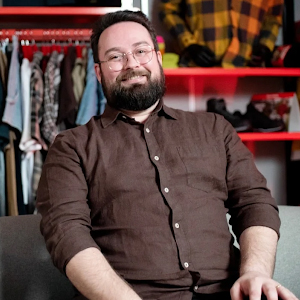
Jason Anderson is the COO of Andzen, a global customer journey and AI-powered CRM agency. In his role, he oversees operational execution and helps drive the agency’s growth and client success across email, SMS, and loyalty programs. Jason has over a decade of experience in the e-commerce lifecycle and CRM marketing.


Here’s a glimpse of what you’ll learn:
- [2:23] Jason Anderson reflects on early career mistakes and learning to value his work
- [5:42] How acquisition and CAC strategies influence customer quality and long-term retention
- [12:33] The role of financial discipline and delayed gratification in surviving early-stage risk
- [18:35] How Andzen built sustainable international expansion
- [22:54] Common misconceptions about segmentation and the customer journey
- [27:15] Reengaging lapsed customers without damaging deliverability or brand trust
- [33:14] The risk of over-segmentation and how to balance personalization with operational management
- [40:02] Tips for identifying meaningful customer data versus noise in modern CRM systems
- [50:42] Loyalty program and mobile app mistakes that signal a lack of strategy
- [55:43] Jason’s upbringing, immigrant family background, and leadership mindset
- [1:13:31] Advice for e-commerce leaders on driving growth through repeat purchases and lifetime value
In this episode…
Scaling an e-commerce business can feel like combining tactics without experiencing momentum. Brands add more channels, push more messages, and chase efficiency metrics, yet retention stalls and growth plateaus. What separates brands that break through from those that remain stuck?
According to e-commerce retention expert and CRM strategist Jason Anderson, the difference lies in designing intentional customer journeys. He emphasizes valuing your work, attracting ideal customers — not just the least expensive ones — and building systems that drive repeat purchases. Additionally, brands should segment customers by intent and engagement, integrate their tech stacks to uncover meaningful data, and use loyalty programs to reward behavior.
In this episode of the Up Arrow Podcast, William Harris sits down with Jason Anderson, COO of Andzen, to discuss how intentional customer journeys fuel e-commerce growth. Jason shares lessons from Andzen’s near-failure, smarter segmentation and reengagement strategies, and how loyalty programs can increase lifetime value without eroding margins.
Resources mentioned in this episode
- William Harris on LinkedIn
- Elumynt
- Jason Anderson on LinkedIn
- Andzen
- The Andzen Approach
- Dilyar Askar on LinkedIn
Quotable Moments
- “I was giving my time away to the type of people who want things for free.”
- “If we hadn't have played it safe, this business would have been gone over a decade ago.”
- “Lowering CAC is almost never the goal.”
- “That is about relationships, right, and that's the sort of thing that creates long-term loyalty.”
- “Once someone gets to three purchases with a brand, [it] is more or less a tipping point.”
Action Steps
- Design segmentation around customer intent, not just demographics: Understanding why and when customers buy helps you send messages they’re actually ready to receive. This reduces fatigue, improves engagement, and increases the likelihood of repeat purchases.
- Optimize for sustainable CAC rather than the lowest CAC: Chasing cheap acquisition cost often yields low-value customers who churn quickly. Paying slightly more for higher-quality buyers can significantly improve retention and lifetime value.
- Reengage dormant customers with low-frequency, high-value messaging: Thoughtful monthly touchpoints keep your brand top of mind without harming deliverability. Over time, this compounds into meaningful revenue from audiences that many brands ignore.
- Integrate your full tech stack into your CRM: Connecting reviews, loyalty, onsite personalization, and engagement data gives you a clearer picture of customer behavior. Better data enables smarter decisions and more personalized customer journeys.
- Build loyalty programs around meaningful perks, not just discounts: Rewards that recognize priority, access, or status strengthen emotional connection. This creates long-term loyalty while protecting margins and brand value.
Sponsor for this episode
This episode is brought to you by Elumynt. Elumynt is a performance-driven e-commerce marketing agency focused on finding the best opportunities for you to grow and scale your business.
Our paid search, social, and programmatic services have proven to increase traffic and ROAS, allowing you to make more money efficiently.
To learn more, visit www.elumynt.com.
Episode Transcript
Intro 0:02
Welcome to the Up Arrow Podcast with William Harris, featuring top business leaders sharing strategies and resources to get to the next level. Now let's get started with the show.
William Harris 0:15
Hey everyone. I'm William Harris. I'm the founder and CEO of Elumynt and the host of the Up Arrow Podcast, where I feature the best minds in e-commerce to help you scale from 10 million to 100 million and beyond. As you up arrow your business and your personal life, send more emails, launch another loyalty program, add SMS, add push, add a mobile app if you've been doing tactic after tactic but still wondering why retention stalls. You're not alone. Today's guest has lived through the hard version of that lesson. He's been nearly wiped out by a single Enterprise Client. He's watched millions of users disappear when a platform collapsed underneath him. He once got a $6 check for a debt north of six figures. We will unpack that one. And instead of quitting, he rebuilt. Jason Anderson is the CRO of Andzen, one of the most respected customer journey and CRM teams in e-commerce today. Over the last decade, he's worked with brands ranging from fast growing DTC startups to global enterprise portfolios, including a call he almost ignored that turned into a new relationship with GSK. Jason, welcome to the Up Arrow Podcast. Thanks Will. It's good to be here, man. I love to give a shout out to the people who make introductions like yours, and I'm excited to meet you. Dilyar Askar is the one who introduced this so dia, thank you. Good heart. Friend network extraordinaire. Just a good guy all around.
Jason Anderson 1:30
Yeah, I've been lucky enough to know Dilyar for probably five years now, and it's always so good to get on a phone call with because he's just such a creative mind, like he's always thinking and trying to do things differently, asking questions that kind of prompt you to think a little bit differently as well. So, yeah, great guy, yeah, you
William Harris 1:49
need people like that in your corner. Jason, I've got one quick interruption, then we'll jump right into the good stuff. This episode is brought to you by Elumynt. Elumynt is an award winning advertising agency optimizing e-commerce campaigns around profit. In fact, we've helped 13 of our customers get acquired, with the largest one selling for nearly 800,000,001 that IPO. You can learn more on our website at Elumynt.com, which is spelled elumynt.com that said, honor the good stuff. Okay, you've been at Andzen for over a decade, but this wasn't some overnight success. What did early Jason misunderstand the most.
Jason Anderson 2:23
It's a good question. I think so. Like a lot of people, I went to university and did a degree that has nothing to do with the career that I then pursued. I did journalism and PR, and I remember thinking when I was in university that if I just go and offer my work for free, an intern at some of these like big companies and big agencies, you know, someone there is going to recognize that I've got the right drive and the right skills, and, you know, they'll give me the job that I want, basically, sure, and so I did in my final year of university, I was pretty much working full time hours, about 30 hours a week across three or four different companies. And I think part of the reality of what I found was that going and just giving my work away for free set of value right at the work that I was doing. And it wasn't really until I started working with some other people in mostly in the populations field, who was saying, No, don't do it for free. I mean, like, you could do it for a nominal amount of money. But, you know, here take some of my overflow work. Take this that you I started to meet people who were serious about the people they wanted to work with, because they were paying for it, right? And it was definitely a misconception that I had, that I could bring this value for free, and people would value it at what it was worth, and then they would see my worth at that. But the reality was, is that I was going out, and I was giving my time away to the type of people who want things for free, not the type of people who are willing to pay for good work. And that doesn't really often lead to good paying work. So it was definitely a lesson that I had to get early on. And, you know, it the journey that I ended up going on the way that I met our founder, Brendan, and became, you know, a partner at Andzen. The job that he initially offered me was as a support person answering the phones at our previous comm Wow. So you know, I'd gone from working on for some of the biggest mining companies in Australia by interning at big PR agencies for free to literally answering the phone for $25 email accounts when their template wasn't working on mobile. So humbling, but you know, it proves that that journey that I went on rapidly became the career that I wanted compared to the amount of time I was just giving a. For free. I want to
William Harris 5:01
ask about that, but I got to go back to this idea of giving away time for free too, which there were audiences were a big thing on on Facebook, but a long time ago, right? And I say a long time ago, it's like everything seems like a long time ago anymore, but yeah, we used to set up all these different audiences around interests and things like that. We just, we don't do that as much anymore, but there was an audience that was for people who used coupons, or coupon lovers or something like that, and it was an audience that I remember walking into and seeing in accounts all the time, and I was like, you realize you are literally just optimizing towards people who are probably going to be your lowest LTV customers. This is not a strategy that I recommend, and we very often pull people away from that, especially if you looked at the cohort analyzes.
Jason Anderson 5:42
Cohort analyzes. Yeah, I mean, we could probably, I mean, we could probably spend 15 minutes on this, easily off track. But actually saw a post from an agency, a founder that I know, who's there also in the PPC space, and he recently did a post talking about a client of his who increased their basically their social bids, the cap on their ad buy because they were willing to increase their CAC, and what they suddenly found was that their average order value was going up, but the crucial thing was that their retention rates were going up. So the only thing they changed was that they increased their ad cap, and suddenly, three months later, they had a much higher percentage of people purchasing for a second time than they did before. And he was essentially theorizing that when you go on this rampage of like we need to reduce CAC as much as possible, you're really funneling your ad strategy in to the type of person who is looking at a product and saying, Oh, well, it's cheap. I'll give it a try. But you're potentially not honing in on that more premium buyer who is looking for a brand to trust that isn't just, you know, shopping the next ad that they get and moving on to a new interest, but potentially the type of buyer that's willing to spend a little bit more but be a bit more loyal. And it got me really thinking, you know, obviously, working in a retention agency, it's something that I never really considered. Was outside of the in being interested in whatever the merchant's product is. What are the ad agencies that our clients are working with doing and what type of person are they bringing in? Because, you know, we spend a lot of our time analyzing that data to understand, you know, gender, age preferences, you know, do they have pets? Do they have kids? All the things that might impact their purchasing cycle and how we're communicating to them. When you know the what we find is the ideal customer type in their CRM might be completely different to the type of customer they're getting on ads just because of the CAC that they're working towards.
William Harris 7:54
Yeah, this is maybe too much of a blanket statement. Lowering CAC is almost never the goal. And I say this to anybody who's coming to talk to us, to talk to us, to work with us, or anything along those lines, unless it's so bad that that is the only way that your business is going to survive in the short term. Maybe, maybe that's okay, right? But more often than not, it's what can you afford for a CAC? And then can we increase that average order value, the first purchase value, the lifetime value? Can we increase other things to make it so that way that CAC is a good, sustainable CAC for you, because that, I think, allows for a better overall, healthy business. Yeah. Okay, I want to get into that stuff here, and I do have a section for that, but I really got to ask you a couple of other things. One was the client that almost ended everything you told me about this massive client that nearly wiped you out, like, what was going on? What happened?
Jason Anderson 8:40
Yeah, so this is in the very early days of ends. And we had a client, you know, there was startup, but they were funded. They were very big. They had millions of customers globally. And we essentially, at that time, we were licensing an email platform. There's a bit of a story there. I'm sure we'll get into it. But essentially, we were licensing this tool. You know, this client was paying us huge amounts every month due to the size of their database, so we were managing all of the email strategy and the services around it, the SMS as well. But we were essentially using a platform that we were licensing to. So we had a not a massive margin, but a little margin on that platform. But of course, we were the ones that were getting invoiced by that platform right, having to pay its costs. So yeah, we'd been working with this client for a number of years, our biggest client, and then we started to just have a few little funny things happen. You know, maybe an invoice was late next month was on time, but then next month was even later than the month prior. And, you know, it's sort of progressed from being patchy to suddenly, you know, most months we were talking about some sort of payment plan to get through payments each week. To pay off the monthly amount. And luckily, Brendan, our CEO, very luckily for us, at the time, made a decision to basically bank any amount of profit that we were making from this client and put it in a separate account and make sure that if anything ever went wrong, you know, there would be as much money in that account as possible to pay our costs out to that platform that we were licensing for. All you know, these emails and this probably progressed, you know, for over a year, and it started becoming very public news how this company was going financially. They had taken essentially Australia's equivalent of four or 1k accounts. Quite a lot of those had invested in this platform. And so there was a bit of a political angle to like, Well, can you know, is it going to be okay if this platform fails? They got to a point where they tried to list on the ASX, and one of the founders of the names suddenly escaping me, Michael can Brooks, what's his? I don't know. I gotta Google Atlassian, one of the founders. So he's Australian, and he basically came out in a major newspaper and said, you know, if the regulators let this company list on the stock exchange. It would be criminal, like we would be sending a message to the market that the Australian Stock Exchange is a Get Out of Jail Free card for failing businesses. And in the end, the regulators shut it down. It couldn't list, and it went under. And we had gotten to the point where we banked enough, basically, money that we could pay all of our platform fees were kind of in the green, and the next invoice was going to be all profit. And you know, we'd been waiting for 12 months to make some profit off this client, so we were really looking forward to it. And I think that was the month that they then went under, and the the liquidators came in and took over. And I think it was maybe seven or eight years later, we got a $6 check in the mail to say, you know, the liquidators, this is how much money was left. Here's was the liquidators fee to go through everything. The liquidators fee was 99% of what was left. And he was the small kitty of the remaining that was being spread out amongst all the debtors.
William Harris 12:28
Yeah, did you? Did you cry? Were you $6 like, 100,000 I
Jason Anderson 12:33
mean, eight years later, though we'd, you know, we'd moved on by then, but it was, you know, at the time we, you know, when they kind of finally announced it. We, you know, we were wrapped up for the day. We went to the pub. And, I mean, quite genuinely, if Brennan hadn't, had been cautious, and hadn't been kind of looking at what the market was doing, we were only a couple of years old at that point. A lot of businesses that at that age, wouldn't, you know, we it was a struggle to put that money away and not invest it in, back into our business, and try and do all the things that we needed to do to grow at one to two years old as a business, right? It was a really difficult decision to play it safe. If we hadn't have played it safe, this business would have been gone over a decade ago, but, you know, just shows sometimes, taking that approach, taking, you know, calculated risk, and we made the right calculation in the end, and we survived. And it was a shame to have not made any profit, but you know, at the same time, it was a big logo. I'm sure it probably helped us win some deals back then, and we were able to kind of just carry on and survive.
William Harris 13:43
You know, I've definitely talked to founders who've had polarizing views on this thing here, right? One are like, sell the cow, get the magic beans, go all in. And then the other, that's like, don't take calculated risk. I kind of lean towards the idea of, like, a good middle ground, but it may be a little bit more calculated, because I think it may be a Simon Sinek who really kind of popularized this idea, at least to me, which is, you can't play the game if you're out of the game, right? Like, the biggest way for you to lose is if you end up just being wiped out of the game. So you got to stay in the game. If you could stay in the game, you likely can weather a lot of different storms. And it sounds like Brennan was able to do that for you guys.
Jason Anderson 14:20
And, yeah, delayed gratification, right? You know, like, I mean, at the end of the day, we weren't telling ourselves that we were never going to spend this money. We were just saying, let's, if it's going to take nine months to build up enough to cover our costs on this and know, we'll be safe if something goes wrong. Let's just do that for nine months. And a month 10, you know, we'll, we'll book a dinner and go and celebrate. And for us, month 10 never came, but we survived because, you know, we we calculated and how we did it well,
William Harris 14:50
depending on when it was six bucks. Could maybe get you a Happy Meal and so you guys could split it. That's not Johnny more, but
Jason Anderson 14:56
yeah, yeah, yeah, it's about half a pint of appearance. Australia these days. So we could have shared that between the two of us.
William Harris 15:02
There you go. On the flip side, though, a few years ago, you got an inbound from Shopify, from Shopify partner portal that you thought was spam. Why did you take the call?
Jason Anderson 15:13
Anyway, it was Klaviyo partner, yeah. So this was during covid, the early days of covid. So still in 2020 Yeah, we got an inquiry from someone saying that they were from GSK and that they were looking for a partner to support them with chapstick. And sure, you know, for us, we would, we looked at this inquiry. We generally stood around the office laughing, being like, this is, what kind of spam or like, you know, fake inquiry is this? Because, you know, you do get a lot, you get a lot of people just kind of fishing and, you know, telling you who they think they might be to try and book calls and whatnot. And so, yeah, we talked about it. And obviously, you know, why? We just reply, why not? And see and lo and behold, a week later, we get on a phone call with a French woman, and she was part of a small innovation team at GSK, and yeah, they were looking to take chapstick direct to consumer, and they were looking for a top Klaviyo agency to do it, and we were the choice. And it that was the start. So we ended up launching with them. We just launched in the US. So they became, very quickly, became our biggest client in the US. We launched chapstick. We did a great job, and that ended up leading us to work with a whole range of their portfolio of retail products. So, pro enamel, Sensodyne, yeah, Advil, Voltaren, I think there was about nine or 10 brands that were in this portfolio. And so, yeah, I mean, you know, this very inconspicuous kind of inquiry that we receive our partner Paul, that just seemed absolutely impossible, very quickly turned into, for us, what was, you know, 10s, hundreds of 1000s of dollars of monthly billables for a company who had, quite literally months before, launched our US operation. It was genuinely like strapping a rocket ship to the back of it and sending it to the moon.
William Harris 17:31
You do have to be careful. I actually got an email just today from somebody that was a phishing email from somebody from a brand that I would love to work with. It was the actual brand name. They got hacked, sent it out. Hey, we want the RFP. Click on here to get the PDF. And you're just like, so tempting. But I happen to know the owner of the company, so I reached out. I was like, Is this you or is this not? And it's like, No, we got hacked. And so they sent but so you do, yeah,
Jason Anderson 17:59
you see it all the time. Yeah. People might not be aware, but agencies like ours, like we get these types of emails all the time of people imitating these big brands. So, yeah, it was, you know, I quite genuinely remember three of us sitting in the office like actually laughing about the thinking that it was with well hydrated lips, yeah, yeah. And away we went.
William Harris 18:24
So what systems were in place that allowed you to say yes? Because you were able to say yes, that at this situation, you, like, you said it was new and up and coming for you, for the US market, but, like, what was in place that made you say, yep, we can go ahead and take
Jason Anderson 18:35
this on, yeah. So we tried a couple of different things with North America. It's a very well trodden path for Australian businesses to try and expand into the US. It's usually one of the US or the UK. And historically, a lot of brands in Australia when they want to go into the US or North America in general, include Canada in that it's usually take on a bunch of investment and make it, try and make a big splash when you get there, and generate all of this attention. And it almost never works out. In my experience seeing brands do that or they end up spending an incredible amount of money, takes a long time to pay back. We tried to go the other route, very, very slow and steady. We were picking up clients just through having really good work. You know, we attended a conference or two in the US, met some merchants. We had a really robust tech partner network. And, you know, as you can imagine, a lot of those platforms are obviously founded in the US. And so we were kind of building clients through reputation there. And then we initially thought, why don't we try with just a sales person, a remote sales person on the ground, who could try and build some business, and if they can then successfully build the business, we'll continue to expand. And it just didn't really work for us as well as we had hoped. We weren't getting the scale quickly enough, and so we made. Decision to put an account manager on the ground. Instead, we went senior Brennan and I both flew over to the US, you know, we set up a WeWork office, put people in place, and basically spent a few weeks over there doing kind of an intensive onboarding culture, who is an you know? What is our mentality? What is our approach? Really kind of bringing everything that it is that makes us who we are to this new staff member in LA we chose. And, mind you, this was January of 2020. Not the best time, obviously, to be investing in a physical office and and things. So, yeah, we kind of really went hard on that, and then went home. And I think that was the difference of we were there. So while we were there, we were obviously going to events, and we were meeting merchants, meeting partners, but we also took the time, I think, to instill what it meant to work fans and right. And the only real two people that could do that were Brennan and I, you know, we were the two original guys at the company. We knew everything about it. It really needed our personal attention to drill this in. And it was complete opposite in terms of the success that we started to see. You know, when clients wanted to come on board, they had a face that they could meet, that could actually represent the brand, and all the ways that they would have heard about from our partners, or the things that they might have seen if they read reviews online and things. And it wasn't just a sales person, it was someone who could walk the walk and talk the talk, and yeah, we just instantly had very different results. We were able to, you know, bring merchants on, get results, build a base that we were able to then sustainably grow from. And then, yeah, now, you know, today, we've been there for six years this year, and growth has been really steady, and we've now, even we've experienced months where it's been our biggest region in terms of revenue. So, yeah, it's, you know, like I said, it's a bit of a badge of honor for us to be, in our opinion, you know, a brand that's been able to make that expansion stick, and have staff over there, have a team over there, because it's a very small number of agencies in particular that have been able to do it. I mean, it's hard enough running an agency, let alone try to expand
William Harris 22:26
it really is. I want to dig in now to customer journey, kind of like the meat of the topic. This is the thing that I think e commerce merchants will have the most excitement behind segmentation. Most brands say they do segmentation. I'd say that there's probably a few that are 10 million that are like, No, we don't do segmentation. But what's the difference between just checking the box and being truly intentional? Yeah, so
Jason Anderson 22:54
something that we try to work with merchants to think about is that your marketing calendar can be as aggressive as you want it to be, right? You know, it can be as full of events and activity as you like. What you really want to do, though, is understand who, out of my customers, is maybe at the peak of their purchasing propensity, or interest and engagement, and who is maybe at the trough, in terms of, you know, being at the bottom, maybe they purchased relatively recently, and your product has a three months repurchase cycle, and they're just not going to be in the best place to reorder right now and then, tailoring who is getting that message at what rate, essentially, what velocity. You know, the people who are at the peak of their interests and propensity, they could get an email every day from you over the course of a week, but they'll be so engaged and so ready to buy that they're opening every one of those emails. They're clicking, you know, they're definitely not unsubscribing or marking a spam so what we need to be doing is breaking your segments down into Okay, who are the people that are up here that could be getting emailed every day. Who are the people that are maybe 75% there, that could get two or three emails in a week or SMS? Who are the people at 50% where maybe it's one, and who are the people who are at maybe 10 or 20% and what are we doing to make sure that that 10 or 20 doesn't fade down to zero, but, you know, continuously builds back up to 5075, and 100 and then looking at your marketing calendar and and being intentional around a right? These are the people that are gonna get this. These are the people that are gonna get that. And you'll be interested to see, I mean, we've got, we've worked with brands where they use, you know, Klaviyo is recommended kind of engagement base, and Klaviyo has done a really good job of educating their customers about deliverability and the need to use segments that are, you know, 30 days, 90 days, 180 days engage. And a lot of your merchants, that's probably the extent of the segmentation that they're doing, which is definitely the right thing to do from a segmentation standpoint or deliverability standpoint. But I. So what happens when you're silently accruing all of these people in the background that you haven't emailed for six months because you know they hadn't opened an email or they'd become disengaged? One, you're building up a huge amount of people in your account that you're paying for that you're not actually sending emails to, right? But two, you've got this dormant list of customers that you're not doing anything to keep warm. And these might be people who purchase from you over Black Friday, you know, and maybe they haven't again for whatever reason. But that doesn't mean that they're not going to purchase again a Black Friday. There might be gift purchases who purchase, you know, for a partner's birthday or something like that. But you know, maybe they want to purchase again and add to their partner's collection the next birthday if they really loved it, or replenish, you know, all these different types of customer demographics that you could potentially just be ignoring. We have a merchant who we did kind of a test where we over 12 months, we consistently emailed at least once a month this group of people that otherwise they historically would have just ignored. And by the end of the 12 months, almost half of the revenue that they made from email came from campaigns sent to that segment. And so it's not necessarily that, you know, there's 50 or 100,000 people in this segment, and they're going to be purchasing every week, but five or 10% of them might purchase in January. Another five or 10% might purchase in February. And you keep stacking that five or 10% up all the way until December, and you've potentially converted a huge amount of those kind of dormant or lapsed customers back into being engaged and sending to these people once a month with a, you know, some sort of good message, you know, if there's a major promo in that month, if there's a new collection that's launching, you know, you want it to be a key message or something that's kind of attention grabbing, but sending to those people once a month, even if the open rate is only 15 or 20% that is not going to negatively, that's not going to destroy your deliverability for the rest of the year, and you're going to have to start from scratch, right? Sending that one email that one email that has a low open rate, as long as it's not getting bounces and spam complaint rates, which shouldn't, if your segments are set up properly, the only thing it's gonna do is just help you try and bring back some of that disengaged customer base.
William Harris 27:15
I love laps, buyers, disengaged customers. We use them in the advertising as well all the time, and one of our favorite ways to use them is, to your point, maybe they're not even going to see the email right? If it's only 15% open, it's like it's not even making it to their primary inbox. There's a lot of the ways, how can I just make sure they see that we don't even necessarily optimize these to a purchase, because meta might be in the same boat. They're thinking they're not likely to purchase, but it's like, well, what if I just optimize for a reach? I just want to make sure that they see this ad. And to your point, it's such a small audience, the cost the CPM for a reach versus an optimized for purchase is negligible. You're talking about spending 100 bucks a month or something to just make sure all of your people laugh, just so they see you've got something new or something exciting or something right, that you're just like, Okay, great. So when they are in market, they're going to see it absolutely.
Jason Anderson 28:03
Yeah, that's it. Just, just keeping your brand in their mind. And this is, I think, crucially important for brands that have products that are, you know, have long, longevities or really high ticket items, you know, if you're a furniture company, if you are, you know, like a home wares company, you know, if you sell like bikes, you know cycling things, you know, things like that, that you buy once you know, even if you're a mad cyclist, you maybe only buy a bike every 12 months at best, right? Sure. I mean, sometimes these people, these people, are spending car money on bikes, right? So you want to be keeping them kind of warm, because there is a very good chance that they're going to come back in 18 months, and if, in 18 months time, if you've done nothing to re engage them, and you know they're out on the road, and someone tells them that a brand that they shop from was great, there's a really good chance that they're gonna the loyalty just isn't going to be there, and they're going to shop elsewhere. Shop elsewhere.
William Harris 29:03
This is a tangent. It's just cuz I'm ADHD, are you like in the jungle? I hear like birds and beautiful.
Jason Anderson 29:09
I mean, it is. It is 7am here in Queensland, in Australia. So, yeah, it's definitely birds, you know, waking up as well and getting out.
William Harris 29:21
I love it. It's, you don't need to change it. It's actually really relaxing. I'm like, I feel at peace right now. Okay, so let's go to, like, a concrete example, or something. You were giving me an example of, almost like this cardigan. So selling a cardigan to a customer versus selling one to a mother, a father, a gift buyer. It's like, how does that change messaging, Cadence, what to send, what not to send, etc, yeah.
Jason Anderson 29:43
So ultimately, what we're trying to do is, you know, understand who the shopper is, who they're shopping for, and we're looking at, you know, it comes down to the top, the type of brand you are and the type of products that you sell. So, you know, let's say that you're a fashion reader. Retailer, and you stock everything from, you know, adults wear to kids wear to babies wear. You know, just because someone comes through and buys a cardigan out of your women's line, you know, she may be a mother, she may be married, and, you know, want to buy something nice for her husband. We really want to get into the mindset of this customer, because it helps us understand all the different types of content that could be could appeal to them, but also the type of messaging the time of year that's important, you know, for parents going, you know, back to school time is incredibly stressful, and there's a lot to be thinking about, but same similarly with school holidays, whereas, you know, single people, I mean, Valentine's Day is coming up, you know. So there's all different types of messaging that comes into the mentality of who these people are and what they're shopping for. But again, that that can influence our segmentation. I think a lot of segmentation has been talked about in the past few years around well, you should know if they're male and female so that you can send them the right things. Or you should know if they like patterns or block colors so that you can send them the right you know things they're sure. But like, what is the greater context of this actual person? You know their frequency that they shop, the average order value that they shop with. Do they usually shop with a coupon or not, all of these things probably going to play a bigger role in you timing your message right and having the content right in that message, because at the end of the day, like you could send someone something, but if it's three days after they got paid, before they get paid, and you know, they're they're not in a position to shop right Now, and you send them something, it just becomes aspirational for them. And yes, of course, the strategies, you know, we get them put on a wish list, and then we can come back around and get their attention later. But in terms of the right now, if you're looking at a segment or you know, you're, you're, you've got your calendar for the next week of campaigns that you send out, and you're thinking about, Well, how am I going to build these segments out to maybe widen a little bit, get a few more people receiving this message, or I want to send a lot of emails, so I want to cut these segments down so that I could send five emails this week, but not overload people. You need to start getting into the weeds there of looking at like, Okay, well, what's the frequency of which people have been on the site recently? So, you know, I want high frequency. I want people that have a historically high average order value, or maybe they've only placed one sort one order overall time, but they've been on the site recently. You know, at what percentage, if the last 10 emails that they've opened, have they received? Have they opened at least seven of them? All of that like extra bit of nuance to kind of tighten those groups down a bit. And maybe you've got an entire database of about 30,000 but you've got five or six things that you want to send out that week. Well, now all 30,000 can receive at least one of those pieces of content, if not maybe two or three, if they're highly engaged, but you're not going to send your spam. Complaint rate through the roof, or your unsubscribe rate through the roof by hitting 40 or 50% of that 30,000 that are just not interested in receiving an email every
William Harris 33:14
day from you. Is there a limit to some of the segmentation, meaning, let's say that you said you've got, you know, 100,000 emails you could, you could segment this in so many different ways. Could you get to a point where it now just becomes unmanageable, and you're like, I got to come up with 100 campaigns this week to do that in let's say if it is unmanageable today. Would it be still best if it was manageable, would that still be better? If you use AI to help you, etc, this is
Jason Anderson 33:46
where we say, like, it comes down to your marketing calendar as well, right? If you've got things that are worth saying, then it's usually where, particularly, if you've got a really large database, then it's usually worth finding people to say that too. And the juggling act that a lot of CRM managers and even founders will say, like, you know, I speak to founders all the time who are saying, we need to increase revenue, but then, you know, they get a couple of extra browse abandonment emails, and they're on the phone being like, You're sending me too many emails. It's annoying. I know my customers won't like this, you know, you and I'm sure all any founder is used to that juxtaposition of being their own ideal customer and knowing what's going to annoy people, but at the same time, you know, going out to the market and saying, like, can you help me understand these people better in terms of how I can get them to shop more often? So it comes down to that what we were trying to figure out, who are these people that are engaged enough and keen enough that they want to receive those emails? And what is it in your marketing calendar that you've got to say there's always additional ideas, right? If you've got a low period of campaigns, you don't know what to be talking about. Well, of course, like, Yeah, let's look at some segments around. Fund sizes that people have purchased, and do a size specific highlight campaign of your clearance section that feels really personalized and intentional. Let's do a plain text email from a customer support person to everyone who's purchased once overall, time but not again. And you know, have it come from customer support to say, hey, you know, we've done something new, or we've put together something just for you. There's always additional ideas and strategies there for broad segments like that, that are, you know, key customer demographics that you want to convert. But there's also opportunity there to be, you know, one big thing that we find is really important, is integrating your tech stack so that you've got as much data as possible to be making decisions with. So you know, are we actually factoring in? Who are people that left a review in the last 30 days that have a available coupon code from reviews and the review was at least three stars or at least four stars? Well, like these are people who are happy with their last order and they have an active coupon code. You know, let's make sure that they in whatever campaign we're going to send today. Or is that group big enough that we should be sending them something specific about their coupon code? Taking the time to build those out can be really valuable,
William Harris 36:20
for sure, the size one is an interesting one to me. I got stuck there. My brain was like, Wait, swirling around. So I imagine there's some very good ones, and I'm gonna ask you for one. But the thing that popped in my head that I had to not chuckle at at the moment was it's like, we just got through the holidays. I couldn't help but thinking that somebody's gonna send out an email that's like, Hey, you normally wear a 32 waist, but you know, you just had Thanksgiving and cookies. Here's some stuff we've got for 34 ways for you, just in case. You know, you never know, I know that that's not the email you're sending. But like, what are emails that you would be sending from, like, size? You're like, here, this is a beneficial way to send out to an email about sizing. Yeah.
Jason Anderson 36:56
I mean, look, it probably comes down to demographics, but you know, sizing comes in a lot of different formats, right? Like, you know, not. It doesn't just have to be fashion. Like, if you're a furniture tailor and you have really oversized, you know, types of furniture or categories of furniture that you know work together, and you know someone has purchased from within a certain category, type, when is a perfect time of year. I mean, in the lead up to Christmas. You know, a lot of people are hosting, having people over. What a perfect time to be like, hey, here are the side tables that go with that couch you ordered. Here are the chairs that go with that dining table that you ordered, or whatever it might be. And particularly, you know, when you've got motivators, like, I mean, fashion is always a great example. But often we see some of the best performing emails are like that. That email that's just, you know, our clearance section has been updated in a banner, and then the block underneath it is shop size 6789, 10. You know, whatever it might be, those campaigns do really well because it's such a facilitated shopping experience. Who doesn't want to see, oh, I could just get a quick little filter of everything that's my size, that you've just dramatically discounted, and all I have to do is click one button. Easy, you know, that's helpful, really easy messaging to get people on site that level of personalization and you can take it a step further if you've got the right demographic. You know, things for brands like activewear, right sizing there is quite personal, and people will appreciate if you were to say, here is a product feed directly in the email of products that are your size, you know, based on your previous shopping that we've got in stock that are your size or that have just gone on clearance that are your size. You might have to be careful, you know, if you've got a size conscious customer group to not call that out, but ultimately, it's a brand decision. You can find appropriate way to articulate that when you send the email just to say, you know, personalized picks based on your shopping, that isn't going to feel as maybe Big Brother is like, we know what size you were. But at the same time, I think these days, and it's borne out in a lot of you know, a lot of the data, but also a lot of the surveys and polls that you hear of customers they want to feel understood by the brands that they shop from. And so that concept of, Oh, that's too creepy that they know this much about me is very quickly becoming more of like a boomer mentality. You know, the younger generations, millennials, Gen Z, very, very very comfortable with a brand just saying, like, hey, we know that you're going to like this, and doesn't need to be much more than that.
William Harris 39:48
Yeah, I share all my data like, I just give it all up. I want everything to be customized to me. So let's talk actually listening points. What data are you intentionally collecting and what. Data is just noise.
Jason Anderson 40:02
So for us, it's engagement is is probably the most intentional thing that we want to track, and that's where those integration pieces come into it. The number of brands that I speak to who are using a loyalty tool that's not integrated with their CRM or, you know, they've got an on site personalization tool, like some of these, things like rebuy and nosto, these are really expensive personalization tools on site that people are using for conversion rate optimization. They all have integrations with Klaviyo. Everything that their engines are understanding about a customer can be all of that detail can be sent back to Klaviyo so that you can use those persona profiles in your CRM. So it's a really, really important thing for us to look deeply at your entire stack, tech stack, and what you're using, and make sure that all of that is integrated.
William Harris 40:59
Is that the lowest taking fruit like, is it just like, almost lowering and you're just like, you have all this stuff, and you're just not bringing it in here. Let's bring it in here, and this is gonna make a
Jason Anderson 41:07
difference right now. Yeah, I still, I still, talk to merchants most weeks who collect product reviews but haven't integrated their review software, and they don't display those reviews in their banning card emails. You know, that's about 15 minutes of work to fix so that you're when someone abandons a cart, they can see the number of stars a product has the number of reviews, and a lot of those reviews tools now you can actually dynamically pull in the most recent like the text of the most recent five star review, so you can create these hyper, hyper personalized abandonment emails, whether that they've just browsed the product, or they've put it in their cart that shows two or three of the most recent people saying this was the best purchase that I ever made, or I'm loving this thing so much since I got it. And we know, statistically, we know that that user generated content is the highest converting thing to put in front of someone at that point, and there's still lots of merchants that aren't doing it. Loyalty programs is another big one. You know, people that have got a loyalty program, and it's on a page, you know, there's a link in the footer that takes people to their loyalty program. And, yeah, sure, people get automatically opted in when they place an order, but they haven't got anything in their email. You know, no dynamic banner at the top that shows you how many points you have, which is a really crucial one to just have a little banner that says you've got enough points for a discount or not, right? When someone receives a campaign, they don't have anything say in their footer that highlights that most of these loyalty tools have a referral program built in. And almost everyone configures their, you know, give 10, get 10, kind of offer, but they don't promote it at all. And we know that, again, word of mouth is one of the best ways for these brands to grow. So there's a lot of opportunity like that, both from a conversion standpoint, but also that data can be so valuable that's coming in. I tell people, one of the biggest values of a loyalty program is the way that it incentivizes customers to log in when they land on the site. And a login is so valuable because suddenly all of your cookies drop. You've identified that session. Now you know whether it's meta or Klaviyo or whoever, if they view a product, if they add a product to cart, all of that data is going to be able to sync with your entire marketing apparatus now and give you more information on this customer. And it's a massively overlooked aspect of loyalty programs that they have this great ability Ave for every person that comes on the website to want to log in and basically allow us to track them. So if you're not using that effectively, both to encourage people to de anonymize, but also integrating all that data with all of your marketing tools, you're missing a huge opportunity to send more targeted, more personalized comms.
William Harris 44:00
Yeah, that de anonymization is huge. Yeah, that helps, even on a lot of the ad stuff that we're doing and everything too. Yeah.
Jason Anderson 44:07
I mean, brands are spending 1000s on tools to identify anonymous traffic, right? And, yeah. I mean, a lot of them have something, you know, Klaviyo is the new customer hub feature that they've released, a great little feature for you to be able to prompt people to log in, and only made more powerful if you have a loyalty program that gives them a reason to see their points and all of that,
William Harris 44:33
that's great. You broke it down for me as having like, two different types of, let's just say, like listening points. You called it direct and passive. Direct being like form, surveys, quizzes, passive, browse, behavior, product affinity, time decay. How screwed up do you think that this data is for people like me who run an agency and now browse all kinds of products across all kinds of different things? Is it even worth it like i. Yeah, what's going on here with philomi like me?
Jason Anderson 45:04
Yeah, look, I mean, there's definitely going to be those outliers, right, that you see in the data, but at the end of the day, like these things, you're talking about the majority of your customers, wanting to put them on a like a brand discovery pathway, right? Most of the time you want, whether they're a new shopper or a new customer, you want to educate them about your catalog, about the brand's principles. Are all the reasons why they should be loyal. And some of those direct strategies, like quizzes, where massive advocates of the idea of quizzes for brands. A lot of brands think like, God's just overkill to need that sort of thing. But if you've got a large product product catalog, the assistance in terms of product discovery that a quiz can give to a customer is massive. The convenience of that customer to land on a website. You know, if you're a craft store, you've got 10s of 1000s of SKUs, probably, and that customer might have very specific preferences around, you know, whatever the part of the hobby that they're interested in, whether that's fabric type, whether that's, you know, brand affinities, all sorts of things. And for them, it could massively simplify the shopping experience for them to be able to just say to you, hey, here are the four things that I'm actually looking for in terms of types of products, and then you can just go, Okay, well, here are all the products that meet those four parameters. That works just as well. If you're selling bedding, right? Someone comes on, you know, I sleep hot. I've got this size bed. I've got, you know, whatever these preferences might be in terms of, you know, I like a fully assembled kit. Actually, I like to individual pieces that I can style and color. I'm sure if you spoke to a linen company, they'd be saying, Oh, I mean, a quiz that's just putting a barrier up in front of people, you know, an extra step that they have to do to find their product, not really, you know, like that might massively increase the convenience for them to find very, very specifically the types of products that they want. So I think, you know, that's a good example of a really, an active kind of data capture process, where, for the customer, it doesn't feel like they're handing over data for them. It's about product discovery. It's about personalizing their experience on the website, and, more easily, building a for you kind of collection page, rather than just going to like betting queen size and having to scroll through a massive collection of, you know, Bibles and individual colors. I gotta
William Harris 47:39
be honest, I'm getting lazy, and I don't want to do that anymore. You know what? I want to see? Know what I want to see? I've got the apple vision Pro. This is what I would like to see now for shopping. And like, nobody has launched an app that I actually like from from an E commerce standpoint there yet, alo yoga did an okay job. Like, there's some, but they're not great. What I want to see is, to your point, I want to walk into your store kind of thing. I don't want, like, like an avatar, like a really genuine looking human being just being like, hey, so glad you're here at the store. What can I help you find today? It's like, um, I'm looking for some new pants. It's like, great. Tell me more about what you need these pants for you going hiking. What's going on, right? It's like, it's a quiz, but it's a choose my own adventure quiz. And I actually feel like I'm talking to somebody that's intelligent and cares and can help me. And they're like, great. I've just pulled up these things now you don't have to browse and filter and filter and do all these things. Here's the three things that are most likely going to fit exactly what you want. You like. Great. Sounds good? Let me just go and buy that's what I want. Yeah, I don't think that far from it. No.
Jason Anderson 48:31
And that's that personalization element that's practical, right? That people want. Yeah, the passive piece that we're collecting
William Harris 48:37
is, I don't want to type essentially, yeah, type it. I just want to talk to talk to the avatar, yeah,
Jason Anderson 48:43
but yeah, the passive pieces is all the information that we're collecting based on your behavior. So I mean, the simple ones are things like, you know, they viewed this product or they were on this page. But we also do things so like, let's say in the welcome email that someone gets when they on board, we often encourage brands to use collection tile links rather than a direct product feed in that first email. And the reason for that is, if you think about the behavior of someone who's just filled out a pop up and then opened a welcome email, 99% of the time they're just there for their coupon code, right? But they're they're off the website. They've copied their coupon code, they're ready to go shopping. They want the quickest experience to go back to where they want to go. If you have all those collection tiles directly under the coupon code, rather than just like hoping and praying that the product they're seeing, they can click on the collection that they think is most appropriate. They might even click on two or three, and you can tag them as interested in each of those collections. In the back end, Klaviyo has the ability to do that based on what they've clicked if you did that in welcome email. One, they browse on the website. They don't check out. Well, day two is welcome email. Now if we know what collections they clicked on and what they're interested in, now we can display product feeds of the top one or two or three. Recollections that we know that they're interested in, and put the top six or eight products in front of them in that email, but know that we're on the right path effectively. So those are a bit more of those passive like, where are people clicking what are they showing some level of interest in, and then making sure that's what we're putting in front of them.
William Harris 50:22
You talked to me before about, like, let's just say, some myths and nuance to different pieces. One that I was calling, like this loyalty program trap. We've seen these waves, loyalty programs, the mobile apps now both again, what tells you instantly what a brand isn't being intentional, that this is more like a trap than like, a real helpful thing.
Jason Anderson 50:42
I mean, there's no greater giveaway that a loyalty program hasn't really been managed or hasn't really been maintained, than the program just having Bronze, Silver, Gold as the tears, that is. I mean, the number one obvious thing, we just bolted this on in the hope of that it's a help retention. And then in terms of the mobile app, mobile apps are a really interesting one. They really are not in our, you know, kind of wheelhouse in terms of something that we recommend. You know, we're a customer journey agency. We're very specifically specialized in those like one to one interactions, but we end up supporting clients with mobile apps a lot. First of all, there's a lot of really great tools out there, you know, reactive, tap, cart, really, really good tools for building and integrating a Shopify mobile app that make it really, really easy to launch a mobile app. But the two things that are really interesting is, like push notifications is a massively slept on marketing channel in e-comm, right, particularly for pure play online brands, where it's entirely digital experience on your phone, but also the ability to create loyalty with things like app exclusives, you know, having your loyalty program really tied into the app, so that you have this really controlled space where people can have a really personalized experience based on who they are. And just not doing those things, not promoting them is a real, you know, obvious indicator not being used. And it's a problem because these platforms are expensive. Some of these loyalty tools cost a lot of money, and those credits as well. You know, if you have a loyalty program and you have 10s of 1000s or hundreds of 1000s of points accruing in customer accounts, that is a liability on your balance sheet. You know, this stuff goes beyond marketing and into the, you know, the actual health and finance of your business. And so if we're not effectively using these tools, they're actually kind of become slightly hidden bear traps that you can step on at any point. Loyalty program is absolutely one of the ones that are the easiest to solve, that can have the most impact, because just branding your loyalty program goes such a long way to making it something that you that customers want to use and want to engage in, creating a name, naming the currency, and just making sure that some of the rewards are really relevant for the type of product that you have really good example, We work with a brand called Sabo. So global fashion brand, and they do regular kind of releases of product, but they sell out. Their products sell out really, really quickly. And so that's it is actually, genuinely very important to people to make sure that they're online when new collections drop. But another thing is that these dresses, yes, there's only certain number of them, but you know, they're a statement piece or a nice piece that people want to wear out. And as a part of their loyalty program, we basically did a little integration with their three po or their warehouse, so that when, if you're in a higher tier of loyalty program, of the loyalty program, and you place your order, your order is bumped to the top of the label printing process, right? So, if there's a sale, or if there's a launch day, a new buy address, and you're in the top tier of loyalty program, you can basically be guaranteed that your order is going to be one of the first couple of 100 to be packed, because you're in that tier of, you know, top couple of 100 levels of customers. Now, when you think about a perk of loyalty, right? That is that costs the Sabo absolutely nothing to implement, but the value to the customer of feeling a part of a program and feeling important is immeasurable loyalty that,
William Harris 54:40
yeah, like, like, but what's the actual value of that, though? Like, like, so you you get yours first.
Jason Anderson 54:45
Like, yeah, think about during Black Friday right, where you know a brand's processing 1000s of orders. It might be three days until that order is fulfilled. If you didn't place your order until the evening and the sale launched in the morning. Mm. The difference could be, it could genuinely be three or four days getting your package early compared to someone else, right? There's huge value in that. And it's just perceived value like, yeah, you're not going to make any money by getting it first. But the idea that, if I'm about to spend $300 on a dress, yeah, I'm going to get it before other people that's important, right? You want that you want, more than anything, that feeling of the brand saying we are acknowledging the value that you've brought to us, and we are intentionally prioritizing you. And that is about relationships, right? And that's the sort of thing that creates long term loyalty. Is valuing the relationship.
William Harris 55:43
I like that. I want to get to know the human being who is Jason Anderson as well a little bit, because I think it's fun to know the backstory and what makes you you. You grew up first gen Australian, working from 13 parents in the military. How much of your leadership style, the way that you go about business, comes from that environment?
Jason Anderson 56:08
I don't know. How much of my leadership style, I would say comes from my parents, although I don't know, maybe in the more that I think about it, they were pretty lazy, fair with me, and I'm a bit the same, if we want to use, like, technical management terms, but yeah. I mean, yeah, my So, my family migrated to Australia from Spain, and then, you know, back in the I think at the times, maybe the 70s, 60s or 70s, you could enlist in the Australian military. And if you did a term of service, you you could get citizenship. So that was kind of the pathway. You know, my mom is only about five foot. I think she was a really great marksman. She ended up, she has photos carrying guns that are pretty much as big as she is. Sure is her kind of role. But, yeah, I mean, that was a pathway in and I think, you know, like, I'm sure, you know, a lot of people will have that experience, you know, they came here, they didn't really speak English. It learned while they're in the military, and went out into the world after their term and started working the kind of jobs that you can get right, like, fairly low income roles. But they, you know, just worked hard. You wanted to work hard because you're excited to be in a country like Australia. And so for me, by the time I was, you know, 12 or 13, I knew, you know, if I wanted to buy a PlayStation game, or if I wanted to do something like that, unless my birthday was coming up, you know, it was kind of up to me to figure out how I was going to make that happen. And all my experience growing up was seeing the people around me, you know, whether my sister or my parents. You know, if you had to work days and nights to afford what you wanted, then you work days and nights. You know, if you You did what you had to do to earn the things that you wanted. And I think that was the mentality that I took moving forward. And, yeah, I mean, as soon as I could get a job, I wanted a job because I wanted that independence for myself. And that was just something that grew. And I think, you know, I mean, probably a classic story I was in I didn't do so well in school. You know, it wasn't really the kind of environment that I thrived in, the social environment, obviously I loved, but I was not the sort of person that did well. Sat in front of a chalkboard trying to memorize lines and and remember things for a test. I felt I knew that I wasn't stupid, but I was definitely not doing well, and I had this more practical sense of all the things that I wanted to do. And, yeah, I think that bore out, you know, I I started working, and I worked in kitchens for a long time, which I really loved, and I almost pursued cooking, but then, you know, it's, it's a very difficult lifestyle being a chef. You know, you generally work nights. It's hugely stressful
William Harris 59:03
roles, because entrepreneurship is so easy of a past, yeah,
Jason Anderson 59:07
but I mean, again, like, in a way, like I, you know, I think I did a lot of these jobs. I mean, one of the first jobs that I, that I had, was cleaning showrooms. I would get up at 4am you know, as a 14 year old, that's my downstairs neighbor had that was his business. He cleaned showrooms. I'd get up at 4am I'd hop in the van with him, and we'd drive around for two to three hours before, like, bathroom retailers would open on a Saturday morning, you know. And we'd be going through shining up all the bathtubs and toilets and, you know, things. And we'd go to four or five places, and that was actually the best money that I made until I was probably 18 hour the hourly rate was fantastic. But, you know, you that was just kind of, you did what you did. And I was also in that environment, like, you know, I lived in apartment block with a lot of immigrants, and they all did the same thing, but they had businesses and they were, you know, stress and hard work was just. Kind of part of it. So, yeah, it wasn't until I was probably 21 that I really got an idea that, like, I really enjoy, you know, talking with people and social aspects. And I am kind of interested in the psychology behind, you know, why people do what they do. And I hadn't quite figured out then, but I, you know, I started getting into, I love to write, I love to write, and so that's when I went into journalism. And I actually thought PR was going to be the way that I I would go that, you know, that idea of creating news and communicating and, you know, maybe I could write speeches I don't know, like I'm just going to jump in and see and, yeah, it was until after that, really, that I kind of found what I wanted in ultimately, now what I do, and that it is marketing. And marketing is seen as, like, you know, a very broad channel, but the specialization that I have in email, SMS, push, like this is all one to one. You know, I've really found a role that is all about having individual conversations with people and convincing them to buy products.
William Harris 1:01:01
I love it. I love even just that idea of that hustle that you had early on. I can relate to that. And I love that idea of neighbors. One of my earliest jobs, probably around the one I was 14 too, I think is when I started doing it was roofing. One of my neighbors was a roofer. And similar story where it's like, we got up, you know, you know, crack a dawn, and we were up on top of a roof. It was hard work. We got done at like, 10 o'clock at night. I forgot to wear sunscreen so you're torched, you know? But it was just like, the best money I'd ever made, like, at a 14 year old, right? Like, 50 bucks cash a day or something like that, right? You're like, yeah, was rolling in it, yeah. I think it
Jason Anderson 1:01:37
was the same thing. I think one day I had like, 60 bucks in my pocket after finishing your morning. And I've never seen that kind of money in my own pocket, right?
William Harris 1:01:46
So that's good. I appreciate that you I understand that you have also spent some time, not just in in Spain, but Germany, where you were carrying some money, got into maybe a fight, or almost a fight, or something happened there. What happened in Germany?
Jason Anderson 1:02:06
Yeah, yeah, that's one of the crazier experiences of my life, yeah. So I was, I was backpacking, you know, this was a little bit after finishing school. I've been working for about a year, and I decided to, you know, go and do the backpacking thing for six months. And so I hadn't been in Europe too long at this point, and I'd been really set on doing everything as cheaply as possible, just getting busses everywhere. And I think after my third or fourth overnight awful bus ride, I was like, I'm not doing this anymore. I'm buying a URL Pass, which, for people that, if you don't know, in Europe's train network, you can basically buy a pass, that's like a international train pass, and you can buy a certain number of trips. So let's say, let's say 10 or 15 trips, and it just allows you to basically get on any train in Europe that you want. So you could just do all your overnight travel via train. And so, yeah, the person I was traveling with and I, we were like, You know what? We're not going to do this anymore. We're just going to get the stuff by Euro pass, pretty expensive, but we kind of knew that we might end up doing it. We had the cash, and we quite literally had the cash. So I had gone back to our hostel. We're actually meeting someone, an exchange student that had been at our high school. We were in Frankfurt. We were meeting them for a beer, and so the person I was with was in the train station waiting for them to arrive. I'd gone back to the hostel to get our cash, and was going back to the train station. Frankfurt is like the one of the busiest international cities in Europe. It's the finance hub, busiest airport in Europe, and the main central station is massive, and there's a big tram station out the front as well for connections. And I was standing at the lights, waiting to cross this tram stations to get to the train station. And there was a underground way that you could go, so I couldn't be bothered waiting. I went down the underground, which probably should have been the first, that was the first mistake that I made, knowing that I had, you know, 1000 euros in my pocket. As I was going down the stairs, someone said something to me in German as they were walking up the stairs, and I just replied, said that I don't speak German. And the guy started following me and saying, Oh, it's okay. It's okay. You have a couple of euros for me. And probably followed me for maybe 50 meters. And I just got really frustrated after he asked probably the for the 15th time, and I said, Look, man, I don't have any money for you. Leave me alone. And I turned around and started to walk away, and he spat on me. Oh no, and yeah, I mean, I, you know, I'd never had some fighting words before, yeah, and, you know, as you do, I just kind of saw red in that moment around and the guy had probably, you know, maybe gotten 10 meters away, we started walking towards each other, and out of the corner of my eye, I saw someone coming, and that. Was kind of the moment, light bulb moment in my head of like, I've just been absolutely set up here, and I'm about to get robbed of everything that I've got. And I, at the very last minute, I kind of looked to the left at this guy that was coming towards us, and He flicked a switchblade knife out of his hand, and then he lunged at the guy that spat on me. And I'd stopped walking as soon as I saw the knife, and the guy had obviously seen that. I was kind of shocked. He turned to his right, and he just avoided getting stabbed by this guy. And the guy chased him out of the underground with the knife.
William Harris 1:05:30
So some good samaritan just came and just sent out
Jason Anderson 1:05:33
just some absolute random guy saw me get spit on, and just wasn't gonna stand for it. And so you basically chased after him. And then he started walking towards me, and he started this knife in his hand, and he just really calmly folded the knife up, put it away, put his extended his hand, shook my hand, and said, I'm sorry about that. Let me walk you out. And we walked out, perfect English, yep. We walked out of the underground. And I said, thanks. And he walked off and got on his train. And I went, No way, I'll take it. Yeah? Really bizarre.
William Harris 1:06:08
I mean, that's one of those things where, Ave you've ever heard people talk about, like, entertaining angels, right? It's like, it's like, sometimes it's like, like, there's no reason for like, this guy to random, just like, how many come done? He's lunging his knife, and
Jason Anderson 1:06:20
that's wild, yeah. I mean, I still try to convince myself to this day like I'm sure it was maybe a bit of bravado, but at the time, I was if he had, if the the guy who spat me had not seen me stop and look to my left the way the guy lunch at him, that could have been a horrifying story instead of a really funny one.
William Harris 1:06:42
Wow. You mentioned that you almost went into becoming a chef. You love food. You told me, if I was coming to Australia, what's, what's the place I've got to go to in the meal I got to try there?
Jason Anderson 1:06:59
Oh, man, there are a lot of choices. I mean, Melbourne is kind of widely considered our, our food capital. A lot of Americans will call it Mel Melbourne, but yeah, on the south coast, definitely known for our kind of food and art scene. Personally, there are, it's probably third on the list of places that I would I would be wanting to go Tasmania, the little island off the south of Australia, is beautiful. It's like incredible place. All the kind of nature and everything that's there, but also the produce that comes out of Tasmania is unbeatable. Lamb is one of the most famous things that they farm down there. But you know, basically any food that you get down there also a really, really good cold climate wine region and whiskey region. So if you like whiskey, if you like cold climate wines, like your pinot noirs, your whites, incredible kind of place to go. There is a place in Hobart, which is a capital city of Tasmania, called Sunny's. You can't book a table. It's basically one long bar and a couple of extra tables. You just have to queue up when they open every day. The menu is different. They just get whatever's kind of fresh, farm fresh, and make up a menu. There's only five things on the menu. They basically have a piece of butcher's paper on the ward wall of what the five things are. The chef works behind the bar, just cooking the food as they go. They'll have five wine pairings with all of the food that you can buy by the glass, or you can kind of buy by the bottle. They've got vinyl records in there, so the bartender is basically manning the record player and making drinks. The chef is cooking the food. The food is unbelievable. If you sit at the bar and you're watching the food come out, you'll end up buying all five things on the menu, basically over the course of the night, because everything looks so good. Yeah, it's a very difficult to beat experience, but probably the number one place that I like to go is Adelaide in South Australia. Australia's most famous wine region by far, if you like big bold reds, really, I mean any type of wine, to be honest, is kind of grown in some part of Adelaide. There's four or five different wine regions. The McLaren Vale in particular, though, is my kind of place. It's on in the southern part, you can literally be on the beach, on the sand, get in a car, drive for 20 minutes straight up into the mountains, and be at a beautiful winery, drinking incredible red wine and an amazing lunch, and then be back at the beach two or three hours later. You know, within another 20 minute drive, it's unbeatable
William Harris 1:09:46
place to be. What's the Australian wine that I gotta try?
Jason Anderson 1:09:51
Rosin is probably my favorite wine maker. They make a Shiraz called Black guts, which is really, really good. Make sure it's got a few years on it. If you. Can, yeah, that's kind of my place of choice. But I mean, our probably most famous brand pen folds their maxes series, which is a bit of like a series, kind of in honor of a wine maker that was their really affordable bottles of really, really good red wine. Nice.
William Harris 1:10:22
And what should I eat with my red wine? What is? What is your go to dish? Yohn, you said you, you almost went into cooking. You were gonna cook this. I'm come on over to your house. What's, what's the dish that we got to have with this red wine?
Jason Anderson 1:10:36
So I make a kind of like an eight, eight hour bolognese. Is kind of the thing that I do, like, you know, if I've had a really terrible week and I need to unwind, I'll get up in the morning, I'll go to the butcher and buy, like, you know, a nice, proper pieces of pancetta. I'll get a mix of veal and pork mince for Yeah, to make the Ragu, I'll do everything. I'll make my own so Freddie like the whole piece. Make everything from scratch. It takes about 10 hours to do. I usually buy two bottles of red wine. I'll put about half a bottle into the Bolognese and the other bottle and a half into myself as I, as I said, like, you know, if I've had a really bad week and I just need to completely zone out, yeah, you know, my rep, I have a record player that sits right next to my kitchen. I'll just basically put on records and cook all listening to it depends. It depends on my on my mood, more often than not, some kind of, kind of, maybe light pop or maybe some jazz, you know, I've been really enjoying at the moment, Anderson pack. He's got a collab with another artist. I'm just trying to think of the name O Lord is, or Yes, Lord is the first album, and O Lord is the second album, but, yeah, something like that. You know, Malibu, one of Anderson parks albums, something like that, you know. And yeah, and then, you know, really nice red with a really slow cooked, you know, Ragu bolognese. Make the pasta from scratch as well. Obviously, really, yeah, that's, it's what kind
William Harris 1:12:28
of noodles you make, very therapeutic, pepper deli, or what? Yeah, Pablo deli, yeah, that's the way. It's the best with a good Ragu like that, yeah. Okay, so I love to cook as well music. I'm with you there, but the music that I end up doing so I cook like all kinds of different things from all kinds of different countries. And my kids will tease me because they come home from school, and usually what I have playing is whatever the music is that I am cooking. So if I'm cooking Moroccan, Moroccan music, going, yeah, they come in, they're just like, oh, we know what we're having for dinner. They don't even smell it. They can already hear what we're eating. That's great. Yeah, okay, if you are going to give one more piece of advice to somebody that's in e Commerce who is trying to grow, this could be about customer journey. It could be about something completely different, but you're like, This is the thing that likely is keeping you stuck, and why you can't break that 1020, $30 million mark to get up over that 100 million dollar mark. What's the other thing that you would say, like, you got to look at this.
Jason Anderson 1:13:31
Yeah, look, we talked a lot about the segmentation, but I think really, really looking at your audience, particularly from a CRM standpoint, like trying to break that audience down so that you can increase lifetime value, you know, like, a lot of the time, the quickest way to boost those revenue numbers is to take your average number of orders from, you know, 1.2 to 1.5 or 1.7 if you can do that, You have exponential multipliers on customer value. And then again, we know statistically speaking, once someone gets to three purchases with a brand, is more or less a tipping point where they become more likely to shop than less likely to shop again. So we normally say you need to be really intentional about what is your journey from first to second purchase and second to third purchase. How are you treating those customers differently? How are you putting, you know, goal posts in front of them to to kind of feel rewarded? And then, you know, again, this is where loyalty programs can come into play. Sometimes we really want to gamify not just like your average order value. This is something that people do a lot with loyalty programs. I'll see they'll say, okay, my average order value is $180 so I'm going to make the threshold from tier one to tier two, $190 worth of spend, or $200 worth of spend, and that's going to encourage people to go from 180 to 200 for that initial average order value. Sound logic. But if you look at your first average first order value versus your. Average order value. Yeah, it is not uncommon for there to be a 10 or $20 disparity between the average first order and your total average. And so you could have just set the goal post actually twice as far away as you intentionally meant to to make that second, you know, hitting that tier. And then the perception that you feel like, I've put I've put together a program that's actually that's actually pretty achievable. Actually, people start looking at and think, I don't even know if I'm going to spend that much. I'm not even going to bother looking at the rewards in that next tier, because I might not even get there. So being really intentional around like, well, if I want to help people get from first to second purchase, I'm not just going to look at my average figures, what? What's the most popular product on average? What's the spend on average? I'm going to intentionally analyze the data for first time customers and second time customers and build a framework for them to progress.
William Harris 1:15:53
Jason, it has been so fun, learning from you today, learning about you, meeting you, if people wanted to work with you or they wanted to follow you. What's the best way for them to do that?
Jason Anderson 1:16:03
Yeah, so hop on the website andzen.co. For anyone who reaches out from the podcast, we do an audit, a CRM audit. It's 30 to 40 pages, a really in depth look at everything from list growth and deliverability to flows and campaign performance, all tied to benchmarks. Normally, $2,000 would do it for free for anyone who's listening. So please feel free to jump on the website and yeah, inquire there. You can book a call with Appa or North America or EMEA. We've got people in all regions that can help. Otherwise. We've also got a podcast The Andzen Approach. So if I if you're not sick of this voice already, feel free to also have a look. Look up The Andzen Approach. We specifically interview tech partners specifically on how can people leverage Klaviyo and whatever their platform is to do more or make the most out of their platform. So we've had some really great conversations on there with you know, yeah, loyalty tools, data capture tools, CRMs, everything that you can think of is on the even, conversion rate optimization tools. So there's something on there for everybody.
William Harris 1:17:12
Well, Jason, again, I can't thank you enough for spending your time with us and sharing your wisdom today.
Jason Anderson 1:17:16
Of course, happy to do it. Thanks for having me on Bill.
William Harris 1:17:19
Yeah, thank you everyone for listening. Have a great rest of your day. Thanks everyone.
Outro 1:17:24
Thanks for listening to the Up Arrow Podcast with William Harris. We'll see you again next time, and be sure to click Subscribe to get future episodes.


%201.png)