


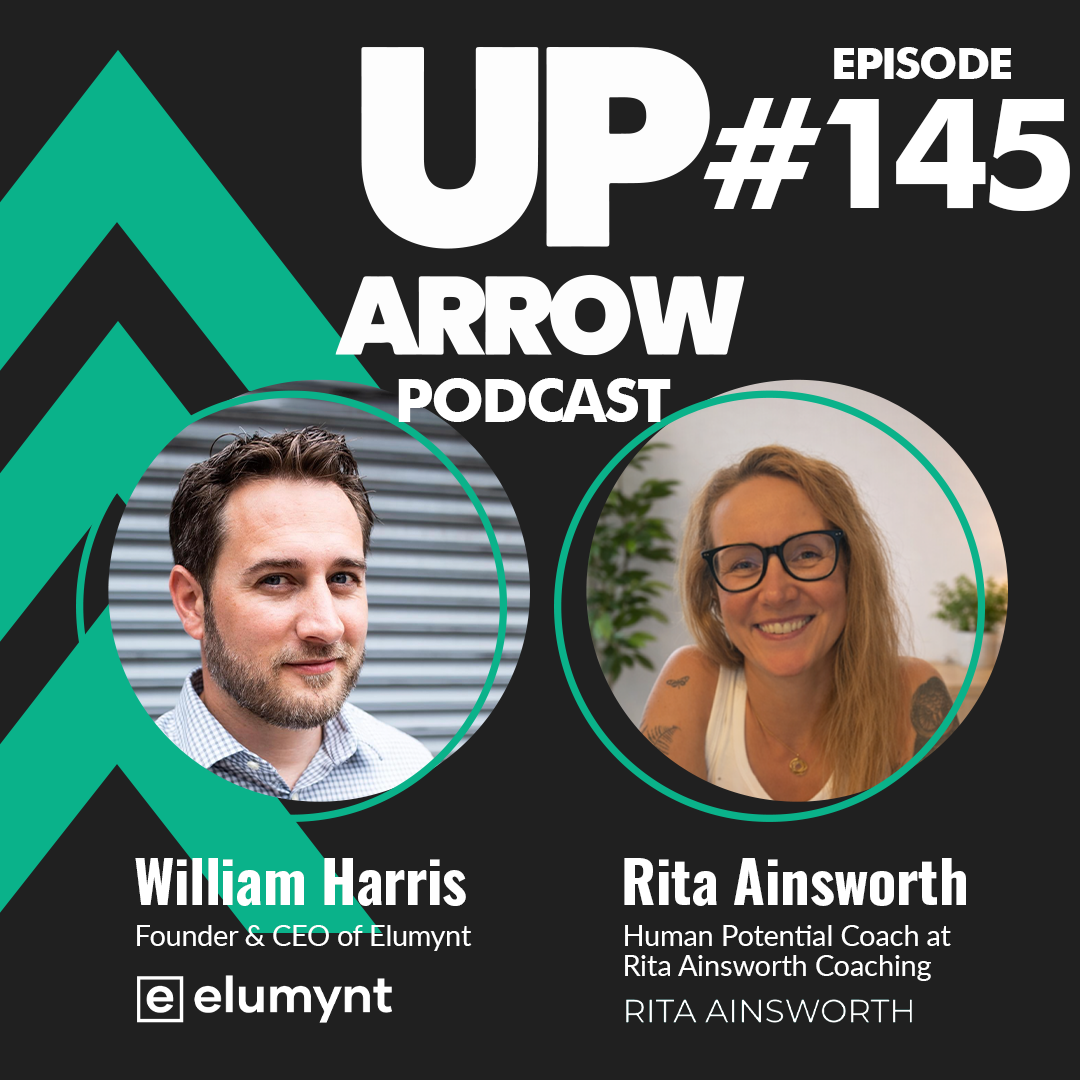


Rita Ainsworth is a Human Potential Coach at Rita Ainsworth Coaching, where she helps high-performing professionals and teams reduce stress and improve resilience through neuroscience-based, body-centered coaching. As a trauma-informed coach, she specializes in guiding clients out of chronic stress and into greater clarity, energy, and balanced performance. After spending a decade in marketing and media-buying, Rita spent years studying human performance, neuroscience, and somatic practices to understand sustainable success.


Here’s a glimpse of what you’ll learn:
- [1:44] Why entrepreneurship should be approached like a marathon rather than a sprint
- [3:06] How business can be driven by unresolved fear instead of joy
- [7:03] Examples of how poor sleep, stress, and triggers lead to overreaction, avoidance, or unclear communication with clients
- [11:50] What happens in the brain under stress: reduced prefrontal cortex function
- [14:41] Why the brain defaults to familiar patterns to conserve energy — even when they’re no longer helpful
- [19:39] The three nervous system states: calm, fight-or-flight, and freeze
- [25:46] How stress leads to behaviors like over-optimizing, blaming, or overworking
- [31:03] Rita Ainsworth’s techniques for regulating stress
- [43:27] Signs of burnout and freeze states, including brain fog, fatigue, and emotional shutdown
- [1:01:49] Rita shares her upbringing in Lithuania and how a nature-filled childhood shaped her perspective on happiness and resilience
- [1:09:45] Why growth requires stepping outside comfort zones while maintaining a sense of internal safety
In this episode…
You can have all the experience, data, and strategy in the world and still make the wrong call in a critical moment. Under pressure, even top performers freeze, overreact, or spiral into unproductive action. So what’s really driving those decisions when everything is on the line?
According to Rita Ainsworth, a human potential coach specializing in nervous system regulation and performance, it’s not your intelligence or skillset — it’s your physiological state. When stress takes over, the brain defaults to survival mode, limiting creativity and decision-making. Rita recommends starting with body-based resets like slowing your breath, scanning your environment for safety, or taking short movement breaks to discharge stress. By building awareness of your patterns and practicing regulation techniques consistently, you can shift from reactive to intentional thinking — even in high-stakes situations.
In this episode of the Up Arrow Podcast, William Harris sits down with Rita Ainsworth, Human Potential Coach at Rita Ainsworth Coaching, to discuss how stress impacts decision-making and performance. Rita explains how nervous system states affect outcomes, why high performers fall into burnout cycles, and practical ways to regulate stress and think clearly under pressure.
Resources mentioned in this episode
- William Harris on LinkedIn
- Elumynt
- Rita Ainsworth on LinkedIn
- Rita Ainsworth Coaching
- Stress Supplement Guide
- “You Can’t Button Push Your Way to $100M: Do This Instead With Sarah Carusona” on the Up Arrow Podcast
- BA Commerce
- Switch on Your Brain: The Key to Peak Happiness, Thinking, and Health by Dr. Caroline Leaf
- A Father's Letter on Relationship and Productivity With William Harris
Quotable Moments
- “The outcome of your decisions will be based on what nervous state you're in.”
- “You can’t outthink stress because stress is [a] survival response.”
- “It takes more effort, more energy to do something that is beneficial than just to keep going through the same old loops.”
- “We perceive everything as [a] threat where this survival mechanism was designed for, you know, a saber tooth tiger chasing you.”
- “From this state, there’s a sense of calm, a sense of being present and grounded.”
Action Steps
- Build awareness of your nervous system state: Recognizing whether you’re calm, stressed, or overwhelmed helps you understand why you’re making certain decisions. Awareness is the first step to shifting from reactive behavior to intentional action.
- Use body-based regulation techniques in real time: Practices like slow breathing or scanning your environment for safety can quickly calm your system. This allows your brain to regain access to clear thinking and better decision-making under pressure.
- Prioritize rest and recovery as performance tools: Sleep, breaks, and downtime are essential for maintaining cognitive function and emotional regulation. Without them, you’re more likely to enter burnout or make poor decisions.
- Interrupt automatic negative thought patterns: Notice when your mind jumps to worst-case scenarios and consciously reframe those thoughts. This helps prevent unnecessary stress and keeps your thinking grounded in reality.
- Practice regulation skills consistently, not just in crisis: Repetition builds new patterns so you can respond effectively when pressure hits. Over time, this makes calm, clear thinking your default instead of stress-driven reactions.
Sponsor for this episode
This episode is brought to you by Elumynt. Elumynt is a performance-driven e-commerce marketing agency focused on finding the best opportunities for you to grow and scale your business.
Our paid search, social, and programmatic services have proven to increase traffic and ROAS, allowing you to make more money efficiently.
To learn more, visit www.elumynt.com.
Powered by Rise25 Podcast Production Company
Episode Transcript
Intro 0:03
Welcome to the Up Arrow Podcast with William Harris, featuring top business leaders, sharing strategies and resources to get to the next level. Now let's get started with the show. Hey
William Harris 0:15
everyone. I'm William Harris. I'm the founder and CEO of Elumynt and the host of the Up Arrow Podcast, where I feature the best minds in e-commerce to help you scale from 10 million to 1 million to 100 million and beyond. As you up area your business and your personal life, have you ever opened your ad account, looked at the numbers, and for a moment you just couldn't think, not because you didn't know what to do, but because something in you just froze. So you start clicking, adjusting budgets, trying to do something to regain control. But deep down, you know this isn't your best thinking. It's not strategy, it's not experience, it's your state. Today's guest has lived that exact moment. Rita Ainsworth was high performing, managing serious budgets, doing everything right, until one day she hits a wall and realizes you can't outwork a dysregulated system. That realization sent her deep into neuroscience stress and performance, and now she helps founders and marketers do something most people never learn, reset on demand so they can make better decisions under pressure when it actually matters. Rita, welcome to the Up Arrow Podcast.
Rita Ainsworth 1:17
Thank you for having me so good to be here.
William Harris 1:20
Yeah, I was very excited about this topic because it's something that I really appreciate, just in marketing, even outside of marketing, I've got daughters who play sports, who are in music, and, you know, this same concept comes up in any other field, and it's things that I'm always talking about them, right? Like with their mental game and things like that. Because it's like, you train your body, but it's like you got to train these other pieces too. And so there's a lot that I've read on this. I'm very excited about the topic.
Rita Ainsworth 1:44
It's fascinating to me because performance marketing or running a business is so demanding and so intense. And I see entrepreneurs, media buyers, they just sprinting. They're sprinting and they think they're gonna sprint for a long time, where, in reality, you have to take the same approaches. If you were doing a Iron Man ultra marathon, any sort of, you know, long race, where you have to pace yourself, and I was racing myself for good three years until I couldn't and
William Harris 2:26
yeah,
Rita Ainsworth 2:26
that's that's why it's so important to me just to share why it shouldn't be a sprint.
William Harris 2:33
What's interesting is, I think entrepreneurship draws a lot of people who are sprinter personalities, a lot of ADHD people in entrepreneurship and things like that. And so it's like, we'd love to just, like, here's an idea, Go, run do because a lot of times you almost have to be impulsive to start the business anyways. You almost have to not think about all of the problems that you're gonna run up in order to actually just get motivated enough to do it. And so then there's that transition. It's like, great, you got it up and moving now you have to switch into like that steady state, and I think that's hard for a lot of people who have the personality to have started it in the first place.
Rita Ainsworth 3:06
I see that a lot. I see this. This field lends itself very well to certain patterns, to certain, you know, unhealed wounds, to certain beliefs, and it's very, very good for keep feeding their beast. So I think it's a realization, why did I start this business? Am I running this business from some sort of unresolved fear, or am I running this business from joy, contribution, fulfillment, anything you know, anything other than fear. So I think it's a good question to just stop and ask.
William Harris 3:52
Yeah, I've got just two quick shout outs, and then I want to really get into this topic, because I think it's gonna be a lot of fun. First, I want to give a shout out to the wonderful Sarah Carusona. She's a previous guest on the podcast. She runs BA Commerce. She's the one who put us in touch. And so just Sarah. Thank you very much. And also, if you're listening, go check out her episode too. Very, very insightful.
Rita Ainsworth 4:12
Sarah is a good friend of mine, so yeah, I'm very grateful she enjoyed this. Yeah. The other one
William Harris 4:17
here is, I just want to announce that this episode is brought to you by Elumynt. Elumynt Elumynt is an award winning advertising agency optimizing e-commerce campaigns around profit. In fact, we've helped 13 of our customers get acquired with the largest one selling for nearly 800,000,001 that IPO Ed. You can learn more on our website at elumynt.com, which is spelled elumynt.com, okay, we are going to be talking about why smart media buyers make bad decisions under pressure and how to fix it. And I want to read this post from David Herman. I think he posted it just today. It was either today or yesterday, but this is on x, and he was talking about, he's like, this week, you know, meta ad simply broke. You probably haven't heard a peep from meta on it, but it's been brutal. We're talking turning add accounts off, brutal. And he goes through it. And. To sell these things. He just says, I'm tired guys, you know. And he says, What does he say? He said, I find myself being a therapist to CMOs and brand teams, trying to figure out, Is this a bug, a creative issue, or the business? There are a lot of bugs on meta. It happens, and not just meta. This happens on a lot of other platforms too. But let's, let's, let's imagine, let's imagine that we're inside ads manager. Yes, there are bugs, but I've got a client rightfully breathing down my neck because performance isn't where it needs to be. I'm in there making a decision, but who's actually making that decision? Is it me or my nervous system.
Rita Ainsworth 5:42
So we think that it's me, whichever part it is, but that decision can have very different outcomes based on the state. So I catch myself throughout the day in very different states, and the same situation can look very different based on what state I am in. So if I have energy, if I slept well, if I had good hydration, and very basic things that body needs. I open the ads manager, I look at it, and I see, okay, the performance rubbish, and I need to deal with the client. But I've been there before. I know what numbers to check. I know how to communicate so I don't raise even more alarms than necessary. For the client, there is, you know, there's a lot of CO regulation happening between the nervous systems, so it's important for me to stay grounded, and when I'm in a good state, I can do all of that.
William Harris 6:57
Yeah,
Rita Ainsworth 6:57
but then gone,
William Harris 6:59
no, go for it. You're gonna take me exactly where I was gonna go. So go for it.
Rita Ainsworth 7:03
Yeah. So then another scenario is I, you know, maybe I slept badly, maybe I had too much coffee. I'm already wired. And I look at it as like, Oh, for God's sake, you know, why? Why do I have this on top of this? I didn't need it. And then I seek message from client that's annoying to me as well. So I am I'm on fire. I am triggered by everything, and I making decisions is harder because I can easily overreact. I can easily turn down things when I just need to wait them out. I can send some message that I you know shouldn't be sending. And then another scenario is I am just so tired that actually I just want to hide. I don't want to communicate. And the worst thing you can do when things are not performing great is pretend that maybe something you know clients not gonna see it, and you just can get away with it, and then you start losing trust. So the outcome of your decisions will be based on what nervous state you're in, and state depends a lot on just your basic needs of sleep and nutrition and rest like rest is like for a lot of people, rest is something that they fear, that it's weakness, that it's gonna be judged. Where rest is very much regulation. Part of the regulation,
William Harris 8:40
it's wild because I went through a period of time building my company where I was convinced that the best thing I could do for the business was to just keep hustling, and I would work until, you know, three in the morning, and then I'm back up at seven in the morning, and I'm back at it, working, and I'm grinding and I'm hustling, and I accomplished a lot. Like, I won't lie that I did accomplish a lot, but I wasn't working out. I was eating crap food, right? Like, maybe McDonald's three times a day, right? It's just like, whatever I could grab, quick, fast, easy. I probably did that for maybe three years. And what's interesting is I was convinced that that was the only way that I could be effective. Eventually, I realized that that's not the best way to do it, and I did start taking time for my morning workout, my devotions, like meditation and prayer, and then in the evening time, like really regulating my bedtime. So that way my circadian rhythm was on, turning off the computer a certain time, and what's wild is I do get significantly more done in less amount of time. I am more effective with all of the decisions that I make. That doesn't mean that I don't still make mistakes, but it's wild being on the other side. It's just like, oh, I can see the colors for the first time over here. I thought I saw colors there. I didn't see them. I do see them now, and I think we downplay just how important all of those pieces really are.
Rita Ainsworth 10:05
And life is not just work like it's so easy to forget why we're doing what we're doing, because a lot of times the business starts when we want freedom, when you know, when we worked in a corporate job or any other job, and we think, Oh, I'll be my own boss. Or if you have children, you say, I want, you know them, to have everything, maybe that I didn't have. And then somehow we lose sight of why we started it, and it becomes just just this beast that we need to keep feeding. And I've lost friendships because I was always working. Luckily, my husband at the time, he was also workaholic, so we kind of didn't, you know, didn't
William Harris 10:55
commiserate
Rita Ainsworth 10:57
But, you know, I see that a lot like people I coach, they would say, Oh, my partner's complaining because I'm always working. I'm always grumpy. Or, you know, like, it just spills into all other other areas of the life, as well as health. And like, my health was impacted massively. So, yeah, it's, it's realization that actually, I can do this from a place of joy and from the place of it being easy. I just need to ask question, why is it hard? What
William Harris 11:29
is break this down for me before we get into the three states, because I want to go to the three states next. But before we get into that, let's imagine that, you know, again, somebody's in a very stressful situation, and they're, they're they're stressed out. They can feel the stress. What's happening between the amygdala, limbic system, and the prefrontal cortex in that high stress moment?
Rita Ainsworth 11:50
So amygdala is the older part of your brain, so it developed first. There's, like, quite a few million years gap between amygdala and prefrontal cortex. So it's so automatic, because survival is the key. It takes over. It takes over so fast, in like milliseconds, we don't even have time to think, is this actually dangerous to my survival? I think, like that's kind of one of the issues right now we perceive everything as threat, where this survival mechanism was designed for, you know, say, but tooth tiger chasing you every so often, and you escape or you don't. But, you know, let's say you escape, and then stress is over. Now we have all the notifications, we have emails, and we perceive our we, not we, but our brain perceives that as actual physical threat. So it's asking yourself, Is it like is the annoyed client a threat? Not really, you know those consequences. But in reality, it's not a massive, you know, threat. So when amygdala takes over, our thinking brain capacity diminishes massively, so we can't make rational decisions. And in that state, it's it's like, Okay, I am looking at the threat. I don't see any options from that side. I don't see any options from that side. It's only this tiny little sliver that I have available to me, and I don't see any other options. So I think that limiting view of the world, of what's around us. What options do I have that gets reduced so much that it it warps the reality in really
William Harris 13:54
there's a really good book I'm just going to show it here by Dr. Caroline Leaf, called Switch On Your Brain, might be one of my favorite books that I've ever read. And she talks about how thoughts become physical structures in the brain, almost like neural trees. And there's been a lot of interesting research on this that that thought almost what do I say? Thought proceeds matter to a point. What's interesting is like the thoughts actually create these changes, not that the changes create thoughts, which is interesting, right? Because we see that these thinking things change things in these moments, these high stress moments, are we basically just running old wiring. Then it's almost like, Hey, we're just defaulting to this old wiring and letting that run instead of being able to create these new states,
Rita Ainsworth 14:41
yes, because the body works, looks for least resistance. So how can I burn the least amount of energy? Again, going back to survival, and energy is a big part of it. So we go to. Those old patterns, even though they're not, you know, good for us anymore, it is. It takes more effort, more energy, to do something that is beneficial than just to keep going through the same old loops, so without awareness, without very intentional change in between the trigger and the response, we just keep going into that just almost like subconscious patterning,
William Harris 15:33
we default, kind of to your point, to our most practiced patterns, not our best thinking. It reminds me I was coaching fourth grade girls basketball this past year, one of the most fun experiences of my life. And you know, you can watch them doing layups and you're like, that form is really bad, and you can have them practice bad form over and over and over and over and over again, if you want, and maybe they'll start to pick up a little bit better form. That's like, there's some benefit to it, right? Or you can slow it down and say, Okay, we're actually just gonna practice that movement without the ball slowly. Now we're gonna practice that movement with just one step. Now we're gonna practice that movement with two steps. Now we're gonna practice that movement with two steps and a dribble, right? And like, getting more and more and practicing, like these little micro pieces to almost, kind of build up those repetitions of that specific movement. And then it becomes, almost, to your point, a groove. And it is a groove in their brain, like it becomes a groove now in groove now in their brain to be able to move the body in that way, in that capacity. Similarly, there are things we're doing when we're making decisions where it's like there are certain defaults. We almost have programs, maybe when we were really little, that we never broke out of those programs, but that was the program that has just been practiced the most in our lives, and we haven't taken the time to almost slow down and develop these a develop these
Rita Ainsworth 16:44
other programs. And something to know about these programs that they're not bad,
William Harris 16:49
sure
Rita Ainsworth 16:50
they developed for a reason. They developed to protect us, but they happen probably very early in life, so most of the programming and patterns to happen up to like age of seven, maybe 12, and we are different people. Now, you know what we needed back then we don't need that anymore. So it's up to us right now to to to look at everything that is happening, step at the time, you know, don't need to overwhelm the system and say, Oh, is this still useful? Is me kind of having this, you know, overreactions? Like, how can I work with my overreactions? Because I noticed after the fact that I were reacted, but there's always a point in time where you know you just before you get, you know, overreactive, that something happens. It's like, what is this like? How can you learn your system so well that you can start changing the default?
William Harris 18:01
It reminds me of something that a youth pastor once told me. His name was happy Peterson, which was when his daughter was three. He was like, Do not go in the road ever. That is absolutely bad. No, you know what I mean, like, very emphatically, that is bad. Now, when she's 16, it's like, we absolutely you can go to the road, you can cross the road. She's got to look both ways, like, like, like, it's a completely different thing that's going on there. Like, you don't have to. There was programming that was necessary when you're three, that that becomes counterproductive when you're older. And so the same thing, like you were saying it's like, these programs, maybe that were written in our brains when we were younger, were absolutely necessary. They were protective. They were good programs. They just need to develop for who we are now today to be able to be the most effective for who we are in this moment.
Rita Ainsworth 18:46
Yeah. And a lot of times, when I work with clients, one to one, we do something called parts work, and we identify a part that is running some sort of loop or pattern. And a lot of times, if you ask that part, you know, how old are you? Or even, how old do you think I am? It'll come in, like, single digits. It'll be three or five or seven, very occasionally, teenage years. But those patterns, like, if you get in tune with yourself, you can find out when they first started.
William Harris 19:22
Very interesting. Okay, so I want to talk about the three states because you told me there are kind of like three states that we have that people operate from. Break these down like a stressed out founder who's staring at a declining role as what are the three states that I might be operating from?
Rita Ainsworth 19:39
So I see people operate in two the third one is actually very rare, and that's where we want to come back to. So the ideal state is, and this is not like just black or white. There's always ranges. So the ideal state is the parasympathetic state. Which is calm, connected, creative. We have empathy. We can see big picture. We have the access to both left and right hemispheres of our brain, so we can combine the logic and creativity. And from this state, there's a sense of calm, sense of, you know, being present and grounded, and it's much easier than to communicate with your team, with your clients. It's easier to make decisions, because you you can think creatively, especially like in media buying. Now, creativity is more important than actual pressing buttons, so to access that part of the brain, you can't do it if you're very stressed. And from here, we have energy and body is working at its optimal level, there is a little like, there could be a little bit of stress. So, for example, you know, you if you love going hiking or jogging or cycling, like, that's a grounded state with some like activation, but the activation is just bringing you just this excitement and energy to your system. Yeah, that small amount
William Harris 21:23
of friction is almost like the friction that's necessary for the thing to move forward, right? It's like, if your tires have no friction, the car can't go anywhere. You need just a little bit of friction so the tires can actually
Rita Ainsworth 21:33
propel you forward. Because if we're too relaxed, we'll we will not have much motivation. So with stress hormones, with adrenaline, you also get dopamine. So dopamine is our motivation hormone, so we need a little bit of adrenaline, just just a tiny bit and dopamine and then cortisol, otherwise we'll be just, you know, Zen and meditating somewhere and not caring too much about any goals. So if we go out of that what, what I call like a optimal performance window, too much, too much stuff is happening at once. Or maybe systems like, you know, the body is too tired and you can't take as much as it normally would, then the body goes into a survival state, which is fight, flight. And that's what most people know probably best. It's the anxious, wired, very focused for for a period of time, you can be really focused, like you were for, you know, three years, getting stuff done, setting up business. Like, I see that a lot, and it's it can be useful, because it gives you like for short period of time, it gives you that sharpness. You don't get distracted, you, you know, you eye on the eyes on the price kind of a thing, and you can keep going because adrenaline gives you so much energy that you can keep going without noticing, you know, where the stories were, like granny lifted some, you know, something out of the burning building. So that sort of energy, but that energy has to come from somewhere, and it comes from our own system. So when we have been in this high alert state, we don't sleep as well. We constantly on, like I've worked with a lot of people who say, I can't just I can't switch off. I finished work, but I'm still thinking about work. So this is a chronic stress state, and adrenaline and cortisol keep pumping because we can't turn it off, and then energy runs out, and we go into the third state, which is called dorsal vagal freeze, which is basically overwhelm burnout, and from there we get brain fog, which is actual brain fog is inflammation in the brain. We get gut inflammation, which is secondary, because they're very much linked. Immune system doesn't work as well. It's It's basically your body saying this, I don't see way out of this threat of this survival, let me play dead, and hopefully this animal that attacked me gonna lose interest and gonna walk away, and I might be still okay, because I can't keep running like it's catching me and I can't run away. So let's use this like last resort tactic
William Harris 24:41
that's wild,
Rita Ainsworth 24:42
yeah,
William Harris 24:43
so let's go. Let's go to the stress state for a minute. Then this feels like the state where I see especially founders or other people. I almost call it flailing. I picture somebody who's who's driving. Drowning in a pool, or, you know, whatever. It doesn't have to be a pool, but they're drowning, and their their reaction is, instead of making productive movements, it's to make unproductive movements that actually makes them go under further. It's flailing like this, and it's not actually helping them get out of the situation. They're doing something. They're not freezing. It's just unproductive. And I see people do this all the time where it's like, okay, well, my ad account isn't doing what I want it to do. So I'm gonna make this change. And this change, I'm also gonna make this change. This changes. I'm gonna change this on the website. I'm gonna change this, change my product, change the price, and they've changed everything. They're just making all of these changes without, like, any real intention behind what they're doing. They're just like, I'm just gonna make these changes, because it feels good, because I feel like I'm being productive, but they're actually being counterproductive.
Rita Ainsworth 25:45
Yeah, it's, it's fight or flight. So that's the response. And some people, you know, they may become more kind of irritable and angry and confrontational and blaming others. Some people will be on like, so does the fight mode, and then flight mode is like, oh, you know, I'm doing things wrong. Let me just do more. Let me keep working. And I'm taking all of the responsibility for everything that is happening and like, that's not helpful. Either. It's like, if I'm running an ad account, Facebook ads or other ads, is just a small fraction of the whole pictures. Like, is there something wrong with the offer, or is there something wrong with the tech? Like, let's, let's bring this to the client, and let's discuss it as you know, a one group. And it's very hard to do it in this state, because it becomes us versus them. It becomes somehow we kind of in opposition, and we can't have this more like a grounded, connected state. So then it's easy to either, you know, not bring up issues. I see that a lot people say, oh, you know, I don't want to upset the client, so I'll just, I'll try to figure this out somehow, you know, by changing a lot of things on the meta side. Or you can say, No, there's nothing, nothing wrong with the ads. It's you know, it's you guys. So that's what really, then hurts the relationship, and at the end of the day is like we are working towards the same goal. So how can we have all realized that we all stressed and come to the place where we can work together instead of being enemies. So I see that a lot.
William Harris 27:50
Yeah, we'll come back to the frozen state later, because I want to, I want to play with this one for a little bit more, and then kind of get into like, maybe solutions for you and two. But when I think about this state, it it's a state that I definitely have found myself in a lot. It's a state that I feel like I found a lot of other people in. I actually wrote an article about the importance of Sabbath, and so regardless of what people's, you know, religious background is, I believe that Sabbath, or this idea of taking a day off, in my belief the creator, the one who made me, said, Hey, I've made you. And I'm going to tell you that this is an important thing to do. And what's interesting is, I think a lot of science seems to back this up, that it's like there is you have to get that. And one of the biggest ways that I noticed that I'm in this state is when I start getting annoyed with people, and you do, you just, you mentioned you get irritable, and you just, like, all of a sudden people are just getting under your skin. When that happens, I realize that I'm like, I'm probably in the wrong state right now, because, for the most part, relationships should bring us a lot of joy. There are people who can get under your skin, but when everybody starts getting under your skin, or they're just very easily, I'm probably the one who's in the wrong state at that moment, and I need to start looking at this and saying, I need to come back into this state of rest.
Rita Ainsworth 29:07
No, like, why are these birds singing outside? They're so annoying. Yeah,
William Harris 29:12
right, that song is too happy. I don't want to be happy right now.
Rita Ainsworth 29:17
There's different signs and the irritability is a big one. Dreading, dreading work. It's like, you know, I kind of, I have to do this instead of, no, I'm choosing to do this. Energy is the big one. Energy and a lot of a lot of voices, parts of us, when we in this wired state, they start showing up. So, you know, maybe they'll be what am I doing wrong? Or something like, I know the client will get upset, and it's it a lot of times, the mind goes to the worst places like this. I will lose the job, I'll lose the house, I'll lose the family, I'll end up, you know, being homeless. That's the way. Brain goes and realizing that probably not gonna happen. Let's be just, you know, let's go to the worst case. Let's look at the best case and actually see what's realistic based on our lives and experience. I think
William Harris 30:40
a lot of people can relate to those examples. I know I can. When we get into that state and we at least recognize, we go, Wait a minute. This isn't a regulated state. I'm in this stress state, the fight or flight state, and I need to, you know, change where I'm at. What are the main ways that you recommend we try to start changing that.
Rita Ainsworth 31:03
I work with body first. I always tell my clients, you can't out think stress because stress is survival response, and the way amygdala picks up threat is through the senses. So hearing, seeing, tasting, touching, what's the other one? That's one more somewhere
William Harris 31:30
you said. Hearing, seeing, teaching, testing, smelling, that's five, right? Did I say that's the five main ones? So okay, no tangent. I always, I like to ask kids, how many senses you have. Those are the five main ones that we talked about, right? We also have the sense of like proprio I think that they there's no official definition of how many senses we have, but it's like proprioception and all of these other senses that we also still have, but other minor senses. So our five main senses? Okay, I'm with you, back to back on track. Yes,
Rita Ainsworth 32:00
that's how we perceive danger or threat.
William Harris 32:05
Sure.
Rita Ainsworth 32:06
So whether it's a slight notification or any other notification or email we saw or the conversation we had, this is all, all comes in, gets processed and subconsciously based on past experiences, kind of decided, is it threat? Is it? Is it safety? That's pretty much to the main concern of the body. We're kind of simple and complicated at the same time. So I can reverse engineer this process through the senses, and I can tell my amygdala in the moment I am safe. I am safe right now, and I'm not thinking about future. I'm not thinking about anything that happened in the past, right now, right now, in this moment, am I safe enough? And very easy exercise, somatic practice, body based practice, is called orienting, which is we can do it through hearing and through sight. So we really slowly look around the room and we're saying, Is there any danger here? So you scan the room until your body gonna like when you when you know you switch the states you will get softening in your stomach. You will get maybe a yawn, spontaneous breath. Maybe you'll notice that temperature changed, like in the fingers, in your toes, and that's the body signaling I am now in this calm state. And it's super easy to do a the more you practice, the quicker the Switch comes. It's almost like the wiring, like, you know, the like, paddle of stocks and salivating, you know, there's a bell and this, yeah. So now, when I start looking around, it's like, I straight away feel like it's all good, very simple, very quick, very simple.
William Harris 34:21
I like both of those. So one is just looking around the room. There is no threat, I'm okay. And then you said saying out loud, not even just inside your head, saying it out loud, because then you're having to make the mouth move. You're having to hear it. It reverberates in your head. You hear it come back through your ears. So it's like, just like, I am safe.
Rita Ainsworth 34:41
Yeah, I'm safe. Or for some people, maybe it's I'm safe
William Harris 34:47
enough,
Rita Ainsworth 34:48
and waiting for the body to give you the response back, because the the messages that go up from the body to the brain, they are. Are slow, slower. They're not myelinated. So three, five seconds for that signal to come. So we will look around. We give our body a moment like, Okay, maybe not yet. Let me look under the desk, maybe, maybe look somewhere like, just be really thorough, and eventually it'll be like, okay, yeah, I can sense it. I can I can feel that I am much more present and grounded and not things are not as urgent or important that they seem like few seconds ago.
William Harris 35:38
Let me take it through two other scenarios, just for fun. Let's say that you're on the volleyball court. I've got a daughter who plays volleyball at a really high level, and you know, you just made a mistake. You missed your serve, or whatever it was, right? It's like you just made a mistake, and you're feeling that rush of whatever bad chemicals of embarrassment or whatever that you're feeling at the moment, but you don't have three to five seconds to reset. You've got to reset because, you know, instantly, is there a faster reset?
Rita Ainsworth 36:08
The more you'll practice, the faster will be. Another thing is breath. So slowing down the out breath, so taking, you know, one breath can make a big difference. So breathing in on a count of four, breathing out on the count of six, and just mentally saying to yourself, Okay, let's, let's, you know, let go of that. Let's start fresh, whatever the conversation, like you can practice the conversation and see what is helpful, and then maybe it's just one word. I, you know, used to watch a lot of Wimbledon, and you can see, like the guys in the break, they are having some sort of conversation. Like they talking to themselves. They're talking to the part that got triggered, that got annoyed, and you have to become the that self leader that can really work with those triggered parts and don't let them take over, because once they take over, like, you know, games over.
William Harris 37:19
This is interesting. Okay, so I was gonna ask about, like, what if you're actually not safe? Melanie Marshall was on and she was talking about, she's covering news, you know, in like, Baghdad, I don't remember where she was at, but like, bullets are flying overhead in that moment, you can't exactly scan the environments and say, I am safe, right? It's like you're actually not safe, but you have to make a decision, but, but I want to skip that one for a second, because I like where you're going with this. That's self talk. It's almost like there are two parts of you in this moment, right? There's the one part that's firing instantly, and then there has to be that logic part of you that says that almost has to have a conversation with your other self that says, hey, yeah, you missed that shot. Like That stinks, but you know you're gonna get the next one. Let's work about what we're training what can training. What can you do differently this next time you, almost to your point, have that conversation out loud with yourself? I think this is why I've seen people that are miked up, that are at like, these elite levels of sports, they do have, for the most part, significantly good self talk, because you already have one part of your brain that's gonna be firing off all the negative stuff that instantly, right? And you have to have some other part of your brain that's at least in control, and going to bring that other piece of your brain back into alignment.
Rita Ainsworth 38:29
Yeah, that's that's huge. We have so many parts like we probably could have 1015, parts, maybe even more. Some will be more dominant than others. There will be some parts that they're just so scared of the let's say the critic, like, you know, why did you mess up? Mess up again? Like that critic gonna be first, and then other parts are afraid to come in and say, no, no, it's, it's fine, you know? It's only, it's a game, and we are building on these skills. And here's what we need to learn because, like, they're so scared to come to show up, so we when we can realize that, no, I don't want to let that critic be so loud. Let me find when I'm in a good state. Let me find the part of me that is, you know, logical and compassionate, and can bring that kind of a almost like a negotiation, like there's a lot of negotiations, so it's like, and then you can practice that like a tiny little escalation, and then maybe a little further and level further it's like. And then you can do it at like, extreme situations where you are in the game and you are, maybe, you know, talking in the middle with the client, and you can notice those parts, and you can say, okay, now I see you. What? You got to say it's not very helpful, right now, I will come back to you later. Let's, you know, let's do this, trust me,
William Harris 40:08
going back to those practiced patterns, right? And so it's like you've practiced those patterns. So when you get to that moment, you know how to handle that. I like that a lot. I want to go ahead. Well, you go to say something.
Rita Ainsworth 40:19
It's practice is the most important thing. Like, we can't just show up, show up and expect to be able to do it. That's why we do meditation, because we want to start building awareness. Like, that's the only purpose of meditations. Like notice the thought. It's not the thinking that we're trying, you know, to to stop. It's the noticing. And when we can notice our voices and these critics and fearful parts, and we can bring the the whole self on board, then it you realize that what you're hearing in your own head is it's just, you know, an old voice. It's not the actual truth. This
William Harris 41:11
reminds me a lot of programming as well, in the things that we watch, the things that we listen to, those things are there, whether we consciously are recognizing they're not those voices are echoing around in certain parts of our brain, and they are very quick. If we've put those on repeat, they're very quick to want to jump in to your point. Then it's like, if we don't have counter balances to that, this is the whole point of be careful what you listen to. Be careful what you're watching, because that stuff does go into your brain. It is now a part of your programming to a point,
Rita Ainsworth 41:42
yeah, and it's our you know, our family, our culture, as you say, everything we see on TV like some clients are coached, you know, let's say, you Know female clients, they have this expectation of how you should be, you know, as a mom and also a business woman and like this superhero, when in reality, you can't be perfect at everything. You have different phases in your life and you stay okay. What's priority to me right now? So Hollywood is creating a very unrealistic expectation, and then now social media, you don't know what's true, especially with AI generated stuff. You know, I stopped going on social media. I mean, I I still do some Facebook ads for clients. But it's like, that's job, but I do not want to spend time on social networks anymore.
William Harris 42:49
What do you mean? You don't run your own business, grow your own wheat, mill your own flour, turn it into your own pizza dough. Like, what do you mean? We don't do all of the things right? I want to go into then the other state, which was that overwhelm freeze, state, dorsal vagal, I think you said, right, yeah. So the dorsal vagal freeze, tell me a little bit more about, like, the signs and symptoms that we've shifted. We've maybe gone run too long in the stress state we're entering into this state. Like, what are the things we're going to start to notice, the things we're doing, things we're saying, things we're thinking. So we can recognize that
Rita Ainsworth 43:25
it starts the body starts whispering first, and then it gets louder, and then gets louder, and it gets louder, and then it screams. So it's very gradual, and it starts with, Oh, I am tired. I'm tired at the end of the day, and I feel like I don't want to cook anything. I just want to grab maybe pizza and watch Netflix. And that's a very mild version of this state. You basically just zone out because it's so uncomfortable to feel in this exhausted state. You kind of try to numb it somehow. And we all have different mechanisms for that. And it's, you know, it's good to recognize, like, Oh, I am grabbing for, like, ice cream I've I must be, you know, really tired, and I need to really just maybe get up an hour later and go to bed an hour earlier. So, little, little, little kind of signals there.
William Harris 44:31
I love that you just called out the TV one, though, that was my default state for a while. There it was like, Hey, I'd finally get done with work. And it's, you know, 11 o'clock at night, I'm just like, I just need to watch a show so I can go to bed. And it's literally the things that I would say this is like, I just need to be able to, like, turn off my brain, right? I just needed and so it's interesting. I don't think I've watched TV two months. I just, I think we tried to watch a show my wife and I the other day, and I'm like, I just don't find it enjoyable anymore. Like, I just. I don't want to. There's just so many other really exciting things. And I think part of that is, like, you said it's like, I'm not. I'm no longer in this like, frozen state where I'm just like, I just got to turn off my brain. It's like, no, no. My brain's just really happy and fine doing what it's doing right now,
Rita Ainsworth 45:13
exactly. Yeah. So that's, that's very mild version. Then you can go into, I get up in the morning and I'm already tired, and I really need coffee to get me going, because coffee is adrenaline. So then you go from burnout to stress, and then we use adrenaline to keep going through the day, and then switch off again in the evening. So this is a very common pattern that I see. And then in some point in time, depending on someone's system, and you know, what are the health conditions they have, and genetics and everything else and epigenetics, there comes a point the body just can't take it anymore, and then it's like, it turns itself off, like it happened to me when I was I was working for a big advertising agency. I was super excited when I joined there. Worked my, you know, ass off, and got to the high level. That was probably about 1214, months in. And I remember I had the team call in the it was my evening time, because it was us based. And I went to check ad account, and as I'm looking at the ads manager, I see what's on the screen, but I can't compute. I can't really make any decisions. So, like, is this good? Is it bad? Like, what do I do? And then with that came this interesting kind of, like, like a metal band came across my forehead, and I had this severe headache, and then the panic, you know, how long will it last? What? What the heck is this? Because I, I always thought I was invincible, you know, I can just push myself and how the body just gonna, you know, submit to my mind. I'll keep going. And, you know, like, when I gonna be able to work, like I need to pay bills and all this, you know, chats are started, and I was in that state for about two months. I would say, two, three months. So working, yeah, it was. And, you know, every day when it's not getting better, that same anxiety comes in as, like, what is it and how long it'll last? So, you know, to the point where, like, I couldn't watch movie because it was such a big sensory load on my site, on my brain, that it would seem like it would cause headaches. So screen time was limited to probably two hours a day for long while. So I had to like gradually, I went back to normal. I took a lot of supplements for energy, but my normal wasn't my regulated state. My normal was back to the stress, anxiety, and then, even less, the year later, I felt like, Okay, I'm burning out again. So it can come on really fast. It can come on gradually, but energy and decision making is two big kind of, you know, factors and kind of symptoms that people I think, will notice.
William Harris 48:57
I've certainly felt this myself, even recently, one of my daughters felt this. It was interesting because we started talking, and she started, you know, tearing up over a couple things, and she was just talking about how she's just annoyed with everybody kind of thing. And it's like, okay, I recognize kind of where you're at. And we talked through some things, and as we continue to talk, and she was able to get some of these things off of her chest and all the things that were kind of bothering her. And, you know, she's, she's, uh, she's doing a lot, right? And I won't go into all the details, because I want to say which daughter it is, right? But it's like, she's doing a lot, and she's very, very productive, like, impressive, right? And it's like, but she's been using that productivity to basically shut off a whole lot of these other parts of her life. And it was interesting, because it's like, we get through all of this, and we're done talking, and she cries a little bit, and then she just takes a nap. She hadn't taken a nap in forever, and she was like, I needed that, right? And it's like, she almost couldn't relax until like was able to like process some of this stuff. And so I wrote this article that I'm going to share in the notes for people too, but it's A Father's Letter on Relationship and Productivity. It's just like, because I have felt that before, I know what it's like to get in that state. We're just like, go, go, go, go, go. And then you just. Can't. And like you said, it's like, I can remember looking at words on a page or numbers, and you're like, I know this stuff. I but I literally cannot process what is right in front of me. Your brain is just like, nope, not today. We're just not doing it. And like you said, that state can last for a while. It's a really frustrating spot to be in.
Rita Ainsworth 50:19
It is because you feel like, oh, you know, I want to do this. Like I want to run my business. I want to, I just, you know, do I just, I want, I need to get
William Harris 50:31
I need to get this done, right?
Rita Ainsworth 50:33
Yeah, and yeah, and then it's just, it's not happening, and it's so frustrating. And again, those different parts come up and the fears, and it's like, you know, it's so beautiful that your daughter can come to you and can talk to you, and you're not just gonna dismiss and say, Ah, you know, don't worry about it. So that that CO regulation and being heard, it's so important for people because they feel so alone in the experience. And I think you know, if you're working for an agency, it's very difficult to go to a manager for people, because they feel like I will be seen as someone's weak, someone is not fit to work here. Maybe I'll lose my job. So people suffer through that in silence, and then eventually, eventually they burn out anyway, and then they leave. And I find it so just mind boggling, where you know, the the manager on the business owner can say, why don't you take a week off, and then you'll come back much more refreshed. Make sure you rest. Make sure don't worry about the accounts. And then people would like week is a lot of time for people to recover. And when I ran ads for agencies, there is no one who covers holiday or, you know, if you figure something out, then you have to then cover for someone else. And that's like, double the load. And you think I was just not gonna bother. I'll just be on all the time, and just some rest, some ability to switch off. That's that's all we need. Every so often,
William Harris 52:25
I totally feel that run an agency that does ads, so we talk about that a lot as a team. I have told everybody on my team, and in case, in case, I have never told this to anybody like I've tried to tell this specifically to every single person we hire, but I'm gonna say it again right now, right? If you need to talk to somebody, if you need time off, please, please, please, make sure that we know take the time off. We have no questions asked. Mental Health days, just take it off. You just say I can't today. I just can't, right? We will cover things. Nothing is that big of an emergency. You need the time off. And when I say that, I like, I will talk to you about anything. It's like, I have cleared my calendar to talk to somebody who's dog died, right? It's like, Great, this meeting doesn't need to happen. Call me. Let's talk. Because I recognize the value of the weight of the human side of who we are, and that is way more important than whatever that ad is, and you're not going to be effective if your dog is actively, you know, passing away, or you had to put them down, or whatever the today, or whatever else is going on, like, there are things that are happening in our life so that it's like, look, this is more important somebody else can handle whatever those changes are. Let's talk about the things that are very real and human for you right now,
Rita Ainsworth 53:39
I've seen agencies lose their best people, because the best people work their way up to where they are. They gained experience, but then they they can't take time off, because, you know, no one wants to let them, you know, to take time off, and it's, it's great that you have that. And I think the more human we can be, the happier the team gonna be, and they're going to be doing better work. Even knowing that it's an option, like even knowing that something's an option, helps us stay out of that free state.
William Harris 54:20
Yeah. So let's say that, aside from taking seven days off to recover, what are some other ways? No, no, I know, but I'm saying like, you do need that sometimes. Besides, besides that, what are other ways you reach this state? Let's say, like, the extreme version of this state, right? Like, where you just, like, I'm frozen, what are some ways that you can help to get yourself out of that
Rita Ainsworth 54:42
safety and rest. So safety is using so orienting is one of those tools, even if no one ever says, unless they actually unsafe, but no one ever says, I feel unsafe. But underneath there is. So much going on. So using the tools that we can tell our body we are safe, the orienting, the breath work, the different ones that I teach, then rest and energy recovery. So what happens in shutdown is it's not just mental burnout, it's also physical. So we want to have as much sleep as possible. We want to be taking supplements. I even go the route of getting some IVs that really, you know, gets helps me to get out of the worst place. Like in November, I was traveling a lot. I was like, almost out for the whole month in the states and working at the same time. And then my mom got ill, and I was very stressed about her. And I could feel like, in a week, like, on top of traveling and on top of the stress with my mom, and, like, in a week, I was like, I am I haven't burned out, so let me find a place where I can get IV. So I had a couple of those, like, one a week, and I felt better. Like, straight away I felt better. So the the biology part plays massive difference, and it's just so easy to do. Like, if you don't, if you can't, go and get IV, take magnesium, take B group, take things like CO, Q, 10 and P, Q that are specific for energy. There's so much out there. Like, obviously, check that that's good quality. Sure. Do you
William Harris 56:44
have a list of these somewhere that we could link to that you're like, hey, here's my top favorite supplements or whatever to take
Rita Ainsworth 56:49
I can Yes, I will share. I have a Google Doc that I share. So yeah, I'll share that with your audience. And a napping like naps are really important. And there is something that you can do it like between maybe zoom meetings or between tasks. And there is a another somatic practice called cardio ocular reflex. So basically it's like an eye support. So the optical nerve is linked to the vagus nerve, and we can turn off that response and give us ourselves a little like someone called it like a micro nap. How
William Harris 57:36
can you show me?
Rita Ainsworth 57:38
Yes, I can show you. So we make sure that our hands are nice and warm, so you can, you can rub, rub your hands together, and then I'll take my glasses off. Then we take our fingertips and we start just finding the outline of the eye socket. And it's probably never done that in your life, so all the way around eyebrows, and just like, just, just say hi to your eyes. And so now you've got the the outline. We'll take our palms of our like hands or heels of our hands, and we want to place the heels over the eyes,
William Harris 58:22
okay?
Rita Ainsworth 58:23
And if do you have anything to lean on, like your desk, correct?
William Harris 58:28
Sure.
Rita Ainsworth 58:29
So just lean into the palms and see what pressure your eyes like, if it likes bit like gentle pressure, if it can just wants to completely collapse into the palms and just notice what happens in your system if you notice any Any changes. And then you can stay here for couple of seconds. You can stay here for 30 seconds. You could even stay there for like, a whole minute, like, depends what your system needs. And then, oh, you know, I'm back. I kind of feel just a little bit more refreshed.
William Harris 59:19
You didn't hypnotize me to act like a chicken while we did that. Did you okay? Just make it. Make it Sure. What about, what about, like cold water, like mammalian dive reflex, helpful in certain situations.
Rita Ainsworth 59:37
It is not helpful if you're already in oval because that it's stress. So if you already have too much stress on your system, it will be, you know, could be a straw that breaks the camel's back. So you have to be careful with cold exposure and heat. It's very nice to stretch your system and. And kind of see, like, Okay, I'm not I'm not breaking myself. I'm just just stretching a little bit, and then I'm recovering. But if you're already tired and it's not a great idea,
William Harris 1:00:11
how do you feel about so maybe not that one, but let's say walks during when you're just in like, that acute stress phase, not the freeze days, but when you're in the stress phase. I heard someone say that our brain thinks best at three miles an hour. And I've noticed for myself that I get a particular email or something that just sets me off. And I'm like, gonna get up, just gonna go for short little walk, and I feel a lot better when I do.
Rita Ainsworth 1:00:33
There is a lot to that, especially if you can find nature as well, because nature is regulating the reason it's good, because stress was designed for escaping, escaping or fighting. So our lives became so sedentary that we don't move. So adrenaline comes up and we are sitting here, like stuck, like even being in this, you know, mobilized position can put us into freeze. So getting out and getting that adrenaline out of the muscles, they they literally go into the muscles, because they are preparing you for for for running away or fighting. So that's why it works so well, because we we're processing adrenaline the body is moving, because that's what it designed to do. And your thinking mind comes online, and then you say, Oh yeah, I can, you know, I can figure this out.
William Harris 1:01:28
I like that. I want to get into the next section. I want to get in to know who is Rita Ainsworth. You grew up in Lithuania until you're 10. But take me to that moment, that time growing up, what it was like and how you helped think has shaped you to be who you are today.
Rita Ainsworth 1:01:49
So I remember it as a very simple life. We I want to grow up in the on a on a farm. There's not many houses around. There was very basic, you know, facilities. There was just a very everything was very simple and basic, but I never felt that there was any kind of lack. And you know, the, there were two or three TV channels. There was probably, you know, two kinds of bread in the shop you could buy. There was the three kinds of cheese, like, everything was just so simple. I guess it helped with, like, now we have decision fatigue. We have so much choice.
William Harris 1:02:49
Just gonna say that, have we complicated life from what that was, yeah,
Rita Ainsworth 1:02:52
and there was a lot of nature. There was a lot of animals living, you know, on in the countryside. So I as much as I guess, I wanted to get out from there, because every kid and teenager things. So I just hate this place. But now looking back, I feel, I just feel so grateful that I had that simplicity, and I know that I can be happy with very little. You know, there were many periods in my life where I've had so many different careers, like, you know, I started as a pharmacist, and then I was working in real estate, and there was financial crisis. And, you know, I lost job, and I went from making really good money to having nothing and trying to figure stuff out. But at every point I felt I'm happy. You know, I can figure stuff out instead of going out, I can cook a nice meal at home. Like the key is people around me and relationships, and right now, like, the older I get, is nature being as much in nature as I can so, yeah, it was interesting times because we didn't have, I called them, you know, foreign movies. We didn't have foreign movies. We had some good old Russian movies that they would New Year's Eve. You would watch the same one. And maybe there was one that you watched as a kid during summer holidays, and it still was enjoyable. It's like, oh, look forward to this because they couldn't get it on like on demand.
William Harris 1:04:44
I love that you told me that school and work became a big source of external validation for you, and that you drove to some of these experiences. Yeah.
Rita Ainsworth 1:05:00
So one it was cultural, you know, you have to work hard. I think it came from being so close post the war. So my mom was born during Second World War, and then she was actually born in Russia, and then brought to Lithuania by Germans on some train. They were just got offloaded the whole family, and they had to find the way around. So for my mom, it was ingrained the work and survival and having enough food on a table. So I saw her as like my hero, and I thought the working hard was the best thing you could do. And then, on the other hand, my my dad and I, we didn't have a great relationship, and I was, I wanted to be like complete opposite, but at the same time, I felt like validation from him was important. So how can I get that attention? How can I be the best student? And that got ingrained without me even realizing, and then it became, oh, how can I be the best at what I do? Doesn't matter what career I was in, and that drew me to burnout. It wasn't like as much as well. This environment is set up to burn out if you set good boundaries, if you know that you are the most important person, that your worth is not tied to outcomes and work you reduce you will be able to speak up and to ask for what you need. And I didn't have that. I didn't have those skills. I constantly felt like I will be found out that I'm not good enough, that I had to keep working. And it wasn't just work, it was personal relationship, relationships as well. And feeling like I am if I'm not doing then I'm not good enough. So sitting with that discomfort and facing it, instead of keep running it, away away from it, and wanting to use doing and work as a coping strategy became less of a good option. And yeah, I did a lot of work, lots of coaching. Most of it came from me becoming taking coach training programs, and we just coached each other, like every single day, until, you know, I ran out of topics to talk about, and then I thought, oh, okay, I feel like I'm a different version of me. I I am not the 457, 1214, year old versions of me. I am bringing myself to, you know, me 40 years old, or, you know now 46 so yeah, I had some upgrades. That's
William Harris 1:08:24
great. Do you have any quotes that you live by?
Rita Ainsworth 1:08:30
I do? I have a one that it became important to me when I continued sacrificing my joy and happiness for some future version of it, and it's says how we live our days is how we live our lives. Because there it's so easy to say, I will do this thing when you know I have less work, or I will do this when, God forbid, retire, or it's easy to sacrifice things that are important. And for me, those things are my health and my relationships. So I every day, I try to live as like as it was like, This is what my life, you know, looks like, because after how many days we have available, like that will be a combination of what our life, life is like. And another one is, ships are safe in Harbor, but that's not what ships are built
William Harris 1:09:44
for, good one,
Rita Ainsworth 1:09:47
and it kind of ties in with the nervous system, because we need to know that we have safety. And we can always venture out and then come back when it gets too stormy, but we can go out in you know. Know, we can choose our storms, the storms that we can manage, and that feels like an adventure, not terror.
William Harris 1:10:08
Yeah, we weren't meant to be sedentary and just sit here and do nothing. We were meant to go, do, be productive, create. We were meant to go on adventures and challenge and do things, right? So, yeah, yeah, that's that's a powerful thought. It's good to find that safety, but it's good to find the ability to feel safe throughout that adventure and to know that that's okay. My wife and I were talking about this with something where it's like, without going into details of what we're gonna do, it's like, something that is like, potentially, like, a big, risky thing, and it's like, if I think about doing this for the next 30 years, I feel incapacitated, right then I'm like, I just can't make this but it's I say we're gonna do for two years and we'll see what happens. As long as I know that it's like, this doesn't have to be a permanent decision. Let's go and do this thing and try this thing and see how it works. Then it feels a bit more like an adventure. And so I've started looking at things as micro adventures. I'm like, what is the adventure of our life right now? Right? Let's adventure. Let's go do that, versus trying to think that this is, like, this big, giant thing that we're gonna like, you know, it's a permanent decision that we've made.
Rita Ainsworth 1:11:12
Like, we have choice at every moment we have choice, and sometimes it's not the choice we want to make, but it's still a choice. We don't have to be stuck like I am in the next month, just over a month, I am relocating to South America, and
William Harris 1:11:30
really,
Rita Ainsworth 1:11:31
yes, and I think to myself, why not try? If I don't like it, I can always come back like there's nothing to lose. So it's the ability to go and have adventure, and also ability to say, you know, if, if it doesn't work out, somehow be a failure and I will not be able to come back, because I'll be too embarrassed. No, I'm I don't know what gonna happen. I never know we're gonna what will gonna happen, even when we think we know what will happen. We don't, but that's
William Harris 1:12:02
the adventure, right? And I think that's what I was looking at for my wife and I too, is this thing that we're gonna do where it's like, yeah, but if it doesn't work out, then it's like, you feel, you feel like you've like, you've messed up, but it's like, but if you look at it as it's not a thing that you have to accomplish, it's just an adventure. And like, you know what your boat might sink you end up on, like this deserted island, and you're like, that just makes the story even better. Like, what story to tell, right?
Rita Ainsworth 1:12:24
Yeah, will I die? No, okay, let's do it. Yeah,
William Harris 1:12:28
that's, that's a good well, and you still might say, yeah, you might, like, I don't know, like, you know you're gonna do like, parachuting or whatever you might, you might, but you know, the risk is still pretty low, and if you do, at least, you've got a good story about how it went. Right?
Rita Ainsworth 1:12:43
Yeah, exactly
William Harris 1:12:44
something that you told me that was important to you. And I like to ask people about their passions. And one of the things you said is just like spiritual passion, like, just something that's bigger than you, tell me a little bit more about like, that passion in you and why that became a passion.
Rita Ainsworth 1:13:04
I was very much like most left brain thinkers, and everything for me had to have logic and proof and scientific proof.
William Harris 1:13:17
Love it,
Rita Ainsworth 1:13:18
and I couldn't touch it. It was, you know, discounted. And then I was going through a tough period in my life where I had to make a hard decision, relationship decision, and for about a year, was going between my head and my heart, and there was no, no way to like one was right and then the other was right, and I felt like I needed some external support, so I looked for other ways to help me make the decision. So that was my beginning of just just playing, dabbling with like, different spiritual modalities that are out there, and it was more of a play. It did help me. I had a lot of validation from what I discovered. And then the real kind of a test was of this becoming less of like theory, more of a reality is I had a brain infection
Speaker 3 1:14:26
out of nowhere.
Rita Ainsworth 1:14:30
It was probably three years ago, and it started out as a cold. But few days in, I felt like I know it's not. There's something more serious going on, and I had to go to the emergency room. I had rash all over my body. I had swelling in my feet and dizziness. And I didn't know what was happening. And for some reason, the conventional medicine was ignoring me and telling me to go and wait. And you know, I wasn't. It wasn't bad enough yet for them to do much about it. And my friend, in kind of prior to that, talked about this healer she met, and she was working with him, and I messaged her, said, I need some help. I don't know what to do. I'm super scared. So on that day, I was already called ambulance because I was afraid that I will pass out. I don't know what will happen. I was living on my own, and we got, I got on a call with him. He lived in he lives in South Carolina, and we started talking, and he was asking me questions, not just health related, but general like about me. And hour and a half into the call, I could feel the feet swelling went down, and I kept in contact with him on WhatsApp. And when I had really severe headaches or dizziness, I would message him, and he said, he would say, okay, just sit down. Let me do some work. And I could feel like the headache moving around and dissipating. And for me, the concept of spirituality, that there is something more to then, to what we can see, became so real, like it was just such a shock to the system, you know, experience that, interestingly, I don't wish it to for anyone, but it was one of the best experiences that happened to me. In hindsight, I had to face a lot of fears, and I now have this gift of understanding that there is so much more, there is bigger purpose that I am in ways connected to the universe, that I have this as a resource and kind of this, you know, this human life is not as serious as we make it out to be. So it was a gift in so many ways. And I say to people, I feel like I was seeing the world in black and white, and then all of a sudden I could say it
William Harris 1:17:47
you, you mentioned it being a gift to go through something so horrible. And I can't think of very many examples of somebody that talk about like this gift that they had without going through something horrible, like the amount of times that we hear this. And what's so interesting about that is it's like we're so scared to go through those really challenging times ourselves without realizing that. It's like the things that we likely want and desire are on the other side of the most challenging things we're going to go through. And that's not just true for us. That's true for our kids, and we want to protect our kids. We don't want them to go through that. But like that, but like that means keeping them from the thing that's even greater and even more exciting, and just that idea of, like you said, spirituality is something that's bigger, that's beyond this. I think I like science a lot as well. I I like physics. We talk a lot about quantum entanglement and things like that. I think about how it's like, okay, somebody who's on a phone with you, right? Like, not even the same room, not even in the same country. I think that there are things that take place even at a quantum level that we don't yet understand. I think maybe at some point in time, we'll have a little bit better understanding. Of that. And I'm not taking that away from the spirituality. What I'm saying is that it's like, I believe that a lot of the spirituality that we see and things like that still has, like, some some element of, again, I'm going to go back and say, like, I'm a Christian, and so I believe that God created the quantum world, even, and that he uses the quantum world as a way to be able to do some of these things that we still perceive, as, you know, outside of what we understand in science. But I think that he's like, no, no, I created science like I made it so that way it works this way, on purpose.
Rita Ainsworth 1:19:32
Yeah, I am with you, with you on that, because I feel like science still catching up with spirituality and looking back at ancient civilizations, they they knew so much more than we do. You know our technologies, like we're rediscovering the wheel right now, and we're just the very. Beginning, yeah,
William Harris 1:20:04
Rita, I have thoroughly enjoyed talking to you. This is, again, one of my favorite topics to talk about. If people wanted to work with you or follow you, what is the best way for them to get in touch and stay in touch with you?
Rita Ainsworth 1:20:16
They can find me on LinkedIn, Rita Ainsworth, or they can come to my website, RitaAinsworthcoaching.com, I do have a quiz to check what state people are in, what state the nervous system is in, so it's a fun quiz, and they can then have some resources to help them to support that state, and if they want to work with me, I have a group coaching session every Friday. I have a small group of performance marketers research circle. We practice the tools that I share today. We talk about our parts. We have just nice conversations where we are going through the same experience, and everyone's already been there, and they can support each other. So it's a nice community. So if someone feels like they feel a bit alone in this, you know, industry or business they're running, then they're very welcome to come and check it out.
William Harris 1:21:27
Did you tell me you had, like, a coupon code or, like, an offer or something, or am I forgetting something?
Rita Ainsworth 1:21:31
So it's free until they're happy to pay. I don't want to force people into fast decisions. That's not how nervous system works, and I want to create it as a safe environment for people to do this work, and it's up to them to decide when they're ready.
William Harris 1:21:51
Amazing. Rita, it has been a lot of fun talking to learning from you. Thank you very much for sharing your time, sharing your wisdom with us today.
Rita Ainsworth 1:22:01
Thank you. It was lots of fun.
William Harris 1:22:04
Thank you everyone for listening. Hope you have a great rest of your day.
Outro 1:22:08
Thanks for listening to the Up Arrow Podcast with William Harris. We'll see you again next time, and be sure to click Subscribe to get future episodes.


%201.png)