


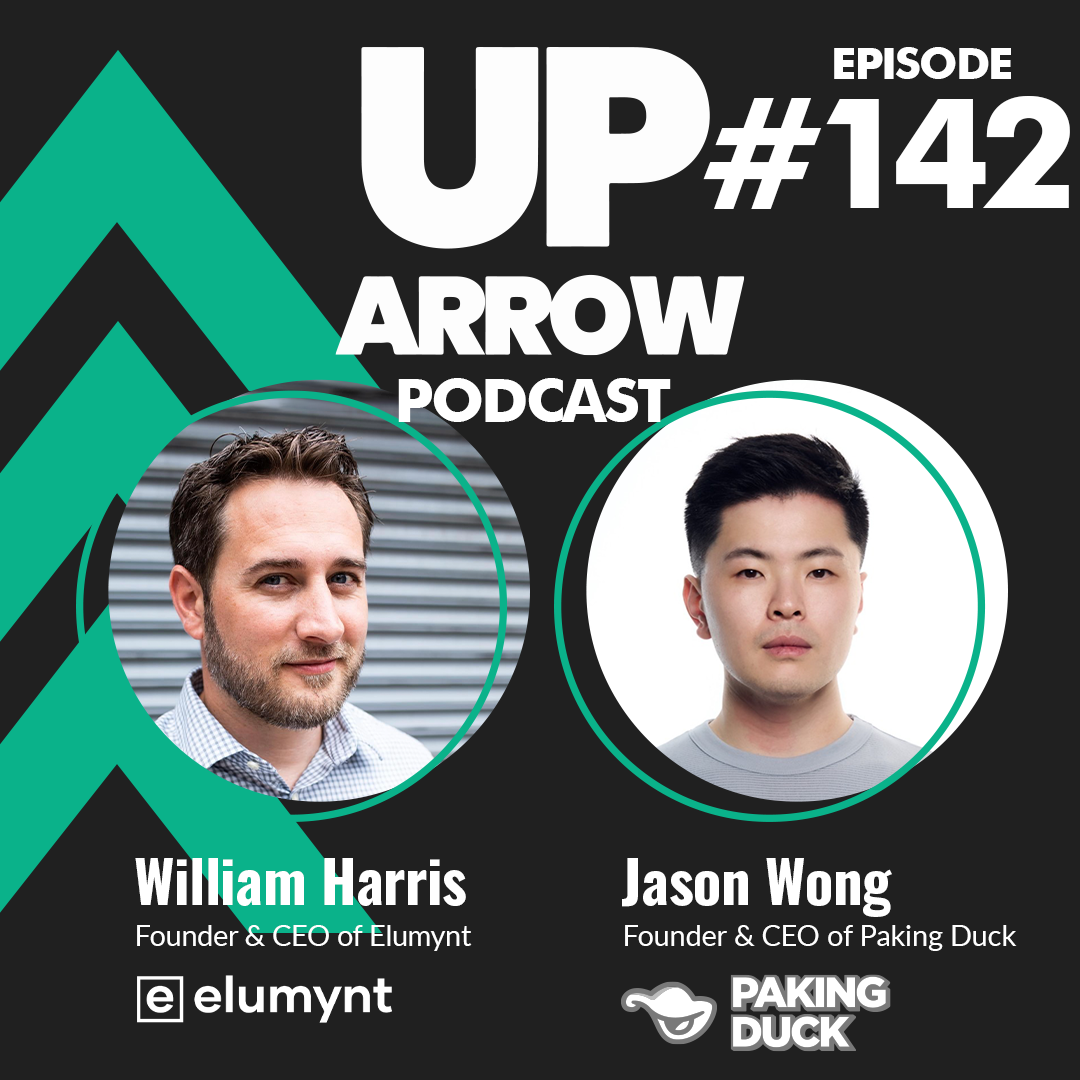



Jason Wong is the Founder and CEO of Paking Duck, which provides custom packaging solutions for DTC brands. Before launching Paking Duck, he built and scaled multiple DTC ventures, including Saucy, an end-to-end sourcing and logistics company, and the beauty brand Doe Lashes, which reached significant valuations under his leadership. Jason started his career as a teen entrepreneur in blogging, affiliate marketing, and e-commerce before expanding into international logistics, manufacturing, and supply chain operations.


Here’s a glimpse of what you’ll learn:
- [2:29] Why packaging is a revenue driver, not just a cost center
- [4:34] How Jason Wong’s early e-commerce experience shaped his view on packaging
- [6:50] The challenges of sourcing packaging manufacturers through Alibaba and Google
- [10:12] Jason explains how he built Paking Duck to operate like a brand partner
- [19:30] How packaging boosts customer retention
- [24:18] The differences between commodity and strategic packaging
- [30:42] Lessons Jason learned from scaling multiple eight-figure e-commerce brands
- [38:15] How TikTok-native brands approach packaging
- [46:27] Tips for managing speed and iteration in fast-growing supply chains
- [55:10] Common mistakes founders make when optimizing packaging for cost
- [1:03:45] Jason’s long-term vision for modernizing the packaging industry
In this episode…
Most founders obsess over ads, creative, and conversion rates — but overlook the one thing every customer physically touches. Packaging is often treated as a cost to minimize rather than an asset to optimize. How can the box on your customer’s doorstep increase retention, reduce costs, and drive revenue?
Packaging manufacturing expert and e-commerce entrepreneur Jason Wong maintains that packaging can be a growth lever. He explains that packaging should be designed as a marketing channel inside the home — something customers proudly display, turning it into a mini billboard that keeps your brand top of mind. Jason advises founders to engineer packaging strategically by reducing dimensional weight to lower shipping costs, reinforcing structural integrity to prevent refunds and chargebacks, and designing with storytelling in mind to strengthen brand perception. When approached holistically, packaging moves from a backend expense to a compounding growth asset.
In this episode of the Up Arrow Podcast, William Harris sits down with Jason Wong, Founder and CEO of Paking Duck, to discuss how packaging drives e-commerce growth. Jason explains why packaging is a revenue driver, how smarter structural design reduces shipping costs and damage, and the common mistakes founders make when optimizing purely for cost.
Resources mentioned in this episode
- William Harris on LinkedIn
- Elumynt
- Jason Wong: LinkedIn | Instagram
- Paking Duck: Website | Instagram
- “Strategies for Cultivating Your Personal Brand on Social Platforms With Goldie Chan” on the Up Arrow Podcast
- Goldie Chan
- “Operational Mastery, Category Clarity, and Building a CPG Brand With Sam Nebel” on the Up Arrow Podcast
- Good Wipes
Quotable Moments
- “I think a lot of people think of packaging as an afterthought…”
- “I think packaging is the first impression that you have with your clients, right?”
- “When I say that packaging is a revenue driver, I'm talking about using it as a marketing element.”
- “Those are basically your billboards… So, that alone can increase customer retention.”
- “There’s an opportunity for me to fix something that I experienced for the last 10 years.”
Action Steps
- Treat packaging as a marketing channel, not just a protective layer: When customers display your product in their homes, it becomes a mini billboard that reinforces brand visibility daily. This increases retention and keeps your brand top of mind without additional ad spend.
- Engineer packaging to reduce shipping weight: Designing with dimensional weight in mind can significantly lower fulfillment and logistics costs. Over time, these savings compound and directly improve your margins.
- Prioritize structural integrity in design: Stronger packaging reduces damage during transit, preventing refunds, chargebacks, and negative reviews. Protecting the customer experience protects your revenue and brand reputation.
- Design packaging to tell a clear brand story: Your packaging is often the first physical touchpoint customers have with your brand. A thoughtful unboxing experience strengthens emotional connection and perceived product value.
- Choose manufacturing partners who think like brand builders: Transactional vendors focus only on cost and output, while strategic partners consider design, transport, and scalability. Aligning with the right partner prevents costly mistakes as you grow.
Sponsor for this episode
This episode is brought to you by Elumynt. Elumynt is a performance-driven e-commerce marketing agency focused on finding the best opportunities for you to grow and scale your business.
Our paid search, social, and programmatic services have proven to increase traffic and ROAS, allowing you to make more money efficiently.
To learn more, visit www.elumynt.com.
Powered by Rise25 Podcast Production Company
Episode Transcript
Intro 0:02
Welcome to the Up Arrow Podcast with William Harris, featuring top business leaders, sharing strategies and resources to get to the next level. Now let's get started with the show. Hey everyone.
William Harris 0:14
I'm William Harris. I'm the founder and CEO of Elumynt and the host of the Up Arrow Podcast, where I feature the best minds in e-commerce to help you scale from 10 million to 1 million to 100 million and beyond. As you up arrow your business and your personal life, what if one of the biggest constraints on your growth is something so mundane that you overlook it every single day, not your ads, not your website, not your product, your packaging, the thing you've probably outsourced de prioritized or optimized purely for cost. Today's guest has built multiple eight-figure businesses and discovered, almost by accident, that packaging is a growth tactic, not a cost. Jason Wong is the founder of Paking Duck, a packaging manufacturing company working with some of the fastest-growing e-commerce, Tiktok, native brands in the world. And today we're breaking down how packaging can move from being an operational headache to a strategic advantage, and why the founders who figure this out early scale faster. Jason, welcome to the Up Arrow Podcast. Thanks, William. Super excited to be here. Yeah, I was trying to think about how we ended up meeting first, and I couldn't remember, but I saw you were connected to my good friend, Goldie Chan so I don't think she made the intro, but I'll just ask, How do you know Goldie?
Jason Wong 1:21
Goldie is amazing. I've known Goldie for maybe eight, nine years now. We met through a conference back in Los Angeles, and she was working on a lot of personal branding marketing, and she's an amazing writer. I actually ran into her randomly a couple couple months ago. She's great.
William Harris 1:37
Yeah, I will say my claim to fame with Goldie is she made an NFT, her very first NFT, and it was to raise funds for some some people, I bought the NFT. So I bought the very first Goldie chan NFT. I'm still a holder to this day. So I got one interruption that we're gonna dive right into the good stuff here. This episode is brought to you by Elumynt. Elumynt is an award winning advertising agency optimizing e-commerce campaigns around profit. In fact, we've helped 13 our customers get acquired, with largest one selling for nearly 800,000,001 that ipoed. You can learn more on our website at elumynt.com, which is spelled elumynt.com, okay, Jason, if I told an average $25 million founder that packaging could directly increase revenue, not just brand. What would they get wrong in trying to defend the opposite?
Jason Wong 2:30
I think a lot of people think of packaging as an afterthought, right? They put a lot of time and effort into the actual content of it. So like, maybe you're making a shampoo and you're so focused on a formulation that bottle is just the vehicle that holds your product. I will say, for the most part, people are not saying that packaging is not important. They just don't really think about that. But I think packaging is the first impression that you have of your clients, right? So, like, imagine it's a storefront for your product. You're you're really trying to make the first impression here. You're trying to get your brand's messaging across. But a lot of brands don't think about that. Don't think about that. They just think about it as a protective layer. So when I when I say that packaging is a revenue driver, I'm talking about using it as a marketing element. You know, having great packaging allows your customers to put them in places that you want them to place. It's kind of like mini billboards in your home, if you think about it, right through your kitchen counter. How many packaging that you have, from your protein powders to your collagen powders? Are you sitting on your kitchen counters? Those are basically your billboards, right? So that alone can increase customer retention, can keep your brand top of mind, and that is a revenue driver. But there's also other ways to think about it, right? You can think about how to strategically design your packaging to have it save more weight, so your shipping cost goes lower. How do you make it so that structural integrity is strong, so that your packaging doesn't get damaged during transit? Will save you a lot of money, and refunds charge back and whatnot. There's a lot of ways that people don't think about but I'm trying to push that message across.
William Harris 3:57
Yeah, I like that. You called out the billboard approach. I had Sam Nebel on here from Good Wipes as well, and that's one of the things he talked about, right? It's like, there aren't a lot of things that people are saying, I'm willing this. The packaging is so pretty that I'm willing to actually put it out for everyone to see. But if you can, if you can go that extra mile, like you said, every single person now that comes over to your house, they're seeing that packaging, and that is, you know, free opportunity for you 100% okay, for you specifically, though, what is the moment that you realize, Oh, this isn't just annoying ops, this is strategically broken. Was there like a moment that you just had this epiphany?
Jason Wong 4:34
Yeah, I've been running my own e-commerce brand since I was 16 years old. My first brand was in clothing, and I got into home decor. I got into beauty. I've had dabble across different industries within the CBG industry, but one of the most common element across all of these brands is that packaging was a huge component of what made us stand out. Because packaging tells a story that you know. People don't really get to hear when, unless you're going through your website and hearing through your mission statement. For a lot of brands, the packaging is the first touch point with the customers, and so I knew the importance of it, but from a brand's perspective, it was never easy to find someone that understood it the way that we want to understood it. Most of the manufacturer. You gotta go and find them through Alibaba, or you Google, who's the best packaging manufacturer? You go in chat GPT, and it'll give you 10 different answers. There's really no one person that's really owning this industry. And so I was like, Okay, great. There's an opportunity for me to fix something that I experienced for the last 10 years, but now I understand it from a brand operators perspective. I can bring it into the B to B perspective. And so from a manufacturer standpoint, we care a lot about other types of other stages of developing a packaging that most manufacturers don't think about. We think about the design, we think about the cost. We think about transport, transport, transportability. Sorry, cause, we think about the structural integrity. We think about a lot of things that manufacturers don't really think about, and that's what led me to start Paking Duck, was all the problems that I had when I was building my own brands. I want
William Harris 6:09
to come back to packaging, because that's going to be the core of what we talked about. But I think it's important to go back a little bit further in your journey, to kind of get into your brain that led you to where you are. You moved from Hong Kong to New York at eight living in Chinatown hostels. What responsibility did that put on you early that most kids never experience?
Jason Wong 6:30
You know, thanks for asking that I never really get to like share that part is, I think early stage of being an immigrant in this country was I knew nothing. I didn't know the language. The English is my third language. I was basically air drop into a new country where I don't know the custom, the culture, the language, but I knew that this was a great place for me to start. And so early on, I was working a lot. I was working in families, restaurants. I was taking all jobs as a kid, and I didn't really get to grow up playing sports, joining clubs, or have a lot of social circles that my peers had. And I think at that time, it sounded like, yeah, it sucked. It definitely sucked. But looking back, it gave me such a head start to what I'm doing right now, right like, how often is a 20 year old able to put that they have 12 years of experience under their belt. So I think, like, you know, at that moment, it sounded like a terrible time, but, and not to discount that it wasn't a great time. But if I were to be an optimistic about this, I think that that gave me such a head start, learning how money works, learning how to transact, learning how to work with people, and all those skills I've taken over to build my companies.
William Harris 7:44
Now, I talk about this on so many episodes of the podcast, but I do think there's something to be said for this idea that we want our kids to be strong, but we don't want them to go through things that make them strong. We want them to be creative, but we won't want them to go through things that make them creative, or whatever these attributes are that we want. And so parents who are worried about their kids and whether they can give their kid this or that or whatever, it's like a lot of those things that might be tough situations are likely molding them to be successful in other ways, and that's okay, too.
Jason Wong 8:14
I agree. I agree. You know, like people are handing a set of cards, and I was Hannah a set of cards that I'm just hoping. You know, if you play poker, I'm hitting the right car on on the river. And, you know, it took a while. It took a very, very long time for me to realize that, because at that at that point, when I first came here, it wasn't like, Oh, I'm gonna be an entrepreneur. I'm gonna make a ton of money. At that point, I was like, Okay, great. Here's a here's a hand of cards I have. I'm gonna learn how to play it in every single scenario. So I moved around a lot. I lived in New York, I lived in California, I lived in Florida. I was moving a lot, because as an immigrant, you don't really have a home base. You try to fit into whatever community your family takes you to. And so I've lived across almost like the entirety of America. I lived in middle America. I lived in coastal cities. I went to school where I was the only Asian kid there, and it was 99% Hispanic, and I went to a school in Florida where I was the only one of seven Asian person in a school full of white people. Like I've lived through everything. I've went through different ends of political spectrum. I've seen most religions, and I think like that experience was really helpful for me to build my own company, because I'm able to socialize with people from all walks of life. I have a deep understanding of why people are the way they are so like, you know, to anyone listening, if you're going through like tough times, I just think that these are building blocks for what's to come. But at the end of the day, you have to take that leap. You have to take these opportunities.
William Harris 9:40
Going back to some of those early jobs. You said you were working in restaurants and things like that as a young kid. What was, what was the worst job? What was the one that you're like, mom? No, please don't ask me to do that one, though.
Jason Wong 9:51
I mean, I've worked in restaurants my entire life, since I was nine years old. When I say restaurants, like a lot of immigrants come to. America, and they start particular businesses that people within that community just keep working in. So you think about nail salons with Vietnamese people, Chinese people do Chinese take out. Korean people with laundry services, Indian people with hotels and gas station. Like we all have our own little niche of business. So I just worked in my family's restaurants, in every position you can think of. When I was nine, I was in the back peeling vegetables, as long as, as soon as I learned English, I was in the front, taking orders. I was the cashier. I was the, you know, I was a host, and then I became a waitress, and then I, you know, I started cooking. I don't think any one of these jobs are particularly harder than the other, but I will say the worst thing is, when you have to peel many, many hundreds of shrimps in the pack, when your friends are going out and playing sports like, I wish I really got time to do some of those things. But, you know, like I said, I look back and I'm grateful for, you know, the opportunity that was given.
William Harris 10:56
Yeah, you told me, fast forwarding a little bit, that there was a moment where you saw that people were not just making $100,000 a year. There were year, they were making $100,000 a month. What did that excite in your head?
Jason Wong 11:08
Oh, man, I think we had this conversation from an earlier call where I was like, you know, when I first came to America, this there's this dream of making six figures. You have a house with a white picket fence, you have a golden retriever like that was in my head, the American dream. And so I was like, okay, great, if I just get a job that makes $100,000 a year. I basically made it in life. And it wasn't until I I started being around people who were very successful, who are humble enough to teach me and socialize with me, that I learned that honestly, the the sky's the limit. You know, there's levels to things, there's there's 100 there's people looking to make $100,000 and people making $100 and want to make a million, and people making a million want to make 50 million. There's levels to it. But I think early, early on, being exposed to that type of people was was a great learning experience, because it really just taught me, like, how high the ceiling could be, right? Like, if you were to visualize it, the the ceiling for me was 10 foot, $100,000.10 foot. I didn't realize that people can have 22 foot ceilings, like I've been to something holy crap, that's that's a very tall ceiling. But you don't know that exists unless you're around people like that. And I think the first time I experienced that, I was like, Holy crap, that seems very unattainable. But as I spent more time with these people who are high achievers and higher earners, I realized that the that what they achieve is very attainable if I put myself in the right path to to get there too, like there's really nothing separating me and that other person, that other person, some of them had a college degree, some of them didn't. But what they had in common that I feel like I can also have if I work towards it was they all had grit, right? They understood that they just have to find opportunities. They have to have the ambition, but they also have to have the consistency to get there. So I was like, Okay, great. None of these traits are inherently born with anyone, right? Like, they just learn to have it. And none of these things require me to go to a college and take a four year degree just to get it. Like all these things are things that I if I put my mind to it, I could also get. And so over time, as I spent more time with these people, it was actually quite motivating for me to realize that it's very attainable, like $50 million a year. Sound like a pipe dream back in the day, but now it is attainable. We're halfway there, right? So, you know, I think for anyone listening is you just need to be around people who you find inspirations from, ask them questions, socialize with them and learn and just pick up pieces, pieces. I was a sponge. I was I was an 18 year old. I moved myself to California by myself. I was just sponge. I was trying to get into every single room that I can, just to learn. And I think that's a superpower that anyone can have, is to learn
William Harris 13:43
that's wise advice. What is the first thing you did for your mom when you, quote, unquote, made it
Jason Wong 13:51
I think first off was pay off her debt. You know, when we came to America, we we spent a lot of money just trying to live in this country. It's not cheap, per se. And so, you know, as soon as I made money, I was like, hey, like, give me, like, your books of people that you borrow money from, just gotta take care of it, and just paid it off. You know, I think as an immigrant, single parent, it's very, very tough, especially single mother with a kid. And so I think, like, now, when I think about, how do I help them out? It's, How do I take weight off their shoulders? Now that is a little bit easier for me to do.
William Harris 14:25
So I love it. You had a challenge that you did, where you went, what, from $500 to 15 million. There's like this playbook that you did. You challenge yourself to start with $500 why the constraint?
Jason Wong 14:39
Yeah, the constraint was mostly to make it attainable for anyone reading the case study to feel like they can also do it. So I gave myself $500 to the budget to start a beauty brand. It was called dough lashes, which is still in operations today. And I wanted to prove to people that you can actually build a brand, not just drop shipping something. From China and putting your logo on it. I felt that it was actually pretty straightforward how you can do it at a very low cost. So I built out this entire case study with Shopify, and I spent $500 on $400 of that on inventory, $100 on web hosting, the website, the website design, and then I leveraged micro influencers to promote the product. And this is back in 2018 so I also like want to put a caveat is that whenever you listen to like, people doing things on the internet, and there's, like, a huge success, there's also caveats to it. There is the right time and place where things can just happen and accelerate. And I think I was very fortunate to be in the right place in the right time, where Tiktok was just coming out back in 2018 right before that, people were just using the app for lip syncing and dancing, and it was just a bunch of teenagers singing, right but then there is a pivotal point where brands are like, holy crap. This is not like Instagram. This is not like Twitter. You can actually show your product to millions of people, if you make really good content, even if you have zero followers, that was what Tiktok changed about the social media landscape, and so we took advantage of that as a brand, we're one of the first few brands on the platform that weren't lip syncing, and we really took advantage of using a platform to tell our story, humanize our brand, and tell People, hey, we're a small startup. Here's what we do, here's what we think we're the best. And we're gonna show you the behind the scenes footage of how we built this company from scratch. So a lot of our customers actually watch us grow from zero, and they're so invested in our growth that they're willing to support over and over and over again and be evangelists of our brand. And that's how we got started.
William Harris 16:40
Yeah, so I totally agree with you in this idea that when you hear people talking about like, this is what we did, that doesn't mean that's what you should do, because maybe the time and place has passed, it's still going to be an effective thing to do. It's likely just not going to take you from 515 from $500 to 15 million, right? Like, it's caveat that by saying, like you said, being one of the first two makes a big difference. If you were going to guess at what is the, what is the outsized opportunity right now? What is the thing that's kind of like being first couple on Tiktok? What is that right now?
Jason Wong 17:13
I think there's a couple of things with the recent AI agents. I think that's the thing that I'm very excited about, is people can now build a one person company with AI agents are handling multiple employee roles. That's something that I'm exploring right now, through that you're able to do way faster and more deep research onto all your competitors. So like now, I have an AI bot that I say, hey, every single morning, go through Tiktok and show me what is the top view video from these type of creators. And like, what are the hooks? And like, analyze the host, analyze the scripts, and then give me, like, five examples that I can do today. Like that used to take us days to put together, and you have to have one or two person going through Tiktok every single day to scroll through it. But now we have these AI agents doing it. And then the other opportunity is clipping. Clipping is one of those things that I think came a few months ago, or maybe a year ago, where people are making multiple accounts to repost clips of their own videos. So instead of posting or sorry, instead of running ads and give money to Facebook or Tiktok, you can make hundreds of accounts posting your clips hundreds of times, and just accumulate 1000 views here, 2000 views here, and hope that one of them gets a million views. So clipping has been a huge thing. You're gonna see a lot of streamers use it, but now a lot of brands are taking notice of that. One of our biggest clients at the packaging business, majority of the revenue comes in from clipping. They make great videos. Are clippable. They have a strong hook that they know would do well. But instead of just posting onto one account, they post it onto 1000 accounts through clipping.
William Harris 18:52
That's brilliant. You, aside from that business, you had some other businesses. You launched a meme Bible that did $250,000 a week, no inventory. What did you understand about demand and inventory that others seem to miss?
Jason Wong 19:10
Oh, man, that was one of my earliest, earliest brands back in 2016 and you know, I'll be honest with you like when I started that company, I knew nothing about what it could turn into, I was just trying to make something fun. So like to give you guys a backstory, I had a number of blogs on the internet, on the platform called Tumblr, rip to it, and I had several million followers to on that platform, and I, and the majority of my content was around humor. So like, think about, like, internet memes, the things that you see on Instagram. Back in the day, we were making those type of content that were being syndicated into Twitter and Instagram, and I realized that no one was really monetizing this right, like these content are going viral on its own, but there's no one really capitalizing on it. So I was like, Okay, let me think of a of a business idea. And I saw a news article about this book that make this coloring book of curse words. So imagine, like, literally, a coloring book, and you can color in the F word or whatever, like curse words they have in it, but it looks very nice. So I was like, Okay, great. What if I turn that concept into meme? So like, what if you can? What if you can do, like, past time activities through the internet's trends and culture. So, like, we had a we had a maze that you can draw of Donald Trump's head, and you can just draw it throughout, because 2016 he was running for his first election. So I was like, Okay, great. He's hot right now. We have, like, word search. We had hang man. We have color in the the illustration. We had everything that you can think of as a kid. Of as a kid. But now turn to internet culture. But the problem is, I didn't think that this was going to do well, I just want to test this product. So I made all the designs. I learned how to Photoshop them into a book to look at, to make it look realistic, and I learned that it's called mock up. It's a digital rendering of the book with your content inside. A lot of people use it to sell books, but I was selling a book that I didn't own at all. I I took that book and I put it under a a screenshot that looks like it was cut out from Mashable or bus fee at the time, but I didn't put their logo on it. But when you look at the picture, it looks like one of those news publication sites. And I changed the title to say this is the hottest Coloring Book of the Year or the I think there's a hottest Christmas gift. Sorry, this coloring book is the hottest Christmas gift of this year, and that's why I put no logo, just that sub line and that and that picture, and I posted on Tumblr, it immediately went viral. And so first day we did $4,000 second day we did 7/3. Day we did nine. By the end of the week, we did a quarter million dollars, and I still didn't have any inventory at the time. So what did you do? So I launched, I launched a company in December 3. And when I say company loosely, I like, I didn't even have an LLC sign up for it. Like I, I literally launched a site for, you know, every product was being sold for 999, and it just blew up. So I I scramble, and I found a print shop nearby, and I was like, Hey, you guys make like, books. You guys can print books. What if I just give you an order for 80,000 books? Wow, and I need it. Next five days, I'll pay whatever. So, like, I pay a lot of money to get them rushed, I packed the orders out of my bedroom. So, like to answer your question, what did it teach me about, like, inventory? And demand planning? To be honest, at first it, I didn't learn anything from it, other than the fact that I just need to do better at, you know, predicting how things are going and have a supply chain partner set up. Because at that time, I didn't have a supply chain partner. I just launched it, just, just for sake of launching. But like, I think for anyone, like, if you're to launch a product without having a product in hand first, not saying that's a bad idea, but you need to make sure that your supply chain partners are ready and loaded and ready to go as soon as you're ready. So you want to have a rough timeline for how long things take to make I was fortunate that books aren't rocket science. You can print a book in four days. But if you're launching any other products, that's probably not a realistic timeline. So for me, I also, once again, got lucky that the things I launched somehow was pretty simple to make, so that by the time I make it, people were able to get it for Christmas. So we launched on December 3. I ship everything by December 13. They got
William Harris 23:20
That's wild. That is just a wild story. I appreciate that you just went for it. I think if I was going to take something away from that story, a lot of times we hold ourselves back from just launching. And there's something to be said for like that VIP MVP model, just like, you know, not mpip, the MVP model, just minimum viable product. Minimum Viable Product was just the mock up of the book. Get it up there. See if there's any interest in it. Up there. Apparently, there's a lot of interest in it. Okay, let's go ahead and get this going. Yeah, I think
Jason Wong 23:55
a lot of people don't launch products because they want to be perfectionist and like, you know, I understand the need for that, but I'm a big, opportunistic guy, so I think that I would rather launch a version that at least it works, and revise it later on, than to wait for the perfect moment. And for us, Christmas was a perfect time. We obviously was able to generate demand through through a picture, just a picture, but now it actually taught me a lot about using that same strategy to to see if there's interest for a product before we invest 10s of $1,000 into developing a product. So for example, you know, one of the brands that we launch for in the eyelash space I was telling you about, before we launch a new style, we actually put it up on the website and mark it sold out. And I'll track clicks to see if people are clicking and if there's enough demand for it. And sometimes we'll run ads to see if people are going through and they obviously cannot buy it, but like, if I'm seeing demand through that, I put it into production. So I kind of put decoys of things that we're planning to launch. Much to see if there's people interested, rather than just launching something for a sake of launching something.
William Harris 25:04
That's so sneaky, and I love it. I've never heard anybody do that, but that is such a brilliant idea.
Jason Wong 25:10
It's like, you know, if you were to go buy a water bottle, and there's like, seven different colors, red, green or blue, if I want to launch yellow, I just put that as a new color variant. Market sold out, but I can track who's clicking on that to see, you know how many people were interested. So there's a lot of strategy that I take on from the things I do, like every company I start, I'm always learning from the previous one to take on to this new one.
William Harris 25:32
That's so good. Okay, I want to get into packaging as a growth strategy here. Like the main thing that I wanted to talk to talk to you about. Let's redefine packaging. If it's not a box, what is it?
Jason Wong 25:46
I think it's a vehicle for for your main product. But the vehicle can be any shape and form that you can think of. It could be a billboard, like I said. It could be a protective layer. It could be just a marketing element for your brand. Yeah, yeah.
William Harris 26:02
At what revenue level does packaging stop being good enough and start being a competitive weapon?
Jason Wong 26:09
Oh, I honestly think that, from the get go, your packaging should stand out right, right from the start.
William Harris 26:18
If I'm trying to think, put myself in, like, the shoes of people that are just starting out. There's, there's obviously a dichotomy here. On one hand, like you were just talking about, you can have an MVP, just get it good and ship it and see if there's demand. You can refine it from there. On the other hand, if you ship something that's not good, that's not exciting, people don't talk about it, then it maybe doesn't get the traction that it needs. It's like, there has to be that balance. How do you decide how to balance that?
Jason Wong 26:47
I mean, it really depends on, like, what's your starting point, right? Like, if you have $50,000 to start a new company, you have a lot more money to play with. $500 to start a company, there's only so much you could do. But I think that, like, people underestimate, or, sorry, overestimate how much packaging actually costs. Like, good packaging partners that care about the overall well being of the product will be able to work with you on a price that makes sense to you and like you're paying for packaging already. Like, either way you're packaging with something, but if you just add a couple cents to it, you can make it look better. If you add 10 cents to it, you can make it look stronger. If you put a little more time in the branding and design of it, you can make the colors pop more, the fonts come out more. You know, it doesn't cost a lot of money to make great packaging. It just takes a lot of effort to think through what great packaging is for your product.
William Harris 27:38
That effort is the hard part. Do you guys help people with that? Or is that something that you're still relying on people to come up with on their own? Or it's like, no, we've got a lot of ideas. We're happy to walk through that with you. A little bit of both.
Jason Wong 27:51
I think, like sometimes customers come to us and they already have a vision. Some people say, Hey, listen, Jason, I know we need to do something better, but I don't know what. So we look at what other people are doing in an industry, but we also think about, like, from our perspective, what is the best way to meet their price point, their quality standards, and make it stand out? So, like, I'll give you a good example for a company that really leveraged good packaging to stand out and eventually sold for a lot of money, touchland, the hand sanitizer, I'm not sure. Yes, they look absolutely longest time was not sexy, like, no one cared about it, right? But they sold for what, $800 million
William Harris 28:28
yeah, my middle schooler has to have it like my dot. She's like, we got to have this. It's like, on all of her gym bags and everything, yeah?
Jason Wong 28:35
But you know, the hand sanitizer stuff is not any different than any hand sanitizer that is on the market, it will still kill 99% or percent of the germs. But the packaging made a stand out. Now, kids love it, and kids are obsessed with they want, they like the apple scent, like the Pearson and whatnot, and so, you know, I think that component isn't that hard to do. It just takes a lot of effort to think about, how do I repackage something that already exists into something that people think it's brand new, right? They repackage it, they added some fruit scents, and now it's $800 million company. And that's really what I'm trying to push across to people, is that, you know, you don't have to spend a ton of money. You just need to be creative.
William Harris 29:16
Yeah, touch on it. That was a great example, and because I can very much sympathize with anybody that's listening to that. What are, what are some other examples of this? I mean, you mentioned, like, protective layer. You mentioned, you know, it can be something that people are actually like, what are some companies that you say are doing packaging exceptionally well, outside of the ones that we use all the time, like Apple or something like that.
Jason Wong 29:39
Yeah, I think the Aesop hand soap is a great example. And here's a funny thing, you've seen those Aesop hands up, right? They're $65 Yeah. Here's a funny thing, their packaging is actually not expensive at all. They just make it look expensive. Their packaging is most likely cheaper than their competitors in terms of cost, because if you ever touch an Aesop hand soap, you can realize that the. Label is a rip it's rippable. It's not printed on the bottle. Printing on the bottle is substantially more expensive than just putting a label on, because it's literally a sticker that they put on an amber colored bottle. But because they design it in a minimalist way, they design it with their brand colors in mind. It looks premium, it looks luxurious, but it's actually very cheap to do. So I think that's a really good argument for people that think that packaging has to be expensive. No, it just needs to be creative. You can actually make something look substantially more expensive by thinking through how it's presented to the consumer without actually costing you a lot of money.
William Harris 30:39
That's a great example of one that ends up being, you know, a billboard too, because it's like, well, you want it's not like the soap that you're like, ah, let's hide that. Let's put that in the in the in the bathroom that nobody goes in, or whatever. You're like, No, I want this front and center. I want people to see that it's, it's esthetic, it's pretty. What about like, you've mentioned the idea of a protective barrier, or whatever. It's like, I my mind doesn't even know where to go with that. The only protective barrier I could think of is, like the stuff that comes from, like sheen or whatever, where it's like, there's a protective barrier there. But like, when you say that, like, what's a way of leveling up a
Jason Wong 31:11
protective barrier? I think a really good example will be like supplements that you're taking. So when you're about, like protein powders, or like collagen powders, or any powders that you take. It usually comes in a pouch form, but a pouch actually has multiple layers on top of it. It's usually three to four layers, and each of the layers serves a different purpose. It prevents oxidation, it prevents moisture from getting in, it prevents UV rays from touching the product and damaging it. So like these are protective layers that people don't think about as protective layers, but every patching should be custom to the product inside. So for a powder form, it's okay that comes in a pouch, because if you can throw that pouch of protein powder across the room and lands on the floor, it's not damaged, it's still perfectly fine because it's powder form. So for every single thing that we're patching, we're also thinking about, What if people throw it? What if it gets dropped? What if your your mailman is stacking it on top of a bunch of other stuff? So for a protein powder, it doesn't matter if your USPS driver is stacking on 10 other boxes, right? But for a fragile thing like glass, we need to think about, how do we compartmentize the glass so that it's not bumping into each other during transport? So we put different cardboard layers in between all the cups so that comes in one piece. You know, that's what I'm thinking about for protective layer has to be custom for what you're packaging.
William Harris 32:37
I like where you went with like the protein powder and stuff. My family goes through a ton of protein powder. I try to get 180 to 200 grams a day. And so I'm going through a lot myself, as well as everybody else my family. And I do feel I don't love the big five pound jars. I like, I like the cost of the five pound, you know, jug or whatever, but it's like, you know, this black nitrile, whatever. And you're like, I don't know, like, I don't love it, like, and then it's like, and it's like, every time I throw it away or recycle it, you're just like, Ah, this is probably not that good. Vital Proteins. I do appreciate their packaging that they have for their collagen, because it's got, like, it's, it's cardboard, like cardboard canister, and it has like, this little like spiral thing that it took me a little bit too long to figure out the first time I had to do it right or to open it up. But I do think that it's a I feel a little bit better about that packaging. I don't know if it costs more or less. Maybe because it's cardboard, it's even less. And so it's like, Hey, this is less for them. It's maybe a little bit better for the environment. I feel a little bit better using that. Then truth to that, no, absolutely.
Jason Wong 33:37
I know they switched to a paper packaging recently, and I think it's a great move. It's recyclable. It's lighter too, and it's definitely a lot cheaper to produce than plastics.
William Harris 33:49
Yeah, let's say that you're an influencer. You get sent 40 PR boxes. What actually makes you pick one that you're going to post?
Jason Wong 34:00
Great question, because that she happened recently, I went to one of my friend who's a big creator, and she gets sent so many packaging, like so many PR boxes, and they all look in their own way. So I can spot in a tower of 40 boxes, there are certain ones that will stand out. But here's the reality, if you're an influencer and you get a bunch of packages, bunch of packaging, the party are the ones that are paying you first. So if you're sending one and you're getting paid for it, those are coming out first, but afterwards, it comes out from the relationship that they have with the brand. So like, if the brand has a good relationship and it's just a free gift thing, they'll pick that box too. I'm just trying to tell you, like, the ranking for like, they pick certain things. But the other thing is, they also open things that are useful to them at the moment. So if they need sunscreen, they go find a box that says sunscreen on it, and they open that one up. But outside of that, definitely mailer boxes that stand out with color, size also matters too. Like. It's better presentation for the videos, they know that there's content that could be made from it, if you're just setting it in a regular brown box of tape over it. It's probably the lower on the totem pole for what they pick out of but like, I don't think like packaging alone makes the entirely of their decision on whether or not they post about it. It's really about the relationship that brands have with the company, but
William Harris 35:22
there's something to be said for that esthetic, right? I think Noah Kagan, I forget the name of his book that he launched maybe a year or two ago, but he, if I remember correctly, he basically figured out what color was not represented on his bookshelf. Like he looked over there. He's like, What color do I see? I see a whole lot of blue, a whole lot of yellow, whole lot of white, whatever he's like, I don't see a lot of neon green. I'm going neon green with like this really sharp neon green, so it stood out on his bookshelf. And to your point, brown boxes on brown boxes on brown boxes. It doesn't stand out. And so if you are and gifting has become such a huge part of what people are doing for influencers, hoping that they will post without actually having to pay them to post. Right if you're actually going to take that route, at least spend a little bit more money on some packaging that is going to stand out 100% what packaging elements are optimized for algorithms, instead of just esthetics.
Jason Wong 36:21
I think patching that is playful is the best for algorithms. When people are unboxing it, if you're just opening a box, that's just one movement. But if you if there's compartments to it, like can take out this other box and open and open it, or maybe there's like, a flap where you can open it, and then there's other things underneath, the more things that the Creator can play with with your packaging, the more moments that it'll have within the video. And you don't have to over complicate it too. Sometimes it's really just a product that you put inside too, but I will say, like playful PR boxes definitely get the most views because the PR box in general are not accessible to the regular consumer. So when you're creating a PR box that's fun on video, there's a desire for the consumer to be like, Oh, this brand is very fun and playful. Like, let me go check them out. Like, that's a little bit more attractive than someone who just has one single box that they open. That's what I've observed.
William Harris 37:19
It's personality in everything that we do, your packaging, your ads, your emails, when you have some personality to your brand, we can relate to it more as a human being. We feel more connected to it. But potentially, I'm not a neuroscientist, but I I have to imagine that it just increases oxytocin, like we actually just feel more connected to it. Can you think of a real example of playful packaging that you're like this stood out as packaging that was truly playful and exciting in multiple layers, etc.
Jason Wong 37:49
Yeah, there's definitely a couple that I can think of that we made. We so we made a pot for Quest Nutrition. So Quest bars, when they launched their protein muffins and brownies. And a lot of people, they told me that they actually like to heat up their protein muffins and brownies and their protein cookies in the oven for a short while. And so we made a box room that looks like an oven, and you can open the drawer and each drawer will be brownies, and the second drawer will be their muffins and then adorable. We will never sell that to a regular consumer, because it was honestly really expensive to make for a small run. But from an influencers perspective, they've never gone anything like that. That's insane. I never thought
William Harris 38:35
about that you could have different packaging for the influencers than you do for others, because it's still just a way to attract that influencer, to get them to do something with that that, in and of itself, is worthwhile 100% short run packaging for that. What's an example of packaging that directly drove either higher AOV or better retention?
Jason Wong 38:57
Yes, so there is a brand that we work with called Ave, O, B, V, I, they make fat burning supplements, and they told me directly that the PR box that we created for them directly increase the number of influencers are posting about them because it was so playful and colorful. It's a box you open. There's three components. There's like their am 1pm, one, and there's an all day fat burning supplement that they have because of the packaging, influencers were more willing to make videos for them because there's more to make out of right? Like when you think about it from a brand's perspective, you want to give more moments for your influencers to to open the box and share with their audience. That alone drove a ton more revenue, because we're packaging this in a in the bundle format. You're selling three bottles of the supplements rather than one bottle. So that increase your AOV. I can't really speak for retention, but I think from a revenue and AOV standpoint, it absolutely made a difference.
William Harris 39:59
What about Pack? Imaging that people want to keep instead of throw away. I go back to, like, the high school days. I can remember it was like Hollister had like, these tags on their clothes that were better than, like the normal tags on clothes you got when you were in high school. And so you overpaid for whatever it was, you know, Abercrombie or Hollister, and then you just hung that tag from like, somewhere in your room. And when it's like, this is a tag for clothing. So dumb, but we did it. You know, I'd say I've seen people doing that. Then for certain clothing brands that they're they're wanting to keep their bags, yeah, yeah, yeah, right. You leave your sticker on it. You're exactly right. That's another example. Like, what are some other examples, though, of packaging that people just seem to want to hold on to and keep and use instead of throw away,
Jason Wong 40:47
I think packaging that can also serve a storage is one that people tend to keep. And a really classic example is the Danish cookie tin, the blue cookie tin that always know this one. There's a there's like a meme on the internet where, oh yes, I
William Harris 41:03
do know you're talking about, like, the metal tin for cookie. Okay, so inside,
Jason Wong 41:10
open and it's what the heck does not even cookies inside. I think that's a good example of packaging that people keep, because there's a storage component of it. It's functional, right? I don't think people are gonna keep a lot of paper boxes, because it gets oily, it gets grimy. But like, metal tents is a great way plastic jars you cannot, honestly sometimes reuse it to to do refills. Apple iPhone boxes people keep because they might resell it down the line. So, like, there's different reasons for why people keep things. Like you probably keep your MacBook Pro box if you want to sell it down the line, because it will retain value better. You might want to keep the cookie tin because you want to use it for storage. There's a lot of reasons, but I think packaging. There are certain subsets of packaging that definitely is more prime for people to keep than others.
William Harris 41:56
You got me with the apple boxes, I literally can see a significant amount of square footage devoted to apple boxes that I've got over there with that intent that it's like, yeah, but someday, three, four years from now, I'm going to sell it, and I want to get $5 more in the box.
Jason Wong 42:15
No, I'm going to the same thing too. Even from a packing guy perspective, I'm like, I go on sometimes, like, I keep things just for reference, like, I want to have a benchmark, but like, I think the apple box is just too nice to throw away. That's the other thing. It's like, there are some packaging that are so nice that you want to keep. So like, a lot of people keep their designer bag boxes, right? When women buy purses or bags, they keep the box that it came with and a dust bag. And some people keep their shopping bag because it's so cool you want to keep it for display so that people know that you bought from all these brands. There's different reasons why people keep packaging, but certainly a lot of people do keep their packaging.
William Harris 42:53
No, that's a good call. What's one of the most expensive packaging mistakes founders don't realize they're making over
Jason Wong 43:01
complicating the packaging and not understanding the weight of the packaging. So, you know, when you're thinking about saving money and shipping, a lot of people look at just the product itself, but the packaging can sometimes wait just as much, if not more, than a product itself, because it's just pure cardboard, right? Just pure paperboard, and there's a lot of inserts inside it adds a lot of density. There's a lot of weight to it. And your product might be only eight ounce, but your packaging adds another six ounce, so you're now at 14 ounce. So that pushes you from USPS first class to USPS priority, which, from anyone that does shipping knows that there's a jump from $4 to like $8 just a big jump, because you're passing that one pound mark. So I think weight is a big component. And then the other thing is thinking through what you're using the packaging for. So if you're using this for DDC, where you're shipping products out to your customers, that should be fundamentally different than a packaging that you have for your target launch. Right the product that people see on the shelf needs to communicate a different message than the stuff that you sent online, because the people that are buying things from you online, they know all the things that they need to know about the product from buying it, but the people walking past the aisle looking your packaging, there's nothing that they know about it unless they read what's on the packaging. So, you know, I think the first thing was saving weight. Number two is designing packaging for where it will be used. I think it's a big thing to consider.
William Harris 44:27
No, that's very, very good points. There was another story you told me about a bike box with a flat screen TV on it. What? What was going on with this?
Jason Wong 44:40
Well, we didn't make that patching. It was a it was a example that we found. But there's this very clever company that sells TV, but they found that a lot of TVs were being damaged during transit. No one really or sorry, there's a lot of people stealing it. And so instead of putting a TV on on the bus. Box, they put a picture of a bike on the box, and there's definitely a lot less people stealing bikes than TVs wild. It was very clever. Yeah. I mean, you wouldn't
William Harris 45:09
think that you're just like, hey, put a picture of the thing that's not actually in there, but it actually decreases theft and stuff like that. Yeah. I want to go a little bit into some East Meets West supply chain stuff. What do Western founders misunderstand most about Chinese manufacturing culture?
Jason Wong 45:29
Yeah, so Chinese manufacturing culture, it's it's really a wild west for a lot of Western brands, because they don't really understand what's going on over there, for good reasons. But the reality is that when people think about Chinese manufacturing, they're like, Oh, I'm gonna have my thing stolen there. You know, like any supplier that work with they might copy my IP and there. It's definitely real concerns to have. But the thing is that things are so easily produced in China that if anyone sees something doing well, they will try to replicate it. And that's a concern, like I as a supply will not try to recreate your IP to resell to someone else, but I cannot promise that the 3000 other suppliers in the same country may see that and steal it. And so I think a lot of people, when they manufacture overseas, they and have that fear. They definitely need to have patent protection or copyright protections in the country itself and in the US. The other thing is we can honestly make anything. So like, if you have an idea, we most likely can piece together how to make it. If we can't make it ourselves, we have partners that can do it. So Chinese supply chain is really set up to be regional based, so not one factory typically does the entire production. So if you were to go make a t shirt, you will walk down the street in China, in Guangzhou, China, and there will be a person that makes buttons, there will be a person that gives you all the threads. There will be the person that does all the sewing, and then there will be a person that's the embroidery. So the supply chain, most most times, is multiple shops working together to create one single piece of unit, and then there will be bigger factories that vertically integrate that. But for the most part, it's like that, and the reason for that is because a lot of Chinese shops were started in the last 2030, years, and they didn't really have the capacity to vertically integrate it. So they just specialize in one thing and one thing only, and all the shops work together to create that. So if you have any idea, if one single shop cannot do it, they most likely can find other partners that can handle that. So I'm talking about like, let's just use t shirt as a very easy example. There's one shop that will specialize in tie dye, there's one shop that will specialize in label making, one shop that will only do cut and sew, one shop that will only do color dyes, zippers and whatnot. They're all in the same street. So you could walk down the street like William at 10am you walk down the street, you say, I have an idea for this thing. By 3pm you have a complete product done. That's how amazing it is.
William Harris 48:00
That is very interesting. I appreciate that. It's almost like a journey. You're walking from here to here to here to here. You're thinking of piece to piece to piece to piece. That's good. I appreciate that. What do factories misunderstand about Western brand builders?
Jason Wong 48:22
I think for the most part, there's a lot of fear of from the from the Chinese standpoint, of brands that that run away after they place a first order. There's a ton of brands who are just testing, testing new concepts of factories place one order and never be seen again. And a lot of Chinese factors are actually in fear of that, and that's why a lot of them are willing to work with a lot of brands. I think the misconception is that, like these people are just not serious people. I think for the most part, Chinese manufacturers don't understand how tough it is to run a brand. You know, it's always like the grass is always greener. No one really understand what's happening on the other side. It just seems like it's better. But the reality is that, you know, launching a company, launching a product, is very difficult. You know, a lot of brands are launching things just a test. It's not that they're trying to screw anyone over, but a lot of Chinese manufacturers feel that they're being taken advantage of, because they spend so much time developing a product, and then the person never comes back again. In reality, the brand just never took off. I lack of mutual understanding for how things work on the western hemisphere for Chinese factories. But other than that, I think, like, things are pretty smooth selling. You know, I I've worked with a ton of Asian brands, a lot of Chinese brands, a lot of factories over there, and a lot of Western brands. For the most part, I think the barrier has really been dissolved in a sense that, like people understand how things work. Because a lot of American brands are going to China, visiting Canton Fair, they're going to different factories, and they're understanding how things work now, compared to 20 years ago, where it was kind of a black box,
William Harris 49:54
yeah, we've come a long way. What's one negotiation mistake? You see us founders repeat.
Jason Wong 50:00
Overseas, the communication style between Chinese people and and Americans is very different. I feel like Americans like to beat around the bush. Chinese people We do, yeah, they're very like. Even the way that we talk like we kind of create. We we say things to insinuate something. We hope that you get it. Go around it. Chinese people are very direct, and if you're not used to it, it feels kind of impolite. It feels kind of rude. But like Chinese people just want to get down to the business, like, just tell me exactly what you want and we'll get it done for you. Don't beat around the bush. And so for negotiation, I think that happens too, because Americans feel like they're trying to play the game. They're like, Oh, I'm not gonna put all my cards on the table. I'm gonna try to I'm gonna try a smart outsmart this supplier, whereas Chinese suppliers, like, I don't have time to play games with you. I have 20 other clients looking for right now. Just get straight to the point. And there's a lot of frustrations with the American brands trying to be around the bush to the point where you really just lose all your negotiating tactics, because the Chinese suppliers will see you as a troublesome customer, and if they see you as a troublesome customer, they will not give you any advantages in pricing or terms or whatever. So you know, the easiest way to negotiate is just get straight to the point, put all your cards on the table and tell them, hey, this is what I'm expecting. I'm talking to four other people right now, but if you're able to meet this price, we can. We're good to go. Just be straight with it.
William Harris 51:23
I really like that a lot. What's one of the wildest packaging ideas that you've ever pitched?
Jason Wong 51:30
I've never been I've never pitched a crazy idea, but I've been pitched crazy ideas. I think for NDA reason, I cannot get into a specifics. But there was a video game company, a very, very large video game company that everyone knows, in collaboration with a shoe company that everyone knows and have worn in their lifetime. And they were collaborating on making packaging that takes in elements from the video game and making into a real life product. And it was just
William Harris 51:58
really hard to do. That sounds really fun, though. Game I grew up
Jason Wong 52:02
playing, so I was like, it was a very cool project. Is really hard to do.
William Harris 52:08
I love when there's a call back to something from our childhood, like a game or something like that. That comes on. For some reason there was like a quote that popped up in our team stand up this morning where it was like, wake up San Francisco, and it was like, wait a minute, what's that from? And half the team didn't know because they're too young, but those of us who are old enough were like, oh, that's from Full House. And it's like, oh, yeah, that's cool. That's like, back back to your childhood. What is a brand that you wish would say yes, so you could go all out for them.
Jason Wong 52:39
There's certainly a lot. I mean, I love to work with shoe brands. We we don't have any brands of shoe customers right now, but I'll love to work like a Nike with an Adidas. That'll be great. But the challenge of, like a lot of these big companies, that there's a lot of bureaucracy, like in changing vendors, you cannot just land Nike as a customer tomorrow. It's a it's a year long process to go due diligence, to go through interviews, just to land any one of these big clients. So, you know, even getting the the big names that we mentioned, like, we work with Vita Coco, we work a Fiji water, like those really took a while to get through. But, you know, I love to work with shoes. I love shoes.
William Harris 53:16
Why shoes? Like, what is it about the packaging for shoes that you feel like this has not been done and I want to do this or like, what is it?
Jason Wong 53:23
I think for the most part, shoe packaging has been very standardized and the same for many, many years. Like, look at all the shoes you bought. It's the same exact box. Yeah, right. There hasn't really been a lot of innovation there, and for good reasons, because margins on on shoes, at least from the from the manufacturer perspective, is quite low. So there's not a lot of playing room for for people to make it better. But I do believe that there is a world where we can make a new version of a shoe box. And, you know, I love to be a part of that.
William Harris 53:53
I hope we get to see that. Who was it that I just saw shoe wise? I think it was Nike and Costco, if I remember quickly, and it could have just been like, like, yes, okay, so you saw it, then too.
Jason Wong 54:06
Yeah, Nike, SB, Kirtland edition. There was a lot. That's what it was. Yeah, completely sold out.
William Harris 54:12
Yeah, I didn't know if it was real, or if they were just like, it's like, now this is AI. I don't think this is real, but apparently you're saying it was real. Yes, it's real. That's fun. You're always coming up with ideas, whether it's for the packaging stuff or, you know, meme Bibles or all kinds of other stuff. You told me there's another business that you developed with some friends while you were on a ski trip. What? What was going on with the ski trip? What did you guys come up with?
Jason Wong 54:39
We went on a ski trip with a couple buddies of mine, four of us, and we were like, you know, we all run our own companies, and we all, you know, we aren't worried about starting a company to make more money. We want to make a company that is impactful, and we're passionate about and so we went through a bunch of ideas throughout the ski trip, and we landed on making a convert. Stational card game for Christians. And you know, out of all of us, I'm probably the least religious. I grew up in a Catholic school, but I was very loosely following the religion, especially after I moved to America. Just didn't really have anyone to guide me. But others in the group were more religious than than I am, but I'm a product guy, so I'm here to manufacture it. And so we, we made a card game called not just Sundays. And the idea is, there's different levels in the card game. There's level 1231, is more icebreakers of more light hearted questions to get you into, into this conversation. And the dirt level is very, very deep, talking about, you know what, what are like some trouble times that you've had and how that God help you along the way, and like share those moments. It sold out in a week. Wow, we actually sold out the first day, restocked and sold out in six more days. It's the fastest growing Christian card game on the market. We're getting a restock today, actually. And it's been a very fun journey, because I think the most impactful thing from running that company is seeing all the feedbacks and emails from people playing with their parents. We had someone yesterday play with their girlfriend who they had a little argument with, but the cards brought deeper conversations that resolve a lot of the conflicts. We have people playing in church groups. We now have pastors reaching out to us, asking us to send them copies to play in their youth groups. It's been amazing journey to to be a part of and you know, I think this is a lifelong passion project for me. You know,
William Harris 56:35
you sent me a copy of this, which I appreciate. So I have played level one. I have not gotten to playing level three with anybody yet, but you've got me excited about going there. I think the thing that I appreciate this is it's kind of like human prompting, right? Like we're we're refining our AI prompts, and so we're getting better responses out of our AI but in a lot of our human prompting and our questions that we ask people, we're very bad about going deeper into things that matter, even though, I think there's a desire for many of us to go to those levels in conversation, we just don't even know what questions to ask my 10 year old, I overheard her talking on the phone to one of her other 10 year old friends, and the conversation is adorable, and they're just like, so what's your Favorite cereal? It's, I mean, it's a very adorable conversation, right? I actually, I video taped it a little bit, so I was like, This is too fun not to but then, like, the conversation kind of stalls out, like it's, it's hard for us to go deeper. And I'd say, like, even as adults, we haven't practiced it. But there's something to be said about like, going through these cards, even just in level one to see that. It's like, okay, yeah, you're breaking through the ice. But then you can go a little bit deeper. Now you can go a little bit deeper to the point where it's like we're actually getting into something that is very substantive here, absolutely.
Jason Wong 57:48
And I love the way that you said it's human prompting, because it's exactly that. I think a lot of us want to have these conversations, but most of us don't know how to ask the right questions, and sometimes you're a little bit shy, sometimes you just can't think of a good question, and you don't want to keep asking small questions, because it just feels like you're scratching the surface. And that's why we create different tiers, to bring people from all walks of life, to get them into these conversations. But you know, like I said, it's been extremely impactful, because people are playing with their kids. You know, kids are playing with their family that they haven't really been able to talk about, really about religion with. It's it's just been one of the greatest joy I've had in recent memory.
William Harris 58:29
I love it. I want to get to know Jason Wong, the human being a little bit. And we've touched on some stuff already earlier, but you told me that you run your life on a to do list. How granular of a to do list are we talking about? Are you like, you know, Tuesday, 9am trim toenails, or like, what like? What is this to do list?
Jason Wong 58:47
Like, not that granular. I think, like, there's certain things that I keep as, like, standing things that I will do, you know, 8pm I go to the gym. Early morning. I make sure that, you know, I check my email so, like, I have time blocks for things that I find are important and recurring. And unless I time block it, it's easy to skip over it. I get, I get about 800 messages a day. Yeah, I I'm in every single conversation with my client. Like, I literally a time block it to check on my messages. And then there will be things like, you know, my to do list will be like reminders for things, and also, like things that I've done, and then I'm waiting for someone else to handle, but I want to keep the top of my list, because sometimes you delegate things and you forget that's there, right? And I'll have stuff like that. And then there's, like, the non negotiables, like date nights, you know, those are in the calendar, you know, dinners with friends and family to to build your social circle. Those are non negotiable. So like every single year, there's certain to do lists for the years I want to have, and then based on that, I'll distill it into day to day, week to week, month to month, that I'm doing.
William Harris 59:55
What inspired you to be this way? I.
Jason Wong 1:00:00
Actually, there's a particular person. It's Rob deer dick, how the pro skateboarder and amazing TV host, I've watched this guy growing up. He's a big inspiration. We're actually looking at working on one of his brands. So that's too bright, nice, but I remember watching him on a podcast. Actually, podcasts are one of the interviews where he goes through his day, and it's very, very structured. Like, from 5am he will clock in every 15 minutes what he's doing. But he was saying, like, he likes to track his life because he wants to optimize his performance. But the first thing in my head, I was like, I will never get to a level. Like, I just don't think I have that capacity to do it. But also, he has, he hasn't. He has a whole team to manage his life. So, like, I can't do that. But what really was interesting to me was how he's tracking his happiness, his sleep, his performance, over time, because he creates a regimen for it. And so I was like, okay, I can at least take 50% of what he's doing and I can start doing it. And that's how I started time blocking my my days, and thinking through, like intentionally what I want to put my time towards, because if you don't intentionally plan your time, sometimes you're just floating away. And time is really a crucial thing that I think, at a young age we need to understand how limited it is, how finite it is. When I talk to a lot of my older mentors who are in their 40s and 50s, they always look at it and be like, time is the most important thing right now. You cannot just let it wither away in your 20s, just because there's a lot of time for you. The earlier you're starting investing, the earlier that you're investing into your relationship, the better. And so that really stuck with me. And like, you know, most people in their 20s, they're not thinking about time. They're just thinking about, how do I have the most fun right now? And I think you should still have fun, but you need to intentionally use use your time to maximize fun and long term outcomes for your life.
William Harris 1:01:52
It is so easy to push back on that when you're young, and I was definitely one of those right where it's like, I just wanted to kind of be a little bit more carefree and do my thing. I don't remember exactly when it switched for me, but I did switch into being a lot more regimented with things like that. There's a there's a really good illustration that talks about having this jar and you put rocks in and pebbles and sand and water, but if you put them in the wrong order, it doesn't all fit. But if you put the rocks in, then the pebbles, then the sand, the water, then it all fits right. And it's partly because it's like those things fill in the gaps. And similarly, doing that with our lives, where we say, what are the rocks? What are the things that are the most important things that you're like? These are the things I value, and I need to make sure that those are blocked off on my calendar scheduled, otherwise it's going to be too easy for them to get pushed back. And you think about that, it's like, you know, for me, it's like working out, reading my Bible, right? Things like what you talked about, date nights, non negotiable. Things like things that you say, like, I need to do these things, and then those other things fill in. And what is so wild to me is I pushed back on it for a long time, but once I started doing that, it's amazing how much more time I felt like I had to actually do all those other things that I thought that I wanted to do, like whatever those fun things were, that I was like, Oh, but I got to do this thing and this thing so I don't have time to work out. And I was like, wait a minute, when I actually time box those things are the most important I get that done, and I somehow still seem to have the time to go do those other fun things, maybe even more than I was doing before.
Jason Wong 1:03:23
Yep, that's right. You know, when people say, I don't have time to do this? No, it's not true. You have a lot of time to do most things, unless you're working, you know, nine to five and you're working a graveyard shift, you do have time. It's misuse of time that most people have when they say they don't have time. And I think that's an excuse a lot of people give, and myself included, like, for a long time, I say I don't have time to work out. No, I if I have an hour to scroll through my phone, I have an hour to go to a gym. You know,
William Harris 1:03:50
totally you told me I like to ask people what's something that makes them I don't know. Like, I wouldn't know unless we were in an office and you told me that despite how engaging you are on this conversation and all of the podcasts that you do and all of the content that you produce everywhere, you don't talk that much in real life, what's going on internally like that. You're, you're you're like, I'd rather not talk when I'm actually in IRL, no,
Jason Wong 1:04:18
I'm actually just really observant. And yeah, I'm the sponge. I like, I like to listen to what's going on. I like to see what people are saying. And, you know, I think, like, it really depends on social settings too. Like, if I'm with a bunch of, like, younger people that are learning, and I feel like I can teach them a lot, I'll take lead on conversation. But if there's someone else smarter in the room, I'm letting them talk. I'm learning from them. So really, I do turn it up or down, depending on the social settings, but for the most part, I like to keep to myself, like I I'm genuinely an introvert, but I will be a little bit more extroverted for the right reasons, like, if I'm on a show right now, I'm talking a lot more, but. Is, I want to share, you know, like, I don't, I hate, like, certain podcasts where the the host is doing most of the heavy lifting, and then the guest is just, like, answering questions and then stopping there. But like, I think there's, there's a proper way to be a guest on a show, and you're, you're trying to provide as much context, as much insights and values as you can. So you got to push yourself to do that. And for me, it's something I had to push myself to do that.
William Harris 1:05:24
Well, it seems natural, so you're doing a great job at pushing yourself. Um, are there any quotes that you like to live by that you're like? This is a this is a quote that maybe you have it on your phone or hanging up on a wall or whatever you're like. This is a quote that I repeat often, either internally, externally, wherever.
Jason Wong 1:05:40
Yeah, it's a quote that I found in my elementary school classroom that I thought was stupid for a long time. You would go to a classroom with your kids and there's like a bunch of posters on the wall, and there's like a lion behind the quote, and it seems motivational. There is a quote that said, how you do anything is how you do everything, and I didn't understand it as a kid. I was like, okay, that's whatever. It's one of the quotes, one of the nine quotes on the wall. But I found that to be increasingly true as an adult, as I reflect on myself, but also see how other people are. You start seeing patterns, like how someone is for certain things is really how they are for other things. If they're not really serious about about themselves, about taking care of their health, they probably aren't that serious about their long term goals, which will affect their work, affect their relationship and whatnot. So I'm seeing patterns, and I do believe that, like, the way that you are for certain things is how you are for most things. And, you know, some people might argue, no, I'm actually very serious about this, but I'm not serious about that. Now I think, like, generally, if you're a serious person, you're gonna be serious about most things.
William Harris 1:06:50
I feel like I agree with that. I'm sure that there are certain things that I'm not very good at, or that I don't take seriously enough where there are always going to be concessions to be made and things that I am very serious about. But to your point, I do feel like, if you aren't taking something seriously, you tend to not take other things seriously too.
Jason Wong 1:07:11
I think it's priorities too, right? Like, I can't say like, like, if you don't prioritize that thing, if that's not important to you, I understand that you don't take it seriously. But if you're like, I really, really, really, really care about golf, and I really want to get good at golf, and you just don't make an effort to do it, I will think that anything that you say that you're very passionate about and you're probably not that serious about, but like, if you don't care about horseback riding, yeah, you get what I'm saying. Like, I'm not saying
William Harris 1:07:37
it's a good distinction. Yes, yeah, that's a good distinction. Jason, I have really enjoyed learning from you and learning about you today. If people want to work with you or they want to follow you, what is the best way for them
Jason Wong 1:07:50
to do that? We are on our website, Paking Duck, pakingduck.com, if you need packaging help, I am on Instagram, and our brands on Instagram, I'm @pug, and then our brand is @duck. I respond to most D, M, S, there.
William Harris 1:08:11
I remember that now that you said that, I did look you up and it was at pug, and I was like, Wait, is this the right Jason won. Like, how did so? How did that come to be your handle?
Jason Wong 1:08:20
I mean, this happened so many years ago where I was just looking for a handle and it was available. I was very real on Instagram. I And also, I don't really like pucks that much. Here's the thing, like, I've never I don't think I'll own one, but I just thought it was a fun name. It's and then there are certain people now that know me by that name and only call me by that name. It's fun.
William Harris 1:08:44
It's hard. That's hilarious. I love it. Well, again, I have really enjoyed talking today. Thank you for sharing your time and your wisdom with us. Appreciate you. Yeah, and everyone for listening. Thank you. Haven't Have a great day too.
Outro 1:08:57
Thanks for listening to the Up Arrow Podcast with William Harris, we'll see you again next time, and be sure to click Subscribe to get future episodes.


%201.png)