


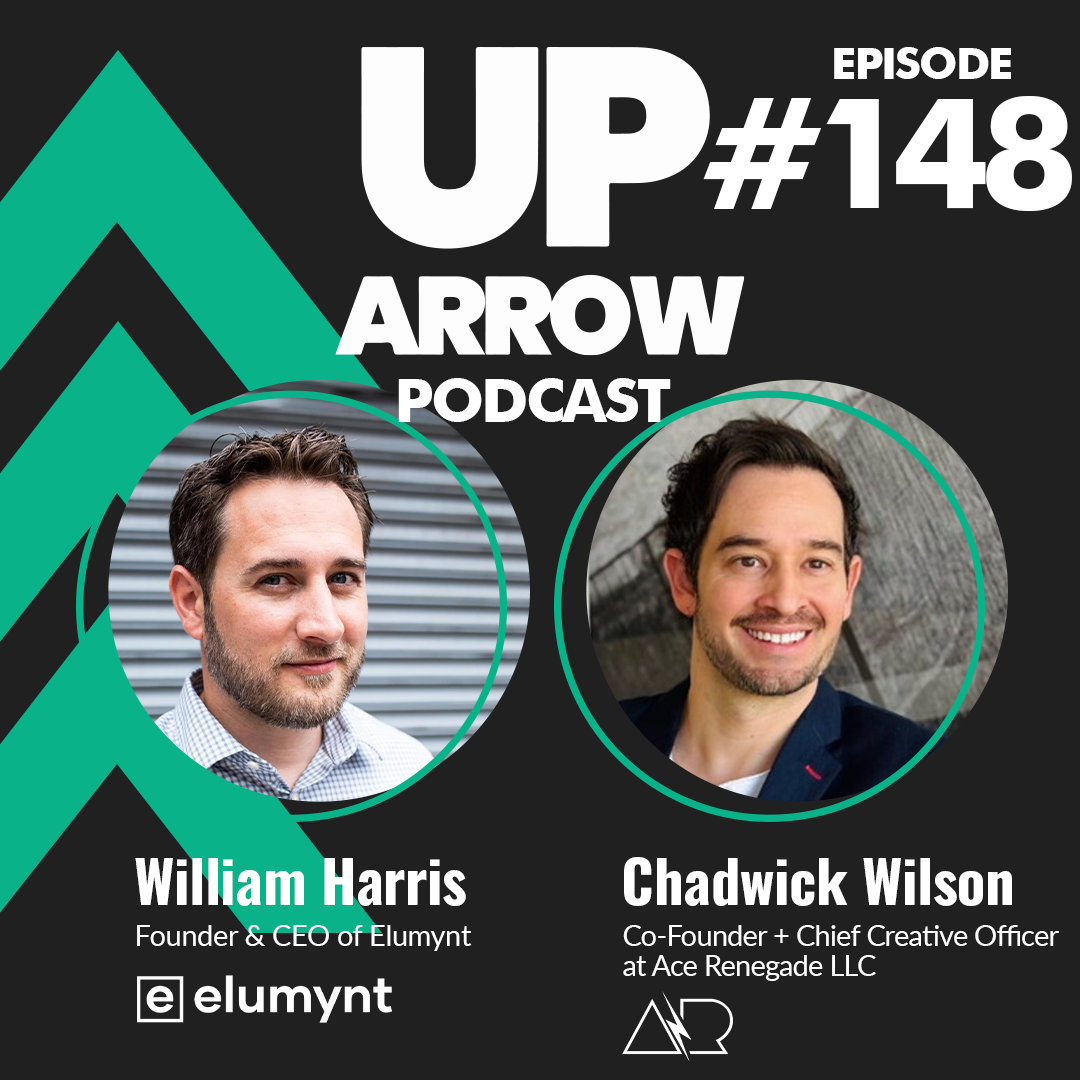



Chadwick Wilson is the Co-founder and Chief Creative Officer at Ace Renegade Productions, a social strategy, video, and content production company specializing in visual branding, social storytelling, and multi-platform marketing. He is also a Senior Casting Producer at Cornwell Casting, a reality television casting company focused on finding dynamic casts across reality TV genres. With over 15 years of entertainment experience, Chadwick was a member of the production staff for 2 Broke Girls and a casting producer on Joe Millionaire, Farmer Wants a Wife, and The 1% Club.


Here’s a glimpse of what you’ll learn:
- [2:27] Chadwick Wilson shares why a recent Manscaped Super Bowl ad stood out to him
- [4:37] How Chadwick moved from Ohio to Los Angeles at 18 years old
- [8:55] The work ethic and optimism Chadwick learned from his parents
- [12:19] How Chadwick’s sketch comedy group went viral on Funny Or Die
- [18:22] Chadwick’s friendship with Jennifer Coolidge from 2 Broke Girls
- [22:31] Why many brands’ ads feel emotionally forgettable — and when they should use nostalgia and emotion instead of humor
- [28:07] Storytelling ingredients that change consumer behavior
- [35:01] How founder-led content makes brands more relatable
- [43:54] Chadwick analyzes ad campaigns from Manscaped and Peloton
- [58:32] Chadwick’s reflections on family, faith, fatherhood, and legacy
- [1:12:15] Why parenting requires different approaches in each season of life
In this episode…
The most memorable ads do more than capture attention — they make people feel something worth repeating. In a landscape of forgettable creative, how can brands turn simple products into stories people actually want to share?
Creative strategist and casting producer Chadwick Wilson says to start with the audience, not the product. Strong brand content comes from emotional relevance, authentic storytelling, and a clear understanding of the message’s audience. Brands should avoid casting too wide a net, use humor only when it fits the product, lean into nostalgia or identity when the story calls for it, and make founder-led content feel human instead of overly polished. The goal is to create content that feels personal, memorable, and culturally resonant.
In this episode of the Up Arrow Podcast, William Harris chats with Chadwick Wilson, Co-founder and Chief Creative Officer of Ace Renegade Productions, about creating ads and content people remember. Chadwick shares why brands need emotionally resonant storytelling, how founder-led content builds trust, and what marketers can learn from viral ads by Manscaped, Peloton, Aviation Gin, and McDonald’s.
Resources mentioned in this episode
- William Harris on LinkedIn
- Elumynt
- Chadwick Wilson: LinkedIn | YouTube | Instagram | Stan Store
- Ace Renegade Productions
- Cornwell Casting
- Funny Or Die
- “‘We Had 5 Years of Inventory…and It Almost Killed Us’ With Brandi Dugal” on the Up Arrow Podcast
Quotable Moments
- “You have to think about your audience first. Okay, who's this? Who's this for?”
- “It all goes back to… spinning the wheels of just thinking outside of the box.”
- “You can't take the human aspect away from that, especially storytelling.”
- “If you want something, work as hard as you can and just go for it.”
- “I think you gotta leave ego at the door when you're an owner and a CEO.”
Action Steps
- Define the audience before developing creative: Identify who the ad is for, what they care about, and why the product matters to them. This helps brands avoid generic messaging and create content that feels personally relevant.
- Build campaigns around emotion, not just attention: Use humor, nostalgia, aspiration, or tension based on what best fits the product and customer. Emotional relevance makes an ad more memorable and more likely to be shared.
- Make founder-led content part of the brand strategy: Encourage CEOs and founders to share their stories, struggles, and perspectives on social platforms. This builds trust with customers and helps employees connect more deeply with the brand’s mission.
- Invest in preproduction before filming content: Clarify the audience, message, call to action, and the desired emotional response before the camera turns on. Strong preparation helps prevent awkward, unfocused, or forgettable creative.
- Repurpose strong content across channels: Treat podcasts, ads, social posts, and UGC as long-term brand assets rather than one-time campaigns. Reusing and adapting content helps extend its impact and keeps the brand story visible over time.
Sponsor for this episode
This episode is brought to you by Elumynt. Elumynt is a performance-driven e-commerce marketing agency focused on finding the best opportunities for you to grow and scale your business.
Our paid search, social, and programmatic services have proven to increase traffic and ROAS, allowing you to make more money efficiently.
To learn more, visit www.elumynt.com.
Powered by Rise25 Podcast Production Company
Episode Transcript
Intro 0:01
Hi, welcome to the Up Arrow Podcast with William Harris, featuring top business leaders sharing strategies and resources to get to the next level. Now let's get started with the show.
William Harris 0:15
Hey everyone, I'm William Harris, I'm the founder and CEO of Element, then the host of the Up Arrow Podcast, where I feature the best minds in e-commerce to help you scale from 10 million to 100 million and beyond as you up arrow your business and your personal life. We don't remember the ads with the best click-through rates, we remember the ads that made us feel something, the ones we quoted, the ones we sent to friends, the ones we talked about the next day. And today's guest has spent his life studying exactly why that happens. Chadwick Wilson went from a blue collar upbringing in Ohio to moving to LA at 18 years old with no college degree to working on Hollywood productions, performing sketch comedy, going viral on Funny Or Die, working on the set of 2 Broke Girls, and eventually helping brands understand how to stop making forgettable ads and start creating culturally magnetic stories. Chad, welcome to the Up Arrow Podcast.
Chawick Wilson 1:02
Wow, hey, thanks. Will that was, man, that was really good. I love that. If I can have you travel with me and just do that every time I walk into a room,
William Harris 1:11
yeah, we gotta pick a song too. What's your song? I mean, I'll play the song as we walk out.
Chawick Wilson 1:15
Oh man, Fireworks, CDC, just get some classic rock, Megan on the stage. That was awesome. Thanks, man. No, I'm happy to be here. This can be really fun.
William Harris 1:24
Well, this is especially fun, because a lot of times I talk about, like, who introduced us, and I don't know who that was, because we were friends back in, like, elementary school. So it's really fun to have you on here, man.
Chawick Wilson 1:35
Thanks. Yeah, no, yeah, we go way back, and I was probably like a pastor or somebody in
William Harris 1:40
our church.
Chawick Wilson 1:40
Yeah, I was like, hey, this is Will. This is Chad. Nice to meet you. No, yeah, we definitely have a history, which has been great, like same sort of upbringing. So I love this. I'm glad we could actually do this together. This is really, really fun.
William Harris 1:53
Likewise, I have one quick interruption that we're going to get right into the good stuff here. You're good. This episode is brought to you by Element. Element is an award-winning advertising agency, optimizing e-commerce campaigns around profit. In fact, we've helped 13 of our customers get acquired, with the largest one selling for nearly 800,000,001 that IPOed. You can learn more on our website@element.com which is spelled e l u m y n t.com Okay, Chad, you've said brands should create the kind of commercials people talk about around the water cooler. What's the last ad you saw where you immediately texted someone and said this is it, you got to see this ad.
Chawick Wilson 2:27
I think it was actually recent, so it was at the Super Bowl, and it was Manscaped. Actually, I think I sent it to you, and
William Harris 2:36
you did, and we're gonna pull those up here in a little bit too.
Chawick Wilson 2:39
So, so I mean, Super Bowl is where all the best ads come, and this year it was okay. I mean, there wasn't really too many great ones, but this one was like a really like it just hit home, because, and it's, and when we show it, I'll talk why, but like it was just so on point of what the brand is, there's hair on the ground, there's like, it's like they are like talking in their puppets, and it's all this like really kind of magical kind of thing, but it made me talking. I sent it to my buddies, and I was like, this is hilarious, because Manscape does a really good job, just not only with the commercial side of things, but also UGC branding themselves really hardcore on social, they're very good on social. So that one was like a big one for me, as most recent is Manscaped,
William Harris 3:23
and what do you think is the thing that separates an ad that people watch versus one that they share, like that.
Chawick Wilson 3:31
Um, well, I think it's all about what's what's memorable in the sense to them that relates to them, so like they'll watch something and be like, oh, that was cute, going back to my day, but when people talk about stuff that is always top, a type of top of mind, and I did even go with film too, with movies or even TV shows you watch, where you're thinking about it after you've seen it, and then you share it, and then I just think that's honestly where, where this kind of whole world of social media happens when people are just sharing really good content with people, but I would just say, yeah, that's the big part, is like the most memorable, pushing the envelope things that stick in your head longer than just a second, and then you go on with your day. I think those are my favorite type of commercials. Honestly,
William Harris 4:18
we're gonna break these down, we're actually going to show examples, and all that, before I get to that piece. Though, I want to go into your background a little bit again. You came from Ohio, didn't go to college, went to acting camp for literally a week. Suddenly, you're getting calls to move to LA. Was it confidence, delusion,
Chawick Wilson 4:36
or both? That's funny. I think it's like a mix of both, honestly, because it was so my senior year of high school, I got into like speech and debate, and that's where I kind of like really fell into this whole stage presence of like, oh man, it's cool to, it's fun to make people laugh in a room, and so I was doing this whole thing, and it was my senior year, and I had no idea what I was going to do with my life, I literally was like, oh mate, I was in accounting in high school, because it was just an easy. Class to take, so I was like, oh, maybe I'll become an accountant against communication, something in that world, and I kind of fell into this whole love of arts and being in front of people and just having fun in that entertainment space. So literally, as soon as I got my diploma, I had an opportunity to go to Maine to go do an acting class, and it was like a course for like a week, and I had never, I've never done this before, except for like making dumb videos around my house, or for school with my buddies, and so I went to this course, and it was taught by like this guy named Barry Primus, who I'll always remember for the rest of my life, because he was best friends with Robert De Niro, and so, so, yeah, so he had a really good history of that era of film, and so he was a really great, great coach, and he came to me like, middle of the thing, and was like, "Hey, you might want to look into coming out to LA, because, and I was like, "Wow, that's really crazy to hear that from me. And once the camp was done, he was like, "Literally, he's like, you need to come out to LA, you have the chops, you know what you're doing, and when you get out there, she'd hit me up, because you should just do it, and I was like, "Wow, this is crazy. So, a couple weeks go by, a couple months go by, and my mom, who was like my manager, was just sending out headshots and little, like a little reel from that camp I just came back from, all over LA. I mean, literally every agency she could send it to, she did. She was on the phone. I know, literally, my mom is like, why I have my career today. Honestly, when I was like 18, had no idea what I was doing. So we got a call back from this agency in LA that was like this. They were across the board, so across the board is like back in the day was like commercials, prints, and TV and film. So that's like across the board of what they were, and they called me back, and or they called my mom back, and they were just like, "Hey, we'd love to meet him in person. We have this kind of open call. It's happening next week. We'd love to, because I know you're in Ohio, so we'd love to have him come out. And I was like, "Sure, let's do this. So my uncle and I went out. We stayed in Burbank. I went to the audition, and honestly, when I went, when they said audition, like, they didn't mention, like, it was a cattle call, like, literally everybody, mother was at the, I mean, line out the door, or there, I was like, yeah, exactly right, so, like, in my head, I'm like, this is not even realistic, like, this is crazy, like, this is, it's cool to experience this, but I don't think I'm gonna land this, because I literally walked into a room with, like, nine other people, all shoulder to shoulder, you do like a quick little intro. Hey, Who are you? Where you from? What are you doing? Whatever. And then I just.. then we left, and that was it. And I kid you not. A day later, I was at the Warner Brothers Studio Tour, and we were just doing it, having fun, checking out all the sights and the sounds of the studio lot, and literally got a call when I was like looking at the Batmobile and the Scooby Doo machine, and like all these like cars that we grew up watching and loving, and I got this call, and there was like, "Hey, is this Chad Wilson? I'm like, "Hey, yeah, and they're like, "Hey, so we want to sign you, and we want to represent you in our agency, and we want you to be a part of our commercial prints, and, and literature, and also film and television, and we want to sign you and get you started, and I'm like, "Oh my gosh, this is crazy. So I'm like, "Yes, let's do it, sign me up. I will be out here in a month, and so no joke. Went back to Ohio, packed my stuff up, packed my Jeep up, my parents packed their car up, and we just drove cross country, landed in LA, and by December 2005 I was officially in LA. So crazy, right?
William Harris 8:31
I love that, though.
Chawick Wilson 8:33
Thanks, man. It's.. yeah,
William Harris 8:34
I think there's something about optimism, and I'm wondering, actually, if you get some of this from.. obviously, your mom was very influenced with the.. but from your dad, if I remember correctly, your dad owned his own business, and so there's something about, like, Midwest, like grit and optimism to be able to do that. Like, do you think that you get some of that from him?
Chawick Wilson 8:54
I think, yeah, I think, I mean, my dad's always been somewhat of a.. I mean, he was a business owner, so he was a risk taker. He took risks with what he was doing every day, but he was also a really hard worker. He's the hardest working guy. He's still working to this day. He just turned 70 last month, so he's still working to this day. And that's the one thing he always taught me was, like, just if you want something, work as hard as you can, and just go for it. Just never give up. But they were very supportive, though, like they're their parents, of like, hey, if, if we don't think you have it, we, we still support you, but we're not going to fully support you, right? But when it came to entertainment, they were like, this is what you were born to do, we've seen it your entire life, you've loved this, you loved being a part of this world, that's all you used to talk about with TV, film your entire life. Um, try it out, go for it. You got nothing to lose. But I will say, looking back, I was totally delusional. I had no idea, like, what I was doing, but I think I like that's the best way to kind of take life by the horns, is being delusional sometimes, because you don't have yourself getting in the way, you have nothing interfering with you, and I kind. Sometimes now, like, I'm almost 40, I'm like, I kind of wish I do have, I had some more of that delusion again, like, I kind of wish I could go back into my, my early 20s and be like, just so naive to life with not being beat down, or like, oh, you're not good enough, or this is not going to work for you, because when you're so young and you have no idea, you, you've tried to chase anything, and that's that's kind of what I've, what I've learned from that, and so I kind of, I try to do that more as I'm, as I'm getting older, is just be a little delusional from time to time.
William Harris 10:28
There's a theme that I've seen on the podcast where almost every single big success anybody has had was literally on the other side of the hardest thing they had to go through in their lives, and I think to your point, it almost takes delusion to push through that, because it's, it's scary, it shouldn't work, and for a lot of people, and here's the thing, like, you got to talk about, like, survivor bias, there's a lot of people who are going to push through the hardest thing, it will not work for them, and so, like, I want to call that, like, maybe nine times out of 10 it won't work, but you can't be the one out of 10 if you don't push through those hard things, either.
Chawick Wilson 11:02
100% I mean, there was times, too, I was like, because, dude, we're from Ohio, we're from a small town, it's not a big city. And it, like, I was 18 when I came out to this huge metropolitan, and it was just such a life change. I mean, there were so many different things I've never seen before my entire life. I had no idea what was on the other side of the pot. I mean, it was, I mean, it was crazy, man. I mean, like, I was living in a studio apartment with people I've never met in my life. I mean, like, I didn't know anything, and it was terrifying sometimes. I mean, there was moments where I'm like, I don't know if I can do this, I might have to just pack it up and go back home, because I don't feel confident yet, I don't feel comfortable, but there was just always a thing inside me that was just like, keep pushing, you're gonna achieve it, and that was the one thing, and, like, I said, I had a lot of support, so I think if I didn't have that support, I would not be where I am now, but I will say, yeah, it was just like the delusion, but also like the pushing through the hard times, that's kind of what got me to where I am today,
William Harris 12:01
and then Funny Or Die, you could go viral. Tell me a little bit about, like, what was the.. I haven't even watched it. I've intentionally stayed away from trying to, like, what was the moment that
Chawick Wilson 12:09
you wait.. did I tell you the title of the show?
William Harris 12:11
I don't think so.
Chawick Wilson 12:12
This is why it's funny. So, the title of the sketch that we did was called Awkward Phone Sex. Okay, so.. so I was in this sketch group, so when I was, it's like my mid 20s, I was working out with WB Warner Brothers, and I, there was just so many creative, talented people that was working in this tour department thing, and tour department, it's like, I mean, dude, you're giving tours, man, you're like over here to your right, is this, this is where they shot this, and it was just trying to just me to get a foot into some sort of industry, and so I got, I got, I was got a chance to become a tour guide at Warner Brothers, and I met these really cool group of people that were there that were like, "Hey, we're starting a sketch group, and you like, "You seem funny, let's let's try to see if we can do this. So we formed this, like, it was a big squad, it was like 13 people, some for from Chicago, that already had kind of that IO experience, and then then people from LA on the on the West Coast, so we just kind of were a bunch of misfits that kind of came together, and once again we were a little young and naive, had no idea what to do, and we just started randomly creating sketches in like a garage in like the valley out here in Van Nuys, and we were just doing it and practicing and getting like the flow of it, of like kind of like what our comedy was, and we were called Ant Farm Recess, that was our name, it was called Ant Farm Recess, terrible name, I don't even know where that even came from, but terrible name, and then we got a chance to perform at one of the one of the big, I mean, there used to be so many cool comedy little shops out here in LA. They all kind of, kind of shut her down after COVID, but like iOS, Second City, the Comedy Store, we were like at all of them, and we got this opportunity. We just started performing, and people were like, oh, you guys are really funny, like, let's have you keep coming back, keep coming back. And then at one point it was iOS was like hey we have a spot it's like an attic in the in the they have like three different stages and one was an attic and they were like every Sunday night it can be yours it's a 930 10pm call like first show but if you guys want it it's your spot and you guys can take the full hour you guys can bring in other groups to perform with you, and we're like, yeah, why not? Why wouldn't we? Why would we pass this opportunity up? This is great. And, and once again, we didn't have like serious jobs. I mean, we were all just like assistants, or we worked at a tour department, and we just all had this like regular little jobs that didn't matter. So we were like, let's do it. So we took advantage of that, and we did. And so then I was a part of this sketch that was called Awkward Phone Sex. It was me, my buddy Aaron LaPlante, who's he's killing right now, he's like in everything, he does all this great voice over, if you've ever seen the show Primal on It's Adult Swim, he's like the main guy on that show, he's also does a lot of like other great cartoons, but he's like this big burly guy, he's six five. And then this girl Libby, who played my girlfriend in the scene, and we did it on, we first tried it on stage, and it was like this, it was like two couples that were just, and on stage it's really weird, because you like, you're you're trying to play this scene out with no props, nothing, we had two chairs, a cell phone, and the soul scene was like a guy and his girlfriend are in two separate spaces, and they're trying to like navigate awkward phone sex, and it's very uncomfortable, very awkward. And then out of nowhere, his girlfriend here is somebody else on the other line. She's like, 'Who is that? And I was like, 'Oh, that's my roommate, he's cool, he can jump in. So my buddy comes on stage, and he's like the big presence, and he's like, 'Hey, what's up? And so then he starts being weird and awkward, and then ultimately it just turns into like a weird like ending, where it's like both, both dudes like standing there in their underwear, and they're like, okay, this is it. So it worked really great on stage. It was really funny on stage. It did really well. People knew of it, so we're like, why don't we shoot this? This would be really fun to shoot this. This was like Funny Or Die, was like on its peak, like Will Ferrell was killing it. Every celebrity was doing really funny short form content, and so we're like, "Let's just make something, put on YouTube, put it on Funny Or Die, just have fun with it. Let's just start shooting some fun content that we shoot that we do on stage. Then let's just make it real. So we shot this one weekend, put it together, threw it up on Funny Or Die, and then like randomly we, so we put it up over the holidays, and I, when I used to go back to Ohio a lot for the holidays, I was there and I started getting like text messages from people in my sketch group, and they're like, "Dude, you got,
William Harris 16:32
yeah,
Chadwick Wilson 16:34
the pastor was totally on, he's like, oh, Chad, awkward, awkward phones like, so he, so I started getting blown up from people in my group, and they're like, "You got to check this out, this is incredible. And I started looking at the numbers of views, just kept going - it was like 50,006 and it's just increased, and I was like, "This is wild, like this is insane. So, this like really kind of weird idea that we created just for the stage, and then we shot it, and then it had traction, and then it kind of just took its way, so it was a really fun experience for me, because it was something that I have never thought I would ever do. I never thought, like, oh, I'll just go perform on stage in Hollywood on Saturday nights, Sunday nights. I met so many cool people. It was just a really great experience, and it was just like it was one of those times you like, you look back and you're like, man, that was a really fun thing. I'm glad I did it in my 20s, because I can't do it now. I'm like, I mean, they were talking about maybe doing a fun little, like, because we all have kids now, and we're all married, and like, they're like, let's just go do one more show in our 40s, and I'm like, that sounds fun, but
William Harris 17:36
right,
Chawick Wilson 17:36
it's just one of those things you look back and you're like, man, like, we took advantage of it, we had fun doing it, and, and something cool came out of it too. So, yeah, yeah, so that's yeah, there's my short form story of Funny Or Die.
William Harris 17:47
I love it.
Chawick Wilson 17:48
Is it even around anymore? I don't even know Funny Or Die's even around.
William Harris 17:51
I have no clue. I will look it up after this. Speaking of meeting cool people, though, you are texting friends with somebody. I'm gonna do a really bad impersonation of her. Oh, wow, you look like the Fourth of July. Now I want a hot dog real bad. Do you know who I'm impersonating here? Of course, I sound more like Adam Sandler, but
Chawick Wilson 18:15
oh, hey, he always does that drawn out. So, okay, so we're talking about Jennifer Coolidge.
William Harris 18:21
Yes,
Chawick Wilson 18:22
love Jennifer Coolidge. I worked with her. I mean, I mean, first off, we first off, we grew up watching her. I mean, like, she was so funny growing up. Everybody knows her as Stifler's mom from American Pie, and then she's been in like every Christopher Guest film. But I got it. I had a really good opportunity to work with her when I worked on a show called 2 Broke Girls on CBS, and then Coolidge was like a regular star on the show, and we just became friends. I mean, you become friends with these people when you work on these types of projects, and because they're just a lot of them are just really grounded, normal people, and they just want people that are normal as well to not be like, oh, you're a celebrity. Oh, okay. So, yeah, we just became really close friends, and, and, yeah, I do text her still from time to time. She knows I have a family now, like, when she knew me, I was like single, Chad. So, at one point, she was like trying to, like, hook me up and matchmaking some of her friends, but yeah, I always remember, like, she, she's always had like a really great career, and in the sitcom world, she's great in that, but she's really fun also in theatrical film, and she had this chance to do, like, a Christopher Guest, I think it was like an HBO series at the time, and I was really advocate about that of her doing that, I was like, "You got to do that one, you got to do that, and I don't know if she actually ever did, but I remember kind of like just just telling that as it is, and that's the one thing I've always been is just like you just kind of tell the truth and just be honest about things if you feel certain ways and and I remember her just being like no one tells me these things like everybody's yes men or yes women around me and and I at the time too I was telling her to do short firm. That's when my sketch group was doing, like, the funnier nice stuff, and I was telling her, like, Coolidge, why aren't you doing any of this like short form stuff? Like, you're, you would get so many views, and people would love your content, and she's like, "Yeah, maybe I should do it. It's funny, because actually, I, after we talked about it, because, well, I haven't, I haven't thought about, like, 2 Broke Girls or anything like that in a long time, I forgot that my buddy was getting married around that time I was on that show, and I actually had Coolidge making a video for him and his wife, because I was the best man, and so I gave it to them as, like, a wedding gift of, like, Jeffrey, really cool, acting like she was Grant's girlfriend at some point, and saying good luck, like, you're now marrying my man, you can have him, kind of thing, but no, like, that's the thing, is like, you just, when it comes to these celebrities, they're just normal people, and a lot of them are, I mean, there are some that are not, I've worked with some that are not very kind or like cool, but like, she's great, and, but that, but going back to, like, the content thing, that's that's always been top of mind for me, is short form, I always think short form has been it's not going away, it's sticking around, and everybody needs to grab the grab life by the horns when it comes to short form, and just ride it like that's where it's at.
William Harris 21:12
Well, I have two things for Jennifer. If she ends up seeing this for some reason, one is my middle school daughter, her one of her best friends at school does an absolutely amazing impersonation of Jennifer Coolidge, and, but I told her that, you know, you know her, she was like, "Oh, I wish I could like show her, and I was like, "There's no way,
Chawick Wilson 21:30
no, make a video instead of cheese.
William Harris 21:33
She's very good at it. And then a friend of mine dared me to do the bend and snap at a boys basketball practice last year, it's harder than it looks. I was not very good at it. It's very awkward, but Jennifer, thanks for all the inspiration in the laughs.
Chawick Wilson 21:49
I know, right? Yeah, she's like, and she's everywhere now, so she's doing these commercials, and
William Harris 21:54
yeah,
Chawick Wilson 21:54
I remember when I saw her on a commercial a couple years ago, and I text her, and I was like, killing it, like you're not, you're doing, you're doing a different type of short form, but now on the commercial side of it. Oh, thanks, Chad.
William Harris 22:07
Your presentations were better than mine, but no,
Chawick Wilson 22:10
it's terrible. No, it's terrible. I don't do.. I'm not good with impressions.
William Harris 22:14
So, okay, let's switch into why most brand creative feels dead. I want to specifically asked, like, a lot of creative brands or e-commerce brands. They're spending millions on media, but emotionally their ads feel completely forgettable. Why are their ads forgettable emotionally?
Chawick Wilson 22:31
I feel like they're not connecting with their audience, and they're not connecting with who's who's going to be watching this. That's the one thing when you go into into the pre, the pre-production stage of the development stage of something you're creating to a mass audience, you have to think about your audience first. Okay, who's this? Who's this for? And I think a lot of brands miss that mark. I think they miss where it's like, oh, let's just, let's just do a big net to everybody, because that's what we want our product to hit everybody, but that's not the case, though. Not everybody needs, I mean, a pair of reading glasses. Not everybody needs a mountain bike, like it's just.. it just depends on who your demo is. And I think that's the first thing that brands.. they always miss the mark on that. That's a big one for me.
William Harris 23:15
Well, yeah, because knowing who that is allows you to be more relevant to that audience, which, like, my next question was literally about that. What's the difference between just a normal high-performing ad, and we have ads, they do a really good job at getting people to click and buy, versus one that's just culturally resonant, but I would say more than culturally resonant, like, uh, like demographically resonant, right? Like, like it is for that audience, like, what's the difference between something that just converts versus something that it's like this is going to be impactful,
Chawick Wilson 23:42
um, I mean, I think it comes down to, like, the well, I mean, we talked about this before, but yeah, like social media versus like now turning into interest media, and I think once again it's the social is your broad, it's your broad net interest is like these are the people that are following your brand is because they like you, they, they are following what you're selling, they're all about it, and I mean, you do a great job with this. Well, like, and I applaud you, that you're as a CEO, you're taking advantage of social, you're on LinkedIn, you're making this great podcast, you're doing all this stuff to get out there, and, and you have, you have interest media, because the people that are following you are interested in your content. So, I think that's good. That breaks down to also on the brand level, too. I think they just really need to start honing in more on on that, because they can make the greatest commercial of all time, or the greatest content piece, but it's, it's not going to move the needle on sales, because it's not hitting the right demo, it's not hitting the right people, so people be like, "Oh, that's a cool, that's a cool piece right there, but I don't want that product, I don't need that product every day. So, yeah, I think that's what it bears down to. A
William Harris 24:55
lot of brands default to humor, I know that I do. It seems to be like the easy emotion to go after. Sure, it's safe, it's shareable. When do you lean into like awe or nostalgia, aspiration, tension, melancholy? Like when you lean into those four brands instead of just humor.
Chawick Wilson 25:14
Once again, it's about the product. I think it's about what you're trying to sell. Yeah, like I think we talked, we talked about this before, where it's like higher-end items, like a stove, for example, like we were talking, I think you mentioned that, like, a was $1,000 stove,
William Harris 25:30
yes, right, yeah,
Chadwick Wilson 25:32
yeah, so that stove is, that's a certain amount, that's a certain demo that would buy that stove, but at the same time it's nostalgia, because family dinner. Who are you cooking for? Mom, maybe always wanted to be a chef or go to, like, culinary school, but she couldn't, because she had kids young. But now here's her chance, because the kids are older, she now, she wants that stove, and she wants the goosebumps to bring. Do you know I'm saying she wants to bring that home to her, since she can't go do it now at her, at her age. So, I think it comes down to personal.. it's always personal, and I think that's the number one thing that you need to hit hard on with these, with especially the $8,000 types of stoves, but.. and also, too, is style too.. like, I like.. I think the style is a number one selling point as well, like you want it to be beautiful, you want it to be like, like I think we mentioned this Wes Anderson style. A fantastic director, he has a very unique style, he's the only one that can pull it off, but if you have a product that, like, that's an $8,000 stove, you can shoot a style like that, and people will be like, oh, nostalgia. I love Wes Anderson, and I love this commercial. This is cool. I will remember this. I will always remember this commercial right here.
William Harris 26:48
Yeah, for the e-commerce founders who don't know what Wes Anderson style is, how would you set it up so that way they're like, okay, I get where you're going with this.
Chawick Wilson 26:55
It's like a picture, it's like a beautiful picture that's brought into a film. It's like it's like this great setup where you're like everything is placed perfectly behind the actors, and and it's also continuous shots too, so it's like walking from into one picture into another picture into another picture, like it just everything has its purpose in the shots, because he's a photographer, so everything he shoots, he, I mean, he's thinking as a photographer's eye, um, but he's, he's also an artist. I mean, when you watch his early stuff, like Bottle Rocket, it's very just a regular type of film, but he, his style has increased as his movies are now. I mean, it's so stylized where you're like that's Wes Anderson, there's no, because I mean, it's so perfect. I mean, it's such a, it's just a perfect, unique style. Yeah,
William Harris 27:39
yeah, and that stands out, I think, if you're doing something on social media, even as an ad, something that stands out like that is what captures that attention. It gets the thumb stop rate. Now somebody's actually willing to click onto it, so it's a lot more effective. The other piece to this that I really like, then, is the storytelling aspect of it. So, for every one of these emotions that we're doing, storytelling ends up being the thing that drives this, what are the universal ingredients of a story that actually change behavior?
Chawick Wilson 28:07
Wow, that's an interesting question. It's really good. I mean, I think like authenticity and truth behind the story, it's all, it all goes back to just spinning the wheels of just thinking outside of the box when it comes to that type of product, and, and just making you really just want, you want your audience to feel like they've never seen something like this before you want it to be groundbreaking, and you want it to be like I love when I watch a commercial and I start like feeling the little bubbles inside my stomach starts turning because I'm like, oh my gosh, like why did that 32nd commercial about healthcare just make me want to start crying, and I think those are the ones that really I think it also, it comes down to the creators too, because the creators are bringing their personal story sometimes into these brands, and I think that also helps too. So, if you have a person that's leading the charge that is very story driven, and they're just like, we don't need all the lights and sounds, like let's just get down to the truth of it, especially with AI nowadays, man. AI is, it's cool for some things, but then it can destroy others. And when I mean that is, like, especially with storytelling, you can give it.. I mean, it can't, it can't have our human emotions. It doesn't feel that, it doesn't know that. You can send it to him, and you can be like, 'Hey, I want a sad story, but the story will not be like a human would would feel. It's going to be very just whatever is searchable, whatever is online, whatever AI can take to make that feel like it's a sad story. So I think that a lot of the AI they call AI slop is happening more and more as you're seeing. A lot of content, especially on the content side of things. I'm seeing a very repetitive type of storytelling, because people are just kind of getting a little lazy, and they're like, "God, just let me just throw this into Claude, and let me just have it spit something out. And then, okay, this looks.. this looks good enough. Let's just.. let's try this out. You can't take the human aspect away from that, especially storytelling. That's..
William Harris 30:21
I think a lot of it is people are also like the prompts that they're using in AI are not good enough, because there's a big difference between saying I want a sad commercial versus I want one with melancholy, one that's bittersweet, one that's solemn, right? Like, there's so many different ways that you can bring sadness or sadness adjacent into this that might have a significantly different effect, a sad commercial might not work, but a solemn one does.
Chawick Wilson 30:44
Yeah, I mean, I could see that too. I just.. I'm just really seeing the same stuff. It's really crazy. Like, within the past, it's been, honestly, I think three months now, I've been seeing like people, the way they say things. I'm like, that's exactly so.. the way you're like, it's like they say, like, this this hook that everybody's using the same hook, and then it's always the same call to action, and it just is like that's true. It's so cringe, man. I mean, it's rough. They use the word cringe a lot, too.
William Harris 31:13
You know what? It also uses em dashes, and this is my one little rant on that. I'm a big fan of the em dash. I used it all the time before, and now that AI does it, I had to change, and I'm like, no, that little
Chawick Wilson 31:23
dash is that the little, just a little, the little,
William Harris 31:26
like, longer one, though. It's like the long, okay? I did a little
Chawick Wilson 31:28
one. I've always done the little
William Harris 31:30
dash, the
Chawick Wilson 31:31
way I talk,
William Harris 31:31
yeah,
Chawick Wilson 31:32
that no, but that's the thing, too. You see that all the time, those big old lines, and you know, automatically, oh, that's AI, it's all you,
William Harris 31:39
you think, but I used to use them, and now I have to stop using them. So, what are you using now? Are you? I will tell you, I use.dot.in placement now. There you go. So, because I'm like, I still want to like this pause, but it's not a comma, right? But I'm like, I can't use an em dash anymore, so I do.dot.so any little I do
Chawick Wilson 31:56
plus sign. I always do a-plus in the beginning of sentences, and sometimes in the middle of them, so if AI starts using plus signs, I'm done. I can't even.. I'll stop writing. I can't do it.
William Harris 32:05
Chad, do you think consumers buy products or identities?
Chadwick Wilson 32:11
I think identities is ultimately.. I think it's because, yeah, the with this through the storytelling, they might not.. they might use the product, and they might be their thing for a little small amount of time, but they bought it because of what do they remember. I think that's the, that's a big part of it is stories of, I mean, like, for example, like my grandfather, he died at a young age, and I only knew him until I was like 10, but he was a very impactful person in my life, because he was very theatrical, musical type of guy, which kind of fell on to me, and he, we would go fishing, so that was our thing, we'd always go fishing, and recently I started looking into hooks and fishing poles for my son, and stuff like that, but I'm not buying it for the product, like you're saying, buying it for that memory of me and my grandfather going fishing, and now I'm passing it down to my son with my dad coming out, and us going on a little fishing trip, but yeah, no, I think that's that's kind of how it relates, and yeah, I think people do do purchase things because of nostalgia, and also not so much the product, yeah,
William Harris 33:14
yeah, I mean it's even like the stove that you were talking about, like this this lady who's like, I want to buy this because not because I need a stove, should I need a stove, but it's like I want this story of who I am, I am this chef, I'm the sous chef, I'm the whatever kind of thing.
Chadwick Wilson 33:28
Yes, 100% yeah, because they're losing a little bit of their identity, I think, too. Like, unfortunately, because that's how life, life just comes hard and comes at you fast. So, the dreams, as you get older, your dreams start to just deteriorate, and they just start not existing because of life, and
William Harris 33:45
yeah,
Chawick Wilson 33:45
I know, like, but at times, though, I'm like, the dream chasing is cool, as you know, I've done the dream chasing, but at times I'm like, maybe I shouldn't have done the dream chasing, maybe it's just got a normal, normal thing, normal job, college, that whole thing, because yeah, you got to be really invincible, and you got to be, man, you got to be, you got to not be able to take criticism, and you got to be able to pick up. I mean, as entrepreneurs, as we both are, it's not the easiest road. You have to be the most creative, and you have to be the best in your class.
William Harris 34:16
A big thing you've been pushing lately is founder-led content, and I think a lot about there's a couple of people that were on my podcast recently that do this very well, Sam Neville at Good Wipes, he's out there doing hilarious things, like I think I saw him the other day on Instagram, he's just out there with a group of buddies walking on like the path, they're just shouting poop, like as like these are 40 year old men just going poop or whatever, I love that, okay, why, right, that's funny. But that's for wipes. And then Brandi Dugal, she was on just recently, but The Fidget Game, it's like this education stuff that's really helping to make education a lot more enjoyable for kids, and she's doing incredible videos for her brand. And so I'm seeing more and more of this. Why are you passionate about founder-led comic?
Chawick Wilson 35:00
It, I think it's, it's what makes the brand relatable for the consumer, also for the employees that work for that brand. It's so huge to see your CEO or founder be have so much passion, and, and to get on the stage, and when I say stage, I'm saying platforms, commercial aspects, get on the stage and talk about the struggles of what you've, you've done and what you've built, and I think we need more CEOs and founders to get out there and share their stories, because I've talked to a buddy of mine who runs a men's hair salon, he has, he's a, I think, 15 franchise franchises that now, and he's, yeah, he's growing, and he was like, and he's doing great, because he has a podcast, he's two podcasts, he loves social, he's all about it, he lets his employees do social, they do videos, all the, all his hair stylists, and everything, they're making original content, and, and he also got into the UGC program recently, where he's having people that are coming in and getting their haircut. They're also talking on their socials about his brand, but he's, he was talking to me, and he was like, "Yeah, like, I love doing this, because that's just who I am. But he's like, "I have so many buddies, because he has a podcast very similar to yours, where he brings in CEOs and all that. He's like, they don't ever want to do this. He's like, they never want to sit down with me and tell their story. And he's like, why is that? And, and I, when I thought about it, I was like, honestly, I, I think it might just come.. there's, there's a couple of reasons, but I think one, just people don't feel comfortable on camera, and they also are very nervous, they don't have the confidence, but the fact is that they could build this huge brand, they have confidence in themselves to do, to do something, and this is very.. it really, when you get down to it, this is very easy. It's very easy to turn on a camera, start talking to the camera, and just kind of see where it goes. So, I think that, but on the other side of it, too, I think a lot of them have.. have the ego gets in the way, where it's like, I don't want people to know my story, because I don't want them to see, hear about the struggle, I just want them to know about the success of the brands, or this, or where we are now, but I think you got to leave eco at the door when you're an owner and a CEO, you got to just leave it there, and because ultimately everybody wants to hear people's stories, I mean, right now, will we're talking, you're hearing my story, right, and if this story impacts somebody out there who's like, oh man, I've always wanted to go to Hollywood, and now you know what, maybe I will take a chance. That's awesome, because that's the whole purpose of telling your story, so you can impact other people, especially when it comes to the brand level, like when you, when you have a brand and your customers and your consumers are hearing your story, that will even boost them up to purchase your products even more because they know where it comes from, they know what they're using, where it physically comes from originally. So, yeah, it's very important. I'm very heavy on founders and CEOs, and that's kind of what I'm doing right now, is helping CEOs and founders with their personal branding, with learning how to shoot content and learning how to produce themselves, because sure, you can shoot content all day. It might not be good, but if you have the right people helping and producing you, you could turn that thing into the next level. Because certain people do have it, will you have it? You're the top tier, like you have, like you don't need to produce, you get somebody to produce you, you already know what you're doing. But then you have the middle ground, where it's like, yeah, they're not bad, they could use a little more of an oomph and pump, and then you have the literally the bore percentage of the people who just don't post ever, maybe they post once a year or twice a year as a CEO or founder, those are the people that really need to kind of just take a look and be like, yeah, I need to boost this up a little bit more,
William Harris 38:34
we're so scared, like you said, the ego part of this gets in the way, and I was nervous when I first started doing my podcast too, and so I'll just share that for any other CEO here. In order to get over my nervousness of being on here, I came up with a bunch of really stupid things that people were allowed to dare me to do on the podcast, because it now it became like more of a game. So, if you've ever seen Impractical Jokers, I did some really dumb things on here. I had a chicken on here one time, I picked my nose on with the CMO of Eddie Bauer. I, a couple of my more recent favorites, I had a buddy of mine come over and deliver a hand, like a pasta dish of pasta, and like shred cheese on it, like it was like the Olive Garden. I had somebody dare me to do a bunch of Wedding Crashers quotes, Mean Girls quotes, right? And so it's like I've got to sneak these into this podcast, and so, yeah, but that got me over the nerves, because I was like, okay, I've got something to do. I don't do this nearly as much anymore, because I don't feel nervous doing podcasts anymore. But it's like, figure out what that is that you can get over it, and to your point, don't be afraid to share the details that you think are not the successful parts of it, because more often than not, that's what people relate to, and that is actually the part that they want. They need to see that piece of it in order to understand the success.
Chawick Wilson 39:46
Yes, 100% I mean, for you, for you, will though, like, what was the turning point? Like, where was it? Like, where was the.. where was it? Like, I need to do this. Like, where did that start for you? Because a lot of people don't even think of the idea of starting a podcast. Us, as a CEO, they, I mean, like, their buddies talk about it, but they're like, I don't really know, like, why are you actually doing this? That's what I'm like, there's a reason you, there's a reason you're doing this.
William Harris 40:08
That's a good question. It's hard to, because this is like three years ago now, so I got to think about what I was actually thinking versus what I'm telling myself I thought at the time, right? If I can try to remember at the time I told myself that it gave me the ability to refine my knowledge and wisdom within the space, first and foremost, because I was going to have a lot of guests on here that were doing things that, like, I was getting to the point where I was not in the weeds as much as I used to be, right, so I hired a lot of people in the team, and so I'm not as deep, I wanted to have these other founders, these other people telling me what's relevant now, in case I'm missing something that it's like I'm not stuck in my way. So that was part one. Part two was I really like people, I just kind of wanted that interaction of like getting to know other really awesome people. Like this has become my favorite thing that I do, because I am extroverted, and I'm just like, man, I've met some amazing people. I've had really good, deep conversations with them. That was part two. Part three was it was training for my employees, and you kind of called this out a little bit as well. I now I'm recording something about, like, how to make absolutely amazing, unforgettable ad content with you. I've done SEO stuff, I've done all of these other topics to where I can tell whenever I have a new employee versus me having to train each one individually, I can say you can actually go watch a lot of the content, you can actually upload this and learn from it without actually having to read all it, if you want, or watch it all. And then I'd say part four was it became, I think you called it what was interest something content, or whatever, but it's like,
Chawick Wilson 41:34
yeah, Interest Media,
William Harris 41:35
Interest Media, like the thing that I like about this is, I, we also had people who had sometimes come to us and want to work with us, but didn't buy into the way that we actually do ads, and so I'm like, if I can do this at first, I'm like, this is how we do it, if you want to do it a different way, go find an agency that does that way, but this is how we think about things, and so now if people come to me, if they come to me from the podcast, and I'm like, you already understand a little bit more about how I think about advertising, how our team thinks about advertising, so now if you work with us, it's like you already know what you're signing up for.
Chawick Wilson 42:06
That's all that's really good. I love that. The one thing you said about, like, your team can go watch these back. That's the great thing about social media. This stuff lives forever.
William Harris 42:14
Yeah,
Chawick Wilson 42:14
like that's why we'll always have that. That's the cool thing about, like, our kids' generation is they can always go look back and see their parents when they were younger. I mean, how crazy. Unfortunately,
William Harris 42:25
too. Yeah, it's
Chawick Wilson 42:26
terrifying that they could see stuff like awkward phone sex at some point. That's the thing. Grandpa,
William Harris 42:31
is that you?
Chawick Wilson 42:32
Yeah, is that you? What are you doing? Like, oh my gosh, that's hilarious. Um, but that's also the cool thing about it, and also, too, when it comes to the brand level, this content lives forever for them, so they can always repurpose this stuff. It's not like you shoot a Super Bowl commercial and then you, you'll never see it again, like you can always just resurface that stuff and always keep it going. That's, I love that stuff. I love when people are repurposing all their content over and over again.
William Harris 42:59
Completely agree, Chad. I want to actually show a couple of examples that you've sent over to me of some ads we could talk about. What makes this a good ad? We've talked a lot about, like, the whys and the what's and the whatever. Like, let's actually show some people, and let's just go through.
Chawick Wilson 43:12
Yeah, this is gonna be fun. I like this.
William Harris 43:15
Okay, let me know if you danced upon your chest, cover your packs. I did my best. I was your scruff, your loyal friend, sworn to protect your dimpled chin, but with manscaped I've met my demise when you chopped me from between your eyes and that awkward part of your tries, your chest, the These,
Chawick Wilson 43:53
so right, it's incredible. And that was so, that was the Super Bowl ad, so that was the one I was mentioning earlier. Um, but it's, it's just starts off where it's just like it hits you and it's funny, and you're just like, oh my gosh, where's this going? It's also weird, but weird commercials are amazing. I love weird commercials. Anytime there's like a weird Sasquatch or like a creature, like I'm just like, oh, what's going on here? What are we looking at here? Um, but everybody's lived this every scene everybody's been in, everybody has been shaving their face, their body, whatever, trying to get ready for the pool, and so they're just getting so I'm like, this is so relatable, and that's once again going back to you got to be relatable to who your audience is, and everybody that's buying Manscape has experienced this before, so that I love, yeah, I love it's like one of my favorite commercials. It's so funny, and it's so random, but and then the flush, where it's just like, because that's what everybody flys up here, everybody, because you don't want to put it down the sinks, because
William Harris 44:51
you can't do anything else with it, right?
Chawick Wilson 44:52
Exactly, yeah, that commercial is like one of my favorites, and also to kind of talking about Manscape, is they do such a good job with you. You see, I was actually up. I did a thing with them two years ago, where they sent me a package, and I did the whole unboxing, and I tested out there. They sent me like three, like pieces of their freezers - it was like a body one, a face one, and something else. And I still have them to this day. They gave me a T-shirt, and so.. and it's like a thing. I mean, they sent like a 25 page packet on how to do the UGC hashtags, where to post, where to upload, lot of communication back and forth with them, but they knocked it out of the park when it came, that was like the best UGC I've ever seen, is through a company like them, but once again, they're not only doing the big stuff, like the Super Bowl commercials, but they're also doing the social pages, where they're having their customers work for them, also, like, I mean, they're having people that are just regular Joes and regular people that have a little bit of a following, and now they're their spokespersons on social genius, so great. I love
William Harris 45:54
you, need both, right? And I think that I see a lot of DTC brands that will get behind the social aspect of things, but what I do see a lot of brands that struggle to get behind this, like this elevated creative, like what we just saw in that landscape commercial, and I think that that's what gives the weight to all the other stuff. The way that I look at this is you need that that anchor piece of content, that hero content, to get people excited about it. That might not be the thing that makes them take the move, but they see that, they laugh, they share it. I'm not buying it yet, but now I see, you know, 1000 people post this, and you're like, that's it, I gotta do it. I'm buying
Chawick Wilson 46:28
it exactly. I 100% agree with you. You have to, yeah, you have to dabble in both worlds. Yeah, if you're not, you're gonna die as a brand.
William Harris 46:37
All right, this one, Peloton, okay? You ready now.
Chawick Wilson 46:42
A Peloton, give it up for our first time ride. First ride. I'm a little nervous, but excited. Let's do this five days in a row. You surprised I am. 6am
William Harris 46:56
rising with the sun.
Chawick Wilson 46:57
That was totally worth it. Let's go break to Boston. I got goosebumps. I didn't realize how much this would change me. It's so good this holiday. Give the gift of Peloton. Okay, so this one is very.. so this one's.. it's an interesting one for me. Okay, because you can see that's the same actress right there. Yeah, so the story behind this Peloton commercial came out during the holidays. It was before the pandemic, so Peloton wasn't like, because they killed during the pandemic, Peloton. This came out in like 2019 the holiday season, and it actually went viral for the wrong reasons. So
William Harris 47:36
really commercial, I liked that commercial. I got
Chawick Wilson 47:39
so super cute commercial,
William Harris 47:41
like it's great for the holidays,
Chawick Wilson 47:42
but everybody online sort of being like, wait, why does she look so terrified? Why is she so nervous? Why is her husband having her document this? Why are they watching this back? What's the husband doing to her? There's like, so the one photo of her where she's like looking over her shoulder on the bike with their phone, like that. That's that image went viral, like everybody's like, "Help her, he needs help, she's scared, she's nervous. So it went viral. I mean, it blew up, everybody was talking about it. So this next commercial, this one right here, this is Ryan Reynolds' gin company, okay, Aviation Gin, and he is first off, he's an amazing marketer. If he wasn't an actor, he would be the best CMO there ever has and ever will be. But he knows how to take brands to the next level, so he jumped on the wave of that viral success that Peloton was having, for once again the wrong reason. And then he hired the same actress stacking on this. So, yeah, so play this one now.
William Harris 48:40
All right, hold on. Before we do, I do have to get back that I missed. I didn't, I didn't. I remember that now that you're saying, but I, I remember this part of it, like the second one. I don't remember the original ad that it came from, the Peloton. No
Chawick Wilson 48:52
one remembers the original ad, though, which is the funny part. Oh
William Harris 48:55
yeah, that's so funny. Okay, here we go, I
Chadwick Wilson 49:11
This gin is really smooth. Yeah, we can get you another one if you like. You're safe here to new beginnings, to new beginnings. You look great, by the way, right?
William Harris 49:41
So brutal. so
Chawick Wilson 49:43
yeah, so yeah, no, we're gonna say, well,
William Harris 49:46
well, I want to say, first of all, like, this is a disclaimer, like, as much as I don't want to say anything about aviation gin, this is me personally, there are zero stories I know of somebody saying alcohol changed my life for the better, I. A lot of off stories on the other side of that, so I don't know that, but okay, go ahead.
Chawick Wilson 50:06
Yes, I don't drink, by the way, just so everybody knows. Going back to Aviation Gin, it, that commercial did so well, and I remember hearing where Ryan Reynolds talk about that, because they were like, how did you pull it off, was she under contract, and he was like, we had her on set, and she was like, about to, she was trying to quit like five times while we were trying to film this thing, because she was so nervous that Peloton would come after her, and all this stuff, and and he said she was a trooper, she did it, and they shot this like a week after, I mean, it was like a, they jumped on it, they were like, this is viral, we had to jump on this opportunity, because we're, it's a small window when you have these viral hits happen. Shot with her, they did it. They, they dropped the commercial, and it did so well. I mean, literally the next year Ryan Reynolds sold. He's still a part of the company, but he sold for like $600 million So, like, because of his genius marketing brain and how it works, that's.. I mean, that's a great.. this is a great.. that's a great ad right there. And it really did, and also, too, he did mention, like Peloton loved it, they thought it was great for them too, they apparently they sent him a Peloton bike, so they were cool with it, they were like, this is great for our brand, because you're helping us out, that's the same actress we used, whatever, it's great, um, so yeah, I, I
William Harris 51:16
mean, it increased their visibility because everybody's saying wait a minute, what, and it's like that research now of the original commercial again, so it's just good exposure for them,
Chawick Wilson 51:24
exactly. Yes, and so, yeah, that's why I, that's why I love those two, because it's just two different brands, but they're telling the same story in the continuation of the story. So, yeah, that's why I love that
William Harris 51:34
one. All right, we got two more, you Oh, you feel that,
Chadwick Wilson 52:00
feel what the crash zone crash what the crash zone it heightens tension builds suspense
William Harris 52:14
uncovers evidence. Yeah, I don't know. I mean, foreshadows danger. Do you feel it now? Oh, yeah.
Chadwick Wilson 52:31
I guess I'll go and try and find a ladder.
William Harris 52:34
Nice.
Chawick Wilson 52:36
Yeah, so I think we all know why I like this one. It's, it's a break. Apple's great. I have every product I have is Apple, honestly.
William Harris 52:45
Same,
Chawick Wilson 52:45
and yeah, I mean, I live, sleep, everything they drop. I'm like, yep, gotta get it. Vision
William Harris 52:50
Pro day of, I'm right there with you, man.
Chawick Wilson 52:52
Seriously, right? I so this, and they've done this before, they've shot a commercial with the iPhone, but this one is like just to another level. I mean, that looks cinematic. That is something where they're taking a product that they make and they're like, let's just show you what it does,
William Harris 53:07
and low light and everything, right? Yeah,
Chadwick Wilson 53:09
it's incredible. And so, like, and I love that we live in that era where in that generation of like, you can just have a cell phone, pull it out, and just shoot the best content ever. I mean, I remember 15 years ago we were trying to shoot stuff, had big camera, we're like, I'm looking this camera around, or like, and I'm like uploading cards, and I'm like doing like mini little mini DVs, and and now it's just like you can pull out your cell phone, and that, so it's so easy nowadays, and I don't know why people aren't you doing it more, like that's the thing that it baffles me that we have this technology, like it's awesome, so that I love that commercial, just because the tech side of things, like I think it's incredible. Yeah,
William Harris 53:47
apparently we're gonna have to watch a commercial because I don't have YouTube Premium or whatever. Give me a second. All right, here we go.
Chadwick Wilson 53:56
Chris K here with you've heard about it. Here it is. The big arch. This is something that we have tested already in Portugal, Germany, Canada. I love this product. It is so good. I'm going to do a tasting right now, but I'm going to eat this for my lunch, just so you know. So, here we go. First, holy cow, God, that is a big burger. We've got a very unique kind of sesame poppy sort of bun on it. We've got two quarter pound patties, a delicious big arch sauce, and of course some lettuce. So, oh, there's so much going on with this. First of all, let's try to get this thing.. I don't even know how to attack it. Got so much to it. Oh, there's also some crispy onions on here as well. I see those kind of coming out all right. The moment of truth, that is so good. That's a big bite for a big instinctively McDonald's, only McDonald's. Could do this type of burger, but it also was unlike anything else on our menu. It's a delicious product, you know. You've got sort of the cheeses and the gooey, but I keep going, but those Christmas, I think we all get
William Harris 55:11
like that was the main part, right?
Chawick Wilson 55:13
Yes, this is bad PR. This is this is a move where his team, everybody should have been like, we gotta redo this, we gotta like, that's that's coming back to what I was saying, is like, I don't know why so many teams are so scared to talk to their, their CEOs or their bosses, of like, hey, let's not do that, Laura, maybe we should just shoot that again, that was so uncomfortable,
William Harris 55:38
it was,
Chawick Wilson 55:39
it's like he's never eaten a burger before, it's like he doesn't eat those ever, you know? He doesn't eat those,
William Harris 55:44
no,
Chawick Wilson 55:44
he didn't even know it was in it, like he was just like it was like he was like he's finding out the ingredients for the very first time. It was incredible. It was like blown away, like, oh man, look at this thing, this thing is big, look at this, wow. And even the way he held the burger, it's like he's never even held a burger before, everything about that was just awkward. It was so uncomfortable and awkward. Yes, that's that was, and honestly, and that's another great idea, commercial idea, or like, like social content that went viral for the wrong reasons. And then everybody piggybacked on it, like Burger King jumped on it, Wendy's jumped on it, and they did a funny job on it. They did great. There was influencers that jumped on that, and they blew up with their content, so yeah, I think that we all know why I picked that one, like that was just that's rough.
William Harris 56:26
So Brandi Dugal, who I mentioned before, one of the things that she said that I really appreciated in her episode was even before she records content as a CEO for her brand, she spends time basically meditating and thinking about what is the intent that she actually wants to do, like even to the point where she's like, I want this game to be really beneficial for these children, so it's like almost more or less like prayers of like I am praying for like these children who are going to see this, that this is going to be beneficial for them, that they are going to learn more, and so it's like so now when she records the content, she's already like thought through like who is going to be seeing this and why, and how it's benefiting them, and that intent shows in the video, and his intent in this, I don't know what it was. It didn't feel like his intent was like, I desire this burger, and I can't wait for how much this burger is going to improve your life. The intent was, we've got this thing, the social media intern asked me to record a video, I don't really know what I'm doing, and so I'm just gonna go ahead and say it. It's like, like, the intent was missing.
Chadwick Wilson 57:23
Oh yeah, 100% I think he literally showed up that day, and they're like, "Hey, we're gonna shoot you eating a burger. He's like, "Yeah, which burger do we.. which one are we gonna try today? Like, "Ah, no, yeah, I think.. I think that.. well, that's the thing with when it comes to content, it's not.. it's not like you can just go and just throw up a camera and start shooting. You have to really think out your what you're creating here, and I'm all about the pre-pro stage. I think that's the most important stage, because it gets your.. it turns off, who's your audience for this? What kind of content are you gonna get across for this? Like, what's the selling? What's the call to action? What are you trying to deliver for, for this type of social or commercial based, yeah, he definitely, he dropped the ball, but that was, that was really bad. It was very fun, very fun. Yes, it was.
William Harris 58:11
I want to get to know who is Chadwick Wilson. I like to get to know the human being behind all of the wisdom that you've shared here today. You went from a very conservative church upbringing to Hollywood, and now you've talked to me about kind of rediscovering your faith through family and fatherhood. What's changed?
Chawick Wilson 58:30
I mean, honestly, that I mean, I would say the by identity, so when I met my wife, I knew she was gonna be my wife. I met her out one night, and in Hall, and actually in the valley, and we just.. we just immediate. It was just like,
William Harris 58:50
so cool.
Chawick Wilson 58:51
It's like, I love you. It's over. Like, we were dancing. We like.. yeah, it was like we did karaoke that night. I mean, we had the.. we actually have it on on DVD. It's the craziest thing, I have the first moments with my wife on DVD.
William Harris 59:03
That's really special.
Chawick Wilson 59:04
It's incredible, and it's this little.. it's called Dimples. It's like this little karaoke.. it's now gone, it's now a Whole Foods. And actually, the bar that we first met at, now that's a Gilson's, which is another group. So every place we've ever hung out at when we first met, it's now a grocery store. So that's strange, but, but I remember when I met her, it was like instantly, like, okay, I'm in love, this is who I'm gonna spend the rest of my life with. And then we got married, then we, we got pregnant really quickly, and so, so, and then we had our son, and so from that it was also kind of like it was a, it was kind of an identity thing for me, like I was now a husband, then I was now a father. I'm still like a producer, I'm still like in my day-to-day job, I'm still working, and now I'm provider. And so, in the beginning, it was really difficult for me. I just, I didn't know if I was doing it right, I didn't know. What it was, and it was, it was scary, but then as you just learn through life, and you just go through, and you start experiencing all these great experiences, it really changed me. And family is very important to me. My, my wife and my son are the most important things in my life, and I, and I love spending every second with them. I was the only child, my son's the only child, so it's like, so we were very close, like it's like he doesn't have any siblings, this is it. But I will say, though, that that's when things started to switch, because I was just like this guy in LA who was just a single guy, just enjoying life, going around doing the Hollywood thing, and it, yeah, and then honestly, it all just like, like that all changed, and but it changed for the better. It was unbelievable, because I don't know where I'd be now if I didn't have my wife. Like, I've, I've, I've actually stopped drinking. I don't drink alcohol. I have a very clean life. I'm very healthy. I run every day, very spiritual. I've actually, I think I'm more spiritual in my adult life than I was in my growing up, where we, how we grew up, like going to, I mean, dude, we went to church like four times a week, I think, like, yeah, there was like multiple services, and like, my
William Harris 1:01:16
kids don't understand, yeah, we went, we went twice on Sunday, I remember being like visitation on Tuesday, Wednesday night, youth group, there's like a Friday night something, sometimes something
Chawick Wilson 1:01:26
basketball, there's a basketball league played in Saturdays, it was like, yeah, so with that growing up around that, I kind of, I got away from that, like, I mean, it was like the Bible throwing, I mean, it was, dude, we were, it's Baptist, man, I mean, that's crazy when you think about it now. And I always remember, though, growing up, I was like, can we go to another church? I was always asking my parents, can we, like, because there was other churches around us that was a little bit more like non-denominational, little bit more conservative. I mean, dude, like, I think wasn't your brother like the first drummer ever for the church? Yes,
William Harris 1:01:57
like, they never drums were not allowed up there for a while. Yes,
Chawick Wilson 1:02:00
yeah. And then Mike went up there, and he's just like, just like one tap, it's just literally, it was just like it was not like drumming, like, like real band stuff, like, but I, yeah, I remember, like, when I was a kid, I was always asking, like, why can we, can we try something else out, because I just don't feel like this is this is where I should be, and we never did, I mean, they, I did jump from church to church sometimes, but like, I was always at our church, where we were raised, and then coming out to LA, there's so many good churches out here that are so in line with just the way we live our life, and, and, yeah, like, I love my faith now, and where I'm at, and I think that's honestly the most important thing in my life, besides my family, I think it's definitely the things that keeps me grounded. It keeps me in line, because I think when you have a higher power, I think it keeps you grounded. I think if you live life with no authority, I think you're, you're, you're gonna fall, you're gonna stumble. So, yeah, I believe that.
William Harris 1:02:56
Yeah, I think there has to be something more. You met your wife doing karaoke, and you have the DVD, so I was gonna say, do you remember the song? You probably remember the song. What was the song you picked out? So, like, so summer loving for girls. Oh yeah,
Chawick Wilson 1:03:11
so yeah, so yeah, it's hilarious, dude. It was so.. and it's funny, because so obviously I was drinking that night. That night I was like, man, she's a really great singer, like, oh my gosh, she's incredible. My wife's a terrible singer, like, she's not.. she's.. she can't hold that, like, she's not.. she's.. she's not saying, but that night she was the best thing I've ever heard of my entire life.
William Harris 1:03:30
Sure,
Chawick Wilson 1:03:31
it was the most magical moment that
William Harris 1:03:33
dopamine was kicking in, and everything is magic, incredible. So
Chawick Wilson 1:03:37
much fun all the time of our lives, like.. yeah, that's
William Harris 1:03:39
cool.
Chawick Wilson 1:03:40
So much fun,
William Harris 1:03:41
you talked about running, is like your new passion. Speaking of dopamine, you said that's kind of like your dopamine kick right now. What got you into running?
Chawick Wilson 1:03:50
So I got into running, I think we're on.. well, I mean, I would run from time to time, but it was nothing like consistent. So I started running four years ago, and I just signed up for just like some random race out here in LA, it was actually a space, it's called Space Rock, so it's actually where they used to shoot a lot of the Star Trek, like the original Star Tracks, where it looked like all these cool rocks, like on another planet, so they do a race every year, and I was like, that's a really fun one, I should do that, like let me sign up for a 10k let me just, and at this time I was so out of shape, I mean I looked awful, like I was carrying a lot of, lot of weight baggage, let's say. And when you're running this kind of trail running, you got to be somewhat in shape, you got to know what you're doing. So I did it, and I didn't really train for it, and it showed I didn't train for it. I did very bad. I was, I think I stopped, I started walking, I think, mile three. So, from mile three all the way to 6.2 I was just walking. I also fell because there was rocks, like a rocky canyon. I had blood coming down one of my knees. I was cramping, literally. I crossed the finish line, and I was like, 'My wife's there, my son's running up to me, like I'm some superhero, and I'm like, 'I need a banana.' I need water. I can't feel my weight, like I was like freaking out, like I was just like, oh my gosh, this is terrible. So that happened, and I was like, that's so embarrassing, because you get the videos and all the pictures, like that's not cool, like that's terrible, like I cannot do that. So I, from that point, I started running consistently, I started, and I started losing weight, started getting healthier, started eating healthier, and, and I did that race again. I was like, I want to do this race again, but do it the right way. And so I just did it last year, I did it again four years later, and crushed it. I didn't stop, I finished strong, I didn't fall, like I didn't come with bloody knees or anything like that. So I like that. That was a big, yeah, thanks. It was like crazy, but it was cool to look back and just be like, wow, like I, because sometimes you have to push yourself. Sometimes you think you're ready for something and you're really not. And then when you do it, you're like, wow, I was not prepared for that at all. But then you retrain yourself, you get into that emotion and get into that routine. Then you change your life, and then you just immediately now, oh, I am ready for this, and I think that's a big part of life in general, not just for like running, but I think in everything, every aspect, but yeah, no, running is my thing, it's my dopamine, it's it gets my day, like I'm a very routine type of person, like wake up, cup of coffee, put my, put my face into an ice little bath, just to get out, just a big shock, I do a shake, then I do my run, then I come back, then I started answering calls, doing my day-to-day job stuff, very routine, and so if I break routine, it doesn't, my days, it's weird, it's shot,
William Harris 1:06:34
I'm the same way, you're probably ADHD, right,
Chawick Wilson 1:06:38
ADHD, and also more OCD,
William Harris 1:06:41
okay, yeah, yeah, like I'm definitely ADHD, and it's.. I found that it's like I can actually do well off of my meds, as long as I'm very routine, but if I break that routine, I'm like, I go on vacation, I'm like, I know I gotta take meds, like I'm all.. oh,
Chawick Wilson 1:06:51
I can't, I can't even go to Disneyland, dude, when we go to Disneyland, my wife's like, oh my god, are you okay? Like, like, so we have to like do a thing, like I can't even go like an hour away, like it's incredible, like on how it kicks in immediately.
William Harris 1:07:02
Yeah, yeah,
Chawick Wilson 1:07:04
routine is everything for us. Yeah.
William Harris 1:07:05
Are there any quotes that you live by?
Chawick Wilson 1:07:08
I don't do quotes. I don't. I was thinking you're gonna ask this question. I do not do quotes, but I do have like a Bible verse that I've always lived by. It was like Proverbs 356 Trust the Lord with all thy heart, lean not to thy own understandings, and then all thy ways acknowledge him, and he shall direct thy path. Kind of always lived my life like that, especially as I've gotten older, but that was like kind of my verse when I was growing up. My parents got me this little gold ring, it's like I think they said it was a purity ring, but inside of it was engraved with that verse, and that was always just a verse that I just always knew, and it was always like, and then that time it was like, I just knew it. I just like, oh, I'm just gonna say it, I get it. What? But as I got older, I understood what it means, and how there is a path for you, and if you just stick on that path that he's directed you, you're gonna, you're gonna do fine. And obviously, I've fallen off the path a lot of times, but if I get back on, yeah, but if I get back on it, I feel better. I am happier. I'm all the things that I should be, just because I'm following that path.
William Harris 1:08:07
It reminds me of the Spanish saber versus conocer, right? And so, like, saber means, like, to know, like, intellectually no, but conocer means, you know, like to know it. And it's like, you're so right, like, there's a lot of verses that I do have that I've memorized that I'm only now getting in my 40s, I'm like, oh, I get, oh, the heart is deceitful above all things, and desperately sick. Who can understand it? It's like, oh, I get it now, right? Fatherhood, though, what do you want? What do you want your legacy to be to your son when he gets to be your age? What do you want him to say about you?
Chawick Wilson 1:08:42
I just, I think it's, I just want him to always know that I'm always there, or I was always there, and we did everything we could to give him the best life, and also just, just, that's the love is always here for him. Like, recently he got into a little fight at school, and it was a big thing. He was crying, it was upsetting for him. He was a best friend, and so we had to, we had to get into parent mode, and it was like, but also not just parent mode, but friend mode, of like, hey, how are you feeling? What's going on? Like, what do you need? Because sometimes the kids at this age, and my son's 10, they, they're, I mean, they have way more, they have way more access, access to the world than we ever have.
William Harris 1:09:31
Totally,
Chawick Wilson 1:09:32
like iPads, computer in the room, TV, Xbox, and they're talking to their friends around the clock, and they're actually seeing their friends as they're talking to them, and it's multiple friends, they're doing like this group chat of like 10 people, and and that's really scary. I know, I don't, not a big fan of it. We're kind of locking down on a little bit, but like the access that he gets, and so raising like type of kids our age in this generation, we have to go a different approach than how we were raised. Because it's just not, it's not possible to raise your kids the way we were raised. We had like a cell, we had like a phone that was like a cord, and everybody could hear it, the person who you're talking to, they could just jump on the line and be like, "Hey, who you talking to? Who is this? Hang up the phone. I'm like, "Okay, bye. Like, now it's like, I don't know who he's talking to. I know it's his friend from school, but like, it's like, "Who's this person now? Oh, it's a friend of this friend, okay? Because they're gaming across the country, so it's a whole thing, but like I would say the thing I want him to always think, no, and is my dad always worked hard, and he taught me how to work hard. He also taught me how to love other people and how to treat people kindly. That's like the big thing that I'm like, it doesn't matter who the person is, doesn't matter if the person washes your car, it doesn't matter if the person is running this type of business or whatever, doesn't matter what their occupation is, who they are, what they do, you love everybody, that's as a normal part, like they're all normal, everybody's normal, everybody's exactly the same, they all come from the same place, so it's like we, I look at it like kindness is super crucial, and just be fair to everybody else as well, like I think that's that's the big thing, I so yeah, I just hope he can understand, and also, too, is like we do, like we were literally doing a parent thing lesson yesterday, of like just like with that whole fight thing, and it was we sat with him after and was just like, hey, do you understand why we're doing this, we care about you, there's some parents that are not around that that can't tell you these things together in the same room because they're not their family's not together, it's a broken home, and so I'm like, I'm like, you understand this, right? Like, we do this because we love you and because we care about you, not because, like, oh, we're just going to be a parent today, like, no, this is like coming from a side of love, but also we want to be your friend at the same time, and your parent, so I think, yeah, I think if, if you can look back at me as like a friend and a parent, that's that's all that really matters.
William Harris 1:11:49
It's a beautiful legacy, and that intentional parenting is so hard. I've got a 16 year old, 13 year old, and 10 year old, and so I can say that it is, it is very hard, and even at 16, you think you're like, oh, and I don't like, you don't have to parent them as much, right? Just no, no, you still have to parent them, probably even more, because the problems they have to deal with then are complex, and it's like it's hours of talking through things and working through things, and you have to be an intentional parent the whole time.
Chawick Wilson 1:12:15
Yeah, it's all seasons, like every, every, every year is a new season, it's like, oh, that thing is gone, that, that, that used to be like, oh, changing a sniper, that's gone now. Now he's potty trained, so that's our new thing we're focused on. But now, okay, now he's going to school, now he's dealing with this at school. Now it's so it's always something new, like I mean, we'll be parents until our kids are 60s, like, and we're always just going to be parents. I mean, my parents are still parents across the country, and I'm 40, so it's like it just, it just, yeah, you never stop parenting, it's just a different season every time.
William Harris 1:12:45
You like DC Comics, so I'm playing one little game, I do.
Chawick Wilson 1:12:50
Yes,
William Harris 1:12:51
Batman or Superman.
Chawick Wilson 1:12:53
Oh, Batman, 100% As you can see, I got
William Harris 1:12:55
Batman stuff behind me right here. Yeah, oh yeah, you do. Okay,
Chawick Wilson 1:12:59
huge
William Harris 1:13:00
Joker or Lex Luthor. I mean, I think I already know now. Where you go,
Chawick Wilson 1:13:03
Joker? Yeah, Joker, yeah.
William Harris 1:13:05
Christian Bale or Michael Keaton.
Chawick Wilson 1:13:07
Oh, I'm gonna have to add in Ben Affleck.
William Harris 1:13:10
Okay, all right. Good. Nice.
Chawick Wilson 1:13:12
I'm a Ben Affleck fan of Batman. I think he's dark, gritty. He was scary like that. That's my Batman. It's Ben Affleck.
William Harris 1:13:20
Okay, so it was the gritty aspect of him. I was gonna say, like, that's my follow-up. Like,
Chadwick Wilson 1:13:23
what he was, the aspect, because it took from, like, so Frank Miller's Batman, the comic, The Dark Knight Returns, identical, because that's what Zack Snyder was going for, identical to it. Just a bruiser. Batman's supposed to be scary. He's supposed to be like, he's not Superman. Superman's like your every day. Hey, I'm gonna come in and save the day. See you later. Like Batman's like he does it, he doesn't even say anything to you, he's just out, like he saves the day and he's gone. So yeah, Ben Haflick smile. Okay, he's a dark gritty Batman.
William Harris 1:13:52
I think I know where you're going with this one. Then Dark Knight trilogy, Dark Knight trilogy, or the animated Batman series.
Chawick Wilson 1:13:59
Oh, see, I do like the Dark Knight trilogy, though. Like, that's the thing.
William Harris 1:14:05
Yeah.
Chawick Wilson 1:14:05
Hey, I'll go. Yeah, Dark Knight trilogy.
William Harris 1:14:07
Okay,
Chawick Wilson 1:14:08
because, yeah, because there was great, yeah, Nolan killed that. He was awesome.
William Harris 1:14:11
Yeah, for sure. Would you rather direct a Batman film or star in
Chawick Wilson 1:14:16
one? Oh, that's awesome. Oh, man. I'd probably want to direct
William Harris 1:14:26
one. Yeah,
Chawick Wilson 1:14:27
yeah, because I feel like I heard it's awful. The costume is terrible. You don't feel it, you don't feel, you don't feel like.. wait a minute. You just want
William Harris 1:14:37
to.. are you thinking that you would be Batman in this Batman film?
Chawick Wilson 1:14:40
Yeah, right. Is that my.
William Harris 1:14:42
I don't know. I don't know, like, you could be anybody, you don't have to be Batman,
Chawick Wilson 1:14:46
oh, I'd want to be Batman, okay, or yeah, I'd want to be Batman, okay, yeah, well, it'd be cool though, no, see, here's the thing, I would like to direct one with Ben Africa's Batman again,
William Harris 1:14:59
okay, so you'd bring him. Back, we would have, we never got
Chawick Wilson 1:15:01
a true Batman movie.
William Harris 1:15:03
I mean, like, this is geriatric Batman, though. At this point,
Chawick Wilson 1:15:09
I know my.. I'm starring as bad.
William Harris 1:15:12
Okay, you're Batman, and he's like, he's.. he'd have to be.. he'd have to be Alfred, like he's too old now to be Batman.
Chawick Wilson 1:15:18
And you're Commissioner Gordon, this whole thing.. we got this whole perfect universe built. Yeah,
William Harris 1:15:24
perfect.
Chawick Wilson 1:15:25
Warner's gonna love this
William Harris 1:15:26
one. Yeah, pitch that, Chad. It has been a lot of fun getting to know you and talking to you today. If people wanted to work with you or follow you, what's the best way for them to do that?
Chawick Wilson 1:15:37
I would say go to.. So, I have a production company, we do social media, all that stuff. We're an agency, and so Ace Renegade Productions.com and I also offer one on one coaching for CEOs, more personal branding, like I help people learn how to produce themselves. So that's another path if people are looking to work in that aspect, taking CEOs to the next level when it comes to their social media content, and that honestly, you can go through the website, but also I have, like, a store where I have a course, actually, that is on there as well, where it's Stan Store or Stan dot store slash the Chadwick Wilson, but yeah, I mean, just there, I'm also on social media, I do videos as well, some on IG, so the Chadwick Wilson, it's everything's just the Chadwick Wilson or Renegade Productions, which is the art company.
William Harris 1:16:27
We can link to all of that in the show notes too.
Chawick Wilson 1:16:30
Cool, awesome, man.
William Harris 1:16:31
It has been a lot of fun learning from you and learning about you, and hope you have a great rest of your day, man.
Chawick Wilson 1:16:36
Thanks, brother. Appreciate it, man. It's awesome.
William Harris 1:16:38
Yeah, thanks everyone for listening. Enjoy your day.
Outro 1:16:41
Thanks for listening to the Up Arrow Podcast with William Harris. We'll see you again next time, and be sure to click subscribe to get future episodes.


%201.png)