


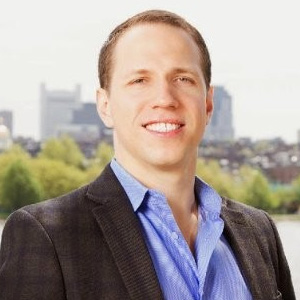
Ross Beyeler is the VP of Business Intelligence at Zaelab, a B2B digital consultancy that helps manufacturers and enterprise organizations modernize the customer experience. In his role, Ross leads data, analytics, and business intelligence strategy, helping organizations translate complex operational and financial data into actionable insights that improve profitability and decision-making. With experience in e-commerce, agency operations, and data-driven growth, he also founded and led multiple companies.


Here’s a glimpse of what you’ll learn:
- [2:09] Ross Beyeler’s approach to evaluating a company’s P&L through contribution margin and cost structure
- [4:54] Why separating growth into acquisition and existing customer expansion changes performance evaluation
- [7:32] The importance of focusing on customer retention and lifetime value
- [15:35] Analyzing product mix and customer behavior over time to provide a clear view of business health
- [17:44] The difference between optimizing for marketing efficiency metrics and business profitability
- [20:44] When marketing shifts from a growth engine into a distraction from building the core business
- [32:18] The risks of over-optimizing businesses through data, incentives, and performance metrics that distort decision-making
- [36:22] How companies can stand out by intentionally embracing uniqueness and personality in their brand and customer experience
- [43:01] Post-acquisition integration and cultural alignment as the most challenging parts of mergers compared to closing the deal
- [50:39] What founders should focus on years before selling
- [1:01:08] How entrepreneurship, ambition, and personal life experiences shape a founder’s definition of success over time
In this episode…
Most companies assume growth is just a matter of getting more customers, but the real story is often buried inside their numbers. Revenue can look strong while profitability quietly erodes through hidden costs, misaligned incentives, and decisions that don’t show up on a surface-level dashboard. If your business is growing but margins aren’t improving, what are you missing?
According to profitability expert Ross Beyeler, the key is learning to read a business through its contribution margin rather than top-line revenue alone. He emphasizes separating new customer acquisition from retention-driven growth, since each carries very different cost structures and long-term impact. Ross also advises leaders to scrutinize return rates, software spend, and fixed-versus-variable cost decisions, because these often determine whether scaling improves profit. Leaders should remain close to the organization through skip-level conversations and direct visibility into teams, so they don’t lose touch with operations. The companies that win are the ones that understand what drives profit, not just what drives activity.
In this episode of the Up Arrow Podcast, William Harris chats with Ross Beyeler, VP of Business Intelligence at Zaelab, about how to uncover hidden profit drivers in growing businesses. Ross discusses P&L analysis beyond revenue, customer acquisition versus retention economics, and why over-optimization can distort decision-making. He also breaks down post-acquisition integration challenges and how founders can stay connected to the operations.
Resources mentioned in this episode
- William Harris on LinkedIn
- Elumynt
- Ross Beyeler on LinkedIn
- Zaelab
- Brian O’Connor on LinkedIn
- “The Underwear Expert: 25 Years of DTC Lessons Most Founders Learn Too Late” with Michael Kleinmann on the Up Arrow Podcast
- Built to Sell: Creating a Business That Can Thrive Without You by John Warrillow
Quotable Moments
- “I think the precursor to that is, are they willing to share their P&L?”
- “The old… adage of… existing customers are the easiest ones to… sell”
- “I think hard problems are hard.”
- “I think that's where the penny-wise, pound-foolish kind of thing can get a lot of merchants caught up.”
- “I think the biggest thing, particularly in larger organizations, is… not being involved in the performance evaluation process.”
Action Steps
- Separate revenue into acquisition and retention streams: Understanding these two drivers independently helps clarify where growth is actually coming from.
- Analyze contribution margin instead of relying on top-line revenue: Incorporating acquisition and fulfillment costs into margin gives a more accurate picture of profitability.
- Evaluate fixed versus variable cost structures regularly: Distinguishing between scalable and non-scalable costs helps prevent profit erosion during growth.
- Audit return rates as a core profitability metric: Returns can significantly distort both revenue and margin if left unexamined.
- Stay directly connected to teams through skip-level conversations: Engaging beyond direct reports helps leaders understand real operational and cultural dynamics.
Sponsor for this episode
This episode is brought to you by Elumynt. Elumynt is a performance-driven e-commerce marketing agency focused on finding the best opportunities for you to grow and scale your business.
Our paid search, social, and programmatic services have proven to increase traffic and ROAS, allowing you to make more money efficiently.
To learn more, visit www.elumynt.com.
Powered by Rise25 Podcast Production Company
Episode Transcript
Intro 0:00
Hi, welcome to the Up Arrow Podcast with William Harris, featuring top business leaders sharing strategies and resources to get to the next level. Now let's get started with the show.
William Harris 0:15
Hey everyone, I'm William Harris, I'm the founder and CEO of Elumynt, and the host of the Up Arrow Podcast, where I feature the best minds in e-commerce to help you scale from 10 million to 100 million and beyond as you up arrow your business and your personal life. One of the biggest mistakes founders make is believing that more growth will solve all of their problems, and for good reason, it usually works. Revenue is down, get more customers, profit is down, get more customers, cash flow stylist, get more customers. In many of these situations, that does solve a lot of the problems you have going on, but sometimes, sometimes your business is already telling you exactly what's wrong. You just start looking in the right place. Today's guest has spent the last two decades helping companies diagnose what actually drives performance. Ross Beyeler founded Growth Spark, sold it to Trellis, became CEO of Trellis, helped lead that business to its own acquisition, and was the former VP of Business Intelligence at Zaelab, and now he's a professional gardener. We're going to talk about how to analyze your company through the lens of your P&L, the hidden expenses silently killing profitability, why so many brands are optimizing the wrong things, and the lessons Ross learned from building, selling, and integrating multiple businesses. Ross, welcome to the Up Arrow Podcast.
Ross Beyeler 1:22
Thank you so much, William. Excited to be here.
William Harris 1:24
Yeah, I want to give a quick shout out to Brian O'Connor from Fast and Furious - I'm kidding - from the CEO and founder of Talent HQ. He's the one who put us in touch. Brian, thanks for making this introduction here.
Ross Beyeler 1:34
Yeah, Brian's a great guy.
William Harris 1:35
Yeah, last interruption, then we'll get right into the good stuff. This episode is brought to you by Elumynt. Elumynt is an award-winning advertising agency optimizing e-commerce campaigns around profit. In fact, we've helped 13 of our customers get acquired, with the largest one selling for nearly 800,000,001 that IPOed. You can learn more on our website@Elumynt.com which is spelled e l u m y n t.com Okay, on to the good stuff. Ross, a PE friend of mine, once told me that the P and L is telling you where the bodies are buried when you look at a company's P and L for the first time. What are the first three things you look at before you ever look at traffic conversion rate or marketing channels?
Ross Beyeler 2:09
That is a great question. I think the precursor to that is, are they willing to share their P and L, right? Oftentimes that's the biggest challenge, but assuming we get access to the books, you know, for me most companies are going to have a generally similar format, right? Revenue, cogs, gross margin, overhead, and then net net profit or operating profit. You know, a lot of organizations are going to have massive leakage in a couple of key areas. The first in sort of how they're structuring their cogs now. This is something that you know any of my CPA accounting friends are going to yell at me for, but the traditional approach to building out your cost gets sold isn't really the right way to think about it for an e-commerce business. So, traditionally, the gap, you know, appropriate method really would only look at the kind of inputs related to the product and would exclude any marketing and acquisition costs, and those would be kind of part of the overhead. I'm a big proponent of really thinking about the contribution margin, which is how much do you have to pay all in to be able to get that product in the hand of a customer, including the cost of acquiring that customer. So, the first thing is, what's going on there, you know, do they have a gross margin calculation that is purely product production, or does it, is it actually inclusive of all the acquisition costs? Is there a contribution margin? So that's one area to look into. The second is, for me, just because I love technology, I love systems, is understanding sort of their percent of spend on their tech tooling relative to overall expenditures are relative to revenue. I think this is an area in the last, like, six to 12 months that has really been upended by AI, in particular, where you know you have a lot of, you know, the whole SaaS pocket thing, right? You have a lot of companies that were spending major money on Shopify apps or third-party tools, where now a lot of that stuff can kind of be rebuilt in relative short order with AI, and could be some massive, massive cost savings. So that's an interesting area to look at, and I think the other one - this is kind of throughout the entire P and L - is this really thinking about what is truly variable versus what is truly fixed. So in your cost structure, right, most of your variable costs, ideally, are in your cost of goods sold, but there are going to be marketing costs, for instance, that are actually fixed. You have a marketing team, a marketing agency, you have, I don't know, some other kind of marketing software, something that's persistent expenditure, regardless of how much you sell. And so I really try to think about, you know, truly variable versus fixed, like what is driven by sales versus what's driven by just commitments that you have, and looking at those, because as you scale your business, you need to understand which of those costs are going to scale along with increased sales, like you were saying earlier, growth for growth sake, versus which might stay flat or scale at a lower magnitude.
William Harris 4:54
I love all three of those. We're going to dig into each one of them over a period of time throughout this I'm. I really appreciated that you called out. Your CPA friends are gonna get mad at you. There are some things that I like to look at differently within the piano. I just think that there's some things on e-commerce that are different. I completely agree with you of looking at, like, CAC and some of the other, like, those acquisition costs being lumped in with that, because I think that, to your point, it gives you a better understanding of what each incremental sale actually costs, and I think that gives you a little bit of better understanding. It's like, if we scale, if we do this, what is this actually going to cost?
Ross Beyeler 5:32
Yeah, exactly. And I think the other thing too is that it's easy to lose sight of sort of the ability to scale net new business versus increase existing business, right? So, you have you have new new customers, and then you have existing customers. There's, there's a big difference from a cost perspective of ratcheting up new customer acquisition versus increasing lifetime value of existing customers, and the impact on profit can be pretty, pretty dramatic between the two.
William Harris 5:56
I got goosebumps, because you don't know how much we talk about this, and I feel like a lot of people will talk about it that way, but there are literally, we set up all ad accounts in that structure, acquisition, LTV, those are like the two things we have, and I look at them as two completely separate cycles. There's everything that you do to get somebody to be a customer, and then there's everything you do after you get them to be a customer, and those are two different things, and there's there's obviously buckets between them, right, like first purchase, the second purchase, the third purchase, etc. You know, re-engagement campaigns, things like that, but to your point, what's interesting is we will break these costs down in looking at that, and there's a lot of times you talk about LTV to CAC ratios, and I love them, it's a really, really good metric. We started doing this back in SAS, we brought me and my business partner, Jeff Snyder, we brought that into e-commerce back when we were doing this, because we were both SaaS before we did e-commerce, and one of the things, though, that I noticed is when we do this for some customers, and you look at what it costs for them to acquire a new customer, and then you look at what it costs for them to reacquire a customer, sometimes they don't realize that they're losing money on every repeat purchase as well, and when you, we've done this for people, where it's like they might be losing even like two bucks per purchase, but they're losing, maybe they're willing to lose $50 on the first purchase, and they're fine, they're like, that's fine, because I've got this LTV, my LTV to CAC ratio is fantastic, right, it's like four to one, and I've showed people this, it's eight to one, I've seen like an eight to one, and they're losing money, though, and so it's like, okay, but then you're losing $2 on every single time that that person comes back to buy, because you're over investing in those reacquisition of the, you know, those new purchases for them. I've seen it too much. Do you feel like that's an issue that people aren't addressing?
Ross Beyeler 7:32
Yeah, 100% I mean, I think it's, you know, it's alluring to get net new all the time, right? And people, people, people get excited about new business, new growth, and I don't blame them, right? Like, there's there's a lot to be said for the ability to drive up, drive up new sales, but you know, the old, a old adage of, like, you know, existing customers are the easiest ones to sell. I think is very true. I think, particularly for e-commerce companies that have a diversified product catalog, where you're talking a sell, upsell, accessory sale opportunities, subscription renewals, anything where it's like, hey, listen, we've got them in the door, right, for this one product, but we've got so many follow-up products that are going to be relevant, that thinking about what you can do to expand that account is critical. I think the last couple of years, you know, we kind of shifted a lot of our focus to the B2B space, and for b account sales and thinking about sort of true lifetime you know value of a customer you know everything is about the subsequent purchases not that first one that first one is oftentimes just just a little fraction of their business just to kind of prove some value and then grow the account from there
William Harris 8:38
yeah I feel like there's a lot of times businesses that are focused on metrics that I would say don't matter as much, they matter, and like they're good. ROAS is an example of one that I feel like it's fine, like you need to know what it is, but it's not the one that matters. But like we were just talking about, like some of these other things, like even conversion rate and traffic, and like those are important, but they're maybe missing on some of these like more foundational metrics. Why do you think founders obsess over metrics that are downstream symptoms instead of upstream causes?
Ross Beyeler 9:07
That's a good question. I think it's, I think hard problems are hard, and I think when it comes to thinking about your business, you know, you want it, you want to, you want to find the kind of easy wins as much as possible. You want to capitalize on sort of the growth hacks, if you will, but a lot of those things truly are hacks, right? They're just bandages, they're just, you know, you trying to spit ball something and making it, make it work, but aren't necessarily getting to the root, you know, of the organization, and sort of the way that you operate. I mean, there's like we've seen clients deal with this over the years, where we have one client in particular that had a fantastic business, super loyal customer base, they would launch new products, they could almost guarantee the percentage of their email list that would buy, just like beautiful, right, exactly what you want for an e-commerce business, but they insisted on how. Having as much of their fulfillment in warehousing and everything like that in house as possible, even though it fundamentally wasn't serving the customers, and it wasn't serving their business, you know, there were elements going down, you could personalize this, we could be a little quicker here, like there were certainly elements, but when they finally made the decision to actually outsource that and found a good partner for it, radically changed your business. I mean, literally, their entire P and L changes when you go from how to deal with a warehouse and employees and all the overhead associated with managing yourself.
William Harris 10:32
I just had Michael Kleinmann, The Underwear Expert, on last week's podcast, and he said the same thing, like it's one of the most important things he does, like for most brands you probably need a 3pm It's gonna be better for you overall, you're gonna scale better, it's gonna be better deliverables, you know, people get the delivery better and stuff. Yeah,
Ross Beyeler 10:53
yeah. And I think just, just to kind of dive into that a little bit further, this is the whole variable versus fixed cost, yeah, fixed cost issue, right? If you, if you're not really mindful of what's variable and what's fixed, it's easy for you to kind of lose sight of the fact that, like, hey, you've got this fixed nut you need to cover every single month, and if, if that outpaces what you're able to sell, like, just not going to make money, it's not hard, right? It's very easy calculation, but, but a lot of, a lot of merchants aren't necessarily separating those two well enough to know just how much they need to sell, and if they look at that fixed cost, and if they're able to say, like, all right, let's take 50% of that and convert that into variable, like, yeah, maybe our contribution margin is a little bit lower, but wow, our EBIT is actually going to be better, because now that fixed expenditures in the down months or off season or whatever, like that's gone, that risk is entirely off our plate. It
William Harris 11:45
happened to a customer of ours a couple years ago, maybe 223, years ago, I don't remember exactly how long, somewhere around there. I lose track of time sometimes, right? It's like, really, that was five years ago, I don't know, I graduated that long ago, but they, they were there. We work with a lot of the CFOs, as well, of companies, for the same reason what you just talked about, as many as we can. We try to get the PILs, because that's the only way that we believe we can optimize their ads correctly. But for this particular company, the CFO was like, "We need to be more profitable than what we are. Guys, like, you need to be more efficient, marketing team, advertising team. And, thankfully, because we do this already, I was able to look at that and say, actually, we are about.. I don't remember how much it is. Let's say 15% more efficient year over year than we were previous years. The thing that changed is your op x, your overhead right now. You went from about 400,000 a month on overhead to 700,000 a month, and so even though from an from a marketing and advertising perspective, we are more efficient, we didn't outpace the growth that you had there, and so your overall EBITDA, yes, ease down here. Over here, there are other things you have to work on,
Ross Beyeler 12:45
100% Yeah, and I mean, honestly, this is just as prevalent in the sort of service business space, right? As agency owners, right? Like, you can, you can be crushing it on the sales side, but if you're adding non-billable resources, you got new account managers and executives, and whatever, all of a sudden you're like, wow, we just can't outsell our way of this overhead that we're accruing.
William Harris 13:04
Yeah, so revenue is usually the sexy problem when we talk about revenue growth. A lot of times people think about, you know, okay, acquiring more customers. When you break apart revenue, though, mathematically, what are the actual levers available, besides just new customers?
Ross Beyeler 13:21
Yeah, I mean, you know, there's a lot of different ways you can kind of tweak the formula, but hypothetically, you know, it's how many people are coming to the site, what percent of them are buying, and how much are they spending on average, right? That gets you sort of your first time value, and then you can kind of extend that out and sort of say, like, okay, well, how often are they buying, you know, what percent is repeat, if it's a subscription business, maybe there's an attrition rate component to it, but it's basically that, right? How many people buying, what percent, buying at what rate, you know, at what dollar value? So really, you're pulling three level levers, right? How do we get more people there? How do we get them to buy at a higher rate, or how do we get them to buy more? Now, if you were to kind of try to divide those philosophically, right, you could sort of say getting more people there. Okay, well, that's all about our marketing and acquisition, and we can have a whole conversation about what channels make sense and the day and age of AI, like what's AEO going to do, and all that. That you know, that's an interesting path. You know, the percentage of purchases, conversion rate optimization - there's all sorts of best practices there that we can kind of get into. I think the one area that maybe is overlooked is the average order value, and thinking about it from a product catalog, product portfolio perspective, you know, you see a lot of brands that are just like amazing one trick ponies, right? Like, they've got one great product and it sells really well, but where's the follow up, you know, where's the accessory, where's the, you know, v, where's the lighter version, the heavier version, that kind of thing. And so I think I think companies, companies have to kind of look at their product portfolio on both the expansion side, like how do we actually come up with follow up products that are going to allow us to increase our average order value, but also on the contraction side, like sometimes you get too many products and you get an 80. 20 rule issue going on, where you just have way too many different things that you're trying to sell, and because you're trying to offer too many different products, there is kind of an inherent cost associated with that, right? If you have a huge portfolio, you've got carrying costs of that inventory, you've got, you know, whatever redesign costs, like there's all hidden costs with, with kind of increased catalogs too, so, so, for a lot of our, you know, a lot of clients I've worked with in the past, trying to help them think about both sides of that. If you're a single, you know, single product company, how do you diversify? You've got 10,000 SKUs, how do you reduce? Because there's probably some sweet spot in the middle that's going to help.
William Harris 15:34
Yeah, I completely agree with you. I want to jump on that ALV train for just a little bit. We like to break those down as well, just first purchase ALV, then let's just say everything else, but then we even break those down too. In the reason why I like to break those down is there's a client that we had that was in the hobby space, and without going into details, let's say that's like the first purchase for this particular business was usually a bigger purchase because it kind of got you into the hobby, and then there are a lot of like follow-ups that you had, but then there are certain things that you almost can count on. It's like, you know, maybe there's like a monthly thing that you need, and then there's like a six-month thing that gets you to that next level that you need a little bit more, right? And so, when you looked at like their AOVs from each cohort, there's a significant difference in what you could expect, and you could almost predict it to a point of about where this would be. The problem with looking at, like, when they just flattened out their AOV was they kept thinking that they were doing something wrong. Oh no, our AOV is down. It's like, well, your AOV is down simply because maybe you weren't acquiring as many new customers, and so, yeah, there's a lot of repeat purchase this month, and so when it blended out, that's where it was. Or I've seen it on the other side, where sometimes their first purchase is maybe a smaller purchase, but then it's like that gets people hooked into it, and then they have bigger LVs afterwards. It's like, well, maybe your AOV is down because you just did a really good job of getting a lot more new customers, and such shifted the ratio of new customers to returning customers. But the point is, being able to separate out those is an important piece. Otherwise, I think that obscures maybe some of the story of what's going on.
Ross Beyeler 16:58
Yeah, well, and I think that gets interesting too, if you start to think about it from a margin perspective, too, because a lot of times that first purchase isn't necessarily the high margin product, bro. You know, I'm a very big motorcycle enthusiast, right, and I've fallen into the Harley Davidson camp, and you know they're expensive bikes, don't get me wrong, you first buy them, but Harley doesn't necessarily, especially the dealers, don't necessarily make the big margin on the motorcycle purchase, it's all the service follow-ups, it's all the accessories that you're buying for the bike, it's all the T-shirts that you end up buying and giving away, like there's huge margin difference between the actual motorcycle itself and all the accessories and service that come with it, and so for them to get you in to their dealership, make you a loyal customer, you know, maybe it's only 10% margin on that bike, but it's 80% margin on all those follow-up services.
William Harris 17:44
Yeah, no, you're absolutely right about that. And so that's where, okay, so one of the other things that we like to do is separate out catalogs based on that, especially brands that have large enough catalogs to say we could optimize around revenue CAC things like that, or we can optimize around EBITDA profit, and there's a big difference. And so the example that I like to give to a lot of brands who are maybe misunderstanding how this looks is, so you got one product that's $200 and you've got margin of $50 on that, another product is $100 you get margin of $75 on that one, if you just say, hey, our goal is a $50 CAC, you got $50 required, either one of those purchases, that's what the advertising is going for, the 200 divided by 50 gives you a four to one ROAS, but you have no dollars of profit left over. $100 one divided by 50 is a two to one ROAS, but you've got 75 or $25 of profit left over. So, arguably we should be going after more of those purchases if we're saying we want to be EBITDA focused.
Ross Beyeler 18:34
Yep, yep, yeah, no, 100% And I think that's where the like penny wise, pound foolish kind of thing can get a lot of merchants caught up, is you know, you asked earlier, kind of like what metrics do people get excited about, but they're not really looking at the, you know, upstream issues, it could be that, like, it could be a pricing issue, could be a margin issue, you know, and margin, margin varies by product for a lot of different reasons, you know, maybe it's the expense of the customer that you're targeting for that particular product, but more likely there's a cost structure element to it, and some products are just more profitable than others, and you just got to be mindful of that in your catalog analysis,
William Harris 19:06
especially if it looks like it's worse. It's like maybe the agency's patting themselves in the back. Hey, four to one rows, we're doing a good job. It's like, well, actually, the two to one was gonna be the better one if you're going after these products.
Ross Beyeler 19:15
Yeah, yeah, and I bet you, if you, if you spoke to a lot of agencies, you know, in the marketing space, you know, they'll, you'll hear these stories where they're like, I don't understand why the client left us. The ROAS we were producing was fantastic, you know. We were killing it month over month over month. It's like, yeah, but they weren't making money, they're not gonna.. your row has looked great, but they weren't making money. They can't afford you, you know.
William Harris 19:33
Exactly. All right, let's play a game. I like analogies. If revenue growth was a fitness goal, what are the business equivalents of these three things: eating better, lifting weights, taking steroids. So, if revenue growth is your fitness goal,
Ross Beyeler 19:48
yeah. Well, the steroids are going to produce pretty big gains in a short time, with a lot of unexpected consequences that aren't going to be good for your health long term, right?
William Harris 19:57
So, what are those like? I was gonna say coupons, as well, the first. That came to my mind, I was like, I like, you're gonna get, you're gonna get like that revenue growth, but it's not the customers that you want, your LTV is now hindered.
Ross Beyeler 20:09
Yeah, I know that's great. Now, I guess I get the game now. Some things
William Harris 20:12
have shrunk. Yeah, exactly.
Ross Beyeler 20:16
Yeah, 100% discounts are one of those things that you know, I think what you find, and I'm sure when merchants are doing cohort analysis, they're going to find there are people who are only buying when they're giving discounts, you know, and the value of those customers is obviously going to be lower than customers who are buying because they love the product, or what have you. So, yeah, so the discount trap can be, can be a real tough one.
William Harris 20:38
Is there a point where marketing actually becomes a distraction from building a better business,
Ross Beyeler 20:44
that's a great question. I mean, I think, I mean, I think you could, you could say that the term marketing, right, is maybe too broad, right, because there's, there's awareness, there's, you know, acquisition, there's like all sorts of elements to it, you know, I think where, where we've seen brands, where we've seen brands that are more focused on how do we connect with our customers, and we're going to throw whatever dollars we need to in order to create a great connection with them, maybe that's events, maybe that's giveaways, maybe that's retail, maybe that's, you know, sort of new social channels, maybe that's really unique content that has not a lot to do with their brand, like I think it's those connections. If you're, if you're looking at marketing as that, I think those brands are doing great, and I would not consider it a distraction, even if some of those efforts don't necessarily have a clear, as clear of an ROI. But when it's just like chasing every metric and trying to optimize the hell out of it to death. I think that's where people can kind of get lost in the sauce on it.
William Harris 21:45
I love where you took that, and it's always fun to see where somebody could take something a completely different direction than what you thought they were gonna go. And so that was very good. Where my mind went with this was, we've got a client who they're killing it, they're doing fantastic in so many ways, right, and like advertising exceptionally well on TV, Meta, Google, Amazon, but they have such a big product failure rate, where it's like, like, like battery issues and things like that, but they don't care that much, because they still keep making enough money, and there's a part of me that's like they're always hammering for like more efficient selling marketing and things like that, and like scaling curly, and I'm like, or hear me out, fix your product, and right,
Ross Beyeler 22:26
yeah, that's great. The probably goes down to, like, you know, what kind of business are they trying to build? You know, is is it a, is it a Yeti that's trying to build the most ridiculously over-engineered, high-quality, you know, stuff that you've ever had, or is it a, you know, a knockoff, just get it in, get it out cheap type company.
William Harris 22:43
Yeah, Tick Tock, maybe buy it, kind of thing. I want to talk about the hidden profit killers. Then, what's the most expensive line item that founders seem to ignore?
Ross Beyeler 22:54
That's a good one. I mean, one that comes up a lot is return rates, you know, because it's not necessarily something that directly shows up in the P and L, right? It depending on how you're structuring it, most often it's a negative revenue, so you know that's that's where it's kind of a killer, where you're like, hey, you know, we did whatever, a million dollars in revenue this this month, that's great, but like you actually did one five, you just had, you know, 30% return rate. That's not great, but they're not necessarily seeing that until you're actually in the detail level, or if you're breaking out in a very specific way, which some merchants do, but not everyone does.
William Harris 23:32
Do you offset that by time?
Ross Beyeler 23:35
That's a great question. That, yeah, I think looking at that, looking at that over time is, is, is a very good thing to consider. I mean, all accounting basically boils down to like things that look at a moment in time versus things over a period of time, right. And so you need to, that's why, like, the profit and loss statement, the balance cash flow statement, are all three interrelated documents, because you know the profit and loss is looking at things over a period of time. Your balance sheet is looking at things that it's not, you know, snapshot in time, and you need to understand sort of how those things connect. And so, yeah, I think the smart firms are looking at that across all three, and things over over that time period too.
William Harris 24:18
Yeah, we always try to offset it, almost like you would like trial to conversion to paid right in SAS, where it's like offset it by a month or whatever the appropriate amount of time is based on when you expect people to make those returns, because if you go from let's say December and you killed it because it was a Christmas product, and then you look at like returns in January, it's like, well, returns in January are significantly higher than what you expect because you had a lot more sales in December, but then that offsets revenue so much more in January, that makes all of January look significantly worse than what it
Ross Beyeler 24:45
Yeah, yeah. Well, I mean, and this is another kind of.. it's funny, I feel like this turning into an accounting lesson, cash versus accrual accounting, right? I mean, this is pretty foundational, and bigger, more sophisticated merchants, you know, your audience certainly under. You'd be
William Harris 25:01
surprised, you would be surprised.
Ross Beyeler 25:05
So, so, here's the thing, in the agency world, right? Because I've had this conversation with other agency owners, right? You can, you can invoice for the work, you can do the work, and you can get paid for the work. All three of those can be the same day, most likely not. Most likely they're entirely separate, and so I talked to agency owners. Well, how'd you do last year? Oh, we did great, we, you know, whatever. Did 10 million bucks. It's like, cool, you invoice that, but you actually owe $5 million worth of work you haven't delivered on yet. So, you haven't earned 10 million, you earned 5 million, you know. And, oh, you know, we earned 10 million, but no one paid us. We have collections issue. Okay, and these things are, yeah, foundational business issues.
William Harris 25:42
It's interesting, that's for sure. You told me earlier that tech spend is one of the places that you immediately like to dive into. Why is software becoming the new office lease?
Ross Beyeler 25:53
Yeah, ooh, new office lease like that. I think that, so I think there's a couple of reasons, right? Let's say before AI, because AI obviously makes everything, you know, whole new spin on it. It's very in the world of Shopify, where it's got a robust ecosystem full of some amazing apps that are one click installs, and you know, 10 bucks a month, or whatever. It's death by 1000 cuts from some merchant, where they just start clogging more and more and more and more apps in their, in their sort of setup, that that's certainly an issue. I think even before AI, there was a big push towards some of the larger platforms that are now trying to be cross-functional and sort of saying, hey, listen, we can, we can kind of do a little bit of everything, you've got five apps here, we can do all those things, maybe we're not a, you know, or number one in all those categories, but like 8020 rule, we're going to get you most of the way there for a single subscription, and so even before AI, we started to see some consolidation there, where merchants are just being smarter around, like, hey, let's go down to five vendors, three vendors who kind of do a little bit of everything, we get tighter integration, we get better account management support, you know, and we can, we can kind of limit some of our spend, so there was that, that we saw, but I think more recently with AI, but now merchants are looking at what they're doing with their apps, and they're saying, like, why can't we do this ourselves, you know, I mean, a lot of applications, I mean, a lot of applications are just a database of information, a form to interact with it, you know, maybe some notification layer, so you know, if you, if you, if you find that you're using a lot of that type of software in your business, there's probably a really good justification for looking at AI as a replacement to that.
William Harris 27:32
Totally agree with you. That said, you've had this happen to you as well. I know a lot of other people are, you know, you wake up the next morning with a $69 bill from Claude, you're like, oh man, I didn't mean to do that. So I have seen the memes of people talking about it's like I just replaced my $10 a month Calendly subscription with $30,000 worth of mythos, right? It's like, okay, well,
Ross Beyeler 27:51
yeah, I know a lot of that has to do with like how your organization is navigating sort of AI adoption, right? And so yeah, you know, are you, are you, you know, turning, you know, not putting any limits in place, giving everyone access, and just letting people, you know, spend tokens like they're at the arcade, or are they, you know, are you kind of rolling it out in a more diligent fashion? I think this is where, so I think this is this is where sort of the whole, you know, agencies working with merchants, and in this kind of, you know, post AI world, or whatever, mid AI world, you know, I think I think that agencies have the ability to navigate this on behalf of their clients and kind of get a little bit of a sense of how the playbook works, not that the merchants can't do it themselves, like I'm all about self empowerment or entrepreneurs taking the reins and being owner operators hands on, but there are times when you can just cut those costly mistakes down pretty considerably by working with someone who's just already done it a couple of times, and they already know who the gotcha is, and they can already point them out for you and help you kind of get that foundation set up.
William Harris 28:50
That's always true for all agencies, and that's one of the things you know. When AI first came out, I like everybody, you're just like, okay, what does this mean for us, right? Yeah, and the more that I've gotten into it, the more that I'm just like, oh, we're in a really good spot, because for instance, my brother-in-law is a graphic designer. What he can get out of AI is so much better than what I can get out of AI from a graphics perspective, and it's not that, like, I have access to all of the same tools that he does, and I'm trying, and I'm using the tools up to get better, but he just has the knowledge, the words to like finesse it and fine tune it, and to know what's good, and to know what's not good, and so there's still like this benefit to being knowledge experts that I think is going to continue through.
Ross Beyeler 29:27
Yeah, that's the taste and judgment and discernment that comes with expertise that you know it's not commoditized. Yeah, I mean, sure, the agents are getting better, the models getting better, like it'll be there'll be more and more robust, but I think there's still many years where smart people who know what they're doing are just going to be ahead of those who don't, when it comes to using AI.
William Harris 29:45
Exactly, what's the difference between I need a better tool or I need a better process?
Ross Beyeler 29:52
I, that's a great question. I think I think people are always too quick to jump to the tool, um. And and honestly, even sometimes the process, I think, what we're, where many businesses, service, merchant, whatever, fail is they don't think about the problem enough, they don't really define the problem enough, right. So, and I'm very guilty of this myself, I love technology, I get excited about it, I, I want to tinker, I want to like build a thing that people, you know, people like, oh, look what it does, it turns it blue, that's awesome, you know, but, but ultimately you need to take that step back and be like, why are we doing this? Why is this problem important? Why is this problem important now? One of the questions that I, that I used to always ask, this is back in my sales days of the agency world, before I moved into kind of the CEO role, is, you know, so what's a good partner look like, but which I think is always telling, but also, you know, why are you doing this project now, and why don't you wait six months? You know, and understanding sort of that, that that drive, that impetus to solve the problem is really important, because sometimes you find out, like, there isn't a reason, it's like, okay, cool, if there isn't a motivation for you to be doing this now, then why should I think that you're even going to do this now? Why should I do this thing now, and so I think understanding problem and the motivation behind it is probably more just thinking about processing and tooling.
William Harris 31:09
We use a framework called EOS Traction, if you're familiar with the
Ross Beyeler 31:12
same thing. Yeah,
William Harris 31:14
yeah, and so like there's the IDS section, right? And I feel like a lot of times people jump into a great, here's the problem, let's solve it, and it's like, wait, wait, spend just a little bit more time deciding if that's actually the problem, and there's a couple of really good frameworks. The one that I typically use, because I'd say it's like the easiest one to use a little bit, that my dad told me is like the five whys, are you familiar with that
Ross Beyeler 31:35
one? Yeah,
William Harris 31:36
right, but it's like, okay, well, why, well, why, well, why, and like the example I like to give, or like the first time that my dad gave me this example was, he's like, "Okay, you're late to work. Why are you late to work? I ran out of gas. Why'd you run out of gas? So, the gas gage is broken. Why's the gas gage broken? Well, because I didn't have enough money to fix the gas gage. Well, why didn't you have that? I didn't have, so it's like he tried to figure out. It's like, well, okay. Well, how do we get to like what is the actual problem? Okay, if we fix that problem, then it solves all of these other things downstream.
Ross Beyeler 31:59
Yeah, yeah, yeah, exactly, and I think that's right. So, you know, really, really important. It's, it's hard for people to be willing to take a beat and maybe step back and ask that kind of question, because you just, you know, everything's so fast-paced, you just want to move, move. But,
William Harris 32:13
yeah, just want to cross it off, mark it down. Great, yeah, exactly. Let's talk about the danger of optimization. For the last decade, I feel like we've worshiped at the altar of data, data, right, measure everything, optimize everything, track everything. Do you think now that we're, are we over optimized?
Ross Beyeler 32:31
That is literally the top question on my mind over the last couple of months. I mean, my entire role, you know, at Zaelab and last company was centered around business intelligence, and you know, we define that a lot of different ways, but you know, part of it was really just understanding kind of the metrics associated with the performance of the company, you know, and helping our clients navigate their own metrics and all that kind of stuff, and there's there's a lot of issues with being just Uber focused on optimization, right. Number one is most companies have just really poor underlying data, and so what ends up happening is we're making these really strong convicted convictions, right, around like we need to do this. It's like, yeah, but dude, we can't trust any of the inputs, right? There's this, we're not capturing data, or capturing it incorrectly, or capturing it, you know, partially, or whatever it is, so I think there's there's this fundamental issue of just like you can't always trust your data, and you probably have a data problem to solve before you have a metrics, you know, problem to solve. That's one. Number two is that people are behavior follows incentives, right? I think it's Charlie Munger has some quote like that, I'm butchering it, but basically it's sort of, you know, whatever you incentivize people towards, whether that's compensation wise or performance review wise, etc. they're going to do that, right? They're going to maximize for that. That's just kind of how incentive structure works. So, if your behaviors are following the incentives you're putting in place in your organization, or for your customers, right, or whoever, that's going to, that's going to potentially shape your business in a way that you didn't intend, and so I think that can be something where, if you're over optimizing, and optimization always requires data, and you know, looking at the numbers, you can find yourself going down a path you didn't expect, because you created an incentive to do a thing that isn't actually the thing that you want. So, I think those two are our prevailing issues? I think the last is what I've seen in this great article, what to share with you, so you can share with your audience afterwards, but that's talked about sort of how, because we have algorithms that are just optimization functions in and of itself, therefore encouraging behavior to follow a particular need, because of that, you're finding there's a massive amount of groupthink and sort of convergence around things like design and esthetics and fashion and beauty and websites, right? I mean, we're all guilty of this, it's like there's some amazing looking Shopify themes out there, why not just pick that theme and why not just drop the content? And then call it a day. Well, you and every other merchant has done that same thing, and now you look just like every other merchant. And so, what ends up happening is by, by following the playbooks and the best practices and playing into the algorithms, you end up having this kind of bland convergent output rather than something that truly stands out relative to everyone else.
William Harris 35:18
Yeah, yeah, I do feel like I've seen a lot of conversions, even like you said, you talked about like beauty, and what's interesting is like where my mind went with that was I have a baby tooth, I don't know, you can tell I still have a baby tooth, and never had braces or anything like that, and maybe my listeners like, yeah, we wish you would, but like the point is that like right now you look at like what they're doing, braces for like 10 year olds and stuff like that, and everybody is ending up with the exact same smile, the exact same mouth, and we're just accepting that, as if, like, hey, this is this is the right thing. To your point, I feel like we're doing that in business as well, where every website is looking and functioning exactly the same, and there's some benefit to it, because now when I go to whatever website, I know how to navigate, I know how it works. It's like, okay, this is familiar, you didn't change me from the hamburger menu to the kebab menu, and it's like, and I'm confused, or whatever, right? Like, you've kept it the same, but I think that there's power in doing something different, but you have to be careful in how different you get. So, I guess the question I'm gonna ask you is, what would a founder see if they let their company and looked at it through the lens of, like, what makes me weird, what makes me different?
Ross Beyeler 36:22
Yeah, that's a, that's an interesting way to think about it, like, you know, like I'm thinking back at some of the clients that we've worked with that I think stood out to me and still stand out to me, you know, they found little touches to kind of embrace the weirdness that they had. Right, we had one client that was like just a little prankster, like we'd go to his office and he would be playing jokes on us, like it was great. He's like popping meetings, wearing like masks and things like that, be like this is this dude's out of his mind. But he was great, amazing client, you know. And he, a lot of that kind of lived in his brand too, and the kind of products that they were, you know, creating, but they would have little things like little little freebies that they would add to their orders, you know, little surprises for their customers, weird ways that they would handle their email marketing, just like quirks, quirks like that, that created this distinct personality in the brand, and a lot of customers kind of like gravitated towards that's that's what they liked, they like that kind of quirkiness, I think it's, you know, that kind of thing is, it's rare, you know, it certainly is rare, but I think, particularly for kind of still founder-led brands, owner-operated brands, where the ownership team is still hands on, like, there's tremendous opportunity for you to have that brand be an expression of your personality, and you don't have to be a prankster, you don't have to be funny every time, like some of it just comes out of your, your story, your, your messaging, your the things you care about, you know, the the community that you've built that has no very little to do with your product, you know, all that kind of stuff can matter.
William Harris 37:54
Well, it's okay. So I think about breaking rules, and there's a quote by Paulo Picasso that I don't remember, and so I would butch it as well, but the gist of the quote is something along the lines of, like, you have to be really good at being able to paint within the rules in order to break them correctly, kind of thing, right? And if you look at his painting, it did, it broke so many rules of painting, but that's what sets him apart, you see it, you go, that's a Picasso, right? Yeah, that's why he was what he was, was, because he was able to break that, but he first got really, really good. If you look at some of his early work, he was very good at following the rules of painting. First, he didn't just try to break. When I think about brands that I think have done a good job breaking the rules, the first one that came to mind is Al Don's Missouri Quilt Company. If you haven't seen what they do, they had an entire town that they basically made into, like, Quilters Mecca, where they have, you know, all kinds of people come in there, like, they basically bought a town and turning this place that people to come out, like, that broke the rules of traditional e-commerce, and I think it's served them exceptionally well.
Ross Beyeler 38:54
That's awesome. Now, I'll definitely, I'll definitely check them out. That's incredible.
William Harris 38:57
You talked to me before about staying close to the customer, what's the earliest warning sign that a founder is becoming disconnected from reality?
Ross Beyeler 39:06
You don't know who's on your team, you don't know your team, team members, that's a pretty good sign, right? You know, you haven't, you haven't been involved in, you know, any element of product design or development or creation, you haven't, you've been so far away from customer support that you don't know, kind of like what the top three issues are from a customer support perspective, you, you don't even know where your marketing dollars are going, you know, from a, you know, from a not, not at a height, not like a real neat detailed level, but you know, maybe you don't know events that are you guys are sponsoring, or you don't know, you know, kind of key key channels that are working. I mean, a lot of it is just like knowing the business, like it should be one where you still know your numbers, you still know your team, you still know sort of what your priorities are. Uh, without that, you're going to get pretty far away, and it's going to be pretty easy to just think of the business as a spreadsheet, and that's when things can get pretty dangerous. If that's where you're living,
William Harris 40:09
we hear this all the time. EOS is even another good one of this, but like almost every management book that you get will tell, talk to you about how you need to delegate and elevate, right? Like, you have to, and there's a lot of truth to that, right? Because if you're still doing all of these other things, then you're also not the coach, you're not the one, like you're on the court, you can't actually step back and see the bigger picture. That said, on the flip side of this, what's something that you think owners, founders are told to delegate that you're like, no, stop delegating that, I actually want you to take that and make sure that that's something you own.
Ross Beyeler 40:42
Yeah, I think the biggest thing, in particular in larger organizations, is just this might sound like kind of HRE, but not being involved in the performance evaluation process, right? And waiting for, and we were talking, like, you know, 100 person plus organizations, but if you're waiting for your head of HR to kind of give you a consolidated report of how the company is doing, and here's our NPS number, like you missed it. You need as many, like I used to make it a point to do as many skip one on ones as I could, so my direct reports, direct reports, and sometimes even their direct reports, like really going down the chain, because the input that you can get from folks who are living it day to day on the front end, is a front edge is incredible. I mean, in the way I would approach it, too, is that you know you're not there to grade their performance, you don't know you're not working with them directly, but you should be there to listen about what is working for them and not working for them in the company, and so a lot of times just showing up and then asking them, hey, what's going well, what's not going well? What are we doing that we should stop doing? What do we should do? Which we do that we aren't doing. You know, just a couple of questions like that can go a really, really long way, particularly if you, you know, interview a bunch of different people, because you're going to start to recognize patterns. If 10 people are telling you kind of the same thing, probably means you need to pay attention to it in your organization.
William Harris 42:00
That's very wise advice. I don't, I would say that I don't do it systematically, but I do that, let's just say organically by accident. There are there's a few that I do one on ones that are like you said, skip one on ones, where it's like they're not my direct report, but I like to have one on ones with them. I do have them a little bit more regularly, and so I don't, I don't maybe branch out as much as I should, and so you've just encouraged me, that's like, I need to do more of them with not just the same kind of like leaders of these departments, but like more people outside of this, so I get more input.
Ross Beyeler 42:30
Yeah, yeah, yeah, I've always, I've always found it's never a waste of time. Let's just say, like, worst case, you know, you get to catch up with someone, and you know when you cut it short.
William Harris 42:37
Sure, you've gotten the opportunity now to sell into Trellis, and then help sell Trellis to Zaelab, and so you've to be a part of this a couple of times. Selling business is not always what you think. I've heard this from so many people who have sold businesses a lot of times, and you told me this a lot of times. People think that the hardest part is maybe getting the LOI or the due diligence, but that's not the hardest part. What is the hardest part?
Ross Beyeler 43:01
Yeah, the hardest part, I think, really is the integration period. So, you know, most people think of sort of what it takes to get to the point where you have an offer and you're like, okay, you know, this is a real thing, you close the deal, you get some money transferred, it's like, okay, we sold the business, we're good. That is just the very, very beginning. You have very technical things that you need to worry about, systems integration, process integration, that kind of stuff. You have relational things that you have to worry about, you know, client contacts and team members integrating, and all that kind of stuff. But most importantly, you have cultural issues that you need to worry about. I mean, in any situation, either it's, you know, two two companies shedding their, their former cultures to create a new one. Maybe it's one company assimilating into another company's culture. Maybe it's some sort of hybrid model, but there's there's going to be some significant sort of shedding and death, if you will, of a previous culture that's necessary in order for the new culture to emerge, and I think what ends up happening is a lot of organizations cannot be clear on, or aren't as clear as they need to be around kind of what the desired culture is going to look like after an integration process, and also overestimate how quickly they can move, like, yes, you can cut over systems and stop spending money on certain vendors, and make, you know, contact clients, like, you can do, you can do a lot of things very quickly, but the actual cultural shifts, cultural changes can take two, three times as much time as you expect.
William Harris 44:31
It's so good. I don't know why this is where my brain went. My brain always goes to where things, but like I was thinking about a marriage in a marriage theory point where it's like it's two different cultures, right? Like, grew up in two different families, two different cultures. You blend things together, and then that's when the real work starts, and you think that it's where you're dating, or when you're engaged. It's like, no, no, it's after marriage, that's when that actually starts taking place. And the example was like, "Hey, we let the dog sleep in the bed with us or not. It's like, "Oh, we always did. Well, we definitely did not, right? It's like, no, they're in the kennel or. Or you know, it's like, hey, we always go over to my mom's house on Sunday night and like play cards and like have pasta, like that's just what we do, and it's like, well, you know, we have another family now too. It's like, how do we integrate that? How do we do this? And so it's like, to your point, the real work starts after marriage, the real work starts after the acquisition.
Ross Beyeler 45:15
Yeah, 100% And if you think about what culture is, you know, culture is the traditions that you decide to carry on, you know, maybe you get both families, traditions, maybe you don't. It's the stories, right? It's the stories that you continue to pass on to your, you know, to your, to each other, to your children, you know. There's a, there's, it's sort of how you think about building a home, and sort of like what's on the walls, you know, like, you know, what do we value? Is it photos, is it art, is it, you know, yeah, entertainment, like all these things, are meaningful symbols that are what inform the way that we kind of live in our families and in our organizations. A lot of those same ideas translate into organizations too. It's a little bit trickier in a remote first company, right? And there's no office culture per se in terms of the environment, physical environment, but there's still norms, there's still stories, there's still traditions, there's still all these things that kind of inform the way that people show up,
William Harris 46:04
and I like that you said, what do we value, and so it's like, well, what do we value, what gets praised, right? Yeah, and then where are we going, and to that point, within our own family, I've written with my wife our mission, vision, and values, where it's like, like, where are we going as a family, right? So that way our kids even know it's like, hey, what are the things that we're gonna get praised for, and we can consistently praise for the things that we jointly agree are the right things. These are the things that we value. And let's just say, from a business perspective, when you're merging, when should you have that? Let's just say, like, the redone version of the mission, vision, values, is it like, hey, day one, or is it like we're working on it, we're going to get this to you in 90 days. I feel like that creates ambiguity, and they're like, "Well, what? What matters now, right now?
Ross Beyeler 46:47
This is the one thing that I just don't know if I have a good answer on. I can tell you what I've observed, right? Okay, is that most often the mission, vision, values comes from sort of the executive team, which is good, right, because the founders there, the owners are there, you know, they have the sort of authority to, you know, determine some of this kind of stuff, and they're looked to as leaders, and they need to be kind of espousing the same direction for the organization, etc. etc. But what, but what's often true as well is that, you know, that's a small percentage of the company, and the vast majority of the company, where the stories live and the behaviors live, and you know, all the traditions live, they're not necessarily on board with that, you know. They maybe want to hold on to old things, or they want to adopt new things, or whatever. And so, you know, I don't - I don't think it can be purely top down. I don't think it should be purely bottoms up, but there needs to be a little bit of a sort of a collaboration, and this is where this is where building and feedback mechanisms within your organization are really important, so things like the skip one on ones, even basic stuff like obviously performance evaluations, 360s pulse surveys, all those things are good. One practice that we have at our trellis that I thought worked out really well for us is that each department would have sort of a quarterly what we call summit, and the idea was you take air a day, you would put all the client stuff aside for a moment, and you would really go deep dive and like what's going on in our department, problems, solutions, processes, etc. And then we would ensure that all that information was shared across the entire leadership team, you know, and that, and that sort of, hey, here's what the PMs think about things, here's what the devs think about things, here's what the marketing team thinks about things, it really kind of brings to the executive team's attention, like this is what's actually important, this is the shit that people are worried about, this is the stuff that needs, and I think you, you want to find a similar way to establishing the mission, vision, values, where there's some sort of collaboration between kind of both the top tier and the folks doing the work,
William Harris 48:39
I think that's brilliant. When we did ours for the business, that is how we did it, right? We basically looked at and talked to the people that are on the team and figured out, like, what are the things that we already espouse as our team. We're an effective team. What are the things that are making us an effective team? Now, how do we boil those things down to the things that are the most important out of all of these different things? What are the ones that we're seeing reiterated that it's like if they didn't have these things that can't be a part of our team.
Ross Beyeler 49:06
Yeah, yeah, absolutely.
William Harris 49:08
What's one thing that surprised you the most about the acquisition process?
Ross Beyeler 49:14
I think that the thing that did surprise me the most is when you move from sort of the entrepreneur owner seat into sort of more, you know, manager executive seat, you know, in your, you're executing someone else's vision, there's a, there's a existential challenge associated with that, you know, and I think it's good, I think in some ways it can be very good, it can be very, very sort of telling, right, when you're shifting out of that, you know, I own the ultimate outcome. I'm responsible for everything, you know, I'm setting the tone and vision of this place to living someone else's. I think it helps you really understand yourself as an entrepreneur better. It's funny, it's like I've always been, you know, very entrepreneurial most of my career. I think entrepreneurship is a great gateway for wealth creation, all that kind of stuff, but I think any one. Has been an entrepreneur for most of their life should go work for someone else, just as a reminder of what is important to them, because when you're, when you're living their vision, you're going to see the differences, and sometimes you're going to see things that you want to adopt, and you're like, well, actually, I love that, I wish I did more of that, and sometimes you're going to be like, that's actually not for me, and I'm going to stay true to this thing, and I believe in
William Harris 50:18
that's so good, you know, I hadn't thought about that much, but to your point, it's like you're used to calling the shots, not all of a sudden there's this other thing, and you can't just override it, and just be like, nope, veto that. Yeah, that's that is an existential crisis of a certain point.
Ross Beyeler 50:32
Yeah, yeah, exactly.
William Harris 50:34
What's one thing founders should do three years before they ever plan to sell?
Ross Beyeler 50:38
Good question. I mean, there's a lot of great advice out there. Built to Sell is a very classic book in this whole space that talks about, you know, sort of how to build a business that's preparing for sale. There's plenty of, you know, folks out there that are writing more informed content than myself on this, but I think there's, there's some foundations, right? Ultimately, like, what would any company that's trying to acquire, investment group is trying to acquire is something that is, you know, a machine that can run without you, right? That's going to produce profit and free cash flow, and has some sort of defensibility within the market, right. Those are the things that they want. So that way, if you're there, not there, it's still going to make money, it's going to make good money, and it's going to make money with some sort of staying power. And so you want to really think about, like, okay, from a people process systems perspective, where are we checking the boxes in those areas? You know, do we have the right people? Is there an executive leadership team outside of the owner? From a process perspective, are there things that are truly repeatable, not just someone wrote down an SOP three years ago that no one's looked at, but like they're the playbook that people are, which is very common that we're running, and we're like we're actually using, you know, to a certain degree, metrics. I know we talked about bad data earlier, but we're using metrics to determine whether or not we're actually living by our SOPs. Like, I'm a big believer that if you are going to measure things, make sure you're, you're looking at what your behavior, your processes are, and that you're able to sort of tie the KPIs or the measurements back to those behaviors. And then the last thing is the system side is like, are you leveraging technology in a way to create more efficiency in the organization, so automation, think AI, things like that, you know, the reason you use those is because then you can get more out of a smaller set of resources, so I would really be thinking about it across those three lenses,
William Harris 52:18
I love that, I want to talk about who is Ross Beyeler. You spent your childhood building Legos. What did Legos teach you about business that business school never did?
Ross Beyeler 52:30
Oh, it's a great question. I just recently finished business school, too, so I get a lot of fresh lessons. I saw
William Harris 52:38
that, and a nice one too. Do you want to share?
Ross Beyeler 52:42
Yeah, well, one of my call, one of my classmates, Sushi, worked at Lego, so that was it. It was ironic that this, this connection is being made. No, I mean, I think, I think with Legos, you know, as a kid, you know, I was fascinated by them for a couple reasons. One, I always, I always liked building things, like if I wasn't building Legos, I was building forts in the woods, something like that, right? Sort of the hands-on thing, you know. Two, I've always been sort of a systems type thinker, and I like the idea of building things that can be modular. So, when I was building Legos, it would be like, okay, like I've got a specific way that I build cars, and specific ways that I build airplanes in specific ways that I built little, whatever, castles or something like that, and so you kind of develop a way of building things, you know, and I think, you know, I think part of it too was also my cousin, who I grew up with, was also always with me playing Legos, he was lived in our house here on the weekends, and and he had a whole different approach to Legos, whole different philosophy, but it was a great way for us to connect, and in, and I think that, you know, if I were to try and draw those lessons into, into business, you know, a lot of it is like, how do you, how do you look at Legos or business as a means of expressing your creativity, whether that's a rigid, I follow the instructions by the T, or like my cousin, a free form, you know, creative artist, trying to, you know, be to be the Picasso of Legos, coming up with some crazy, you know, I think there's that sort of insight that you can get from it, that's that's unique. I think, I think personally, the whole idea of kind of modularization is important in business, and, and in Legos, you know, and I think also just like having a, having a thing that you can connect with other people on, you know, I think it's a very, it's a very easy thing. Like, I play Legos with my son now, he's five years old, and it's a great way for us to bond, you know, kind of pass that on.
William Harris 54:32
Is he developing a really good appreciation for Legos?
Ross Beyeler 54:35
He's getting there. Yeah, I think it's, I think right now we're still in the, it has to be a dinosaur phase, otherwise he's a little less interested, but so
William Harris 54:45
that's a good sign. You know what they say about people who like dinosaurs when they're young, right? Have you heard this?
Ross Beyeler 54:49
No, no, no, they
William Harris 54:50
tend to be more intelligent. They say, like, people who are drawn to dinosaurs at young ages tend to be more.. so you've, you've got a little uh prodigy on your hands. That's
Ross Beyeler 54:58
great. I love it. Well. Let mom know
William Harris 55:01
what's his favorite dinosaur.
Ross Beyeler 55:04
Oh, well, T Rex is kind of, yeah,
William Harris 55:07
yours too. Or do you have a different one that you like? No, I like another
Ross Beyeler 55:09
one. I mean, I don't know. I feel like I feel like I watching Jurassic Park, and let's say I probably would have been like 12 or something like that when that came out, 10 to 12, and the Velociraptors, man. Those are some pretty nasty, nasty fast,
William Harris 55:24
yeah, and
Ross Beyeler 55:25
they're super fast, yeah, and they're clever too. I like them.
William Harris 55:28
You and your wife spent a half year traveling the country while you were running your businesses. Why? And what was that like?
Ross Beyeler 55:38
Yeah, that was that was a wild, wild time. So, 2000 2000 we had done a couple different things. So, we had back in like 2012 we had spent a year, a night, a year, excuse me, a month in Hawaii working remotely, and we're literally just camping on the beach and working out of a Starbucks and doing that kind of thing, and we were broke as shit, but, like, you know, we had a good time just being there and making it, making it work. It's a good place
William Harris 56:02
to be broke. Yeah,
Ross Beyeler 56:03
good place to be broke. Yeah, we found we found a way to make it work. And then she had another experience where she went and did like a month-long trip on her motorcycle, and she lived, you know, lived in the Middle East for a while, and I had backpacking, like, we had a lot of these kind of like little quirky, you know, little escapes, and in 2016 we both, for whatever reason, we were like, you know, we've been working remotely, there's no reason that we have to still be here in Massachusetts. Why don't we, like, we've done some of these remote things, let's just, let's go, and we had been really developing our love for motorcycles at that point, and so we just sold everything that we, that we didn't need, that couldn't fit on the motorcycle, got on the bikes, and then just started riding, and this was in the sort of the heyday of Airbnb being popular, but still affordable, so it made it a lot easier to get around, and with friends and family, and couches, and campgrounds that kind of became temporary homes, but it was, yeah, 32,000 miles that we covered over that trip,
William Harris 57:00
yeah, they say that everything you own owns a piece of you. Did you feel free getting rid of all that stuff, or was it hard?
Ross Beyeler 57:07
No, no, it was the best experience of my life. I mean, in terms of, like, I consider myself, and ironically, like both an aspiring minimalist and an aspiring homesteader at the same time. Contradictory, I get it, though.
William Harris 57:21
I get it. I do. It's so
Ross Beyeler 57:23
hard, because it's like recently where it's like in my life. I feel that when I was on the motorcycle, I had ultimate optionality, because everything I needed was with me right there at that moment, and so I had full autonomy, but, but as I've, you know, I have two kids, I've got a house, wife, dogs, chickens, bees, we got all that kind of stuff. We're developing our little homestead. What I've also found, though, is that like, as you start to acquire all these these things, and you're like, wow, like I'm growing my own food and I'm handling my own waste, and I've got tools, and I can do my own repairs, and all of a sudden you get this new form of autonomy where you're like, wow, I've got, I've got a different type of independence, and I've got a different type of optionality. I can't just get up and leave, but like, whatever problems I'm being faced with, I can now build solutions for, rather than just escape. And so I think both, both, you know, periods now with chapters in my life, I'm starting to appreciate sort of the different type of optionality that they, that they provide.
William Harris 58:18
As beautifully said, we have the chickens, we have a rabbit, we have the dogs with the cats, we have the kids, we had the bees. Bees are hard to keep alive in Minnesota, probably in Massachusetts too.
Ross Beyeler 58:30
We just got them, so I'm like hoping, yeah,
William Harris 58:33
I want to come back to the gardening, but I don't want to leave the motorcycle touring the world thing yet. What's something that you learned from traveling that much, where you're like you went into it having some preconceived notion, and you, you left going, being like, oh, that changed me.
Ross Beyeler 58:54
Yeah, I think I think the biggest lesson was just, just America is huge, right? The US is a huge place. It's a beautiful place. It's a very diverse place, and then there's a lot of just nuance in just being in a different place. Right, I grew up in New England and went to school in New England. I've lived there now, so like a lot of my life, my family's from New England, like everything's very centered around here, and New England's great, but you know, like all places, it's got its ups and downs, its pros and cons. Don't talk to me about winter, but you know, I really had an opportunity to spend meaningful amounts of time, like in the South, in the Southwest, in the Northwest, and that to me really gave me a new appreciation for just the differences that exist in the country, and sort of, you know, why people live differently and think differently, and sort of the uniqueness, you know, whether it's the architectural differences, you know, in the Southwest versus New England, or the culinary differences in New England versus the South, or whatever it is, like really appreciating the country by being there, you know, in-person by by traveling it, and I think America is the kind of. Country that you ideally want to travel by car or motorcycle, you can, because so much of its personality is shaped by, you know, the roads and the weird towns they go through, and the second cities that you would never think to visit. Those are some of my favorite places. So, yeah,
William Harris 1:00:17
I love that we try to take a road trip once a summer, so like spring break, we're in Minnesota, we fly, we got to get to Florida or somewhere warm, but in the summertime I tried to do at least one road trip with the family for that exact reason, where it's like you got to, you got to all pack into the car, it's got to get a little uncomfortable, you've got to go through these small weird towns and stop and see, you know, the world's biggest ball of yarn, or whatever it is, it's like you got to do some of those things, and just appreciate, like you said, all of the different cultures that you see along the way.
Ross Beyeler 1:00:45
Yeah, yeah. And unfortunately, Minnesota's are the one, one of the areas we didn't get to. So I've got an excuse now to
William Harris 1:00:52
when you and I talked before, you told me about how the East Coast trains you to live at a certain speed, right? Like it's very fast paced. How much of what entrepreneurs call ambition do you think is actually anxiety?
Ross Beyeler 1:01:04
100% Yeah, I think what ends up happening is like, listen, the vast majority of entrepreneurs, you know, aren't LinkedIn content influencers, right? They're they're small business owners, they're craftsmen, they're people who are, you know, work in the farmers market, they're they get a plumbing business, like that's that's that's just as much entrepreneurship as you know e-commerce and agencies and tech companies and all that type of stuff. I think the difference is that they're, you know, we're all expert marketers and we, we like the hype and we feed off of each other's energy, and so you know it's very easy and alluring to like go to the conferences and to be on LinkedIn and to read the blogs and to be on the cutting edge of all this technology, but it's very much an echo chamber in a vacuum, and it's very easy to feel like you're never doing enough, especially right now with AI, and so what ends up happening is like you kind of get into this race where you're like, wow, as successful as I am, there's 1000 other entrepreneurs who are 10 times more successful, you know, other than, I guess, most now, but you know, yeah, that's
William Harris 1:02:09
on another level, right?
Ross Beyeler 1:02:10
You know, but so, so I think it's very easy to, it's very easy to forget that, like, the purpose of being an entrepreneur is to create more value than you consume, and provide a great life for your family. You know, and you know, I think there are times, right now, in particular, where I'm trying to remind myself of that, of like, whatever I'm going to do next, you know? Like, sure, there might be some glory in it, sure, there might be some accolades in it, but, like, ultimately, I want to do something that is meaningful to me, that pays the bills, certainly, and creates value for others, but it doesn't have to be big, you know, maybe it will be, but maybe, maybe it isn't, you know, and it's very easy to lose sight of that when you're, when you're, you know, in the hustle,
William Harris 1:02:51
for sure. Speaking of what you're doing next, you told me that you're now a professional gardener, but I was told that you're not just, you don't just enjoy it, you are obsessed with gardening and composting, is that something that you were always into, like, or is that like a new thing?
Ross Beyeler 1:03:10
Yeah. No. Well, my dad, my dad knew the gardener, too. His dad was a gardener, so it kind of passed out in that way. And my dad, you know, just kind of had compost piles all around the yard, so I kind of grew up with it, learned some techniques from him, but I think what I've kind of come to appreciate, you know, especially now that I have my own, my own place, and everything like that, is that any time you can build sort of a true kind of like system, you know, where your, you know, inputs of one thing feed into the, or the outputs of one thing feed into the inputs of another, and actually produce something like it's really fascinating to think that you can have chickens that lay eggs, of which the shells you crush to put in the soil to turn into new soil to then raise the plants that you use to feed the chickens, you create this closed loop ecosystem in your own world, your own home, like that to me is just beyond fascinating, and so I've like somehow developed this, you know, obsession with, with kind of gardening and homesteading, and you know, regenerative soil, and all that type of stuff, just over the last couple of years, but it's just, it's just fun to like be in the yard with my son, you know, planting gardens in soil that we created because of the byproduct that would have otherwise gone to a landfill, so like there's just this kind of holistic appreciation that's kind of emerged over the last couple of years, that yeah, for whatever reason, is kind of where I'm, where I'm going.
William Harris 1:04:28
I love it. I like you said, the full circle, and we're similar in that, like I said, we've got a lot of the same animals, and I eat those eggs, right? Like, like I actually consume them, I eat two eggs a day, and they're still the best eggs I've ever had. Our chickens are free range. We just put up chicken wire fence around our entire property, so they can run all over there. He's eating all the bugs, and it's so good just to see.. I don't know, like you said, the full circle of life, and how all of these things kind of fit together.
Ross Beyeler 1:04:54
Yeah, and I think it's.. I think, particularly for people in tech, it's very rejuvenating to get away. From the computer screen for a bit, and like, get your hands dirty, smell the earth, and just be part of something that's real, that's been going on forever, right? Like that is so permanent compared to the fleeting tech trend of the day, you know.
William Harris 1:05:12
Yeah, there's the thing that went around for a while on X, right, was like touch grass, and it's like all the tech bros on each other, and he goes, "Touch grass. It's like, go beyond that. How about, like, touch chicken, like, touch an animal, touch some manure. There's a lot more out there.
Ross Beyeler 1:05:26
Yeah, totally.
William Harris 1:05:27
What's a quote that you live by?
Ross Beyeler 1:05:31
I think the, I think the one that I got handed down to me by my mentor, so the first guy I worked for in college, this guy named Bob Glaser, who's gone on to start Acceleration Partners with, like, the top performance marketing firm, you know, in the world. Honestly, incredible author, podcaster, etc. I was working in his basement when it's just him way back, is just me and him doing, doing, doing stuff as a like 19 year old, but he used to always say all success and failure in any kind of client business is set expectations, meet expectations, and if you're able to do a good job in those two things, you know you're not going to fail. When you find that you're failing, you have to ask yourself, did I not set the right expectation of timing, of budget, of outcome, of process, etc. or did I not meet the expectation that I set? Did I fail to meet the deadline? Did I fail to hit the budget? Did I fail to hit the target? And so, you know, to me, that that's very telling. And my career has been in this kind of professional services space, and, and I've always tried to kind of come back to that, particularly in moments of failure, being like, okay, what was the expectation that was not set, or not in this situation.
William Harris 1:06:41
I've even heard that said that that's true for yourself. You're only disappointed because your own unmet expectation. There was an expectation you had, maybe it was never communicated to anybody, and you're disappointed because that expectation wasn't met. Is there an expectation that you have had of yourself that you've had to change?
Ross Beyeler 1:07:01
I, yeah, I think the thing that I'm even just now still wrestling with considerably is sort of how I show up for my kids, you know, like I think I had this expectation of parenthood as like it was going to be all about playing Legos and being outside building for it's like that's what I remember of my childhood, and that's true, Todd, maybe 10% of the time, 5% of the time, but so much of parenting is, it's hard, you know, it's it's dealing with these little people that have no ability to regulate themselves, no fault of their own, they're just still developing, and and finding that you're constantly just fighting the clock, you're fighting for bedtime, you're fighting for a meal, you're fighting to get in the car, and it's for whatever reason, like it's been harder for me navigating all that, then I feel like any entrepreneurial thing that I've done, and so I've had to do a lot of like resetting of expectations around like, hey, parenthood is not easy, you know, and there's a lot of work, and there's a lot of personal work you need to do to become a better parent, and so a lot of like what I've been trying to think about, particularly over the last few months, that I've had some real time to step away, has been very much rooted in that.
William Harris 1:08:05
Yeah, my wife and I talk about intentional parenting, is kind of the way we like to look at it. Actually, my oldest, so I've got a 1613, 10 year old, my six year old just got her license today this morning, and so I officially got a driver. But what we found is that, like, you think that the kids are so busy when they're toddlers, and they are. It's like, I will never take that away from any parent of toddlers, but like that intentionality that you have with them at that stage, it doesn't get easier. You just shift that. You still have the same amount of intentionality when they're older, or you should. We see a lot of people who don't, but it's like when they're 16, the problems they have then are like this person said this, and it's like this is a very legitimate thing to them that you have to work through, or like whatever, like there's still the same amount of time and intentionality that is needed along the way, and I'm told, which I haven't reached it, that same thing is still true when you have adult children, I'm not there yet, right, but it's like that same like intentionality that is just necessary.
Ross Beyeler 1:08:57
Yeah, I'm looking forward to it.
William Harris 1:09:01
Well, it has been absolutely amazing talking to you and learning from you, Ross. If people wanted to work with you, what's the best way for them to do that, or follow you?
Ross Beyeler 1:09:10
Yeah, yeah, I honestly have been slacking on the social media, but I'm on LinkedIn. I definitely check it out. Absolutely, feel free to reach out, connect there, you know. We'll see where my ambitions take me over the coming months, and if I can get out of the garden and get back online and do something, something more significant, but I think, yeah, I think LinkedIn is a great place to start.
William Harris 1:09:30
Nice. Well, again, I really appreciate your time and your wisdom here today.
Ross Beyeler 1:09:34
Yeah, thank you so much. Appreciate it, William.
William Harris 1:09:36
Thank you, everyone, for listening. Hope you have a great rest of your day.
Outro 1:09:41
Thanks for listening to the Up Arrow Podcast with William Harris. We'll see you again next time, and be sure to click subscribe to get future episodes.


%201.png)