


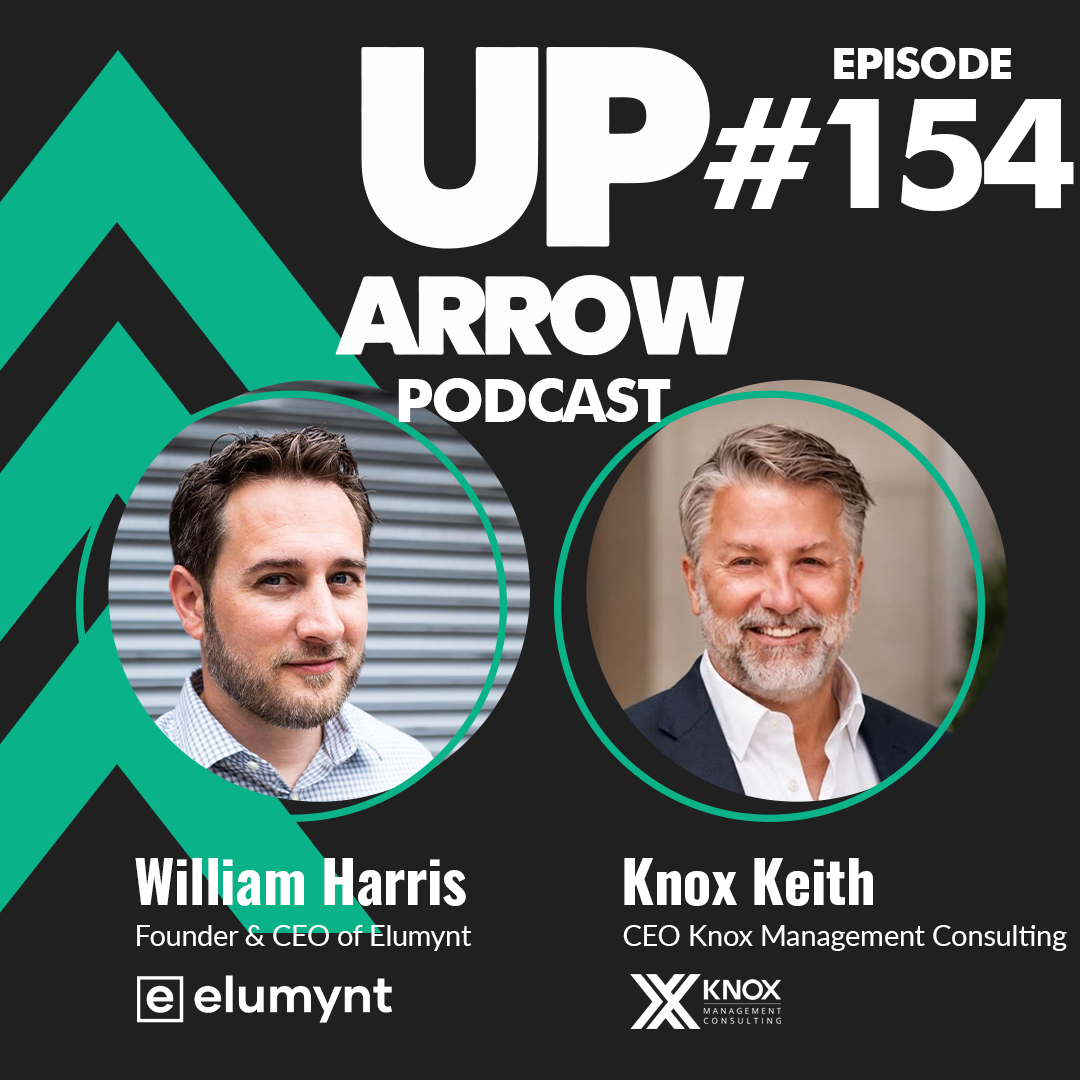



Knox Keith is the Founder and President of Knox Management Consulting, a strategic advisory firm helping organizations strengthen communication, credibility, and digital presence. With more than 30 years of experience, Knox advises executives and teams on management consulting, organizational change, and strategic communication. He is also the author of Validated, a guide to building trust and opportunity online, and created Digital Validation®, a framework for turning visibility into trust and professional credibility.


Here’s a glimpse of what you’ll learn:
- [2:49] The hidden business risk of not having a digital footprint
- [9:26] How Knox Keith uses human-to-human connection to build trust
- [14:14] Simple ways busy executives can strengthen relationships online
- [23:18] Why founder stories can create stronger customer connections
- [28:34] Lessons from Dell about meeting customers where they are
- [36:20] How to measure the business impact of trust-building efforts
- [40:46] Knox’s relationship-building approach after meeting Ted Rubin at South by Southwest
- [46:20] Leveraging AI without losing authenticity or personal voice
- [54:09] Knox’s shift from business studies to English literature
- [1:03:22] How an Emmy-winning sports project helped Knox land an opportunity at Dell
In this episode…
Building awareness is easier than ever, but attention alone does not create trust. Customers, prospects, and business partners often research a person or brand long before making a decision, which means a strong digital presence can influence credibility before a conversation even begins. So how can leaders turn visibility into lasting trust?
According to strategic communication expert Knox Keith, the answer lies in consistently showing up, adding value, and creating genuine human-to-human connections. Rather than relying on self-promotion, leaders can strengthen trust by sharing useful expertise, engaging thoughtfully with their networks, and developing a digital footprint that demonstrates credibility over time. Knox also recommends finding the channels where your audience spends time and measuring meaningful outcomes instead of chasing vanity metrics. With consistency, these efforts can transform awareness into credibility, relationships, and business opportunities.
In this episode of the Up Arrow Podcast, William Harris talks with Knox Keith, Founder and President of Knox Management Consulting, about building digital credibility and earning trust online. Knox explains why visibility needs credibility, how leaders can create authentic connections, and ways to measure trust-building efforts. He also touches on AI, executive communication, and the unexpected opportunities a strong digital presence can create.
Resources mentioned in this episode
- William Harris on LinkedIn
- Elumynt
- Knox Keith: Website | LinkedIn
- Knox Management Consulting
- Validated: Add Value. Build Trust. Be Seen. by Knox Keith
- Digital Validation®
- Ted Rubin
- Return on Relationship: Relationships Are the New Currency: Honor Them, Invest in Them, and Start Measuring Your ROR by Kathryn Rose and Ted Rubin
- “Leveraging Return on Relationship To Boost Brand Reputation With Ted Rubin” on the Up Arrow Podcast
- “Your Ads Aren’t Bad… They’re Just Forgettable: Hollywood Secrets With Chadwick Wilson” on the Up Arrow Podcast
- “‘We Had 5 Years of Inventory…and It Almost Killed Us’ With Brandi Dugal” on the Up Arrow Podcast
- Smart Brevity: The Power of Saying More with Less by Jim VandeHei, Mike Allen, and Roy Schwartz
Quotable Moments
- “People started to connect with me because I shared a real experience.”
- “You do that by being human, by adding value, showing up consistently, and not always asking for something in return.”
- "The real power comes when you leverage your critical thinking skills and use it as research and challenge what it's presenting.”
- “You can't be lazy and successful most of the time.”
- “People are going to connect with an executive at AT&T versus the logo of AT&T.”
Action Steps
- Build credibility before you need it: Consistently sharing useful expertise and showing up online helps prospects see you as a lower-risk, more trustworthy choice.
- Focus on human-to-human connection: Letting personality, experience, and genuine interaction come through makes it easier for people to relate to you and remember your brand.
- Engage where your audience already spends time: Choosing the right platforms and participating there regularly helps you build trust in the places customers are already paying attention.
- Measure outcomes, not vanity metrics: Tracking qualified leads, conversions, and business impact gives you a clearer view of whether your content and campaigns are actually working.
- Use AI as a tool, not a replacement for your voice: Applying judgment and rewriting AI-generated ideas in your own style helps preserve authenticity and differentiation.
Sponsor for this episode
This episode is brought to you by Elumynt. Elumynt is a performance-driven e-commerce marketing agency focused on finding the best opportunities for you to grow and scale your business.
Our paid search, social, and programmatic services have proven to increase traffic and ROAS, allowing you to make more money efficiently.
To learn more, visit www.elumynt.com.
Powered by Rise25 Podcast Production Company
Episode Transcript
Intro 0:03
Welcome to the Up Arrow Podcast with William Harris, featuring top business leaders sharing strategies and resources to get to the next level. Now, let's get started with the show.
William Harris 0:15
Hey, everyone! I'm William Harris. I'm the founder and CEO of Elumynt and the host of the Up Arrow Podcast, where I feature the best minds in e-commerce to help you scale from 10 million to 100 million and beyond as you up arrow your business and your personal life. Every founder has asked themselves this question: Why did they buy from my competitor? Sometimes we assume it was price. Sometimes we blame the product, and sometimes you're right. But sometimes there's something more going on. What if your competitor simply felt safer, more credible, more trusted? Today's guest argues that we've become obsessed with awareness, but awareness without credibility is just noise. In e-commerce, especially where customers can compare dozens of brands in minutes, trust has become one of the few competitive advantages that's difficult to copy. Knox Keith has spent years studying exactly how trust is built online, working with Fortune 500 companies and executives while developing what he calls Digital Validation—the idea that your reputation begins long before you enter the room. So today we're going to explore something that every founder should care about: How do you become the brand people already believe before they ever click buy now. Knox, welcome to the Up Arrow Podcast.
Knox Keith 1:24
Hey William, thank you for having me.
William Harris 1:26
I always like to give a shout out to whoever introduced us, and in this case, it's Ted Rubin, best-selling author, Return on Relationship. Ted's been on the show before, but I've I've gotten to meet Ted in-person several times, and he's just an absolute class act stand up guy. So Ted, thank you for putting me in touch with Knox.
Knox Keith 1:43
Yes, Ted, thank you so much. I've known Ted for at least 12 or 14 years now. We first met in Austin at South by Southwest when he was in seeing the Brand Innovators Showcase, and what my client at the time introduced us, AT and T, and we've been doing interviews and executive get-togethers with him ever since. So Ted's a Ted's an asset, a good friend, a mentor, and one of my favorite people.
William Harris 2:12
I love that. I have one thing to jump into, and then we'll get into the good stuff here. This episode is brought to you by Elumynt. Elumynt is an award-winning advertising agency optimizing e-commerce campaigns around profit. In fact, we've helped 13 of our customers get acquired with the largest one selling for nearly 800,000,001 that IPOed. You can learn more on our website at elumynt.com, which is spelled elumynt.com. Okay, Knox. Imagine two companies, same product, same pricing, same presentation, same everything one wins one loses and the deciding factor is something that happened before the meeting even started what happened
Knox Keith 2:49
oh my goodness this is one of my favorite baseline stories because I had two clients in the same exact situation and I call it the tale of two executives so I went with client one, and we thought it was just a formality: making the pitch, you know, doing the presentation, talking everything, shaking hands, kissing babies, the whole nine. Yeah, we we patted ourselves on the back. We flew home. We thought it's in the bank, and three weeks later, we didn't win the deal. And I did a post mortem, and I followed up with our contacts, and they said, "You know, when procurement got involved and started doing their due diligence, your executive, the one that lost the deal, had no digital footprint. We couldn't find him anywhere. Now we can see that he's a young and upcoming star. He's rising, but we determined that that was a risk.
William Harris 3:40
And
Knox Keith 3:41
I said a risk. What are you What are you talking about? And they said, Well, listen, you know, your competitor, in this case, is someone who has been doing the same job for 20 years. He talks at industry events. He shares information. He's he's a thought leader, and your guy, you know, may be in this role for two or three years before moving on. He's got no credibility. He's got very little visibility on top of that. So we think it's safer. There's less risk involved because your executive produces uncertainty or friction into the equation, whereas the other executive doesn't.
William Harris 4:19
I've seen that, and I think about that often when people were even deciding to work with us or some other agency. There's this idea of that risk. Ultimately, when that person signs on the line that like we're going to work with Elumynt or this other company, they're they're shouldering that risk. And so if things don't work out the way that they wanted it to, that's their job on the line to a point. There, that's their boss is coming to them saying, "You picked that company, and I can remember that being a tough thing when we were still a young company and we didn't have as many case studies or things to back up. Where it's like, boy, somebody's got to-they got to be sticking their neck out saying, "I, we have to change this, in spite of the fact that there's maybe. Risk to this because we we need to take a chance.
Knox Keith 5:03
Absolutely, and we get so caught up in you know our babies, our products, our services are are the best thing ever, and we love them, and we brought them to life, and we're trying to get them out into the market. But in the end, it's really that validation of either having a client list or referrals, and we can see it in a progression to trust ladder that we developed at AT and T, where it's a little bit of control from the brand versus control and and certainty, where blanking it's trust versus not trust. So anyway, at the bottom of the ladder, companies have the most power over advertising, right? But the least amount of trust from the consumer side, and then you take a step up, and maybe it's a celebrity endorsement, and a step up from there would be maybe a journalist or an analyst writes about it. Sometimes those are paid for by the company. The next step up is a peer review, like perhaps on Amazon or Yelp, and then the last one is, you know, William, if you move to Texas and you bought a house and you and you knew I lived here and you said, hey, I'm looking for a plumber. Who should I call? Well, I can tell you who to call and who not to call, and you're going to trust that the most. But that's the least amount of control from the company from from the company selling the product or service.
William Harris 6:26
Yeah, yeah, yeah. I like that ladder. That's a good way of looking at it. I think about this then, bringing this to e commerce founders, e commerce brands. It's very easy for e commerce brands to spend all of their money on creating awareness. It's what we do as advertisers, and it's very fun. But I shared this example with a couple of founders recently, and I'm actually writing an article about this. I'm calling it the two traps of of DTC growth. There's this. It's not a meme. Like I guess maybe it's a meme. There's a there's a guy out there who has apparently only worked out one trap for like a year. I don't know if you've seen this picture, but I mean, is he is he is completely jacked on this lot and not over here? It's very disturbing to look at. But the idea here is that it's like I look at this as like companies becoming very very addicted to the dopamine hits of advertising because it's it's immediate. It's like I did this thing and I got this sale. I did this thing and I got this sale. It's fun, and so then they just build that up and get to a point where you're like, you are over-indexing now on creating awareness through advertising, and you are under indexing on these other aspects of the business, building up trust, SEO, etc. These other pieces that are necessary, and you're walking around with your business that's like this, and we got to get both of those traps to work in order for your business to continue to be successful and not hit these plateaus.
Knox Keith 7:47
Absolutely, and that's such a great point. Is that so much of marketing, as you know, and the success you've had with your business is advertising, which which drives top of the funnel awareness. But given that we all have a megaphone now with our own social media platforms, and we can all broadcast our own messages. Is that what you said at the beginning? Is my thesis is visibility without credibility is more noise. So how do you develop the longer tail piece to what you're talking about to to aid in that foundation, so that when you do get Googled, or people do are or are searching for you, that you've got something else, a different form of credibility, as opposed to just telling people that you're great. You're actually showing people that you're great through referrals, recommendations, adding value through maybe a blog or a post that you're doing, or through your podcast, which you're doing as well.
William Harris 8:43
Yeah, you sent me your book, Validated, back down your shelf. I read through most of it, and I think this is a quote from you. So I'm like, oh no, did I get this from you or somewhere else? But like, awareness is rented, trust is owned, and this idea where it's like a lot of the awareness that we're doing, it's like we're just we're spending money to get that awareness and it's good, but it's it's kind of like rented, whereas like that trust is something that kind of like sticks with you and carries with you. Awareness is somewhat easy to buy, trust is not. So if we can't just go buy trust, it's not like hey, let's spend $100,000 on trust. You can to a point, right? Like I'll say, like you can increase trust through through advertising to a point, but if you can't just buy, what are the ways e-commerce brands should be going about building up trust?
Knox Keith 9:26
Right. So, and I started off by talking about that we focus on not B 2b or B 2c, but human to human. People want to connect with other humans. People trust people more than they do a logo, unless you know. There's a few examples like when Lance Armstrong was was popular. That was a big logo, and maybe Harley Davidson. But other than that, most brands don't really get that that connection, right? People are going to connect with an executive at AT and T versus the logo of AT and T. So it's the same thing. That that small businesses and founders and people in the e commerce space can do is not all of us like to be front and center, but you need somebody, a CEO, a VP of sales, someone that is willing to do it, where they can be the face of the company or the division or the group, and they really need to develop their content pillars, and what I mean by that is, like for example, on LinkedIn we think we have to be all buttoned up, but really you need to let some personality shine. So, what are the four to six things that you're known for in your space? You know, are you an engineer? Are you over a certain product line? What experience do you know? And then you start sharing things of value, not selling the product necessarily. So if you've been doing this for five years or 10 years, or you just started the business based off something you've done for 30 years, there's some secret ingredient that you know that you're not giving away the house that you can add to your network to your audience that slowly over time without asking for anything in return starts to build that credibility and trust. You have to do it consistently. You can't do it every time you need to make your you know quarterly sales quotas. Su have to be doing you have to be doing it regularly. Obviously, there's more pressure then, but those are your professional settings and one to two personal things. So our friend Ted, you know, he's got his own hashtag, Ted Sockies. I hope you know that story. The ironic thing is, is our friend Ted loves these colorful socks that he wears, and he shows them off, and he's been stopped in Central Park where people are like, are you Ted Rubin? Let me see your socks, and that's partially. He's partially colorblind, so so I
William Harris 11:46
don't think I realized that.
Knox Keith 11:47
Yeah, he admits it somewhere along the way, but something silly like that helps people connect. And me being from South Texas, Taco Tuesday stock. You know, as someone who grew up eating Mexican food four or five times a day, sometimes I posted a Taco Tuesday meme so much so that years later, when McCormick Spice had a director of taco relations position open, 75 of my contacts on LinkedIn, predominantly former clients, sent me the link to apply to the job, and and it became inbound conversations where they're like, "Oh, and by the way, I haven't chatted with you in a while. We've got this business problem. Can you come help us whiteboard it or software? And that indirectly led to more business forming. And then I say the last thing you should always do is always add something charitable as well, because you never know where you're going to connect with somebody. So you know, for example, there may be a commonality with you know a love for for animals, or maybe both your mothers went through you know breast cancer, and it's it's something horrible, but it's something that can help you connect with other people. And so by showing up consistently, adding value, and being human, then you're starting to build that credibility, which gives you the pull from awareness to consideration, and then later purchase. Because over the long term, that credibility term, that awareness turns to credibility, turns to trust. So you you become part of the the solution options for your audience or your clients,
William Harris 13:22
I think there's a lot that I want to unpack there. Let's say one of the hard parts about that, I think, for a lot of founders, and not even founders, but let's say executives, is justifying that time spent being human on LinkedIn feels. Let's say that if you if you're an executive and you have a boss, you're just like, is my boss really gonna be okay with this? But then if you're the founder, sometimes it's like, hey guys, while you're in the trenches, don't worry. I had some pretty good comments that I put out on LinkedIn. I got your back. It feels like you're like, man, I'm not in the I'm not in the ring with them, right? And so, how do you justify that in a way that makes sense to the team? On like, this is what I'm spending my time on. I'm going to spend an hour a day on social media to do this. How do you justify that and make that make sense? There, yeah,
Knox Keith 14:14
and that's a great point too, right? There's there's a lot of optics. Executives or small business owners are busy. It's like I I don't have time, right? And you may experience this too, where the cobbler's shoes, the cobbler's kids don't always wear shoes. It can kind of be the same thing. And I know when social media started a long time ago, I was like, "There's there's no way that as a consultant or an executive, I can spend time writing a blog every week. I don't have the bandwidth, but here's the trade-off, right? We all doom scroll on these things, our mobile devices, right? So, when you're doom scrolling on social media, you're spending time, but if you're intentional about spending five minutes a day, five minutes a week on. LinkedIn, following the people in your network, and and just supporting them and liking their stuff, and or when you see it, just adding a note. So you know, if you showed up in my feed and you posted something and I saw it, and I'm like, hey William, that was really great. I agree, and here's why. It doesn't take me 20 minutes to do. It takes me two or three minutes, and it adds value to your network, and it adds value to mine. And I'm not asking for anything in between, nor am I being braggadocious or saying, "Hey, look at me, I'm important. I am genuinely nurturing a relationship online with someone whose opinions I value. So that's the first place to start. Second is kind of the optics. Sometimes you know I'm an executive. I'm I'm busy. I don't have time for this. Or PR and marketing may have different views of what's going on, but it's about relationships. It's that human to human side, and you shouldn't be overwhelmed when you start with it. Start small, crawl, walk, run, build into it. So, you know, when I turned 40 and was not in good shape, and I decided I needed to get back in shape, I was like, "We're going to run these tough mudders, 13 point something miles through mud and all these military obstacles. Oh
William Harris 16:16
yeah,
Knox Keith 16:17
and it wasn't easy, but I couldn't. I couldn't run half a mile to start with because it had been years since I did it. So you know, I slog through 100 yards at a time and and and run and walk, and then finally I got up to two or three miles, and then finally you know I we've gotten in shape enough to do it. We had a lot of fun doing it as a team, but that's kind of the same mindset. Is is you can't run the half marathon or marathon the first day, for the most part. So break it down, look at some some steps, trade some of your time that you're spending in one area, and reframe it as investing time in another area. And I think you'll start to see the the impacts that that can bring for you.
William Harris 16:59
And how do you come up with? You were talking about defining your content pillars. How do you do that? Because I I've got on my team just some brilliant people. They're very very good within the platform. Like my creative director is so creative, and so it's like I would love for them to do more on on LinkedIn and posting and things like that. But it's very easy for them to be very good at what they do, and then they could have LinkedIn, and it's just like I don't know what to post, and I'm not very good at helping them along those lines. So it's like, how do I help them to know these are the things that you could do that become almost like repeatable patterns, almost
Knox Keith 17:33
right? And yeah, that's that can be tough, right? Because we don't always know our own skill set, and we're not always skilled at talking about our skills or or about ourselves, so really in this case it becomes less about what me talking about me. It becomes me talking about you or sharing an experience. So let's say you've got a creative director and you know they're moving from one medium to another, or following a certain style, and then they've got a network or connection of people that are talking about graphic design or certain elements within graphic design. All they have to do is share their experience, and that's the most interesting thing about LinkedIn right now is that 80% of our visibility is not coming from what we post; it's coming from our engagements. So that makes that crawl piece even easier because then you're not planning content and coming up with content calendars and mapping back to to themes or campaigns. You're just simply sharing your voice, and that's really where you start to get your legs and go from from you know, I don't know if you've got kids or not, but where you go from you know you go from from rolling over to to tummy time to to crawling to pulling up to taking those first steps, it's it's part of that same thing. So once you start commenting on a regular basis, I'm going to comment on five posts this week. Then that that you're you're pulling up and standing up, and then once you get some confidence doing that, and it becomes secondary, then you start walking, and then then you can come and say, okay, well, these are the things that were that are resonating with people because, like, you know who Gary Vaynerchuk is, correct?
William Harris 19:17
No, never. Yeah, yeah, that guy,
Knox Keith 19:19
the former, the the feature owner of the New York Jets, yeah,
William Harris 19:23
yeah.
Knox Keith 19:24
So I've interviewed him a couple times at South by Southwest. We are not a first degree connection. He doesn't know me from Adam, but at one point he had posted something on LinkedIn. I was like, wow, that really resonated with me. And I took five minutes to write a response. From that one response, I got 272 likes on my comment, like 47 comments exchanges back and forth, and like eight new connection requests based off of that, and was just me genuinely saying, "Hey, that resonated. Let me take a moment to share. And yeah, it's kind of hard being vulnerable and. Yourself in areas you're not used to. The best part about LinkedIn is it doesn't have as many trolls as we might have on other social platforms, so that helps because most people are trying to be professional.
William Harris 20:11
Sure,
Knox Keith 20:12
but but just that me sharing something in and connecting with with someone in his audience, that was a different dopamine hit than just the advertising piece. Is like, oh wow, this really led to something. So you can you can start to track that and see what what is connecting with your audience's audience, and maybe that leads you to to getting your legs underneath you before you advance.
William Harris 20:38
This makes so much sense for B 2b, and I think where a lot of times when I talk to founders of e-commerce brands, like yeah, that's not for me, right? Yeah, it's like I I would argue that it is, but rather than me arguing that it is, I'd like to hear you argue that
Knox Keith 20:54
it is. Yeah, completely. Because again, I think from a generational standpoint, you know, I was always taught to let your work speak for itself, but most people can't see that. Back in 1997, Tom Peters wrote an article for Fast Company called "The Brain Called You, Me Inc. and was the first time. And remember, this is still kind of the early days of internet. People were scared to give their credit card numbers online, and social media was non-existent. So the idea became that you are need to be your own publicist, and the idea is that you can expand your audience and your reach and show your value if you do that. Now it's been bastardized a little bit with the age of influencers and a lot of look at me attention, which makes that the awareness at the top of the funnel even more crowded and noisier. But I think if you can show up consistently and share the things you know, especially if you've got a good origin story, so that's something that founders need to talk about: is why are you doing this? How did you get into this space? Because that helps people connect with you. And along those lines, you know, I think last year or the year before, I wrote a blog, put it on LinkedIn, and it was about a really embarrassing time in my life when I had been laid off from a company, and in that vulnerability, you know, because people ask, well, how did you go into consulting for your own? I'm like, well, wasn't necessarily by design. I had gotten laid off. I found some jobs. I kept networking, and I just kept talking to people. And ultimately, that led to different consulting assignments where I didn't need the the nine to the nine to five of working for someone else, where that's and so people started to connect with me because I shared a real experience, and then I gave my origin story, which is not as heroic as you know maybe Superman coming from Krypton or
William Harris 22:57
sure
Knox Keith 22:57
or Tony Stark with Iron Man, where you're you know you're inventing your own superhero tools, but that resonated and helped connect, and that helped people go. Okay, I understand where he's coming from, and I think that's what what people are afraid to do. But once you step into it, it can open a lot more doors for you.
William Harris 23:16
Yeah, what's interesting is in the e commerce space, I have seen that even found ads, not always, but they tend to outperform a lot of other ads. Even if the founder is awkward and weird and not that well spoken or whatever, like whatever that their thing is, whatever their objection is to why they're not doing it, I have found still found that it's like I I don't know why, but you do better. And why is it not the
Knox Keith 23:44
McDonald's CEO taking a bite of the new burger?
William Harris 23:47
We we covered that a couple of episodes. I agree completely with you. With on on the episode with Chadwick Wilson, we literally show that. Yes, I had another guest on Brandi Dugal of the Fidget the Fidget Toy. I think it's the Fidget Toy Game, or I forget the the fidget something the fidget toy, and she talks about how before she makes content for ads and things like that for the fidget, she will kind of like get in this zone of going through and just visualizing and thinking about all of the people that her toy is going to impact and how that's going to impact and it's for education, right? And so, like like educational games, and so so she's thinking about like this kid is going to be impacted and this kid is going to be this kid, and then when she creates that content, it's almost as if like that energy just exudes itself, and without it sounding like let's just say like woo, right? Like the reality is, I I like the idea of quantum entanglement and energy, and I think that there's a lot to it that we're just starting to discover in the scientific realm here. That there is something to be said for that founder who's like, I am passionate about this, and that passion in and of itself is going to come through more so than me hiring an actor to do this. Now there are some incredible actors, and we will say that there is a time and place where that eventually still ends up doing a better job. And you can look at a lot of those ads that do that, and those are the things around Super Bowl, and it works, right? But before you have the budget for that type of advertising, there is something just so raw about a founder saying exactly what you just said. It's like I have the intentionality behind this.
Knox Keith 25:15
Yeah, it goes back to that progression to trust that we just talked about. So the the celebrity, the spokesperson is the second from the bottom rung. It's it's nice, okay. You know Taylor Swift is talking about your product, but but she's not engaging with your audience in any capacity. But a founder is up towards the top, where they're sharing something. They're sharing their reason why, and that gives someone the opportunity to connect with them on a level that an actor can't, because they can't they can't feel that energy. They don't see the purpose. They don't understand the purpose. And when you share that, yeah, the founder is visible. They're open to to the trolls or some of the negative comments. But for the most part, it's that opportunity to be human and show that side, and show your why, and show your origin story, that makes people connect. Because people, in the end, in the end, William, people want to do business with people. I want to do business with with people I know and trust. And I've got the second executive from the Taylor Two executives who switch from selling product A to product B, and I just happened to have coffee with him one morning in passing in the break room, and I'm like, "Hey, this is great, but how are you going to let everyone know that you're now selling product B? He's like, "I don't, I don't know. Let's let's go whiteboard this. So we went his office and we whiteboarded some things. And six weeks into the the pilot, because we've got his team involved, he's just sharing already produced marketing materials the company had, and he's sharing things behind the scenes or at conferences where he's not necessarily speaking, but he started to position himself as a thought leader, and he gets a cold call from a former client that said, "Hey, we were about to put out an RFP for product B, and RFP processes, if you're not familiar, take for freaking ever between by the time you put them out and the software finally gets approved and installed. And he said, "Listen, we've done business together. I like working with you. We have a relationship. Promise me that you'll give us a fair deal on the price, and I'll go to our board and remove the RFP and just go with you, and in three months he got a $5 million sale from a pilot versus going through the 18 month process, and it's because of that human to human connection, and because he was letting his audience and connections know that he had pivoted, and it wasn't the same thing he had been selling for 10 years. It was something new, but he was doing it by adding value to his network and letting them know. So I think all that kind of ties together with your why and your purpose and that human to human connection.
William Harris 27:52
Yeah. When we look at this for e commerce founders, then right. So we talk about channel then, right? LinkedIn for most of them not the main place, but creating content then on the channel that their customers live on would be probably more ideal. And so it's like if you're selling something that is very much a TikTok product, you should be on TikTok figuring out how that content works there. If you are selling something that's going to work very well on Reddit, you should be figuring out Reddit and being very good at Reddit, there are some who LinkedIn still works for you in e-commerce, and so you should be on LinkedIn and doing what you need to do. But figuring out where that channel is that your customers are hanging out, build the credibility with them in the place that they're hanging out.
Knox Keith 28:34
Right, right, and so, and that that speaks to the Dell Hell case study. I'm not sure if you're familiar with that one, but briefly, in the into I don't know how long ago it was, but Dell had taken and built this huge online community on the Dell. comm platform, and then social media started happening, and Dell outsourced its call center to India, and a gentleman who happened to have like the one of the first million person blog followings had bought a Dell computer, and there was an there was something wrong with it. And he kept calling the the 800 number, the customer service number, and he kept getting hung up on within like two and a half minutes. And so he just started blogging about it on the kind of the daily basis. You know, just okay. I started the stopwatch. Here's what happened, and then ultimately mainstream media picked it up, and Dell caught wind of it. And the guy's name was Jeff Jarvis, and it's called Dell Hell. And and Michael Dell was like, "Oh my God, what are we doing? We we have completely missed the boat for where our audience is. We assumed they were on our website, our domain, our platform, but they're all doing all these new things, and so ultimately it got resolved. And then Dell went through and started using some new new social media listening tools. I won't go too much into that, but they started looking for customers under arrest so much so that they established a customer. Support center for Twitter alone, 114 people, 14 languages, and they were closing like 2,000 open customer service tickets each month based off Twitter alone. So they had to go find where their audience was. So what you're saying is absolutely right. You've got to find where your audience is. You can't assume that they're going to find you, but how do you do that? You do that by being human, by adding value, showing up consistently, and not always asking for something in return. And that's more the longer tail. Whereas I know a lot of your focus with ads and and SEO is is the shorter tail up front stuff. So I think you've got to balance the two from an investment standpoint, but some of it is that research and, like you said, finding where your audience is and then connecting with them.
William Harris 30:49
I want to talk about the fragility of trust, then, Toon. So,
Knox Keith 30:51
okay,
William Harris 30:51
there's a lot of examples of brands lately in the news where trust, because of whoever they decided to associate themselves was eroded in in the you know public sphere. This can happen to a lot of founders where it's like you're you're you're behind that. The founder does something though, and it's like that implodes. So there's fragility on that side of things. The brand itself can have its issues, and like the one that I always like to quote is it's like the bad PR. It's like I think BP. When I was young, I don't remember in like 2000 or something. It's like all the oil went into like the Gulf, and you know, there's like BP is you know they're under, they're not going to be able to recover from this, and they they didn't, and it was no big deal. And like the the part of this is, it's like you can literally you know kill half the ocean, and you're still going to be okay as a company. There is no such thing as bad PR. You're going to be okay, kind of thing. But there is there is truly bad PR. There is truly well. He he came out. The
Knox Keith 31:45
CEO came out and said, "When is this going to be over? I just want to go home.
William Harris 31:48
Yeah, yeah. So like, okay. So there is there is fragility and trust though. But okay, that's a good example, right? Where it's like sometimes that that trust can be lost. Sometimes it's maybe a little bit harder to lose it once you've gained it, but what about like piggybacking off of some of these people who then could become liabilities as well?
Knox Keith 32:09
Yeah, that's you're you're absolutely right. What's the what? I'm going to butcher the saying, but it's something along the lines that takes a lifetime to build a reputation and only a few seconds to destroy it. Sure, and we've we've seen that with with celebrity sports stars. Some of the we talked about Lance Armstrong, Tiger Woods had a falling out. You know, there's there's dozens and dozens of examples where a brand or a founder can do that. So yeah, you have to have some controls. You have to be smart about it because it is a fragile process, and I think you need to recognize that, but I think the greater risk is being frozen or paranoid into not acting, right? So when I was at Dell, and we trained like 10,000 employees because social media was just coming out, we built a governance body. We trained the employees to speak on behalf of Dell, in the in the in the in the Twitterverse and social verse, because an engineer knew the server way better than a marketing person did, so they could address the questions easier. So I think we had four rules. It was I you know be transparent. So I work at Dell. I'm a Dell employee commenting on this post, have fun. So you're authentic. You add value, and then protect data information. So if you abide by those four rules, you're you're not going to have any problems. In Adele, we had one problem, and we we were monitoring it. The lawyers got involved, and they went back to the engineer and said, "Listen, We understand how you said this, but but I think we think it could be interpreted two different ways. Can you just add a clarification tweet or comment to to further explain what you're talking about? And the employee was like, "Yeah, no problem, easy to do, and that that was the easiest resolution, right? But yeah, you have to you have to also not be reactive in a lot of cases to protect that fragility that you were talking about. But you also can't be timid at the same time. So if a response needs a response, if an apology needs to be made, you you make those things, but I think the greater risk is not stepping into those audiences and not trying to to help them where they are.
William Harris 34:30
Especially depending on the size of your business, and I bring this up to a lot of my customers. Yeah, again, it's like maybe a 50 million, 100 million dollar company, and they're worried about this. And it's like, well, when you have 80% of the market share. You need to be a little bit more worried about that. When you have 8% of the market share, the chances are any publicity, even if it was bad publicity, is going to be beneficial to you to a point. Like, just get out there, say things. You'll make mistakes. It's okay. You'll likely be able to bounce back from that.
Knox Keith 34:54
No, completely agree. And so we're we're about to start the NFL season. I'm assuming you're. Vikings fan, see as much
William Harris 35:01
as you can be. Yeah. Okay. Well, I'm in
Knox Keith 35:03
Dallas for Calvin. Okay. The last time we went to a Super Bowl was January 28, 1996, Right. So, so complain about our owner Jerry Jones as much as you want to about being a general manager. As an owner, he's absolutely genius. He took $140 million investment and turned it into a $15.5 billion asset, not including all the merchandise he sale sells every year, which he's number one in for a team that's been a loser for 30 years. So he's always stirring the pot, and he's at the he's at the high end of the of the revenue picture, but they're always talked about. You either love them or hate them, but you have an opinion on the
William Harris 35:49
yeah. So that's a good point. The other thing I want to talk about that is measurement of this, because you and I can sit here and talk about how well. Obviously, this is a good thing for business. It's obvious, intuitive, right? But how do we prove that this is good? Is there ways that we can see in the data, and have you done studies or seen studies that this is that lowers the customer acquisition cost? It increases the lifetime value. Some way that we can just you know codify this in some way.
Knox Keith 36:20
Absolutely. So, there are ways to do it. We don't do it on a regular basis. With excuse me, my consulting practice, we usually have to rely on what our clients have in terms of the big expensive software. So, there are ways to tag things. But I think you know one of the most interesting things has been qualified sales leads. So, for example, some of my clients will will try to translate impressions into sales revenues. So, one client, for example, hired an influencer at an event not related to their product. So, they were industrial equipment or industrial manufacturing, they paid a one of the the housewives reality stars a million dollars to talk about their floors or commercial products, and a couple tweets at some fashion show in New York, and they couldn't figure out why they didn't automatically get 5 million impressions, and that turn into you know 200,000 qualified sales leads, and we were like, well, we've been yelling at you the whole time. This this is the wrong metrics. You need to you need to have tags associated with things so you can track it. So we wound up devising a new campaign where we focused on regional players related to the industry they were in, who were willing to do more at a lower price point, so that we could then measure online traffic through gated content, so we knew what the qualified leads were, or how many of the leads we got were qualified versus trash, as well as incentives to go into store with a QR code or a coupon code or something that could say we drove traffic to either the store, how that impacted quarterly sales, and then how it impacted web traffic as well. And by doing that and setting up those metrics within the system, because I think the other thing that we often I'm going to go into a tangent here, but it's related. So draw me back if I get too far off. Okay, is is there? So those are ways to set up metrics, right? The other another example is we had a client that would spend a million dollars on a white paper, publish it on some obscure landing page on their domain, and then tweet about it or put it on LinkedIn once.
William Harris 38:48
Yeah,
Knox Keith 38:48
and I went back and said, "Okay, great. How many people saw this post? They said four after we did a little digging. I'm like, "How many sales did that lead to? Zero.
William Harris 38:58
Right. Like,
Knox Keith 38:58
well, why didn't we have any gated content? Well, what's gated content? Well, give me your email address, and we'll give you the report, right? Or you featured 10 executives in here. Why aren't they in their teams tweeting out sound bites from the report with a link to the landing page for the gated content? So then you can get the qualified leads. So you also to to do all this, you have to create campaigns and not just think. Oh, I posted about it. I call it checklist marketing. So I wrote a blog. I tweeted about it. I posted on LinkedIn. I'm done. That's not a campaign. That's checking the box. So what's the value? What's the soundbite? How are people digesting the information? And then how does that breadcrumb to either daily content or longer form content to drive what your objectives are. More more in store sales. Okay, probably not for e commerce, but you've got different product pages. You can track web volume. You can track shopping carts. You can track abandoned shopping carts. You can see what what you know, just like you would do with a. Coupon. If you're offering a digital coupon, you put it in there. You can track how many people people have used it, so you know, and how many people it went to. So you start to get conversion rates. So that's a very long winded answer to heck yes, we can we can track those things, but you have to think about it differently as opposed to checklist marketing to more campaign marketing, so you've got the back end pieces that track the not just the impressions or the vanity metrics, but really what is your objective for doing this in the first place?
William Harris 40:31
Yeah, I love that. You hinted at this story a little bit, but I want to come back to it. The time that you met Ted Rubin, South by Southwest, you're at AT&T. Tell me a little bit about more of what was going on there and what this ended up. How you ended up meeting Ted?
Knox Keith 40:46
Yeah, so so I had AT&T for a client for a long time, and we were doing some things with their small business development marketing group, and so they were like, "Hey, take your film crew, go down to South by Southwest, interview some some man on the street things. We're sponsoring this brand innovator thing. Go there, interview some CEOs, CEOs, all these things, and meet meet startups, meet incubators, meet people, and ask how they're bringing their products to life and what struggles they're going with. And we'll share that on our small business blog and YouTube channel, so we show up at Brand Innovators, which is always in Lambert's Barbecue, which is a fantastic place. It's it's tiny, right? It's very intimate setting, and and and Ted and I's mutual contact says, "Hey, you need to interview Ted. So Ted's Ted's you know a New Yorker, right? He he talks with his hands like I do, but he's loud and he's opinionated, and and and he's always got something to say, and it's it's nine times out of 10, it's something very valuable, right? And so we go out on the street, and because it's too loud and noisy inside, and we like this one take with Ted, and it's like it's perfect. And then he had been emceeing things, and so we just got to know each other. And then it's it's kind of a progress, right? With any relationship, is we didn't become BFFs, you know, in year one. I we sent him the videos, we chatted a few times on Twitter or LinkedIn. Then we see him in year two, and we do a few more things. And then in year three, he's got a client. He's like, "Well, what are you doing with all these interviews? I'm like, "Just bring your clients in. Well, well, you can be the interviewer. I don't have to do the interviews, and then we'll just give you the the footage. And so we're just adding value back and forth to each other. And then when you know I went to write my book, you know he's been a mentor and a guide as well. Where I was just like, hey, this is this is a really silly question, but as a Texan, here's something we hate saying: we hate saying this is my first rodeo because we're Texans. This is really we need you know, and so this last 18 months has been a lot of. This is my first rodeos in terms of writing a book or in publishing it and self-publishing and and all the things. And Ted has always been there to answer the questions. And anytime he's in Dallas, he comes to my house and we we drink some Scotch whiskey and and and just you know catch up as as friends do. So that's an open invitation for two for for you, William, if if you if you make it to Texas, look me up. We're gonna go have barbecue, Tex Mex, and some maybe some Scotch whiskey if you if you partake.
William Harris 43:32
Hey Siri, remind me to find tickets.
Knox Keith 43:36
Absolutely,
William Harris 43:37
right. So okay, I like that. So come to South by Southwest.
William Harris 43:43
I want to. I whether it's that or not. I need to get down there and visit you. I've got some other friends down in Texas as well that have been on the podcast. Sujan Patel, Nevadhora. There's a lot of people down there that I need to make my need to make a trip down in here. The the
Knox Keith 43:55
the ranch is an hour hour and a half west of Austin. It's 3700 acres. One of the best barbecue joints in town in the state is in our little town, and then it's just a lot of fun to go out and build a bonfire and cook barbecue and hang out outdoors and just you know be kids again.
William Harris 44:14
I love some good barbecue and I love being a kid, so this sounds good.
Knox Keith 44:19
Sorry, I'm distracted you.
William Harris 44:21
Not at all. Well, yeah, I'm hungry now. I get easily distracted by food. My wife will say, so sometimes I probably shouldn't say this, but I've already started. I like to cook, you know, like like a barbacoa or something like that. It's like sometimes I've got something going in the crock pot, and I I come out of my my office, whatever, and I I walk in to get a drink of water, and I I walk by, then I go, and every time I walk by, she's like, I wish you would react like that sometimes when you see me, and I do, I do, but sometimes she's like, I don't know, the way that you look at and react to food is a little bit intense.
Knox Keith 44:55
Well, so so my shared story with that is my daughter's 23, and she lives in town. And when she's hungry or doesn't have things at home, she'll call me, and she knows that if she mentions food, even if I'm full, 20 minutes later I'm hungry, and she gets to go eat where she wants to go
William Harris 45:11
eat. That's so good. So okay, I want to talk a little bit about AI and trust now. First of all, I love my m dashes, and I had I used them all the time. I actually set up. There's a shortcut that you can set up within Google Docs. That way, when you double space or double double hyphen, then it turns it into an em dash automatically. Like, because I loved my m dashes. I can't use them anymore now because everybody's like, "Oh, AI, like no, I just, I just correctly used my M dash, or incorrectly. Actually, I over used it. But when I sometimes reply to people on LinkedIn, I'm like, "Love it. I don't know what else to say, so just say "love it, and then I hit send. Yeah. And so sometimes it's like there's this temptation, and it's like I see these other people, but then it's like I read these comments. I'm like, this is like four paragraphs long. It's not, but it's really long. And I'm like, this is this is clearly AI written, and it's more of a turn off. Even though it's like, me, that wasn't a bad response. It was actually kind of insightful. But it was like, you didn't write this. I know you didn't write this. And so, how do you find AI and trust in the mingling of all of that?
Knox Keith 46:20
Yeah. So that's that's kind of the there's like an anti AI movement right now, and and I get it because the term AI slop has definitely come out, and and people are kind of abusing it. And the real power comes when you leverage your critical thinking skills and use it as research and challenge what it's presenting, because you you're right. Sometimes you see something and you're like, "Oh, I want to respond, and to love it doesn't foster conversation, which is what's rewarded as that exchange. And look, I'll be honest. Sometimes somebody will post something and it's like it's TLDR, too long, didn't read, or I want to come back to it. So I've got all these open tabs of all these great posts that I want to come back to. So sometimes when and it'll be easier now that the football season's starting and I'm watching the Cowboys lose. At least I can feel productive on Sunday responding to people. But sometimes our our brain is is stuck, and so it's not always bad to take AI and say, hey, William had this beautiful post. I want to come up with something responsible, not an essay in response, but give me some angles or some ideas based off what you know of me. Now, the key is that's that's like using a spreadsheet to create your formulas to build your your business case, right? But as an English literature major, right? I I cannot, in in all honesty, copy and paste AI. I can be like, okay, that gave me three points to make. If I've got them, then here's how Knox actually sounds, because you can start to see the AI repetitive speak, and the the danger is if we're all using AI, then we all start to sound the same and there's no differentiation. Everybody's become homogenized. So I I hate that. I do love the end dashes, but now I break them up where I use the two spaces instead of the legitimate end dash, so it looks more human, or on LinkedIn with my ideas, you can't bold or italicize your response. So I put asterisks before and after it, so people kind of emphasize the word. So I'm humanizing it more. I don't. I don't want AI to replace me because then that's not authentic. It's not connection. But if I use it to be a researcher or a tool to give me some ideas because I'm in a creative block and we play in the creative space all day long, then it then it's a tool and it's okay. But the the copy paste and I I actually seen business partners copy and paste responses with the follow up questions that you know, chat gives you at the bottom, or Claude, and they pasted it into our email. I'm like, come on, please. Yeah, we
William Harris 49:10
are working on maybe another post about this as well. Somebody gave one of our clients before they came to work with us. They gave them. They worked with this agency. They put together this go-to-market plan or whatever it was for them. I want to say they spent like $15,000 on this. It was straight up copied out of ChatGPT and Claude. You can see both different ones in there, and it's just a bad. It's a bad plan. It's not horrible, right? Like when you read it, if you're uneducated in marketing, like you look at this, you're like, "This is good. This is solid. They were like, "Hey, we've got our plan. We want you guys to execute it. And we're like, "We cannot execute this because we don't want to run your business into the ground. So, unable to complete task. Here's what we're going to do instead. But it was just copy and pasted. And say, to your point, it's like there still needs to be that human that looks at this and says, "This is going." And it's not really good enough yet. And so, how do we make this better?
Knox Keith 50:03
Yeah, there's a term that Ted and I's mutual friend uses is called share worthy, meaning. So, if you ever watch Seinfeld, it was sponge worthy, but he he turned it and made it share worthy. Where he's like, look, if your work product's not good enough for you to brag about or share with your friends and family, then it's not share worthy, and the same thing goes for AI. You you can't be lazy and successful most of the time.
William Harris 50:29
It's so true,
Knox Keith 50:30
right? Most of the time,
William Harris 50:31
yeah,
Knox Keith 50:31
yeah, and you know, minus the lottery winners and and other things of being in the right place at the right time. So so, you know, it's that critical thinking and that judgment that becomes the most valued skill for any business, B 2b, B 2c, e commerce, retail, brick and mortar, whatever it is, is that discernment, and we have to keep reemphasizing that. That you know, back in in my day, we had the the cliff notes for the books that we were supposed to read, and it would give you the synopsis. They were the yellow with the black stripes on them, and that was that was our cheat. We can't now turn AI into making us lazier. We've got to we've got to hold ourselves accountable to that share worthy status of making something that's that will help us and help others.
William Harris 51:25
Yeah, I think the other thing that frustrates me is let's just if we're honest, AI writes pretty well. There's a lot of things that it's like it's actually really good. It is better than what a lot of people their actual ability to write is. There's a book called The Elements of Eloquence by Mark Forsythe. It was given to me first by Casey Armstrong, the CMO over at ShipBob. Read it years ago, and I've now gifted that book out to so many other people. And I can see it then. I'm like, I can't quite reach it over here. It's like a foot foot beyond my reach. But the thing that I love about this book is it talks about like marism and all these other really unique little elements of eloquence that you could write in there. You know, English lit. I'm sure you'd appreciate that. But there's all these things where it's like even like this, like this rule of three that you have, where it's like this, then this, then this, right? And it's like, oh, it's so good. And when you use it, you can see Shakespeare using it. You can see all of these elements being used by AI. But now it's become almost ubiquitous to the point where people like, oh, that reads like AI instead of that reads like just a well written piece of text. And so I think that bothers me is that sometimes now to make ourselves sound human, we almost have to write less good. And I'm like, I don't like that, and that's bad English. But we have to write less. No, but but
Knox Keith 52:37
like sometimes I will purposely put typos in my posts, yeah. So, so they're like, "Oh, that can't be AI. That's where we're at. There's a type of crazy. The other great book that that I read talking about writing is called Smart Brevity by Axios, and one of the things it talks about is don't bury the lead. So hit your point up front because we're all skimming now, for the most part, and we're and we're not reading. And I'm guilty of it too. But but the point is, is that you hit those three points, and those three points are actually a consulting thing that Harvard Business Review came up with, where it's like you know people don't remember like our phone numbers are 334 right back when we used to memorize phone numbers and now outsource them to the cloud, but but there's there's pattern recognition, so people tend to remember three things and not seven things. So I hear you on all that, but it's it is quite ironic that we're having to force ourselves to sound human, and now the ultimate insult is, oh well, that's AI written. I was like, no, it's not.
William Harris 53:43
Yes, I always like to get an opportunity to meet the individual. Then, so I want to talk a little bit about who is Knox Keith. You brought this up just a little bit about the English lit. You you assumed you were going to get an MBA, then you switched to English lit, it kind of feels impulsive, different. I don't know what was going on. What made you say like I'm going to switch? Not doing the NBA. I'm going English lit.
Knox Keith 54:09
That's that's a great question. And in high school, I had a friend's dad who was a partner at a big law firm, and you know, one day I'm hanging out at their house and I'm talking to the dad, and he's like, "Well, you know, what are you going to do when you go to college? Or maybe I was in college. I'm like, "Oh, studying business. And someone else said, "Well, you know, if you go back and get a master's degree, you're you're really just taking the same classes that you're taking as an undergrad. And what my friend's dad said is, "Well, he said, you know, here's something for you to think about. He said, "Your communication skills are the most important thing you'll have. He's like, "Well, what do what do you mean? He goes, "Well, look, if you've got a brilliant idea for a product and you can't communicate its value or how it works to the finance guys who are going to pay for it, the market who's going to buy it." The developers who are going to develop it, then it sits stuck in your head and it never serves the world, he said. "You know, my challenge to you is learn learn how to communicate well, and in doing so, you'll it'll aid you much further in the future. Now, keep in mind, my parents were mathematics professors. My dad was a physicist at one point, building rocket systems, and they looked at me like, "Are you crazy? How are you going to get a job with a liberal arts degree? And this was long before you know you could get all the crazy degrees you can get now.
William Harris 55:35
Yeah, yeah, yeah.
Knox Keith 55:36
But I think it aided me in so many ways because it was that how do how do you write concisely? How do you build a presentation? How do you stack things? How do you how do you communicate verbally as well? And then, you know, I still had a minor in business in undergrad, so it wasn't completely out the window. And then, of course, I got my master's degree in finance as well. So I think that's how it coupled each other, and and there's so many other ironic points to this story that we don't have to go into now, but we'll do it over beers in Texas. I like
William Harris 56:08
that.
Knox Keith 56:09
That it's it's kind of kind of eye opening now that I'm an author.
William Harris 56:15
Yeah, that's true. Coming full circle to that. Yeah, because I
Knox Keith 56:20
was a kid who had a traumatic brain injury when I was younger and had a speech impediment. So, you know, in one of my recent blogs, I came to realize I still can't necessarily hear the difference between bees and peas in talking or hearing. So, so, so it's something I've just grown up with. But now, you know, the kid that couldn't speak clearly. Suddenly, the one that's you know doing keynotes and and writing books is really really ironic.
William Harris 56:48
The biggest difference between bees and peas is one you can eat and one you cannot. So that is
Knox Keith 56:54
okay.
William Harris 56:55
There you go. Such a dad joke. I love the
Knox Keith 56:58
dad jokes.
William Harris 57:00
So I love English and language in general, and this is completely unrelated. But I love learning about just all things language. Like I've got all like the little little nerd out moments. But the one that just popped in my mind right now is maybe two days ago or so. I was just looking up the etymology of the word quintessential because I was like, it doesn't make sense to me. I was like, "Why does that mean? Why does that mean that it's like, like almost like the the best version of something, right? Because it's like it sounds like it means like five something, and I'm like, and I look at the etymology. Sure enough, that's exactly what it means, like the five essence, the fifth essence, and it was because they believed that there were five essences, right? And so there was what earth, air, water, fire, and then the fifth was ether, and it was like the heaven, right? And so it was like the the perfection of something. It was like the best. It was the fifth essence, and so it's like the fifth essence was like this, like perfection of this. It's it's the thing, right? And so I was like, oh, now it makes sense on why quintessential means what it means, but it bothered me, and so etymology being one of those things that I appreciate, and so I figured you would appreciate the negative.
Knox Keith 57:58
I love that. I always remember, like, like prohibit. What What do you mean? You can't do it. Pro is good, and Hebit is life. So, you know, prohibit. No, you can't do it.
William Harris 58:11
Yeah, exactly. That's yeah. There's all those little nuances to the language that I think make it a very interesting language. So, yeah, that's
Knox Keith 58:20
or or the history of things. So, not to sound too crude, but remember blowing smoke up someone's rear. Well, that was
William Harris 58:27
yes. I know where you're going with this. Yeah, where they were actually like, yeah, yeah,
Knox Keith 58:32
blowing nicotine smoke up someone's derriere. It's like, oh my, that can't be real, you know. It
William Harris 58:39
was though. Like I'm 99% sure that that is exactly it was real. I don't remember like the science behind it, but yes, that is exactly what it was. It was almost like like the little like thing that you have to like for the fire fireplace. Yeah, the flu. Yeah, there you go. That thing. I can't think what it's called, right? But like that thing, they would just stick. Yeah, I um, I got to look up the science behind that one again because it's very interesting. But that was a CPR tactic before we had modern CPR. So, those of you who are taking CPR classes, be glad you don't have to still do it that way.
Knox Keith 59:10
Amy, Amy, are you okay?
William Harris 59:12
Speaking of languages, you said something about your dad speaking two languages.
Knox Keith 59:21
Oh yeah, yeah. So, so we're from Texas. I grew up in the big town of San Antonio, which was a million people plus. But my parents grew up in these little small towns in East Texas, and so one day I'm I'm home from college, and my dad looks at me and goes, "You know, I speak two languages, and you know how 20 year olds do. You roll your eyes at your dad, and you are like, "Okay, what do you speak? And I am thinking redneck and English, right? Because because I get around my family, and and we sound like Opie Taylor from from Mayberry. If you are old enough to remember the Andy Griffith show, and he goes, "No, I speak math." And I speak English, and I kind of roll my eyes and I don't think about it till I really get into my first job out of grad school, where I'm managing a billion-dollar e-commerce product line, and I'm one of 10 people out of a 10-1000-person company that understands how the technology works, and so I'm having to translate it like marketing speak to to the executive speak, especially when we IPOed to Wall Street to operations to development to sales to to customer training on how the technology worked as we change things. So that's where language and communication became even more important because I had to recognize what the audience needed to know, or what motivated the audience, because finance and sales are rewarded very differently than development or operations. And so, you know, you get into so many different nuances that I think, as an executive or a leader or a business owner, if you can think in those terms, then it helps you craft your story a little bit different for who needs to hear what or how you build relationships with someone else.
William Harris 1:01:10
I love math. I tell my kids that math, I think, is the language of God, and so not to get too crazy on that. You may be
Knox Keith 1:01:17
related to our family then.
William Harris 1:01:19
Yeah. So because I was very
Knox Keith 1:01:22
good in math and I was very bad at communicating.
William Harris 1:01:24
So here's the thing, though, that I think that's so good about math that I really appreciate everything more or less that you see can be reduced to math. Literally, like you can describe the world using mathematics, every shape, every color, like there are all there are waveforms, and those waveforms can reduce the math. And even when you begin to see certain things like the Mandelbrot set or whatever, when you switch it into three dimensions and you look at it outside of just like this two-dimensional plane, you start seeing these other patterns emerge. And all of these things are just really interesting when you come to that. And there's a lot of let's just say physicists Richard Fagin, some of the other physicists who are coming out saying more or less that it's like information preceded matter, and that it's like information was kind of like this this this thing. I believe that we discover mathematics; we don't create it, right? That it's just us trying to put and understand the rules of the things that already exist. These rules are already there, and we're just discovering how it works and trying to put the numbers and names and shapes and words and all of that together to just interpret the information that exists underlying.
Knox Keith 1:02:36
Yeah, I can I can see that. And there's wave theory and everything's energy if you think about it because there's space in between atoms and subatomic particles and all those things. It's it's always been numerically calculated and then you know Tesla's was it 369 and all the all the other things that can take us down another rabbit hole that I want to you know, I need to learn and read more on. So after this, I'm going to be I'm emailing you, like, give me what you're reading and and what you recommend.
William Harris 1:03:08
We could keep going and turn it into a Joe Rogan episode here. Well,
Knox Keith 1:03:12
I'm not I'm not smart enough to be on Joe Rogan, so
William Harris 1:03:15
speaking of pretty impressive things, though, you want an Emmy. Um, I need to know the story of that, though.
Knox Keith 1:03:22
Okay, so here it
William Harris 1:03:25
Ah, so cool!
Knox Keith 1:03:27
It's it's crazy. So, do you remember public access television?
William Harris 1:03:32
Yeah.
Knox Keith 1:03:33
Okay, so a friend of mine in college in the 80s decided he's going to become a sports broadcaster, and so he goes down to the local Austin station and gets certified to be on public access TV, and we get a time slot. So our time slot is 3o'clock in the morning on Saturday night. After, and I kid you not, after the naked guy. That's that's a whole whole different story. So it was a sports related call show where people would call in and talk sports, and we had the Texas Longhorns and the Dallas Cowboys used to have training camp in Austin, so we were horrible. But fast forward, he goes on to become a sportscaster in some big cities. I go with him because I've been helping him forever when he's in small markets, and we cover the second Cowboys Super Bowl in the '90s when they were in Atlanta. So I was on the field in Texas Stadium when you know whether the balls were brass or papier-mâché was was up. So lots of fun stuff. We go to the Super Bowl. We come back. Fast forward a few years. He calls me up and says, "Hey, I'm I'm going to quit my job. I'm like, "Why? You got the coolest job ever. He's like, "Because I always work weekends. I don't ever get to get to see my kids, but I'm going to start producing videos for corporate America. I'm going to put it on this thing called Twitter and YouTube. So, so lots of great stories come out of that. But long story short, we. We wind up lending Anheuser Busch as a client and Maui Jim Sunglasses as a client, and we produce a TV show for Anheuser Busch called The Ultimate Tailgater. So they didn't want to spend $50 million to sponsor the Big 12. They were like, "Here's a small budget. Go get us a bunch of you know publicity around around Budweiser, and maybe Coors or Miller was sponsoring the Big 12, so we would show up to tailgates and film the find in search of the ultimate tailgater best barbecue best and we had Bud Light girls with us right so
William Harris 1:05:37
good
Knox Keith 1:05:38
so we're handing out business cards and we're putting we're putting the things on Fox Sports Southwest and YouTube, and the the the goal was, whoever had the most views on YouTube at the end of the season got four tickets to the Big 12 Championship game in the Anheuser-Busch box. So they got box seats. So suddenly we're we're driving impressions. It's kind of American Idol meets YouTube in terms of people calling in and voting each week. We're having a ton of fun, and we get nominated for an Emmy and win Best New Sports Broadcast in 2009.
William Harris 1:06:13
That's so cool, and that sounds like so much more fun than just sitting behind making videos, right? You're out there on the
Knox Keith 1:06:20
scene. Yeah. Well, yeah. We had we no yeah we had a lot of fun, but the other thing that happened from that is by creating visibility and credibility doors that you don't expect will open, and here's the home run story out of all of this. So at the time, I'm a management consulting consultant working for emphasis, big consulting firm. I'm working 80 plus hours a week. I'm screwing around with him on the weekends, filming games. I've got two small kids, and one Friday afternoon, the phone rings, and this was back before when you would actually answer a phone number you don't recognize, and it's a recruiter. And this is the recruiter's pitch: Knox, Michael Dell likes what you're doing. Do you have a few minutes to chat? Wow! I'm like, what on earth am I doing? He said, "Well, you're a process engineer. You're management consulting. You've done learning and development, and you're sharing all this really great stuff that you're learning on the job around social media, which was pretty new and how companies are using it. Michael's got an unadvertised pet project. Would you like to come work for us to do that project? So I wasn't looking for a job. I hadn't put together a resume in years. I was working my wasn't paying attention, but because I was consistently showing up, consistently adding value, and consistently sharing my experiences, someone said this guy's credible in what he's doing, so much so that you know a pretty big name and opportunity fell in my lap.
William Harris 1:07:50
I love that. That is exactly the epitome of what we were talking about. In
Knox Keith 1:07:55
yeah, so so you never know where your life is going to take you from this ridiculous piece of hardware and some great stories to winding up in rooms I never ever envisioned I would be in, all because of learning to be visible, but not for awareness for awareness' sake, but awareness from credibility's sake, which builds that long-term trust by adding value to people in your audience, and I think every small business, B 2b, B 2c, and any big company, that's really where you you can nurture those relationships without necessarily having any agenda in mind.
William Harris 1:08:36
Beautifully put, Knox. If people are listening to you and they want to work with you, or they want to follow you. What is the best way for them to do that?
Knox Keith 1:08:43
Yeah, so if you want to keep track of me, I've got a website now called MoxKKeyth. com. I'll put blogs out there quite quite regularly as I think about things. Not of them, not all of them are business related, and I've got LinkedIn is usually the best place. So Knox Keith linkedin.com/in/knox Keith is a great place. Twitter if you want to see some of my travel and food adventures it's Knox K N O X K N O X and then Twitter and most everything else is Knox Keith as well.
William Harris 1:09:18
That's so good. That makes it easy. We'll put that in the show notes for people as well. Thank you, Knox. I have thoroughly enjoyed talking to you, getting to know you, learning from you. It's been just been absolute blast.
Knox Keith 1:09:28
I I have too, William, and you know what I'm excited about getting your butt down to Texas. That's right. And and you know I will need a signed permission slip from your wife before you come down, and we may have to put our phones in Faraday bags just so you know we can't be tracked and and and all those good things. But that that makes for some great stories.
William Harris 1:09:47
Yeah, yeah, yeah. The best stories happen when the phones aren't around, right?
Knox Keith 1:09:51
Absolutely, and that's. I think you lead the same kind of life where where we're not afraid to put the phones down, and and that's that's really the the best. Experiences is when when they're off.
William Harris 1:10:03
Completely agree, Knox. Thank you again for joining me today.
Knox Keith 1:10:05
Hey, William, thank you so much.
William Harris 1:10:07
Thank you, everyone, for listening. Have a great rest of your day.
Outro 1:10:10
Thanks for listening to the Up Arrow Podcast with William Harris. We'll see you again next time, and be sure to click subscribe to get future episodes.


%201.png)